

Beavers
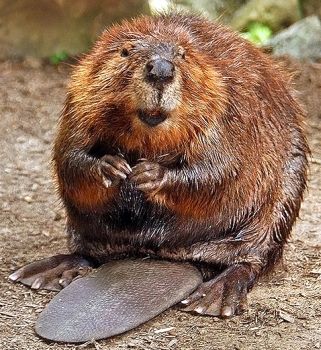
Aquatic architects
The dam building ability of beavers is fairly well known, but beavers possess other amazing design features which God has included in their anatomy. Beavers are air-breathing mammals which spend a great deal of time in water. For this reason they need special equipment.
First, the beaver has special valves in its ears and nose. When the beaver dives below the water these valves automatically close so that no water can enter. When the animal resurfaces, the valves reopen and it breathes again.
Perhaps their more amazing piece of equipment is their eyelids. If you have done any diving or snorkelling you will know that water and materials in it can irritate your eyes and wash out natural lubricants. Not only that, but your eyes do not see well under water. That is why snorkellers wear goggles.
Were we original to think up this idea of goggles?
Not really. God designed beavers with ‘built-in’ goggles. Their eyelids are transparent, so they can close their eyes underwater and still see extremely well. Their transparent eyelids give protection to their eyes from water-borne irritants.
During winter, beavers must feed on the bark of trees they have cut and stored in the autumn, using their specially designed, self-sharpening front incisors (perhaps one of the beaver’s better known pieces of equipment).
The beavers collect the young trees (usually two to five centimetres (one to two inches) in diameter) for food, cut them to suitable lengths and then transport them, by holding them in their teeth, to their underwater cache, forcing the branches into the mud at the bottom of the pond.
Amazing design
Which brings us to another amazing design feature. To retrieve the stored food in the winter months when ice covers the pond, the beavers may need to chew the sticks underwater. They can do this without water entering their mouths, because they have fur mouth flaps between their front incisors and their rear molar teeth, which are set considerably further back. These two folds of skin, one on each side of the mouth, meet behind the incisors and seal off the rest of the mouth.
The beaver’s large paddle-shaped tail, which has a scale-like skin covering it, is used as a rudder when it swims. This is particularly important when the animal is swimming with a branch in its mouth. The tail must compensate for any uneven drag from the branch, thus the tail is often held at an angle for accurate steering.
The rear feet of the beaver are large and webbed like a duck’s feet, to give the animal good swimming ability. The two inner claws of each foot have split toenails, which the beaver uses as a comb to groom itself and oil its fur.
Beavers use their smaller, unwebbed front paws to carry mud and other materials, and to dig canals which they use as a means of transporting wood and also as a means of quick escape from predators.
The fur of the beaver must be oiled to prevent water reaching the animal’s skin. The oil is provided from two large oil glands. They are filled with a rich, thick, deep yellow oily liquid, which the beaver spreads on its fur for water-proofing. This, along with its two layers of fur, are so effective that water rarely reaches the skin. A layer of fat beneath the skin gives further protection against the cold.
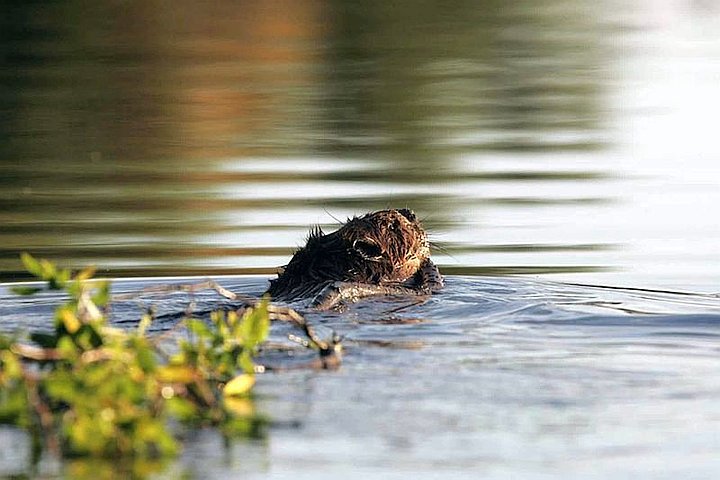
A beaver can swim submerged for perhaps 800 metres (a half-mile) or more. Most air-breathing creatures would be adversely affected by lack of oxygen to the brain. The beaver has special equipment to compensate for this need. Large lungs and liver allow for the storage of more air and oxygenated blood. In addition, a beaver’s heart beats more slowly when it dives, in order to conserve oxygen, and the blood is restricted to the animal’s extremities while the vital supply to the brain remains normal.
 |
 |
Engineering skills
Beavers construct dams that may be hundreds of metres long. Construction of the dam is done by cutting down trees and shrubs, dragging each piece to the dam-site, and laying them in the water parallel to the stream (end facing up-stream). Almost everything the beavers can find goes into the dam—live wood, dead wood, mud, grass and rocks. When the beaver’s pond floods, mounting pressure on the dam can cause it to break. To prevent this, if there is time, the beaver engineers a spillway to relieve pressure, then fixes it after the water subsides.
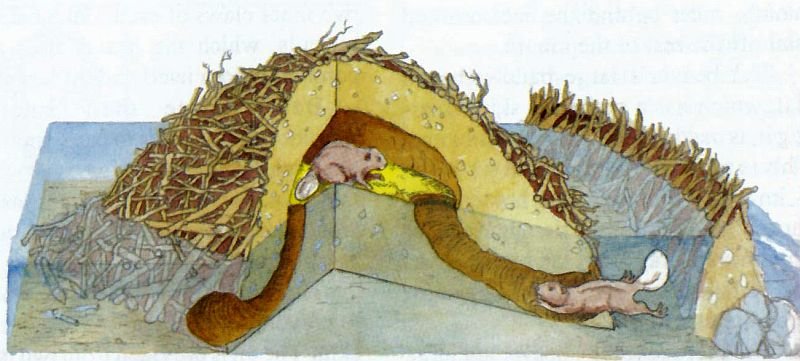
Beaver lodges are also the work of a master builder. They are built with sticks, and sealed from the cold with mud. The centre of the roof is not sealed, which allows some ventilation. Access is only from underwater, with more than one entry in case of the need to escape. The beavers can gain direct underwater access to the cache of sticks they have stored under the water when ice covers the pond in winter and this is their only available food.
Truly the beaver is yet another example of the wonderful provision and wise planning of a caring Creator God. Such variety of essential equipment could not have evolved over time by chance and selection. All of the beaver’s equipment must be present and fully functional in the animal from the beginning for it to survive its semiaquatic life-style.
 |
 |


Readers’ comments
Comments are automatically closed 14 days after publication.