
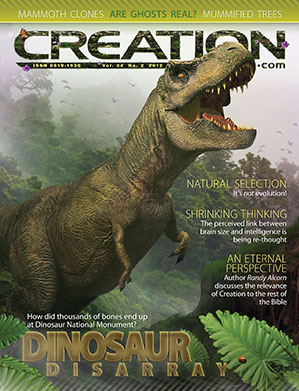
Challenging dogmas
Correcting wrong ideas
Editorial
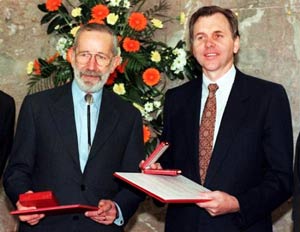
Thirty years ago, two Australian physicians, Robin Warren and Barry Marshall, discovered that stress and diet do not cause peptic ulcers, as doctors believed. Instead, a previously unknown bacterium (Helicobacter pylori) is the culprit. Other doctors dismissed their findings and even rejected a paper about their work. It was impossible, they thought, for bacteria to live inside the human stomach.
However, Warren and Marshall persisted with more research and publishing. Marshall even infected himself with the bacteria and treated himself with antibiotics. As they gathered more evidence, attitudes gradually changed.
In 2005, Warren and Marshall were awarded the Nobel Prize for medicine. The committee praised them for their tenacity and willingness to challenge prevailing dogmas.
Before this discovery, doctors treated persistent ulcers with major surgery, knowing the patient was unlikely to be cured but would continue to be disabled. Now, just one course of antibiotics will usually cure an ulcer.
False beliefs can have serious consequences. They also close people’s minds to truth. Wrong beliefs about stomach ulcers had serious consequences for people’s health. But wrong beliefs about our origin, about where we came from and why we are here, are even more serious.

Many today dismiss God as Creator, not because they have examined the evidence but because of conditioning. They accept ideas about science and the Bible because of the culture. As with peptic ulcers, good research and information are needed to correct these wrong ideas. This is what Creation magazine provides.
Design in living things, even the humble mudskipper living in tropical mangrove swamps (pp. 48–50), is evidence that God created. Yet, we need to have some of the amazing design features pointed out before we realise how truly remarkable these animals are.
Scientists and engineers purposefully study God’s designs, like the mantis shrimp eye (p. 56), because they can copy them to solve technological challenges. This creature’s amazing eye construction has shown engineers how to develop DVD players able to process more information than the current conventional models.
But creation is not just about design—it’s about history. Many imagine the Bible’s 6,000-year history is unbelievable. But they have not considered evidence that challenges belief in millions of years, such as fresh-looking wood and leaves mummified in the Canadian Arctic (p. 19).
The key to understanding history is the global Flood, which formed the landscapes and buried billions of dead things all over the earth. One spectacular evidence is the fossil graveyard on display at Dinosaur National Monument, Utah, USA (pp. 28–31).
Evidence—that is what challenges dogmas and changes wrong ideas. And evidence is what we present in Creation magazine. We hope you enjoy this issue and share some of the exciting evidence with your friends and loved ones.


Readers’ comments
Comments are automatically closed 14 days after publication.