
Charles Lyell’s hidden agenda—to free science “from Moses”
19 August 2009

19th century geologist and lawyer Charles Lyell (1797–1875) is renowned for popularizing the idea that the world’s geology reflected an old age of the earth (i.e. much older than the Bible’s 6,000-year timeframe of history), thus paving the way and providing some traction for Charles Darwin’s evolutionary ideas.
But was Charles Lyell truly viewing the rocks from a scientifically objective perspective?
In his private correspondence, Lyell admitted to the strongly anti-biblical (“anti-Mosaical”) nature of his ideas. In 1829, just a few months prior to the publication of the first volume of his Principles of Geology, Lyell wrote, in a letter to fellow old-earth geologist Roderick Murchison:
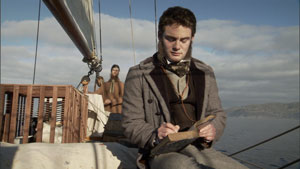
I trust I shall make my sketch of the progress of geology popular. Old [Rev. John] Fleming is frightened and thinks the age will not stand my anti-Mosaical conclusions and at least that the subject will for a time become unpopular and awkward for the clergy, but I am not afraid. I shall out with the whole but in as conciliatory a manner as possible.1
Edward Bailey’s biography of Charles Lyell writes that at that time, “A few days in Paris allowed Lyell to enjoy a lecture by Prévost ‘on diluvium and caves, a good logical refutation of the diluvian humbug’.”2
By the following year, we see that Charles Lyell has a clear agenda, i.e. to “free the science from Moses”.3 That is what Lyell wrote on 14th June 1830 in a letter to George Poulett Scrope:
I am sure you may get into Q.R. [Quarterly Review] what will free the science from Moses, for if treated seriously, the [church] party are quite prepared for it. A bishop, Buckland ascertained (we suppose [Bishop] Sumner), gave Ure a dressing in the British Critic and Theological Review. They see at last the mischief and scandal brought on them by Mosaic systems … . Probably there was a beginning—it is a metaphysical question, worthy of a theologian—probably there will be an end. Species, as you say, have begun and ended—but the analogy is faint and distant. Perhaps it is an analogy, but all I say is, there are, as Hutton said, ‘no signs of a beginning, no prospect of an end’ … . All I ask is, that at any given period of the past, don’t stop inquiry when puzzled by refuge to a ‘beginning,’ which is all one with ‘another state of nature,’ as it appears to me. But there is no harm in your attacking me, provided you point out that it is the proof I deny, not the probability of a beginning … . I was afraid to point the moral, as much as you can do in the Q.R. about Moses. Perhaps I should have been tenderer about the Koran. Don’t meddle much with that, if at all.
If we don’t irritate, which I fear that we may (though mere history), we shall carry all with us. If you don’t triumph over them, but compliment the liberality and candour of the present age, the bishops and enlightened saints will join us in despising both the ancient and modern physico-theologians. It is just the time to strike, so rejoice that, sinner as you are, the Q.R. is open to you.
P.S. … I conceived the idea five or six years ago [1824–25], that if ever the Mosaic geology could be set down without giving offence, it would be in an historical sketch, and you must abstract mine, in order to have as little to say as possible yourself. Let them feel it, and point the moral.”4
Lyell, the lawyer par excellence, was involved, not in scientific investigation but political game playing to ensure his uniformitarian ideas would be accepted by the church, even though he knew they clearly contradicted the plain teaching of Scripture.5 Lyell’s secretive scheming not only deceived the church to accept his false ideas that undermined the Gospel, but he set geology on a wrong path for over a century, as geologists now recognize:
“Lyell also sold geology some snake oil. He convinced geologists that … all past processes acted at essentially their current rates (that is, those observed in historical time). This extreme gradualism has led to numerous unfortunate consequences, including the rejection of sudden or catastrophic events in the face of positive evidence for them, for no reason other than that they were not gradual.” 6
References
- From Mortenson, T., The Great Turning Point: The Church’s Catastrophic Mistake on Geology—Before Darwin, Master Books, Inc., P.O. Box 726, Green Forest, AR 72638, USA, 2004, pp. 225–226, citing Brooke, J., “The Natural Theology of the Geologists: Some Theological Strata”, in Jordanova, L. and Porter, R., Images of the Earth (British Society for the History of Science, Monograph 1, 1979), p. 45. Return to text.
- Bailey, E., British men of science: Charles Lyell, Thomas Nelson and Sons Ltd, London, Great Britain, 1962 p. 75. Return to text.
- Ref. 2, pp. 77–78. Bailey adds re Lyell: “In this matter, he thinks, ‘Prévost has done a little but is a diluvialist, a rare thing in France’.” Diluvium was the term used for the surface sediments attributed at the time to Noah’s Flood but later recognized as being formed by glaciers during the Ice Age. Return to text.
- From Mortenson, T., The Great Turning Point: The Church’s Catastrophic Mistake on Geology—Before Darwin, Master Books, Inc., P.O. Box 726, Green Forest, AR 72638, USA, 2004, pp. 226–227, citing Lyell, Katherine (Lyell’s sister-in-law), Life, Letters and Journals of Sir Charles Lyell, Bart. (London: Murray, 1881), I:p. 268–271. Return to text.
- Lyell further promulgated his uniformitarian views in a lecture at King’s College, London, on 4 May 1832, when he said “the physical part of Geological inquiry ought to be conducted as if the Scriptures were not in existence”. Lecture II at King’s College London on 4 May 1832—quoted in Rudwick, Martin J.S., Charles Lyell Speaks in the Lecture Theatre, The British Journal for the History of Science 9(2):147–155, 1976, DOI:10.1017/S0007087400014734. Such a view might be reasonable if the Bible did not describe any events relating to the formation of rocks on earth. But the Bible does speak of such events, i.e. Creation Week and the Flood. Thus Lyell’s approach is like trying to write a history of British settlement in Australia in the 1700s by merely studying surviving buildings and other remnant artifacts around Sydney but intentionally ignoring written eyewitness testimony from that time. Or like writing about the life of Jesus on earth without reference to the Gospels of Matthew, Mark, Luke and John. Return to text.
- Allmon, W.D. Post Gradualism, Science 262:122–123, October 1, 1993. Warren Allmon, Director of the Paleontological Research Institution in Ithaca, NY, and Adjunct Associate Professor of Earth and Atmospheric Sciences at Cornell University, was reviewing Ager, D., The New Catastrophism: The Importance of the Rare Event in Geological History, Cambridge University Press, New York, 1993. Return to text.


Readers’ comments
Comments are automatically closed 14 days after publication.