

Cosmic catastrophes

Planets crashing together … moons being ripped apart … heavenly bodies forming, shattering, and re-forming again.
According to evolutionists, such catastrophes played a large role in the development of our solar system.
It all sounds very dramatic. But is this true history? Or is it just a fanciful story?
The Bible versus ‘evolutionary’ astronomy
The Bible tells us that after creating the earth, God created the rest of the heavens during Day 4 of Creation Week. This would include all the beautiful things we see in our solar system: the sun, planets, moons, asteroids, comets, and other objects.
Conversely, the standard evolutionary model says our solar system formed from a cloud of gas and dust: a nebula. The gas and dust condensed into rocks, then the rocks stuck together to become planets. This idea is called the ‘nebular hypothesis’.1
(Note that secular astronomers often apply the word ‘evolution’ to their long-ages, non-creationary model. For convenience, we’ll do the same in this article.)
The evolutionary model is promoted endlessly in textbooks, science magazines, television programs, and so on. But despite the beautiful artwork and computer animations that show how it all happened, there’s a glaring problem with it.
It can’t produce the solar system we see today.
The failure of the nebular hypothesis
Our solar system contradicts the nebular hypothesis in many ways. Here are a few of them, along with the typical solutions proposed by evolutionists. (See if you can spot any recurring themes.)
Mercury is too dense. According to evolutionary theory, it must have formed at a much lower density.2 Therefore, reasons the evolutionist, it did form at a much lower density. Later, a massive asteroid smashed into it, and all the lighter material was blasted away. The material left behind is what we see today.
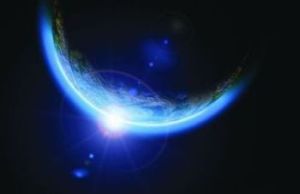
Earth has a moon, but the nebular theory can’t explain where it came from. Therefore, reasons the evolutionist, it didn’t exist at first. Later, a massive asteroid crashed into the earth at just the right angle and speed. The debris sprayed into space, and some of it turned into our moon. (This hypothetical asteroid, which of course doesn’t exist today, has even been named—Theia.)
Venus doesn’t have any moons. However, if the earth got its moon in an asteroid collision, then Venus should have one too. (Venus and Earth are neighbors in space, so the nebular hypothesis says they should have similar histories.) Therefore, some evolutionists propose3 that Venus did get a moon from such a collision. Why don’t we see this moon today? Because a second asteroid collision destroyed it.
Some evolutionists propose a catastrophe to solve yet another problem. Venus rotates retrograde, or backwards when compared to the other planets. Since this contradicts the nebular hypothesis, some evolutionists have proposed that Venus initially rotated in the ‘correct’ direction. Then a massive asteroid collision spun it around the other way.
Mars has a very thin atmosphere today. However, for various reasons, evolutionists want Mars to have had a thick atmosphere in the past. The answer, as you might have guessed by now, is that a massive asteroid collision disrupted the planet. As a result, it lost4 its atmosphere.
Jupiter has many ‘irregular’ moons. Most are retrograde, orbiting in the opposite direction of the planet’s rotation. None of them could have formed in their current orbits, according to the nebular hypothesis.
Most evolutionists believe these objects formed elsewhere. Later, they were captured by gravity into their current orbits. However, such captures are extremely unlikely,5 and over 90 irregular moons are currently known. A favored solution is to appeal to collisions with other objects.6
Saturn also has many irregular moons. These are also explained as the result of captures and collisions.
Uranus rotates on its side. Unlike the other planets, which spin like tops as they move through space, Uranus rolls along like a ball. According to the nebular hypothesis, it can’t have formed this way. Therefore, reasons the evolutionist, it formed the ‘correct’ way. Later, a massive collision knocked it over on its side. Then it supposedly captured its moons, because their orbits are likewise sideways.
Uranus also has an unusual-looking moon named Miranda. To explain its features, some evolutionists invoke not one, not two, but five collisions.7
Neptune has a large retrograde moon named Triton. Again, this is contrary to the nebular theory. Again, a collision is invoked to explain away the problem.
According to one version of the story,8 Triton used to be a moon of a planet named Amphitrite, until Neptune stole it from the smaller planet. Of course, there is no planet named Amphitrite today. There’s not even a trace of it. Why? Because it allegedly collided with either Neptune or Uranus and was destroyed.
Science or story telling?
As you can see, collisions are invoked to explain away a long list of problems for the nebular hypothesis.
Creationists are frequently charged with believing in a model that is ‘unscientific’. This charge is false, of course. The Bible is consistent with the physical world we live in.
On the other hand, how scientific is the evolutionary model? Science is supposed to be based on evidence. But the only ‘evidence’ for most of these collisions is that if they hadn’t occurred, the nebular hypothesis would be disproved!
Notice also that evolutionists go so far as inventing (and even naming) planets which don’t exist, and for which there is no evidence whatsoever. At the same time, they must explain why certain planets (Jupiter, Saturn, Uranus, and Neptune) do exist, when the evolutionary model says they cannot.9,10,11,12
What can we learn from all this? Although evolutionists claim to base their model on science, the reality is quite different. The solar system as we see it today—in other words, the actual scientific evidence—contradicts the nebular hypothesis. To rescue their model from the facts, secular astronomers are forced to invent a long series of ‘just so’ stories.
There’s also more than a hint of hypocrisy here. Creationists are often criticized for believing in Noah’s Flood. Since the Flood was a one-time catastrophe, it is non-repeatable. Therefore, say many evolutionists, it is outside of science. But where is the outrage for the endless series of non-repeatable catastrophes in the nebular hypothesis?
Denying true history
When you deny the truth, you must believe a falsehood.
Because secular astronomers deny the Bible, they cannot base their model on the solar system’s true history. Thus, their model cannot be correct. They’re left with a series of just-so stories and self-contradictory assertions.
It’s far better to acknowledge our Creator as we observe the beautiful solar system He has made. The heavens truly declare the glory of God (Psalm 19:1).
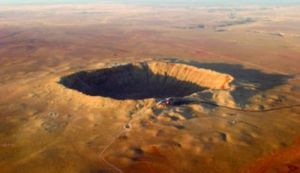
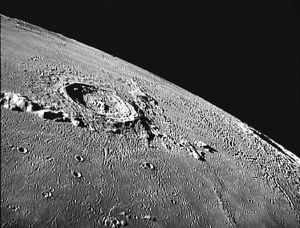
Do creationists deny that minor collisions have occurred in our solar system? Of course not.13 We see evidence for them in many places. Many heavenly bodies, including the earth itself, have features such as craters and impact basins.
Nevertheless, we know that these collisions occurred because they left evidence. Conversely, there is no evidence for most of the collisions that are necessary to rescue the nebular hypothesis from the facts.
Indeed, the opposite is often true. The evidence suggests that many of the alleged collisions could never have happened. As one example, a recent analysis of lunar soils revealed that the Moon cannot have come from an earth-shattering collision.14 As another example, the moons of Uranus cause great difficulties for believing in a collision that tilted the planet.
References
- See also Sarfati, J., Solar system origin: Nebular hypothesis, Creation 32(3):34–35, 2010. Return to text.
- For more on Mercury, see Mercury—the tiny planet that causes big problems for evolution, Creation 26(4):36–39, 2004. Return to text.
- Alemi, A. and Stevenson, D., Why Venus has no moon, Bulletin of the American Astronomical Society 38:491, 2006. Abstract available at adsabs.harvard.edu. Return to text.
- More precisely, it allegedly lost its magnetic field. Then the Martian atmosphere was dissipated by the solar wind. Return to text.
- “None of the suggested mechanisms, including gas-drag, pull-down, and three-body capture, convincingly fit the group characteristics of the irregular satellites. The sources of the satellites also remain unidentified.” Jewitt, D., and Haghighipour, N., Irregular satellites of the planets: products of capture in the early solar system, Annual Review of Astronomy and Astrophysics 45:261–295, 2007. Abstract available at arjournals.annualreviews.org/loi/astro. Return to text.
- “[T]he original size-frequency distribution of the irregular moons must have significantly evolved by collisions to produce their present populations.” Nesvorný and two others, Capture of planetary satellites during planetary encounters, The Astronomical Journal 133(5):1962–1976, 2007; iopscience.iop.org/1538-3881/133/5/1962. Return to text.
- verity01.jpl.nasa.gov/sse/planets/profile.cfm?Object=Ura_Miranda, 24 May 2010. Return to text.
- Desch, S., and Porter, S., Amphitrite: A twist on Triton’s capture, LPI Contribution No. 1533, 41st Lunar and Planetary Science Conference, held March 1–5, 2010 in The Woodlands, Texas, p. 2625. Available at www.lpi.usra.edu/meetings/lpsc2010/pdf/2625.pdf, 24 May 2010. Return to text.
- For more on Jupiter, see Jupiter—King of the planets and testament to our Creator, Creation 30(3):38–40, 2008. Return to text.
- For more on Saturn, see Saturn—the ringed planet, Creation 30(4):18–20, 2008. Return to text.
- For more on Uranus, see Uranus—the strange planet, Creation 24(3):38–40, 2002. Return to text.
- For more on Neptune, see Neptune—monument to creation, Creation 25(1):22–24, 2002. Return to text.
- Faulkner, D., A biblically-based cratering theory, Journal of Creation 13(1):100–104, 1999; Spencer, W.R., Response to Faulkner’s ‘biblically-based cratering theory’, Journal of Creation 14(1):46–49, 2000. Return to text.
- Water has been confirmed to exist in lunar soils. However, it would not be there if the moon had been formed in a giant collision. One of the scientists who discovered it said, “It’s hard to imagine a scenario in which a giant impact melts, completely, the moon, and at the same time allows it to hold onto its water … That’s a really, really difficult knot to untie.” npr.org/templates/story/story.php?storyId=92383117&ft=1&f=1001, 24 May 2010. Return to text.

Readers’ comments
Comments are automatically closed 14 days after publication.