
Dawkins’ Ironic Hypocrisy
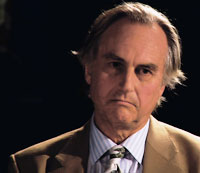
Creationists are certainly accustomed to being dismissed as a crackpot fringe that holds a minority position—especially in the community of science, where indeed the vast majority of scientists argue for some form of evolution. We are also accustomed to being ridiculed by popularist demagogues like Richard Dawkins. Dawkins professes to find himself highly disturbed that anyone at all accepts young earth or creationist views, and is even more despairing that despite years of evolutionary indoctrination in our schools, creationism just doesn’t seem to be going away. Recently, at the Edinburgh International Science Festival, Dawkins was quoted as saying:
‘I have spoken to a lot of science teachers in schools here in Britain who are finding an increasing number of students coming to them and saying they are Young Earth creationists. Now this is a belief that the Earth is only 6000 years old, and it is such a staggering mistake that it is very concerning to hear this. It is no small error–it is equivalent to someone believing, despite the evidence, that the width of North America from one coast to the other is only 7.8 yards.’1
One could compile a lengthy list of the insulting rhetoric Dawkins has heaped upon creationists,2 but it is not my purpose to address that here. Rather, I’d like to comment on what has become a rather stunning irony and hypocrisy that has emerged from the rhetoric of Dawkins (as well as a handful of other critics of creationism). Dawkins and many others are quite frank in dismissing special creation as a minority, crackpot view. And yet it seems that when it comes to certain ideas that they find beneficial to their agenda, it doesn’t matter at all whether those ideas are considered a minority, crackpot view by experts in other fields!
The most stunning example of this, from Dawkins, is his tacit endorsement of what is popularly known as the ‘Christ myth’–the conception that Jesus did not even exist at all, not even as a person walking the earth (much less as the incarnate Son of God). In The God Delusion, for example, Dawkins says that it is ‘possible to mount a serious, though not widely supported, historical case that Jesus never lived at all’ and appeals to the work of G. A. Wells.3 Dawkins also made an appearance in a 2006 film titled The God Who Wasn’t There, created by apostate Brian Flemming. The God Who Wasn’t There argued vociferously for the ‘Christ myth,’ including the even more absurd proposition that Jesus’ life story was derived from accounts of pagan deities.4 While Dawkins did not address the existence of Jesus in the film, that he even appeared in it amounts to him giving the film and its main ideas credibility. And he praised it warmly in The God Delusion, despite its crass errors.

Dawkins himself apparently has not accepted the Christ myth as actually true. In The God Delusion, he says that Jesus ‘probably existed’ and leaves it at that. Nevertheless, that he even grants the Christ myth a semblance of credibility reveals a certain ironic hypocrisy in his criticism of creationists, and that of others who dismiss creationism as a minority or crackpot view: From the perspective of serious historians, the Christ myth is precisely that. It is a ‘staggering mistake’ and ‘no small error’–equivalent to someone believing, despite the evidence, that the width of North America from one coast to the other is only three centimeters, and that the continent itself is made of burnt toffee. Yet Dawkins willingly gives this fringe view a hearing and directs his readers to sources that advocate it.
The Christ myth is not endorsed by a single reputable historian. The leading proponent of the Christ myth over the past century—G. A. Wells, whom Dawkins mentions—is not a historian, but a professor of German. (He has also recently recanted his position on the Christ myth.5) The current leading proponent of the thesis, Earl Doherty, possesses a mere Bachelor’s degree in history. Among persons who do possess an advanced degree, Robert Price, a biblical scholar, advances other fringe notions such as that sayings of Jesus may be more accurately preserved in Muslim Sufi tradition than in the Gospels. Note that these represent the Christ-myth’s most credible representatives.6
Dawkins of course is far from the only advocate of evolution to be a victim of this ironic hypocrisy, and he may not even be the most prominent. The recently released American film Religulous,7 hosted by comedian Bill Maher, features an ‘ambush’ interview of Senator Mark Pryor of Arkansas, in which Pryor states that the scientific community is divided over whether evolution is true. Maher solemnly corrects Pryor by affirming that evolution is the majority view of scientists; yet elsewhere in the film, Maher advocates the Christ myth plus other wacky ideas.8 Many of Dawkins’ own fans, likewise, can be discovered to endorse the Christ myth.9
Dawkins’ hypocrisy in this matter raises a number of interesting questions aside from the blatant hypocrisies involved. How far do Dawkins and his ideological cohorts actually investigate matters in their own field, if they so readily and willingly accept as credible a fringe thesis like the Christ myth? How much does this indicate Dawkins and others to be less objective scientists and thinkers, versus their being demagogues who have already decided what is true and will welcome any idea that they find amenable to their misotheism, no matter how absurd?
Of course, these questions do not act as substitutes for directly addressing arguments presented by Dawkins and other evolutionists. They do, however, make it clear that they are in no sense deserving of any benefit of the doubt. They would be well advised to remove the log cabin from their own eyes prior to giving creationists advice on extracting the mote they think they see in their eyes.
References
- ‘Richard Dawkins: ‘Growth in creationist beliefs a problem for schools, The Scotsman, 2 April 2008. Return to text.
- For example, in a 16 September 2008 letter to New Scientist, Dawkins offered the following barbs: Creationism is ‘obviously silly’, and it is the result of ‘ignorance or stupidity’. Return to text.
- Richard Dawkins, The God Delusion, p. 122, Mariner Books, 2008. See review by Philip Bell, Atheist with a Mission, J. Creation 21(2):28–34, 2007; and this follow-up response to critics. Return to text.
- For an analysis of Flemming’s film, see my article, ‘Great Expectorations: Or, The Apostate Who Wasn’t All There’. Return to text.
- See James Hannam, ‘An Evening With G. A. Wells’. Dr Hannam recently completed his Ph.D. on the History of Science at the University of Cambridge, and is the author of God’s Philosophers: How the Medieval World Laid the Foundations of Modern Science (2007). Return to text.
- For replies to Doherty, see Fairy Castles Built on Sand: Or, A Most Complex Case of Christ-Myth. For replies to Price, see these articles as well as my book Shattering the Christ Myth (Xulon Press, 2008). One other name that may be mentioned in passing is that of Richard Carrier, a premier member of the Internet Infidels website, who has just recently (2008) obtained his doctorate in history. Carrier has expressed sympathy for the Christ myth thesis, but claims to be in the process of investigating it. In the main he was persuaded of its plausibility by the works of Doherty. Return to text.
- See my critique, Religupigulous:Bill Maher’s Arrow Through the Head, 4 October 2008. Return to text.
- There is added irony with Maher, inasmuch as he advocates a variety of crackpot scientific theories that creationist and evolutionist scientists alike would disdain. As the Wall Street Journal reports: ‘But it turns out that [Maher] is no icon of rationality himself. In fact, he is a fervent advocate of pseudoscience. The night before his performance on Conan O’Brien, Mr. Maher told David Letterman—a quintuple bypass survivor—to stop taking the pills that his doctor had prescribed for him. He proudly stated that he didn’t accept Western medicine. On his HBO show in 2005, Mr Maher said: “I don’t believe in vaccination. … Another theory that I think is flawed, that we go by the Louis Pasteur [germ] theory.” He has told CNN’s Larry King that he won’t take aspirin because he believes it is lethal and that he doesn’t even believe the Salk vaccine eradicated polio.’ Mollie Ziegler Hemingway, ‘Look Who’s Irrational Now’, 19 September 2008, which also documents the strong correlation between rejection of superstitions, cults, and paranormal claims like ghosts and clairvoyance, with attendance at a theologically conservative church. Return to text.
- Examples of this can be found in comments to Dawkins’ article Atheists for Jesus, 11 April 2006 (accessed 5 November 2008). As one admirer of Dawkins puts it: ‘Jesus not only didn’t exist, but he is certainly not a good modern (key word-modern) ethical role model, as others here have pointed out.’ Return to text.
Readers’ comments
Comments are automatically closed 14 days after publication.