
Did Jesus walk on ice?
Even many non-Christians have heard of the miracle of Jesus walking on water, an event recorded in detail in the Bible (John 6:16–21; Matthew 14:22–33; Mark 6:45–51). So famous is this miracle that the term ‘walking on water’ has become a common idiom in the English language.
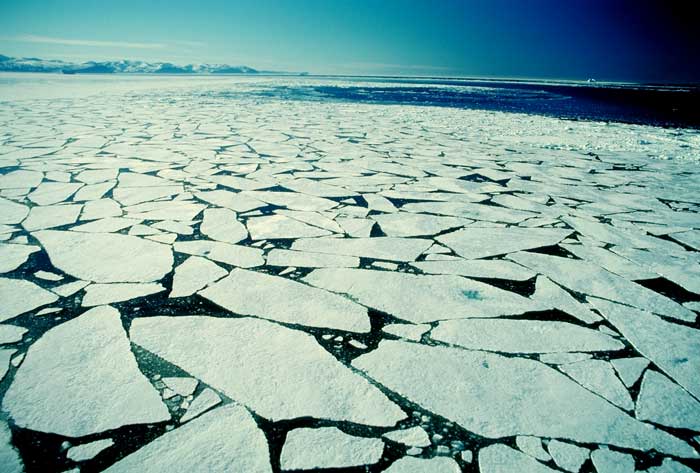
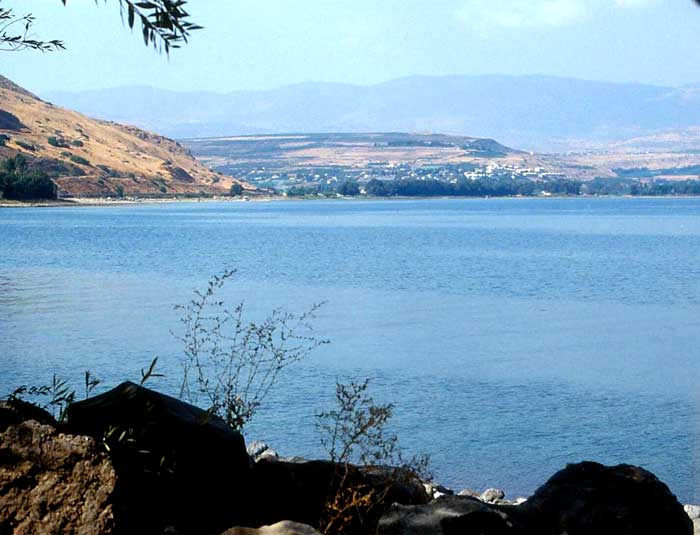
But some academics claim that Jesus walked not on water, but on ice! These academics say that in Jesus’ time the climate was cooler, and that ice floes occasionally formed on the Sea of Galilee, and that this was how Jesus walked on water.
But the Sea of Galilee does not have ice floes, and the idea that it has had them in the past is outrageous speculation. This idea is not based on historical records or scientific observation. There are no records at all, ancient or modern, of ice floes ever having occurred on the Sea of Galilee (as these academics admit in their paper). Their claim involves the most tenuous and esoteric of reasoning.
There are many aspects of the biblical account that are irreconcilable with the ice floe idea. For example Peter, as he walked on the water towards Jesus, slowly sank. This is hard to reconcile with walking on an ice floe. And the sea was windy and rough, with waves tossing the ship around (Matthew 14:24), whereas the ice floe theory invokes a placid sea.
Like many others, the academics making the ice floe claim apparently do not wish to acknowledge the reality of Jesus’ deity. Generally this is what motivates people to try to produce naturalistic explanations for biblical miracles such as this ice floe idea for the walking on water miracle. Their bias and worldview drives them to invent speculative and highly credulous conjectures to try to explain away well-attested historical events that they find unpalatable and threatening.
Every year, and especially around Easter, the secular media promotes new anti-biblical theories about Jesus (e.g. that He was homosexual/drug-addicted/married) and about biblical miracles. Naturalistic theories endeavoring to explain away the biblical miracles are churned out ad nauseam by secular academia. For a rebuttal of these sorts of naturalistic theories in general, see Materialist ‘defence’ of Bible fails.
Jesus’ disciples were not stupid, and as fishermen (Matthew 4:18–22) some of them were intimately familiar with the Sea of Galilee. If Jesus had been walking on ice (or sandbanks, etc. as others have claimed) they would have known. Neither were the disciples gullible, but just as naturally sceptical of miracles as anyone else. For example when Mary Magdalene and other women first reported that Jesus had risen from the dead (Mark 16:10; Luke 24:11), the disciples initially dismissed what they said as ‘idle tales’. It is well worth contemplating what occurred to overcome their healthy scepticism. Neither were they hoaxers (2 Peter 1:16). Most of the apostles were eventually executed because they insisted that Jesus was the resurrected Son of God, and refused to deny Him. But if they knew that Jesus’ miracles were just tricks, such as walking on ice, why were they willing to be martyred?
When confronted with Jesus’ miracles one is faced with a choice—To willfully deny the powerful eye-witness evidence, and instead use fallen human imagination to concoct vain and fanciful fairytales like the Galilean ice-floe idea. Or, to humbly face up to the fact that these miracles are authentic, and that Jesus truly is the living Son of God, as the empty tomb and the willing martyrdom of His disciples testifies.
References
- Nof, D., McKeague, I., and Paldor, N., Is there a paleolimnological explanation for ‘walking on water’ in the Sea of Galilee? Journal of Paleolimnology 35(3):417–439, April 2006.
- Jesus walked on ice, says study led by FSU scientist, FSU News, April 2006, fsu.edu/news/2006/04/04/ice.walk.
Re-featured on homepage: 22 September 2022
Readers’ comments
Comments are automatically closed 14 days after publication.