
Does creation really matter?
Restoring Confidence in the Bible and its Author1
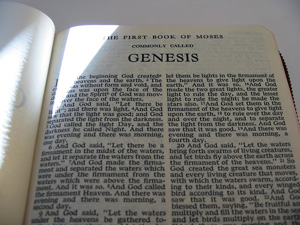
The idea that the Bible is a revelation from the One Creator of all things is increasingly seen as irrelevant in our ‘enlightened’ twenty-first century. So, how may Christian people restore confidence in the Scriptures and in God Himself, not merely in society as a whole but particularly among the men, women and children who attend a local church?
First, let us consider why this confidence has been eroded:
- We have become a feelings-led culture—this has extended to very many in our churches too.
- Related to this is the growing number of people (especially the young) who no longer believe in absolutes.
- Undoubtedly a major reason for the above is that the teachings of the Christian faith have been largely disconnected from their historical basis, especially the early chapters of Genesis.
- If the foundations of Christianity are ignored (deemed myth), undermined (by compromise) or destroyed (by all-out attacks by anti-Christians) how can the Christian hope to defend his/her faith in a world that is hostile to the message?
Morality is relative?
It is entirely logical, for anyone who fits the above description (Christians included), to think about morality in relative terms—“I don’t see how my actions are really hurting anybody”; “Well most reasonable people seem to think this behaviour is ok”; “But surely, in this day and age to insist on that is old-fashioned”; “That teaching belongs to another time—in this enlightened age, we now know things that our forebears didn’t”. We are all too familiar with these attitudes. In other words, people think that it’s quite reasonable to do what is right in their own eyes—including many religious people, regular church-attendees.
Of course, such errant, modernist thinking is nothing new. Moses told the Israelites: “You shall not at all do as we are doing here today—every man doing whatever is right in his own eyes” (Deuteronomy 12:8). We are familiar, too, with the explanation of the wanton behaviour of the days of the Judges, that “In those days there was no king in Israel; everyone did what was right in his own eyes” (Judges 17:6 & 21:25). Solomon warns that such an attitude is “the way of a fool” (Proverbs 12:15) because it is the Lord God who “weighs the hearts” (21:2). Moreover, says Isaiah, “Woe to those [who are] prudent in their own sight” (Isaiah 5:21). Solomon’s proverbial challenge has a very contemporary ring about it: “Do not be wise in your own eyes; Fear the LORD and depart from evil” (Proverbs 3:7). In my preaching, I often highlight the sadly apt words of Agur (in Proverbs 30:12) to our culture today: ‘There is a generation that is pure in its own eyes, yet is not washed from its filthiness.’
Why the increasing apathy towards the Christian message? Why this post-modern approach to right and wrong? Surely, a major factor is that people no longer respect the absolutes on which societies like ours were once established. And, surely, this has a great deal to do with the way in which the foundational teaching for the Christian Gospel and Christian morality have been systematically attacked in the generations since Darwin’s dangerous idea took root in the nineteenth century. “If the foundations are destroyed, what can the righteous do?” (Psalm 11:3).
Shoring up the Foundations
Making the diagnosis is the easy part, but let us consider what positive steps we might take to reverse this trend. We need to re-establish the fundamentals of Christian faith from the foundational level upwards. Here is a biblical imperative: “Those from among you shall build the old waste places; you shall raise up the foundations of many generations; and you shall be called the Repairer of the Breach, the Restorer of Streets to dwell in” (Isaiah 58:12; emphasis added). The present-day situation in the UK, the country in which I live, has a clear parallel with the days of the young Samuel as he ministered in the temple with the priest Eli. We read these fascinating words: ‘And the word of the LORD was rare in those days; there was no widespread revelation’ (1 Samuel 3:1). The tragedy is that the Church does have God’s supreme revelation but many of her leaders have blocked its true brilliance from the view of the people of our nation. How so? Doubtless, many answers might be proffered, but one reason is surely the endemic tolerance of compromise of the timeless truths of Genesis, the book of beginnings. There really is a crying need for Christians to get back to the authority of the Word of God.
It all goes back to Genesis
The conviction of those involved in what might broadly be termed “creation ministry” is that nothing less than a return to Biblical Authority will “stop the rot”. The stark truth is that human beings stand condemned before the burning righteousness of a Holy God (John 3:18)—sin’s penalty is death. That the majority think their lives are alright in their own eyes does not alter their predicament from God’s perspective one iota. The very self-righteousness of many unbelievers—e.g. “I’m not so bad; I’ve never murdered anyone, I pay my taxes”, etc.—is an offence to the God who has provided the sacrifice of His own precious Son as the only way by which a person can be cleansed from sin and made acceptable in His sight. Everybody has broken God’s law and the very purpose of the law is to act as a mirror (Romans 6:7–13)—a mirror to sinful people which the Holy Spirit uses to convict them “of sin, and of righteousness, and of judgment” (John 16:8). In these postmodern days, it is increasingly necessary to hold this mirror up to people so that they recognise their true condition and status before their Judge and Lawgiver (Isaiah 33:22)—after all, to know Him as their King and their Saviour is conditional upon their repentance. But, how will they necessarily accept those laws if they have no confidence in the Bible or the God of the Bible? The logical basis of all those laws and standards is found in Genesis and nowhere else. And this is precisely why Christian believers must seek to destroy all proud obstacles and arguments to the knowledge of God in our culture. We all have a part to play in shoring up those foundations of faith in Genesis. And since the doctrine of evolution has, for a century and a half, been one of the devil’s main tactical weapons against Christ’s Church (undermining the very foundation of Christian morality and the Gospel), evangelical Christians should not be counted among those who are squeamish about taking a stand against it!
Seeking foot soldiers—what about you?
Recognising where the battle is at, how can you and I play our part effectively? Even beyond 2009’s ‘Year of Darwin’ celebrations, there continue to be opportunities aplenty as scientists and the media continue with their adulation and promotion of this godless belief system. Prayer is paramount of course but let our prayers have legs! We must ensure that we and our children are truly familiar with the actual words of Genesis 1-11, those much-disputed early chapters of God’s Word. Far too many believers have only scanty knowledge of the accounts of Creation, the Fall, the Flood and Babel. In addition, it is wise to invest in some resources that will equip you and your family to understand how the true history of the world (Genesis) connects with the real world of the twenty-first century. Take advantage of some of the wealth of resources that God has provided through creationist organisations like CMI. Consider a gift subscription to someone who does not yet receive Creation magazine and take advantage of the many topical articles on our website by reputable creationists2—in this way, you will be better equipped to share and defend your faith in a relevant and effective manner. Find out what is being taught in your local school and, where appropriate, provide young people and teachers with materials that correct some of the errors being propagated in the classroom. Raise awareness of these vitally important foundational issues by organising a meeting in your area—perhaps show a thought-provoking DVD or arrange for a CMI speaker to come. Encourage Christian bookshops and libraries (including school libraries) to stock good books and DVDs on the topic. By these, and other, means, we can all play our part in helping to influence churches and the culture at large. As many Christians can readily testify, a little time spent in any of these directions has the potential to bear wonderful fruit for the Kingdom of God. The words of this lady, who e-mailed our UK office in May, bear striking testimony to this fact: “I … would again love to tell you just how useful all the wonderful articles and especially many of the dvds have been that I bought from CMI…..it has made such a huge and noticeable difference to the confidence of our sons. My friend’s son especially; he has, since I have been using the material from CMI, become a Christian … ”
Creation matters to the gospel
We may lament the existing rejection of the fundamentals of the Christian faith in the Church but that should propel us into action. We should appeal to people to return to a faithful stand on Genesis—perhaps copy this article and give it to a select few and pray for God to work! Unless people see Christians acting as believers should—believing their Holy Book—how will God’s people be able to effect change? Non-Christians often reject Christ’s teaching because “it comes from that book that science (aka evolution) has proved to be riddled with errors!” Let us teach that the Bible gives us the big picture to understand geology, biology, anthropology and astronomy—and of course morality and the Gospel! We are called to be “the salt of the earth” (Matthew 5:13). Christians are to savour society by our Christ-like influence, speaking the truth of God’s Word in love and demonstrating that love by actions that are consistent with our words. The Bible says, “Salt is good, but if it loses its saltiness, how can you make it salty again? Have salt in yourselves, and be at peace with each other.” (Mark 9:50).
If someone rejects the Word of God in one area, what authority do they have to point out that others are guilty of rejecting the Bible and the God of the Bible in another area? Will they be able to season the pot or will they just be seen as stirring things up? On what basis can they pick and choose which parts of the Bible they believe and which parts they should reinterpret? “It seems to me an odd proposition that we should adhere to some parts of the Bible story but not to others. After all, when it comes to important moral questions, by what standards do we cherry-pick the Bible? Why bother with the Bible at all if we have the ability to pick and choose from it, what is right and what is wrong?”—the words of atheist and biologist Richard Dawkins in one of his now infamous attacks on the Christian faith.3 And in this, he is absolutely correct.
Daring to be different
Worldly people are going about their business and pleasure activities, doing what is right in their own eyes. Can Christians seriously expect to have a positive influence for Christ if they are not prepared to believe all that He believed and taught?4 Jesus expressly warned his followers that salt which loses its flavour “is then good for nothing but to be thrown out and trampled underfoot by men” (Matthew 5:13). These are very sobering words indeed—if we take them seriously, that is. How desperately we need a return to the attitude that God desires for His people, one of humble submission to His revealed Word, in every area, including the foundational teaching about Creation: “‘For all those things my hand has made, and all those things exist,’ says the LORD. ‘But on this one will I look: on him who is poor and of a contrite spirit, and who trembles at My word’” (Isaiah 66:2). Frankly, those whose beliefs contradict the plain teachings of Moses, Christ and the apostles, will be found in open rebellion against the One to whom they have pledged allegiance. Jeremiah took up a lament in his own day, overwhelmed as he was by the tragic spiritual adultery of God’s own people: “Why has this people slidden back, Jerusalem, in a perpetual backsliding? They hold fast to deceit, they refuse to return” (Jeremiah 18:5). “How can you say, ‘We are wise, and the law of the LORD is with us?’ … The wise men are ashamed, they are dismayed and taken. Behold, they have rejected the word of the LORD; so what wisdom do they have?” (18:8,9; emphasis added). True wisdom is not proportional to the number of college degrees I possess, the eloquence of my speech, my mastery of debate or the number of acclaimed books I may have published. It is found in those—however insignificant in this world’s estimation—who “fear the Lord” and embrace, rather than reject, His Word. This was the earnest desire of the apostle Paul, that all believers should shun the “persuasive words of human wisdom … that your faith should not be in the wisdom of men but in the power of God” (1 Corinthians 2:4,5).
References
- This article was adapted from one which appeared in CMI’s Update in August 2009, modified from one which appeared in the May 2009 edition of Evangelical Times. Return to text.
- Creation.com now has over 7,000 fully-searchable, peer-reviewed articles. Return to text.
- The Root of all Evil, Channel 4, broadcast 16 January, 2006. Return to text.
- An excellent short book to read in this vein is: Batten, D. & Sarfati, J., 15 Reasons to take Genesis as history, 2006. Return to text.


Readers’ comments
Comments are automatically closed 14 days after publication.