

Earth is ‘too special’?
Astronomer Thomas Clarke of the University of Central Florida in Orlando recently made an astonishing statement:
‘It’s a bit depressing to think that Earth-like planets are too special.’1
Evidence that the earth is special
Why should this be ‘depressing’? Those who believe the Bible should be elated—after all, the earth was created first (before the sun, moon and stars) and was specially designed to accommodate millions of kinds of living things.

Earth stands unique in all the planetary bodies yet discovered. Its distance from the sun, temperature range allowing liquid water, and diverse range of organic life, point to an Intelligent Designer who created the world as an ideal place for life.
First, one must understand that evolutionary astronomers have excluded a Creator by decree, and instead believe that our solar system formed by itself:
‘Astronomers agree that the planets and moons of our Solar System formed in a swirling disc of dust and gas around the Sun. … in the inner regions, dusty particles melted and stuck together, forming hot blobs of rock that cooled and merged to make Mercury, Venus, Earth and Mars.’1
That is, according to evolutionists, the solar system was born in a collapsing cloud of dust and gas called a nebula, hence the term nebular hypothesis. Most of this collapsed into the sun,2 while the inner planets were formed from fragments that collided and fused together.
However, the more scientists have investigated this, the more they have realized that there is a problem. There was no reason for the rocky particles to melt—what would have heated them? If anything, back then the sun would have been cooler than today.3 Therefore only a small and very close planet like Mercury could conceivably have become hot enough. But further from the sun, they have admitted a problem:
‘While asteroid-sized rocks would have aggregated in the inner Solar System, they would not have melted and clumped together to form planets. … the solid rocks would just zoom past each other or collide and recoil like snooker balls.’1
Evolutionary astronomers propose that a supernova explosion within 50 light years from Earth exploded and supplied the nebula with radioactive aluminium-26, which provided heat as it decayed. But this requires a highly unlikely set of coincidences, which is why the chances are ‘remote’.1
However, Dr Clarke couldn’t bear the thought of Earth being in a favoured place in the universe, even in an evolutionary scenario, as shown in the quote at the beginning of this article. It has a great deal to do with the humanistic/atheistic belief that life on Earth, including humanity, just ‘happened’. Therefore they would expect our earth to be neither especially equipped nor to occupy a special location in the universe. So he prefers the above ‘speculative’1 idea!
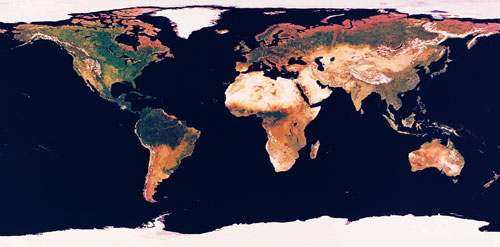
Earth facts
Mass: 5.976x1024 kg (1/333,400 sun, 81x moon)
Radius: 6,378 km (equator) 6,356 km (pole) (1/109 sun, 3.66x moon)
Mean distance from sun: 149.6 million km (1 astronomical unit (AU))
Land area: 148 million km2 (29% of total area)
Highest point: 8,848 m (Mt Everest)
Lowest points: sea-11,034 m (Marianas Trench); land-397 m (Dead Sea)
Gravitational acceleration at surface: 9.8 m/s2 (1/27 sun, 6x moon)
Hidden assumptions of secular cosmology
This denial of Earth’s special place goes even further, and it underlies the big bang theory itself. Most people don’t realize that this theory depends on a philosophical assumption called the Cosmological Principle—that there is no special place or direction in the universe. That is, the universe has no centre and no edge to it.4
However, consistent with the Bible, we can start from a different assumption—that humanity is special in God’s sight, and the earth, as our home, does show evidences of uniqueness, including its location. Both a centred and a centreless universe are consistent with the observation that almost all galaxies are receding from Earth, so the choice is purely philosophical on those grounds.5 But only the idea that our galaxy is near the centre of the universe fits all the evidence, making sense of the quantized redshifts that a centreless universe has great difficulties explaining.6
Conclusion
Of course, there is nothing depressing about God creating Earth especially for life, as the Bible says! The genuine scientific evidence, as opposed to unscientific assumptions, is just another confirmation that nothing in real science contradicts the Bible—on the contrary it confirms the Bible’s history over and over again.
References and notes
- Earth was a freak, New Scientist 177(2388):24, 29 March 2003. Return to Text.
- With a major problem that the planets have most of the solar system’s angular momentum—see Spencer, W., Revelations in the Solar System, Creation 19(3):26–29, 1997. Return to Text.
- Sarfati, J., Our steady sun: a problem for billions of years, Creation 26(3):52–53, 2004; Faulkner, D., The young faint sun paradox and the age of the solar system, Journal of Creation 15(2):3–4, 2001. Return to Text.
- Not to be confused with the notion of an infinite universe, which most big-bangers reject. The two-dimensional surface of a balloon is also finite, despite having neither centre nor edge. Return to Text.
- Even Edwin Hubble, the discoverer of the expansion of the universe, admitted ‘Such a condition [these redshifts] would imply that we occupy a unique position in the universe …. But the unwelcome supposition of a favored location must be avoided at all costs. … is intolerable; moreover, it represents a discrepancy with the theory because the theory postulates homogeneity.’ The Observational Approach to Cosmology, Clarendon, Oxford, pp. 50, 51 and 59, 1937. Return to Text.
- This refers to regular ‘spacings’ in the ‘shift’ in the frequency (hence colour) of their light, and hence the distances assigned to faraway galaxies. See Humphreys, R., Our galaxy is the centre of the universe, ‘quantized’ redshifts show, Journal of Creation 16(2):95–104, 2002. Return to Text.
Readers’ comments
Comments are automatically closed 14 days after publication.