

Fouling the nest
Christianity and the environment
‘What should we think of the Greenhouse Effect?’ our speakers often face questions like this on environmental matters. It is helpful, even vital, to view such things from a Biblical perspective. But in a complex world, it may not be possible to give a rigidly ‘for’ or ‘against’ Christian response. Biblical principles are unchanging, but the situations we face, and the information available, are not.
Imagine you are a bureaucrat in 19th-century South America, contemplating the vast, seemingly limitless expanse of the Amazon jungle. Some poor villagers ask you for a permit to clear an acre for their crops. Or you’re the same bureaucrat in the distant future; some rich estate-owner asks if he can clear one of the last remaining stands of Amazonian trees, home of some of the rarest and most beautiful of God’s creatures, because they obstruct the breeze to his mansion. Presumably your response would be different in each case!
The Greenhouse Effect
‘Greenhouse’ dominates thinking on the environment. Certain gases in the atmosphere, chiefly water vapour, carbon dioxide (CO2) and methane (CH4), trap heat from the Earth, inhibiting its radiation to outer space.
Animals and humans breathe out CO2 as they ‘burn’ carbon-containing foodstuffs. Plants, in turn, powered by sunlight, absorb the CO2. Along with hydrogen from water, it is used to ‘build’ plant structures. (The process releases oxygen from the water, replenishing the oxygen consumed by animals.) Chop down a tree and burn it, and you ‘turn’ carbon into CO2. But during the tree’s lifetime of growth, it ‘mopped up’ an equivalent amount of CO2, so the books roughly balance.
In the modern world, however, the books are becoming unbalanced in two ways. First, through burning large amounts of ‘fossil fuels’ (coal and oil). The carbon in this case was buried deep in the Earth, and so it is not a part of the current ‘carbon cycle’ as above. Second, an expanding population means more housing, which displaces vegetation that would otherwise soak up CO2. Simple physics suggests that, all else being equal, the average temperature of the Earth will gradually increase due to these rising CO2 levels—hence the term ‘global warming’.
Ozone layer thinning
Between 15 and 30 km (9 and 18 miles) above the Earth, a layer of ozone gas (O3) prevents most of the sun’s harmful ultraviolet (UV) rays reaching the ground, and destroying most living things. Man-made chemicals such as refrigerator gases react with ozone and destroy it. Depletion of ozone within the stratosphere has been observed around the South Pole. Though distinct from the Greenhouse Effect, there is a link. Much of the photosynthesis that consumes CO2 takes place not in rainforests, but at the surface of the vast oceans, by countless trillions of microscopic plants (phytoplankton). Increased UV radiation would kill many of these aquatic plants, tipping the balance in favour of more atmospheric CO2.
The generally predicted result is an increase in mean global temperature, with effects on human society ranging from mild to catastrophic. Warmer oceans would mean more water vapour (which traps even more heat) and expanded ocean volumes. This, coupled with partial melting of the ice sheets, would raise average sea levels, submerging whole communities, even entire small island nations. The drastic weather effects could include huge droughts in Australia, flooding and landslides in the western US, and much greater hurricane/cyclone activity. Paradoxically, the Gulf Stream might slow down or stop, so northern Europe would get much colder.1
Responses to all this Greenhouse publicity range from overt panic to outright dismissal as some sort of vast conspiracy.
What is really known?
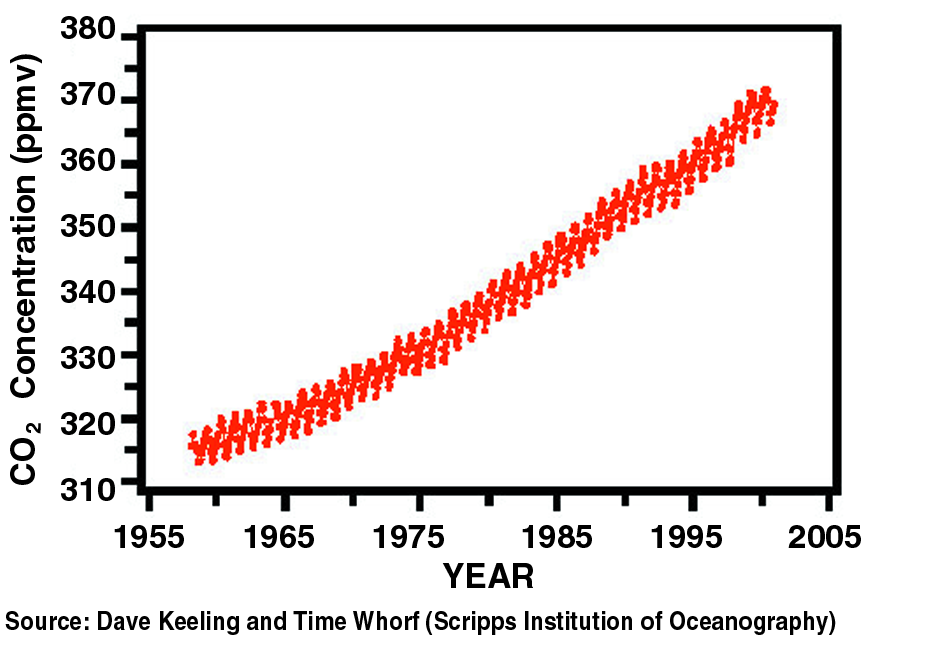
CO2 levels have certainly increased dramatically since the Industrial Revolution (see graph below). The hard part is to predict exactly what this will do. Computer modellers face immense challenges; e.g. how to adequately include the dynamics of the oceans.
More evaporation could increase high-latitude snowfall, increasing ice cover and cooling the Earth. It should also increase cloud cover; this should reflect more solar heat back into space, thus also cooling the Earth. However, depending on the type of cloud, it could do the exact opposite, though current modelling suggests that cooling is far more likely. Atmospheric physicist Dr Larry Vardiman, of the Institute for Creation Research, calls this a created ‘thermostat’ mechanism designed to cope with minor perturbations, and which will prevent a ‘runaway Greenhouse’.2 Others disagree strongly.
Some welcome this ‘Greenhouse’ as a partial return to presumed ‘pre-Flood’ conditions. But the Bible gives very little direct information about the pre-Flood world, and computer modelling has too many limitations to be more than speculative.
The Greenhouse Effect seems a classic example of a ‘wisdom issue’, i.e. one on which there is no direct Biblical teaching. Christians should feel free to make up their minds on the basis of the best available evidence. As is common in science, the ‘right’ conclusion might vary as more and more is learned.
Environment as religion
With the decline of Christianity in the face of the evolutionary onslaught, environmentalism seems like a substitute religion, with an established dogma; ‘plastic is bad, recycling is virtuous, forests are sacred sites, developers are satanical’. 3 And much environmentalism is fanned by evolutionary pantheism. ‘Mother Earth’ is the creative goddess, who must be protected and pacified. But in any issue, we should be prepared to think carefully, and not let our reaction to extremists goad us into overlooking any Biblical principles that apply.
Some Christians reject any environmental concern, saying that since God is in control overall, we should just let Him look after it. But in Scripture, the sovereignty of God never allows us to evade our responsibility. For instance, we don’t expect God to take out our garbage (even though we know He is in control) nor to look after the sewage problems for a village or a city. So why should we not support efforts to keep clean something on a grander scale (the atmosphere, or the oceans)? It may appeal to intuition to ‘leave the sky in God’s hands’—but the Bible does not suggest that God is more in control of big things than small things; not even a sparrow falls without the Father’s oversight (Matthew 10:29).
Speaking of sparrows, I recall watching a nest with four baby birds. Each of the occupants, in polite sequence, pivoted its tail out of the nest and sent its dropping down to the ground below. God gave these tiny birds programmed instincts to avoid fouling their own nest. We have been given, instead, wisdom to make conscious choices to avoid fouling our individual, community and global ‘nest’.
Dominion and stewardship
All Christians seem to agree that man has been given dominion over the Earth, as a steward under God. But what are the limits of responsible stewardship? Man’s dominion extends to the fish of the sea (Genesis 1:26). But where is the fine line between catching a fish to feed one’s family, and huge factory vessels, towing the ‘walls of death’—kilometres-long drift-nets scouring everything clean, edible or not, and devastating long-standing fishing grounds?
The same concepts apply to forestry and tree-felling. The Christian does not see nature as sacred in itself. While respecting a tree as a creation of God, and thus not to be wantonly destroyed, he will have no problem as such with chopping down a tree to build a house. But in our high-tech age, rainforests are disappearing at a rate equivalent to one football field in area every few seconds.
Determining the boundary between use and abuse, between responsible resource management and rapacious plunder, is obviously a complex ‘wisdom’ issue, not one with a single Biblical answer that fits all cases. Scientific data, if one can separate out the biases of the researchers, is vital—for instance, reliably knowing the regenerative capacities of logged forests and fresh plantations.
Many Bible-believing Christian professionals who have access to much relevant data are becoming increasingly convinced that talk of crisis, particularly in the area of waste accumulation, cannot easily be dismissed as simply scaremongering—see interviews at bottom of page.
‘Don’t fight the Curse’
Some point out that this cursed world is running down, and that the only ultimate answer is God’s creation of a new Heaven and Earth. The physical world is indeed running down. Given enough time, the sun and all other atomic processes would (without God’s intervention) fizzle out, all energy would become evenly distributed, and so all things would be completely dead. However, local aspects of this entropy principle can be reversed here on Earth through intelligent effort. And though this ‘running down’ of the physical world is a net effect of the Curse, the entropy law is not responsible for social/moral decay, or environmental irresponsibility—human choices are involved.

A small paper calling itself A Christian Response to the Ecological Movement said, ‘No conservational program will reverse God’s decision to continue to frustrate the ecology of a sinful world … conservational efforts cannot solve a problem which is only redeemable by God’s hand of recreation.’
This is really saying that since the Curse is God’s doing, we should not oppose it. But applying this consistently would mean we should not try to fight raging disease epidemics, e.g. by vaccination. However, Scripture continually praises the sorts of actions that are local and temporary attempts to overcome the Curse’s effects. The Curse brought man into conflict with man—yet ‘blessed are the peacemakers’ (Matthew 5:9). The Curse brought disease and suffering—yet alleviating suffering is not only consistent with Scripture, it follows Christ’s healing example.
The Curse also brought an alienation between nature and man; so environmental responsibility which seeks to oppose some of those effects of the Curse is not ‘opposing God’, even though a new creation will eventually be needed.
Saving species
The effort to conserve as many species as possible often presents as the need to preserve diversity, much of it in rapidly disappearing tropical rainforests.
We have often shown how new species (not kinds) can arise through time, by reshuffling and loss/thinning of information. Because there is no input of new information, no evolution is involved. Inbreeding gene pools with large amounts of diversity are broken down by natural selection and genetic drift into multiple pools of smaller amounts of information. Thus the ‘dog’ kind leaving the Ark rapidly diversified into dingoes, wolves, coyotes, etc. Along the way, mutations have added increasing genetic load, further degrading information. Such downhill changes have greatly increased diversity, while reducing the capacity for further change and adaptation. The ultimate end of this process is extinction, not evolutionary progress.
Why preserve species? There are man-centred pragmatic reasons. For example, rainforest species may contain many as-yet-undiscovered therapeutic chemicals. This highlights a moral component to environmental issues. God commands us to do good to all men (Galatians 6:10). Depleting genetic richness may deny a future cancer victim a cure. ‘Thou shalt not steal’ also applies to stealing another person’s access to fresh water or clean air. I currently judge global warming issues in that light—though the science is still fuzzy, if there is a possible danger that excess CO2 emissions may harm future generations, why not err on the side of caution, and support ‘cleaner’ energy research such as solar or wind power?
World agricultural authorities are also keen to preserve biological diversity. They know that the ‘wild types’ of the plants from which our cereals etc. were bred contain vast storehouses of information that have been depleted through breeding selection—a strong creation argument.4
There are deeper considerations, too. The evolutionary conservationist contemplating the extinction of, say, a magnificent wild bird might feel a profound sense of loss, lamenting the ‘millions of years’ evolution allegedly took to make it. Since random mutations will not again come to exactly the same combination, he can say—‘there’re no more of these being made’.5
In fact, the information present on the unique DNA of any species, as the unique blueprint of its kind, originated during Creation Week, directly from the mind of God. Though thinned out by selection/adaptation, lost or corrupted by mutation, we don’t see it added to. (In fact, we never see information arising spontaneously from raw, unprogrammed matter, except by the operation of mind.) So the permanent loss of some of this divinely implanted information makes me, too, see extinction as tragic. Because Creation was a ‘one-off’ event, I can also say, ‘There’re no more of these being made.’
But there is a crucial difference, illustrated by the smallpox virus. Because it needs a human host, it has probably been eradicated by mass inoculation—except for two frozen laboratory batches. Destroy these, and the virus is gone forever. If it is wrong to allow the Mottled Mongolian Mongoose to become extinct, why not save the smallpox virus, also a ‘part of nature’? Non-Christians (and Christians who fail to acknowledge the Genesis reality that this is not the good world God originally made, but its cursed and groaning remnant) have no consistent basis for favouring one type of creature over another. I suggest that the appropriate Christian attitude is, ‘Wipe it out!’. The Earth is ultimately for people, and the virus represents some of the worst aspects of the Curse.6
Is technology the problem?

Big technology makes it easier to pollute or destroy in a big way, overwhelming the checks and balances God has created to allow (fallen) ecosystems to respond to disruption. But it does not follow that technology per se is opposed to sound environmental ethics. In fact, man’s ingenuity and technology may enable us to build super-efficient waste-free factories, or develop non-polluting power sources. Zero growth, which seems logical in some ways, may be a very selfish option for the developed world to foist upon its poorer neighbours. Christian thinking on the environment cannot sidestep issues such as poverty, oppression, corruption, etc. Of course, applying large-scale technology to assist ‘nature’, such as damming watercourses, may make matters worse. But this is because of the ingenuity and complexity inherent in the created world, not a fault of technology in principle.
Similarly, genetic engineering may aggravate ecological problems, but it might also actually help to overcome them. Constructing new combinations of DNA, and thus even new species (not kinds), is no more un-Biblical than breeding new varieties of corn. The idea of engineered solutions to ecological problems sounds like heresy—yet Eden was a garden, not a wilderness.
Down with people
The extreme wing of environmentalism is the animal rights movement. Their leading advocate, Princeton professor Peter Singer, is a fanatical (but wholly consistent) evolutionist. He says, ‘There is no ethical basis for elevating membership of one particular species into a morally crucial characteristic. From an ethical point of view, we all stand on equal footing—whether we stand on two feet, four feet, or none at all.’7
In practice, however, animal-righters usually regard man as lower than the animals. After the Valdez oil spill which killed 30,000 birds (about 0.1% of the area’s population), some called it a worse tragedy than the 1984 chemical leak in Bhopal, India. But this killed more than 3,000 people and injured 200,000 others.8 Many animal liberationists have said it is acceptable to use ‘defective’ humans in scientific tests as opposed to testing things on healthy animals.9
This is violently opposed to Biblical reality. Man made in the image of God, no matter if unborn, frail or retarded, has intrinsic rights not shared by animals. The Lord Jesus Christ said, ‘You are of more value than many sparrows’ (Luke 12:7). Of course, the Bible gives no mandate for cruelty to animals; Proverbs 12:10 teaches that a righteous person will regard their needs.
Getting the balance right
God owns the Earth, not man, so as responsible stewards we are not free to do as we please with it (Psalm 24:1). But we have also been given dominion (rule) over it, and told to subdue it for our own needs (Genesis 1:26—28). Mankind, not the California Cockroach, is, after all, the purpose of Creation. But man was required to dress and keep the garden, not plunder it (Genesis 2:15).
Beyond that, our attempts as Christians to make decisions on environmental matters can, in each case, be based on a pragmatism born of concern for others, and on wisdom (James 1:5), refined and informed by the best available scientific data on these continually changing and complex issues.
Global warming–is it happening?
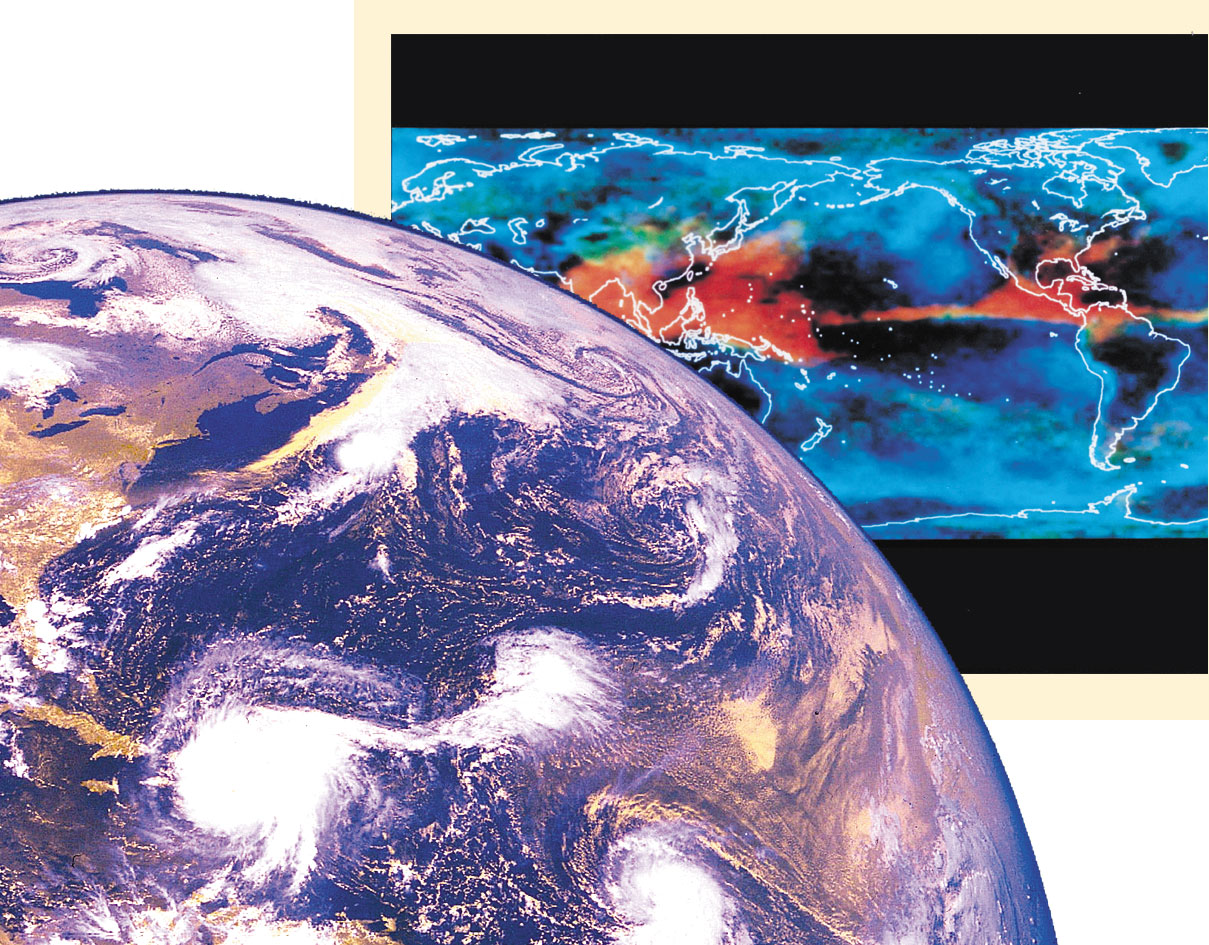
Some researchers point out that analyses of actual measurements of surface temperatures have shown no warming trend at all.1
A new satellite survey of over 2,000 glaciers indicates that most of them are shrinking. Thousands of images from NASA’s Terra spacecraft were compared with aerial photos of up to 20 years ago. Most had shrunk ‘by hundreds of metres, some by several kilometres’, while the lakes at their base have generally grown larger.2 Some think this may be part of a natural cycle (Greenland was much greener c. 1000 AD).
Blaming christianity?
Francis Schaeffer’s 1970 classic Pollution and the Death of Man quotes philosopher Lynn White as blaming our present ecological crisis on the Christian view of man as having lordship over nature. This false belief has caused totally unnecessary evangelical cringing. Even the humanist ecologist Rene Dubois, in his book A God Within (1972), wrote:
‘Erosion of the land, destruction of animal and plant species, excessive exploitation of natural resources, and ecological disasters, are not peculiar to the Judea-Christian tradition and to scientific technology. At all times, and all over the world, man’s thoughtless interventions into nature have had a variety of disastrous consequences … . All over the globe and at all times in the past, men have pillaged nature and disturbed the ecological equilibrium … . In fact, the Judeo-Christian peoples were probably the first to develop on a large scale a pervasive concern for land management and an ethic of nature (pp. 158–161).’
The collapsed communist economies, which left a legacy of shocking pollution, create a dilemma for those who would like to blame our environmental problems on either Christianity or the evils of (especially multinational) capitalism. Free enterprise has a strong Biblical basis. Of course, unchecked by Biblical ethics/law, it is easily corrupted into ‘evolutionary economics’—survival of the most ruthless, as in post-communist Russia.
References
- Vardiman, L., Earth’s climate thermostat, Impact #339, Acts and Facts, September 2001.
- Samuel, E., Total meltdown, New Scientist 170(2294):13, 9 June 2001.
Creationist comment

We knew of three Christians, supportive of our ministry, who were from professions to do with environmental issues. Without directing their choice of emphasis, we asked each of them for a brief comment to add to this article.
Environmental engineering
‘We continue to abuse the environment as a convenient dump for increasing amounts of wastes, including large quantities of man-made toxic materials. Our efforts to control the risks have had limited success, but have made us painfully aware of how little is known about natural processes and our created life support system. This environmental crisis, which is to a considerable degree the result of greed—a desire to have more and more material possessions—has now reached a critical point where the damage may not be reversible in time to prevent a major catastrophe.
‘As a Christian who believes we cannot separate our stewardship role from our faith, I believe it is a spiritual issue, a wake-up call from God to greater holiness. The majority of Christians, including myself, have bought into an economic system based on unlimited growth and, hence, unlimited consumption of the Earth’s resources. Materialism—more and bigger cars, houses, gadgets, etc.—interferes with our stewardship obligations, as well as our spiritual growth.’
Dr Lambert Otten,
Director, School of Engineering
Professor of Biological Engineering
Professor of Environmental Engineering
University of Guelph, Canada.

Environmental science
‘The Bible teaches that the Curse on nature will end—nature will be restored to its original splendour (Acts 3:21), sharing in the effects of redemption (Romans 8:19–23). Biblical visions of this restoration are of people and nature once again in harmony.
‘Christians are part of a new creation (2 Corinthians 5:17). We share the Gospel message with many people, even though we know that probably only a few will respond. Likewise, we ought to be willing to care for creation, even though we know we can’t bring full restoration. It is therefore right to care for the natural environment, provided it does not conflict with another Scripture principle. Too often we waste and misuse God’s possessions, like the manager in Luke 16:1 wasted his master’s possessions.’
Dr George Hawke
Senior Environmental Consultant
Pacific Power International, Sydney, Australia.

Environmental management
‘The principle of Ecologically Sustainable Development has been widely accepted by governments all over the world since the Earth Summit in Rio in 1992. One of its main principles is inter-generational equity, i.e. we shouldn’t eat now the future of our children. It’s not hard to see Biblical ethics behind this idea.’
Geoff Meadows
Manager–Environmental Planning
Environmental Protection Agency, Cairns, Australia.
References and notes
- This current of warm water from the tropics is probably ‘driven’ by cold water sinking in the freezing Arctic. Return to text.
- Impact #339, Acts and Facts, September 2001. Return to text.
- Hugh Mackay, The Adelaide Advertiser, 2 May 1990. Return to text.
- Batten, D., What! … no potatoes?, Creation 21(1):12—14, 1998. Return to text.
- Some say that a consistent evolutionist should not complain about extinction because it is part of evolution. This is true, but may be a little unfair. The evolutionist believes that it took a very long time for nature to create these things, and that the abnormal selection pressure applied by mankind nowadays is forcing extinction to occur at a far greater rate than new ones could possibly evolve. Return to text.
- For a discussion of the problem of how ‘bad’ things arose post-Fall, see Chapter 6 of The Creation Answers Book, Creation Ministries International, Brisbane, 2006. Return to text.
- Singer, P. (Ed.), In Defence of Animals, Basil Blackwell Limited, Oxford, p. 6, 1985. Return to text.
- Time, p. 57, 26 March 1990. Return to text.
- Frey, R. & G., Journal of Medical Ethics 9:94–97, 1983. Return to text.
Readers’ comments
Comments are automatically closed 14 days after publication.