

James ossuary withstands accusations

The James ossuary is a 2,000 year old box claimed to be the ossuary (“bone box”) of James, the brother of Jesus. On the side of the box is inscribed in Aramaic: “James, son of Joseph, brother of Jesus”. If authentic, the inscription is the first historic record found of Jesus apart from manuscripts.1 Furthermore, it provides physical testimony to the 1st century belief in the resurrection, since Jesus had been crucified as a criminal, and yet was given a place of high honour on a family ossuary.2
The ossuary and its inscription were examined extensively by Ed Keall of the Royal Ontario Museum (ROM)3, who along with many other scholars is convinced of its authenticity.2 André Lemaire, a leading paleographer from the University of Paris, found ancient patina within the lettering of the inscription, lending strong evidence for its authenticity.4
However, shortly after its discovery the ossuary met with a firestorm of controversy as claims that the name of Jesus had been added to the inscription spread like a contagious disease.2 The Israeli Antiquities Authority (IAA) later announced that the inscription was a forgery and initiated a trial against the owner of the ossuary.5
Criticisms of these accusations were previously reported. A major concern was the antichristian bias of the IAA committee that investigated the ossuary.4 According to Lemaire, the committee did not include any Christian scholars, only people with known bias who had “expressed their opinion against the authenticity of the inscriptions”.6 In addition, the IAA never offered a detailed report that would allow the ROM to reevaluate its findings, so the ROM continues to support the inscription’s authenticity.3
The “forgery trial of the century”, as it was called,7 has lasted nearly five years, and involved more than 75 witnesses and over 9,000 pages of testimony.8 Despite the claims of the IAA, the inscription has withstood attempts to discredit it as a forgery.
Under cross-examination by defense attorneys, many experts for the hoax claim recanted their findings.9 The government’s principal witness, Yuval Goren, who testified that a covering had been applied to conceal evidence of forgery, was forced to admit upon cross-examination that he could see original ancient patina in the critical word “Jesus”. With that admission, the prosecution’s case fell apart.10 Not a single expert on Semitic inscriptions of the period has testified that the ossuary was a forgery. Several scientists offered testimony against Goren’s, and none verified his claims. In October 2008, after more than three years in court, Judge Farkash advised the prosecution to drop the case, which would result in a major embarrassment for the IAA and the Israeli police.8
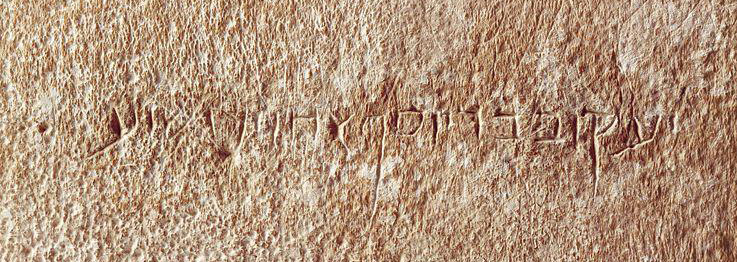
The defendants, who have maintained their innocence throughout the ordeal, appear to have been vindicated, along with the Biblical Archaeology Review, which among others has consistently supported the authenticity of the inscription.10 That such a discovery would receive much public scrutiny and bias is not unexpected given the political and religious conflicts that surround the historicity of Jesus Christ. Furthermore, human endeavours like archaeology will always be fallible, and authenticating this artifact to the satisfaction of all may not be possible. Nevertheless, the ossuary remains as support for the existence of Jesus and the belief of the 1st-century Church in His resurrection.
Editorial comment:
This article assumes that the reader is familiar with previous articles published by CMI on this topic. For example, The James claims—Sensational ‘new’ find suggests a relic of incredible historical significance, explains why this ossuary inscription probably refers to Jesus of Nazareth and not some other Yeshua. Of course there can be no ‘proof’ of such association.
References
- Mayell, H., Burial box may be that of Jesus’ brother, expert says, National Geographic News, news.nationalgeographic.com/news/pf/18752004.html, 21 October 2002. Return to text.
- Mayell, H., Jesus’ brother’s “bone box” closer to being authenticated, National Geographic News, news.nationalgeographic.com/news/pf/62979004.html, 18 April 2003. Return to text.
- Royal Ontario Museum Statement: Oded Golan’s arrest/ James ossuary Royal Ontario Museum, Toronto, Canada, www.rom.on.ca/news/releases/public.php?mediakey= vhggdo3048, 23 July 2003. Return to text.
- Sarfati, J., Bonebox bashers blasted: update on James ossuary claims, Creation 26(2):15, 2004; creation.com/bonebox. Return to text.
- Mayell, H., “Jesus box” is a fake, Israeli experts rule, National Geographic News, news.nationalgeographic.com/news/pf/13032924.html, 18 June 2003. Return to text.
- Lemaire, A., Israel Antiquities Authority’s report deeply flawed, Biblical Archaeology Review 29(6):50–59, 67, 70, 2003. Return to text.
- Shanks, H., James ossuary forgery case in shambles, bib-arch.org/press-james-ossuary.asp, 31 October 2008. Return to text.
- Kalman, M., James ossuary trial Jerusalem, jamesossuarytrial.blogspot.com. Return to text.
- Ossuary hoax case may collapse, San Francisco Chronicle, sfgate.com/cgi-bin/article.cgi?f=/c/a/2008/10/29/MN3U13
QHMD.DTL, 30 October 2008. Return to text. - Shanks, H., Supporters of James ossuary inscription’s authenticity vindicated, Biblical Archaeology Review, bib-arch.org/news/forgery-trial-news.asp, 10 November 2008. Return to text.

Readers’ comments
Comments are automatically closed 14 days after publication.