
Old Drug, New Results
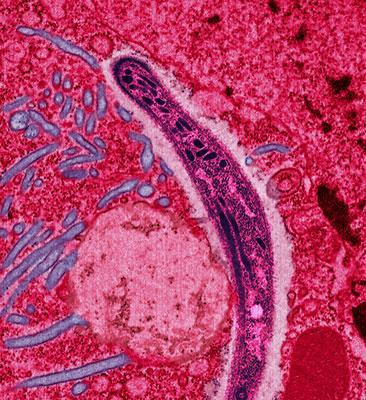
Antibiotic resistance is back in the news again. A malaria drug, called chloroquine, is once again effective in fighting this dreaded disease in the African country of Malawi.1 Throughout the 1970s and 1980s, chloroquine was extremely successful in eradicating malaria in southern Europe and the southern United States. It was cost effective and easy to administer. However, as is usually the case with extensive antibiotic use, resistance began to rapidly emerge. Chloroquine became obsolete in 1993, with the Malawi government officially discouraging its use.
A new study, by malaria experts Miriam Laufer and Christopher Plowe of the University of Maryland School of Medicine, tested two anti-malaria drugs.1 In the study, children were treated with either chloroquine or sulfadoxine-pyrimethamine, still the primary anti-malaria drug in Malawi. The results were quite surprising. Chloroquine was effective in 79 of 80 children who received it, while sulfadoxine-pyrimethamine failed in 71 of 87 children who received it.
Despite the results, the researchers did not advocate reintroducing chloroquine to Malawi. Plowe stated, ‘Malawi is a little island of sensitivity surrounded by a sea of resistance…resistance would come washing back in…’ if chloroquine was widely used again.
What does the reinstatement of an old, malaria-fighting antibiotic have to do with the creation/evolution debate? Evolutionists often promote antibiotic resistance in microscopic organisms as evidence of ‘evolution in action.’ However, a closer look provides much stronger evidence for creation. (While P. vivax is not a bacterium, resistance to anti-malarial drugs in P. vivax is a direct corollary to the development of antibiotic resistance in bacteria - something that has been discussed at length in the creationist literature.)
Three Ways Bacteria Become Resistant to Antibiotics
First, many microbes already possess the resistance in their genomes. The resistance does not arise by itself, nor does it arise in response to the antibiotic. In fact, soil samples from villages where modern antibiotics have never been used reveal that some of the germs are already resistant to drugs that have never existed in nature. Also, bacteria revived from the frozen intestines of explorers who died in polar expeditions carried resistance to several modern antibiotics, which had not been invented when the explorers died.2
Second, bacteria can transfer resistance, already present in their genomes, to other bacteria by injecting a tiny loop of DNA, called a plasmid, into other bacteria. In other words, genetic information for antibiotic resistance is being transferred, not created de novo.
Third, bacteria can acquire resistance to certain antibiotics through mutations (mistakes in the copying of genetic information). However, all such mutations are degenerative (information-losing) changes. For example, the loss of a control gene may actually enhance bacterial resistance to antibiotics.2
Many antibiotics need to be actively pumped into the bacterium to kill it. The bacteria possess complex chemical pumps which pump nutrients from the outside, through the cell wall, and into its cytoplasmic interior. Bacteria with operational chemical pumps basically pump the deadly poison into themselves. However, if certain bacteria inherit a defective gene through a genetic mutation, then the chemical pump may fail, and the antibiotic will not be actively pumped inside the cell wall. As a result, the bacteria will become resistant, and rapidly multiply this resistance to subsequent offspring. Natural selection will favour the resistant types in the population by getting rid of all the non-resistant types, even though the resistant types are, overall, weaker (see Muddy Waters). Despite the acquisition of resistance due to genetic mutation, the bacteria have lost information and biological function.
Resistance Supports Creation Model
Antibiotic resistance fits nicely in the creation model. The empirical evidence reveals that no new structure, no new gene, and no new genetic information are created. However, molecules-to-man evolution requires vast amounts of new information, new genes, and new structures to change one kind of creature into a completely different kind of creature.
Antibiotic resistance demonstrates that genetic variation within living organisms operates within distinct biological limits. This is exactly what the creation model predicts. After countless billions upon billions of bacteria being bred, observed in the laboratory, and exposed to all manner of chemical agents, the single-celled bacteria remain single-celled bacteria. And despite vast numbers of bacterial generations (equivalent to hundreds of millions of years in human generations) in the 120 years or so since Robert Koch made his epochal descriptions of disease-causing bacteria, we still have the same species as Koch described.
Where a population of bacteria becomes resistant to a particular antibiotic due to natural selection favouring this shift, it is clear that it may readily shift back again once the environment is no longer antibiotic-saturated, because no fundamental change to the bacterium has taken place. Peter and Rosemary Grant noted the same situation when they made their classic observations of the changes of beak lengths in Darwin’s finches on the Galápagos in response to changing rainfall. The average beak size certainly changed due to natural selection, but when the original rainfall pattern was restored, the size came right back again to what it had been.3 A shift to the left, followed by a shift to the right, fluctuating as the environment fluctuates. No net long-term change, as evolution would require.
The same sort of thing has now been documented in the malaria parasite in its response to chloroquine; a shift in one direction, followed by a shift back, depending on the environment, i.e. the degree to which chloroquine is used. In addition to being significant in the fight against disease, we see that once again the testable, observational evidence points to creation, not evolution.
Related articles
- Darwin’s finches: Evidence supporting rapid post-Flood adaptation
- Superbugs not super after all
- Anthrax and antibiotics: Is evolution relevant?
- Sickle-cell anemia does not prove evolution!
Readers’ comments
Comments are automatically closed 14 days after publication.