

The ‘Pioneer anomaly’
Search continues for a non-creationist solution
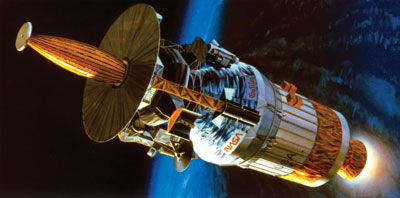
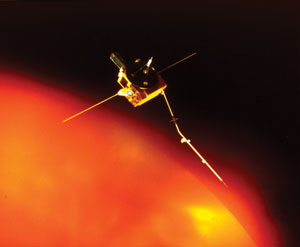
About once a week for 10 years, scientific papers have been offering new solutions to the ‘Pioneer anomaly’, a small but mysterious slowdown (i.e. a negative acceleration) of four outward-bound spacecraft: Galileo, Ulysses, and Pioneers 10 and 11.
Some papers seek for a mundane cause, such as heat radiation emitted by all three types of spacecraft in exactly the right direction at exactly the right intensity … the required coincidences stretch my credulity a bit. A recent scientific conference1 heard that such an effect ‘could account for at least a third of Pioneer 11’s anomalous acceleration.’ Why isn’t there more certainty, what about the other two-thirds, and what about the other three spacecraft? It doesn’t look like celebrations are yet in order.
Other papers invent exotic physical laws to explain the anomaly; especially why the amount of slowdown is very close to a number that has cosmological connections. The very existence of so many different theories shows a general dissatisfaction with both the mundane explanations and the exotic theories.
Some papers use the physical laws we know about, but invoke new conditions to give new results, such as imagining much more mass in the as-yet-unobserved Oort cloud (imagined to be far beyond the orbit of Pluto occasionally supplying new comets to the Solar System). Such explanations don’t appear credible, judging by the lack of enthusiasm for them in secular science circles.
Last year I published a solution of this third type.2 It uses standard physics, such as Einstein’s general theory of relativity, and makes standard assumptions, such as the expansion of space (to which Scripture alludes3).
The only non-standard assumption I used was that the matter of the cosmos is limited in extent, with a fair amount of empty space beyond the matter—an assumption supported by the Bible. With those relatively modest beginnings, I was able to explain the Pioneer anomaly—it’s due to a change in the ‘fabric’ of space. In fact, this anomaly could be the first local manifestation we have observed of the expansion of the cosmos, and the first evidence that expansion is occurring in the present, not just the past.
The assumption I used violently contradicts the foundational assumption of the big bang, which says the universe has no centre and no edge. In that model, the fabric of space would not change. Consequently, the big bang model has been unable to explain the anomalous Pioneer acceleration.
My paper does not appear to have slowed the flow of new theories. In fact, the flow seems to have increased, and (perhaps it is only my imagination) the theories seem to have become wilder and more desperate. Yet for those who prefer a biblical view of the cosmos, my article offers a reasonable explanation. Perhaps other creation cosmologists will develop other biblical options.
References and notes
- Turyshev, S.G., Pioneer` anomaly: status of new investigation, American Physical Society meeting, 11–15 April 2008, St. Louis, Missouri, Abstract H7.00001. Goldman, S., ‘Pioneer Anomaly’ solved? Sky and Telescope <skyandtelescope.com/community/skyblog/newsblog/17846774.html>, 18 April 2008. Return to text.
- Humphreys, R., Creationist cosmologies explain the anomalous acceleration of Pioneer spacecraft, Journal of Creation 21(2):61–70, 2007; Creation cosmologies solve spacecraft mystery, Acts & Facts 36(10):10–12, October 2007. Return to text.
- Seventeen Bible references say God ‘stretched out the heavens’: Job 9:8; Isaiah 42:5, 44:24, 45:12, 51:13; Jeremiah 10:12, 51:15; Zechariah 12:1, plus others saying ‘spread out the heavens’, etc. Return to text.
Readers’ comments
Comments are automatically closed 14 days after publication.