
Journal of Creation 20(3):31–38, December 2006
Browse our latest digital issue Subscribe
Progressive creationist anthropology: many reasons NOT to believe
A review of Who was Adam? by Fazale Rana with Hugh Ross
NAVPRESS, Colorado Springs, CO, 2005
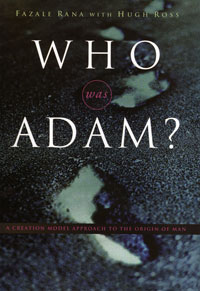
Although mostly written by Fazale Rana, the book is said to equally represent the work of Hugh Ross. Their salvos against biblical creationists are mostly confined to the earlier chapters of the book, with the first shot being to blame us for the biblical perspective on human origins not being ‘at the high table of scientific debate’ (p. 12).
Here they characterize the approach taken by creationists as largely attacking human evolutionary models, but seldom offering ‘a viable theory of their own’ (p. 12). They also portray creationists as often attacking the integrity of evolutionary biologists and anthropologists ‘with accusations of deception and conspiracy theories’ (p. 12). After this chastisement of creationists the authors claim the moral high ground by stating, ‘Personal attacks destroy the possibility for dialogue. They erect barriers’ (p. 12). Pleading for peace while shooting rockets is unfortunately par for the course with these writers.
They oddly express agreement with anti-creationists Brian Alters and Sandra Alters, who argue against teaching creation alongside evolutionary theory in the science classroom because it is a religious concept (pp. 12–13). One presumes Rana and Ross agree with the teaching of evolution as science, as they voice objection only to the teaching of creation as science.
David vs Darwin?
Chapter one focuses on comparing the views of the biblical David with those of Charles Darwin. There is nothing really remarkable about this chapter, although the authors manage another swipe at young-earth creationists when they state:
‘Neanderthal fossils convinced many people that humanity’s age far exceeded 6,000 years, the age espoused by many self-described biblical literalists, who viewed the Genesis 1 creation days as 24-hour time periods. For many people, this finding greatly diminished the credibility of the biblical account of Adam and Eve’ (p. 24).
They therefore argue that human evolution ‘indirectly gained favor’, as the ‘scientific community seemed to have demonstrated biblical error regarding human origins’ (p. 24). Of course, there is also an oft repeated straw man here: informed creationists do not describe themselves as ‘literalists’, but those who take the text according to the original meaning, i.e. history as history, poetry as poetry, etc.
Instead of blaming young-earth creationists, Rana and Ross should consider whether it was Christian compromisers of that era, all too willing to abandon the plain meaning of God’s Word in order to retain worldly respectability, who made people doubt the biblical account of human origins. The views of Darwin’s defeated opponents were essentially identical to those of modern progressive creationists or ‘intelligent design’ theorists.1,2
Hominids
Chapter two is primarily a brief review of the ‘hominid’ fossil record and current human evolutionary models. Here, some creationists are portrayed as opportunists who capitalize on the Piltdown Man forgery, and other ‘dubious paleoanthropological finds’, in order to ‘generalize that hominid fossils are either fictitious or fraudulent’ (p. 28). Other creationists are said to
‘ … view the fossils as real but regard some to be apes (the australopithecines, for example) and some (such as Homo erectus and Neanderthals) as variants of modern humans. Any dating of fossils as older than 10,000 years in age is disputed and dismissed’ (p. 28).
The above ‘all too popular creationist views’ are said to be:
‘ … not the only Christian views. A perspective consistent with the Bible can regard hominids in much the same way as the entire scientific community does—as real animals that existed in earth’s past. This interpretation also considers the dates assigned to hominid fossils as generally reliable within the limitations of the methods used to obtain them’ (p. 29).
Throughout the book there seems to be this yearning by the authors to be on the same playing field as the ‘scientific community’. So, who is this ‘scientific community’ they keep referring to? A clue might be that the authors consider most evolutionary paleoanthropologists, ‘though typically committed to methodological naturalism (the notion that in science only mechanistic explanations based on the laws of physics and chemistry are permitted), display exemplary integrity and work hard at their discipline’ (p. 29).
No prizes for guessing whom Rana and Ross are trying to curry favour with. Of course, most biblical creationists have likewise pointed out that our main disagreement with secular scientists is not with their data but their interpretations of this data.
Scriptura sub scientia
Chapter three presents the Reasons to Believe (RTB) model of human origins. However, before elucidating on their model, the authors have another shot at young-earth creationists by saying that many scientists ‘dismiss the biblical account of human origins because they assume it requires a young-earth interpretation of Genesis 1—a position that treats the creation days as six calendar (24 hour) days’ (p. 41). They then state that:
‘Clearly, any stance that regards the universe and Earth as merely 6,000 to 10,000 years old lacks scientific credibility. However, to discount the biblical explanation for humanity based on this one creationist perspective disregards all other theologically credible interpretations of Genesis 1’ (pp. 41–42).
The creation days in Genesis 1 are associated with a numeric, with evening and morning, and also with night.3 In addition, Exodus affirms that ‘in six days the Lord made the heavens and the earth, the sea, and all that is in them, but rested on the seventh day’. Exodus even outlines that the working week, consisting of six days of labour and one day of rest, is based on the creation week (Exodus 20:8–11). It is hard to believe that any other interpretation of the creation days, other than literal 24-hour days, is conceptually possible in the context of Scripture. It is like arguing that Jonah was not in the great sea creature for three days and three nights, but for three eons of time (Jonah 1:17).
Hence, there are no ‘other theologically credible interpretations of Genesis 1’. The day-age view and other compromise positions, such as the gap theory and the framework hypothesis, have all been thoroughly refuted in Jonathan Sarfati’s book Refuting Compromise.4 According to Sarfati these positions ‘are reactions to perceived conflicts with “science” and have not the slightest basis in the Hebrew of Genesis’.5 Rana and Ross let the cat out of the bag when they dismiss the young-earth position, not because of biblical arguments, but because to them it ‘lacks scientific credibility’ (p. 41).
Yet they repeatedly call their human origins model biblical, even though their erroneous interpretation of the creation days makes their creation model unbiblical, with far reaching consequences. For example, the authors’ day-age view allows them to readily accommodate ‘the scientific dates for the age of the universe and earth’ (p. 42), meaning they believe the earth is billions of years old. They also believe that ‘the Creator repeatedly intervened in Earth’s history, initiating new life-forms, including humans’ (p. 42).
Soulless pre-Adamic hominids
As such, hominids (fossil specimens that evolutionists regard as ape-men) to them were ‘animals created by God’s direct intervention’, but ‘they were not spiritual beings made in His image’ (p. 50). However, the Creator Himself, the Lord Jesus Christ, stated emphatically that ‘at the beginning of creation God made them male and female’ (Mark 10:6).6 Hence, if man was created on Day 6 (only five days after ‘the beginning’), then this gives no room for God to repeatedly have inserted soulless ‘hominids’, by ‘direct intervention’, over millions of years prior to the creation of Adam. They must be either extinct apes or descendants of Adam and Eve.
Day-age views of Scripture also lead to the uncomfortable position that death and disease had already been in existence for millions of years prior to the creation of Adam and Eve. Yet, in Romans 5:12 it says that sin entered the world through one man, and as result of this sin death occurred. As put by Ken Ham: ‘God instituted death and bloodshed so that man could be redeemed. If death and bloodshed existed before Adam sinned, the basis for atonement is destroyed.’7
The day-age view that fossils formed millions of years before Adam also necessitates that God created the world with death and suffering in operation, which is evident by some fossils exhibiting ‘evidences of disease and violence (hence suffering)’.8,9 Yet, at the end of the sixth day of creation, ‘God saw all that he had made, and it was very good’ (Genesis 1:31). This throws doubt on the very character of God.
The purpose here is not to give a refutation of the day-age view of Scripture, but to make the reader aware of the dangerous biblical position the authors take. Whatever the perceived benefit of accommodating the Bible to positions more aligned with the ‘scientific community’, it is insignificant compared to the day-age view’s ‘wrecking ball’ effect on Scripture.
The Reasons to Believe (RTB) Model
Rana and Ross like to emphasize that ‘With RTB’s scientific model, creation is testable. The concept of creation has entered the scientific domain’ (p. 43). In chapter 3, they outline thirteen ‘predictions’ of the RTB human origins creation model. Many of these predictions conveniently fit in with the Out-of-Africa evolutionary hypothesis or are watered down biblical events, for example, a local flood, that puts little burden of proof on the model. The authors state that:
‘The chief features of the Out-of-Africa hypothesis bear striking similarity to the central tenets of RTB’s human origins model. In some respects the Out-of-Africa hypothesis could be thought of as the biblical model shoehorned into an evolutionary framework’ (p. 73).
The following is a brief summary of thirteen ‘predictions’ from the RTB model, with the number in brackets corresponding to how the predictions were numbered (pp. 51–52): humanity traces back to one woman (Eve) and one man (Noah) (1), and was created by God ‘at the “just-right” time in Earth’s history’ (6); ‘in or near the Middle East’ humanity originated in a single location (3); spread around the world (12); and ‘seeds of human civilization and agriculture had their birth’ (13); ‘humanity’s early population size was relatively small’ (2) and its ‘origin dates back to between 10,000 and 100,000 years ago’ (4); ‘the female lineage (Eve) predates the origin of the male lineage (Noah) (5); humanity’s origin coincides with the appearance of human culture in the archaeological record, and its subsequent explosive expansion (7); ‘humans share anatomical , physical, biochemical, and genetic similarities with the extinct hominids as well as with great apes and other animals’ (8); and are behaviourally distinct from the hominids and great apes (9); a ‘universal but local flood, that impacted all of humanity, shaped human history’ (10); and finally that human life spans ‘became progressively shorter after the Flood’ (11).
Concerning points 3, 12 and 13, the location ‘in or near the Middle East’ is somehow compatible with an African origin of humanity, amazingly even East African (p. 61). Moreover, prediction 10, a ‘universal but local flood’, is an exquisite oxymoron.
The ‘evidence’

The next few chapters ‘summarize recent advances in the study of human origins’ (p. 52). Predictably, in chapter four, which deals with summaries of genetic studies, the evidence is ‘remarkably consistent with RTB’s creation model’, including the ‘timing and location of humanity’s origin’ (p. 73). Similarly, an examination of the fossil record and archaeological evidence in chapter five found that it was ‘reasonably’ explained by the RTB ‘biblical’ model (p. 92).
In the latter chapter the authors seem to be settling for a date of about 40,000 years ago for the appearance of human beings on Earth (pp. 80, 95). If they are that confident in this age date, one wonders why a safety age range of humanity’s origin, to between 10,000 and 100,000 years ago, is necessary. Building such extreme plasticity in to their supposed ‘biblical’ model indicates that the authors, rather than deferring to Scripture (which gives an age under 10,000 years10), are allowing their model to sail in whatever direction the ‘scientific community’ blows. It seems that their model changes direction regularly, as in 2003 the above age range was from about 10 to 60,000 years ago.11
They also note that around 40,000 years ago ‘advanced human culture exploded on the scene’ (p. 91), with the culture displayed by these human beings indicating ‘defining features of God’s image in humans’ (p. 92). There is a danger, however, in insisting that because other ‘hominids’, such as Neandertals, allegedly possessed relatively simplistic cultures, that they were not human. The following statement by Holloway illustrates the folly in such logic:
‘Were modern living human hunters and gatherers to be judged on the basis of stone tool technology alone, they would probably be considered less advanced, “brain wise,” than Neanderthals.’12
Dates or dating methods that do not agree with the RTB human origins model are said to be obtained using ‘the notoriously inaccurate luminescence dating method’ (p. 80). For example, the recently re-dated ‘early anatomically modern humans’ Omo I and Omo II fossils from the Kibish Formation in southern Ethiopia (giving a new estimated age of about 195,000 years13 —previous assigned age was 130,000 years old), as well as dates for human fossils from Skhűl cave and Qafzeh caves of Israel, and Klaise River Mouth Cave in South Africa. However, the authors have not done their homework too well, as the new dates for the Omo fossils were obtained using the argon-argon (40Ar/39Ar) dating technique.14 Perhaps sensing it is a lost cause to bring the evolutionary age dates of these fossils within the confine of the RTB model, the authors instead try to dehumanize the fossil specimens. To Rana and Ross, these fossils, categorized as modern humans even by many evolutionists (i.e. people who Rana and Ross claim ‘display exemplary integrity’, as mentioned before), are to ‘be thought of as nonhuman, bipedal primates that predated humankind’ (p. 80).
The authors describe how the ‘obituary’ of their model had been reported by a young-earth Christian organization, in regards to the publishing of the fossil called Homo sapiens idàltu (p. 82–83).15 These fossil crania,16 hailed by evolutionary anthropologist Richard Klein of Stanford University as being ‘basically modern people, remarkably modern in appearance’,17 and dated to between 160,000 and 154,000 years ago using the 40Ar/39Ar dating method,18 are conveniently brushed off by Rana and Ross as:
‘ … simply primates—animals that walked upright, possessed limited intelligence, and had some type of culture, but animals nonetheless. All the data support this interpretation’ (p. 83).
Their human origins model is then gleefully pronounced as ‘alive and well’ and that ‘[a]ny reports of it succumbing under the weight of this find have been greatly exaggerated’ (p. 83). The RTB model may be pronounced ‘alive and well’, but who actually believes it?
Fine-tuned
Chapter six details how, in terms of the fine-tuning of conditions in the Earth and universe for human life to appear, ‘all the necessary windows for human life and human civilization opened at just the right time and all at once’ (p. 109). Some may be tempted to jump on this bandwagon as, after all, few creationists would argue that the universe and planet Earth are not exquisitely fine-tuned and designed for life. However, one can argue for this much more persuasively without the ‘baggage’ of being married to the ‘scientific community’s’ big bang cosmology, stellar evolution, and billions of years of Earth geological activity, as are Rana and Ross (but of course they oppose the same ‘scientific community’ on biological evolution).
For example, in their scenario at least nine billion years of star formation had to occur before Earth could be formed (p. 98). Also, in their cosmology, the origin of humanity had to occur between fateful molecular cloud encounters, which are said to occur about every 100 million years (p. 102).
One wonders why an omnipotent God would be constrained to create according to a secular cosmological model whose main purpose is to explain the creation and evolution of the universe without Him. In the authors’ creation model life first appeared about 550 million years after the creation of Earth, and then ‘these simple organisms needed nearly another 4 billion years to process and redistribute Earth’s heavy elements into forms essential to human survival’ (p. 98). Surely an omnipotent God could create instantly the necessary conditions for life to thrive or perhaps do it in six days if trying to set a precedent, instead of through the tortured logic suggested by Rana and Ross.
Longevity
As outlined in chapter seven, the RTB model accepts the longer life spans described in Genesis, and that ‘the literal meaning of “years” for the Genesis account of early human life spans is accurate’ (p. 112). Rana and Ross state that other explanations, such as using lunar years, ‘typically lead to absurdity’ (p. 112). It is a pity that they cannot see a similar absurdity associated with their non-literal interpretation of the creation days in Genesis.
Migration
Chapter eight is about human migration patterns, and it is no surprise when the authors state, ‘Many of the predictions made by the RTB human origins model regarding populating the earth overlap those made by the Out-of-Africa model’ (p. 124), and later that these predictions ‘fully harmonizes [sic] with the RTB creation model’ (p. 136). Awkward age dates for their model are brushed off as: ‘controversial’ (p. 128); as ‘the notorious inaccuracy of this technique’ (p. 129); again as ‘controversial’ and ‘inaccurate’ (p. 130); and as ‘techniques that typically overestimate the age of fossil specimens and ‘artifacts’ (p. 131). Not that I am arguing that these age dates are valid; I am merely pointing out how Rana and Ross are selective in their acceptance of the age dates.
To Rana and Ross the findings from their analysis up to this point ‘also resonate with the Out-of-Africa hypothesis’ (p. 137). Hence, they suggest that a way of discriminating between the two models is to evaluate whether ‘abundant evidence for human evolution exists’ (p. 137), and so chapters nine to 14 are spent critically evaluating evidence for human evolution.
Hominid insertions
In chapter nine the authors emphasize the debate between ‘lumpers’ and ‘splitters’ of hominid species, and how the ‘inability to determine the number of hominid species and properly classify them creates real problems that prevent scientists from establishing the evolutionary pathway to humans’ (p. 148). According to Rana and Ross:
‘The pattern of the hominid fossil records can, however, be readily explained within the framework of RTB’s human origins model. It regards the hominids as animals created by God. The explosive initial diversity of hominids in the fossil record and their persistent diversity for the past 7 million years is the very feature expected in the fossil record if the hominids were formed by the Creator’s hand’ (p. 154).
It almost defies belief that they can suggest that a diversity of hominids in the fossil record for the past 7 million years ‘is the very feature expected … if the hominids were formed by the Creator’s hand.’ There is no mention in Scripture of anything that could be contrived as a hominid, nor of God periodically creating and inserting such hominids on Earth over millions of years.
One may also ask as to God’s reason for such hominid insertions over time, as the best explanation offered by Rana and Ross is that the hominid ‘animals’ were ‘created by God’s direct intervention for His purposes’ (p. 50). Convinced that their RTB model wins out so far the authors move on to chapter 10, where aspects such as ‘the emergence of bipedalism and the increase in brain size’ (p. 154) are compared between the RTB and evolutionary models.
Brain size and bipedalism
To Rana and Ross, if ‘bipedalism emerged through natural-process biological evolution’, then the transformation from ‘knuckle-walking quadrupeds into bipedal primates’ should have occurred gradually, and ‘the first form of bipedalism should be crude and inefficient’ (p. 159). This is opposed to the RTB model, which proposes ‘bipedal primates as coming into existence through God’s direct creative activity’; and in this model bipedalism is expected to have appeared ‘suddenly in the fossil record’, to have remained ‘essentially unaltered’, and to ‘be optimal as soon as it appears’ (p. 159).
Hence, it is no surprise that Rana and Ross fall over themselves in accepting, seemingly without qualification, any ‘early hominid’ as being bipedal, no matter that there is still much dispute, even within the evolutionist community, as to the nature of the locomotion of these apes. This rush to judgment allows them to pronounce, in support of the RTB model, that ‘the fossil record shows that bipedalism did not emerge gradually’, but ‘appeared suddenly and concurrently with the hominids’ first appearance’ (p. 160).
The authors argue there would be ‘insufficient time for bipedalism to emerge through natural-process biological evolution’, given the ‘extensive and coordinated changes to the skeletal and muscular anatomy of knuckle-walking quadrupeds’ that would be required (p. 163). By stating that there was ‘insufficient time’ the authors seem to imply that given more time the anatomical changes could have occurred via evolutionary processes. Most creationists would argue that no amount of time will make evolution work; rather, more time would lead to more losses of information.
Facultative vs obligate bipedalism?
They propose that this first form of ‘facultative (optional)’ bipedalism lasted for about five million years, with a second, ‘obligatory bipedalism’, that first appeared in the genus Homo, lasting nearly two million years (p. 162). They also state, presumably based on a study of pelvis bones cited by the authors in a preceding paragraph, that:
‘Interestingly, Homo erectus and Neanderthals possessed an identical form of obligatory bipedalism, but distinct from that seen in human beings. Again, with the arrival of humanity, a new form of bipedalism suddenly broke forth’ (p. 162).
Despite their campaign to have the early hominids and australopithecines classified as bipedal, they nevertheless only consider this bipedalism optional. Indeed, some of these apes may have had limited ability for non-human bipedal locomotion, but the morphology of creatures such as Australopithecus afarensis indicates they were specialized for climbing in trees, as well as knuckle walking.19 Their justification for the second obligatory bipedalism is that, ‘given the differences between the australopithecines and the Homo primates in lifestyle and environment, the creation model anticipates that God would create each of the two with different forms of bipedalism’ (p. 162). However, they appear to give no justification or explanation for how and why the purported obligatory bipedalism in Homo erectus and Neandertals were different to that of ‘human beings’. The authors of the pelvis bones study that Rana and Ross rely on for the above analysis admit that ‘The significance of the differences within Homo are unclear’,20 so one wonders how Rana and Ross can be so certain about the functional implication of these same differences.
Brain size progression?
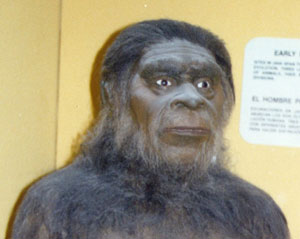
This chapter also examines hominid brain size in the fossil record. They argue that ‘if hominids represent God’s creative handiwork, the fossil record should reveal a step-wise pattern for brain-size change between species’ (p. 164). The argument of discontinuous leaps in brain size falls apart with the Neandertals, as well as other fossil skulls also not regarded as humans by Rana and Ross, such as Omo II mentioned earlier (estimated cranial capacity of 1435 cm3),21 as there is no step-wise pattern of change in cranial capacity between these fossils and extant humans. The authors manage to list brain sizes that indicate a step-wise increase from the australopithecines, to Homo habilis, and to Homo erectus. They then mention that the ‘Neanderthal’s brain size was 1,100 to 1,400 cm3 ’, and that by comparison ‘modern human brains range in size between about 1,000 to 1,500 cm3 ’ (p. 164), and subsequently state that ‘These figures show the general pattern of discontinuous leaps in brain size, not gradual increases’ (p. 164).
However, the above figures underestimate the brain size range in ‘normal’ adult ‘modern humans’ (about 790 to 2200 cm3),22 and incorrectly lowers the range for Neandertals. Aiello and Dean23 list Neandertal specimens with cranial capacities between 1200 and 1750 cm3. Although at the end of the chapter they claim that the natural history of the ‘bipedalism, brain size, and brain structure’ of ‘the various hominids in the fossil record’ align with the RTB creation model, the alignment is forced.
Homo erectus
Chapter 11 is essentially about making Homo erectus distinct from human beings, even to the point of making him appear ‘to have had more in common with apes than with human beings’ (p. 174). Concerning the juvenile Turkana Boy (KNM-WT 15000), containing one of only a few, as well as the most complete, Homo erectus postcranial skeleton, according to the authors: ‘Like others of its kind, this biped likely stood just over five feet tall’ (p. 169). However, they fail to mention that ‘the average best estimate of adult stature in KNM-WT 15000 is about 185 cm (6’1”)’.24
They state that ‘no H. erectus specimens exist with undisputed dates more recent than 100,000 years ago’ (p. 172). However, one can argue, as creationists do, that there are no undisputed H. erectus dates. If Rana and Ross adhere to evolutionary age dates then they should accept the dates for the H. erectus fossils from Java, Indonesia, which have been dated to possibly as late as 27,000 years ago,25 even though it contradicts their model. This is yet another example of how they are selective in the age dates they accept, largely depending on how each conforms to their model. According to the RTB model hominids such as H. erectus ‘existed for a time—then went extinct—disappearing (in almost all cases) before Adam and Eve were created’ (p. 175). As mentioned earlier, the authors appear to have settled for a creation date of Adam and Eve about 40,000 years ago, and so H. erectus would not be expected to exist any later than this.
Dentition
Rana and Ross also make much out of teeth development patterns, insisting that ‘H. erectus/ergaster (like the great apes today) grew rapidly and skipped adolescence’, and that ‘this creature did not have the time provided by adolescence for additional brain growth and learning’ (p. 174). However, using data from a longitudinal study of Montreal French-Canadian children, Smith recently found that:
‘It is also possible to find children with patterns of dental maturation similar to KNM-WT 15000’s pattern in the Montreal sample. Therefore, neither the discrepancy between skeletal age and dental age alone nor the pattern of dental maturation as assessed by dental stages precludes a human-like pattern of growth, including an adolescent growth spurt, for this individual.’26
Hence, Rana and Ross’ claim that H. erectus ‘had more in common with apes than with human beings’ (p. 174), and as being ‘not made in God’s image’ (p. 175), is false.
Neandertals
Chapter 12 appears to have as its agenda the portrayal of Neandertals as dunderheads, and after a Rana and Ross clubbing, the Neandertals unsurprisingly emerge as mere creatures that ‘behaved more like animals than like humans’ (p. 196).
Even the authors admit that some of the Neandertal’s morphology was due to cold adaptation, but predictably any differences are played up. But how important are these minor differences in morphology, particularly given the variation seen in ‘modern humans’? The following statement by proponents of the multiregional school suggests differences in morphology are not important, nor universal:
‘Neandertals have much larger browridges than living Europeans, and they are always continuously developed across the forehead. A significant number of recent and living Indigenous Aboriginal Australians have large, continuously developed browridges. Does this make them more primitive than Europeans? Does this make the Neandertals modern?’27
Neandertal–modern-human hybrids
Rana and Ross play down suggestions of hybrids between ‘humans’ and Neandertals, such as the Lagar Velho Child and a lower jaw discovered from Romania. However, there is evidence of interbreeding between Neandertals and humans categorized as ‘modern’ in the recently re-dated Hahnöfersand man.28 From a progressive creation point of view, this means that ‘nonhuman’ Neandertals interbred with the descendants of Adam and Eve (as recent as 7,500 years ago), and therefore contributed to the human gene pool, and so fatally undermines the RTB human origins model.
Teeth
As with Homo erectus, Rana and Ross argue that developmental dissimilarities break the ties between humans and Neandertals. They flaunt a study29 on dental growth as showing that ‘Neanderthals matured much more rapidly than humans’, with the researchers attesting ‘that Neanderthals and humans must be distinct species’ (p. 191). However, more recent research has indicated this study to be flawed, with the new evidence being that Neandertal ‘tooth growth and, by extension, somatic growth, appears to be encompassed within the modern human range of interpopulation variation’.30
Genetic differences?
Rana and Ross argue that the ‘cumulative weight of genetic evidence appears to decisively sever the link between Neanderthals and humans’ (p. 186). However, using evolutionary assumption based genetic studies to club the Neandertals is a two way street. For example, recent modeling by one team of researchers led them to conclude ‘that while modern humans first emerged in Africa, living human populations carry within them a substantial genetic inheritance that had its origins in non-African archaics.’31 Any such assimilation between ‘modern humans’ and ‘archaics’ is fatal to the RTB model. Given that evolutionary based genetic studies are tied to molecular clocks, which are based on unproven and problematic assumptions,32 one needs to be cautious in accepting any finding from these types of studies.
Did Neandertals have souls?
One would expect strong arguments to back up audacious claims, such as the following:
‘When all archaeological evidence is critically considered, it appears as though Neanderthals possessed some capacity for emotional expression and a level of intelligence, similar to that of the great apes today. Yet they clearly lived in nonhuman ways. To say that Neanderthals behaved like spiritual beings made in God’s image stretches the evidence beyond reasonable limits. The archeological evidence more closely coincides with the RTB model’s perspective on these creatures—they behaved more like animals than like humans’ (p. 195–196).
Instead, the arguments by Rana and Ross for Neandertals being behaviourally inferior, being limited in emotional capacity, lacking symbolic thought, and lacking speech, are very weak. The Neandertals had quite a culture inventory, and buried their dead.33 This in itself should be ample evidence that the Neandertals were fully human. Perhaps Rana and Ross will instead heed the following words of evolutionary anthropologist Ralph Holloway:
‘One cannot help but wonder what modern archaeologists would conclude after studying all Eskimo, Aleut, Australian, Bushman, and tropical rainforest aboriginal material cultures if only stone tools remained. No language? No ritual? No concern for the dead, spirits, etc.? … And if, by chance, no archaeological or ethnographic evidence was available, one would have to conclude on the basis of brain size alone (given our obsession with this variable) that Neanderthals were more advanced, behaviorally, than living groups whose languages and social customs still defy complete understanding among 20th century anthropologists.’34
Larger brains
The authors finally acknowledge that Neandertal brains ‘slightly exceeded’ those of humans in terms of size, but qualify this by saying ‘their brain-size to body-mass ratio was smaller’ (p. 181). They claim that the ‘anatomical evidence, while not entirely conclusive, increasingly indicates that Neanderthals lacked the capacity for speech and language’ (p. 193). Concerning speech and language, Broca’s and Wernicke’s areas are two key brain regions. Evolutionist Holloway, after examining endocasts of Neandertals, concluded that:

‘I can find no reason to assert that Neanderthals had smaller or more “primitive” Broca’s areas than did modern Homo. Moreover, there is no evidence for any critical weakness of organization or mass in what would be the so-called Wernicke’s area of superior but caudal temporal lobe, and anterior inferior parietal zones.’35
Also, with respect to what can be deduced about the anatomy of the throat, evidence indicates that ‘physiology does not deny the Neanderthalers a voice’.36 So much for Neandertals lacking speech and language. Furthermore, Rana and Ross make the following statement:
‘Compared to Neanderthal’s brains, the human brain has a larger parietal lobe. This brain region plays a vital role in language, math reasoning, sense of self-identity, and religious experience’ (p. 197).
Even if the finding37,38 (cited by Rana and Ross) of a larger parietal lobe in ‘humans’ hold up it is doubtful that it has any significance. For starters, as acknowledged by author Bruner,39 there are severe limitations in studying endocast morphology, particularly from fossil specimens. This also applies to the study by Holloway quoted above.
Rana and Ross then make the following preposterous conclusion:
‘Such a profound biological distinction explains the behavioral difference between Neanderthals and people. The Neanderthals’ brain shape and structure provided no capacity for behaving the way human beings behave. Neanderthals lacked the necessary brain structure to think and act in a way that reflects God’s image’ (p. 197).
Even if Neandertals had a fractionally smaller parietal lobe, they still had one, and their brains were just as large. From such meager evidence it seems extraordinary to deduce that Neandertals ‘lacked the necessary brain structure to think and act in a way that reflects God’s image’. Bruner reported:
‘Considering the relative values, Neanderthals display a larger frontal and a shorter parietal chord, while modern humans have a relatively greater development of the parietal value.’40
Does the Neandertals displaying a larger frontal chord then mean they were smarter than ‘modern humans’, as the frontal lobe is associated with planning and higher cognitive abilities? To make such an assertion would be as absurd as insisting they could not ‘think and act in a way that reflects God’s image’ because they display a shorter parietal chord. Also, given the enormous range of brain size in humans, there would be plenty of humans with much smaller parietal lobes per se than the Neandertals. Are these people also beyond reflecting God’s image? It seems Rana and Ross’ conclusions are utterly going beyond the evidence.
Humans vs chimps
Chapter 13 looks at the genetic differences between humans and chimpanzees, and argues that they could not be the result of evolutionary processes, but are instead from intelligent design. Chapter 14 is a useful discussion about junk DNA, showing how what was once considered solid evidence for evolution is now evidence against the theory, because junk DNA is increasingly shown to be functional. The last chapter is essentially a recap of their main findings.
Conclusion
In conclusion, the RTB human origins model is unfortunately unbiblical, and also has many flawed arguments. Rana and Ross state, ‘The testability of the RTB creation model based on the Bible can be used by the scientific community to access—and further assess—truth abut the natural realm’ (p. 248). The reader can decide whether the RTB model is the path of ‘truth’ they want to follow, and where following this path may lead them.
References
- Mortenson, T., The Great Turning Point, Master Books, Green Forest, AZ, 2004. Return to text.
- Mortenson, T., Philosophical naturalism and the age of the earth: are they related? The Master’s Seminary Journal 15(1):71–92, Spring 2004;
. Return to text. - Sarfati, J., Refuting Compromise, Master Books, Green Forest, AR, p. 105, 2004. Return to text.
- Sarfati, ref. 3, pp. 67–105. Return to text.
- Sarfati, ref. 3, p. 105. Return to text.
- See also Mortenson, T., But from the beginning of … the institution of marriage?
, 1 November 2004. Return to text. - Ham, K.A., The Lie: Evolution, Master Books, El Cajon, CA, p. 73, 1987. Return to text.
- Stambaugh, J., Creation, suffering and the problem of evil, Journal of Creation 10(3):391–404, 1996. Return to text.
- Sarfati, J., The Fall: a cosmic catastrophe: Hugh Ross’s blunders on plant death in the Bible, Journal of Creation 19(3):60–64, 2005;
. Return to text. - Sarfati, ref. 3, pp. 139, 287. Return to text.
- Ross, H. Genesis One, Dinosaurs and Cavemen, Reasons to Believe
, 15 March 2003. As cited in: Sarfati, ref. 3, p. 306. Return to text. - Holloway, R.L., The poor brain of Homo sapiens neanderthalensis: See what you please … ; in: Delson, E. (Ed.), Anceors: The Hard Evidence, Alan R. Liss, New York, p. 319, 1985. Return to text.
- McDougall, I., Brown, F.H. and Fleagle, J.G., Stratigraphic placement and age of modern humans from Kibish, Ethiopia, Nature 433:733–736, 2005. Return to text.
- McDougal et al., ref. 13, p. 733. Return to text.
- Presumably referring to Wieland, C. and Sarfati, J., Ethiopian ‘earliest humans’ find: a severe blow to the beliefs of Hugh Ross and similar ‘progressive creationist’ compromise views,
, 12 June 2003. Return to text. - White, T.D. et al., Pleistocene Homo sapiens from Middle Awash, Ethiopia, Nature 423:742–747, 2003. Return to text.
- Wilford, J.N., Fossil skulls offer first glimpse of early human faces, The New York Times
, 12 June 2003. Return to text. - Clark, J.D. et al., Stratigraphic, chronological and behavioural contexts of Pleistocene Homo sapiens from Middle Awash, Ethiopia, Nature 423:747, 2003. Return to text.
- Line, P., Fossil evidence for alleged apemen—Part 2: non-Homo hominids, Journal of Creation 19(1):33–42, 2005. Return to text.
- Marchal, F., A new morphometric analysis of the hominid pelvic bone, Journal of Human Evolution 38:362, 2000. Return to text.
- Day, M.H., Omo human skeletal remains, Nature 222:1136, 1969. Return to text.
- Line, P., Fossil evidence for alleged apemen—Part 1: the genus Homo, Journal of Creation 19(1):22–32, 2005. Return to text.
- Aiello, L. and Dean, C., An Introduction to Human Evolutionary Anatomy, Academic Press, London, pp. 192–193, 1990. Return to text.
- Ruff, C.B. and Walker, A., Body size and shape; in: Walker, A. and Leakey, R. (Eds), The Nariokotome Homo erectus Skeleton, Harvard University Press, Cambridge, MA, p. 252, 1993. Return to text.
- Swisher, C.C. III, Rink, W.J., Anton, S.C., et al, Latest Homo erectus of Java: Potential contemporaneity with Homo sapiens in Southeast Asia, Science 274:1870–1874, 1996. Return to text.
- Smith, S.L., Skeletal age, dental age, and the maturation of KNM-WT 15000, American Journal of Physical Anthropology 125:105, 2004. Return to text.
- Wolpoff, M. and Caspari, R., Race and Human Evolution, Simon and Schuster, New York, pp. 331–332, 1997. Return to text.
- Line, P., Upper Paleolithic blues: Consequences of recent dating fiasco on human evolutionary prehistory, Journal of Creation 19(2):7–9, 2005. Return to text.
- Ramirez Rozzi, F.V. R. and Bermudez de Castro, J.M., Surprisingly rapid growth in Neanderthals, Nature 428:936–939, 2004. Return to text.
- Guatelli-Steinberg, D. et al., Anterior tooth growth periods in Neandertals were comparable to those of modern humans, Proc. Nat. Acad. Sci. USA 102:14197–14202, 2005. Return to text.
- Eswaran, V., Harpending, H. and Rogers, A.R., Genomics refutes an exclusively African origin of humans, Journal of Human Evolution 49:17, 2005. Return to text.
- Lubenow, M.L., Bones of Contention: A Creationist Assessment of Human Fossils, Revised and Updated, Baker Books, Grand Rapids, Michigan, pp. 222–235, 2004. Return to text.
- Lubenow, ref. 32, pp. 236–257. Return to text.
- Holloway, ref. 12, p. 322. Return to text.
- Holloway, ref. 12, p. 321. Return to text.
- Jordan, P., Neanderthal: Neanderthal man and the story of human origins, Sutton Publishing, Gloucestershire, p. 57, 1999. Return to text.
- Bruner, E., Geometric morphometrics and paleoneurology: brain shape evolution in the genus Homo, Journal of Human Evolution 47:279–303, 2004. Return to text.
- Bruner, E., Manzi, G. and Arsuaga, L., Encephalization and allometric trajectories in the genus Homo: Evidence from the Neandertal and modern lineages, Proc. Nat. Acad. Sc. USA 100:15335–15340, 2003. Return to text.
- Bruner, ref. 37, pp. 290–292. Return to text.
- Bruner, ref. 37, p. 286. Return to text.


Readers’ comments
Comments are automatically closed 14 days after publication.