
What happens when speculative science and questionable exegesis collide
A review of Hidden Treasures in the Book of Job by Hugh Ross
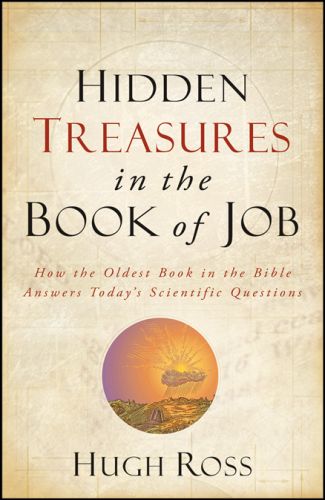
The message of Hugh Ross’s latest book is one that many evangelicals will celebrate: the Bible talks about things that modern science has only discovered in the past few centuries. He argues that the Bible anticipates scientific advances; in fact, the authors were on par with the greatest minds of today as far as their knowledge of the world around us. Unfortunately, the science he attributes to the biblical authors is anything but biblical.
Hugh Ross’s Hidden Treasures in the Book of Job: How the Oldest Book of the Bible Answers Today’s Scientific Questions doesn’t claim to be a commentary. Rather, his stated intent is to “focus on the science-related content of the book of Job, especially on passages describing God’s involvement in creation” (7). He recounts his own ‘Job-like’ suffering in the prologue to the book, including a blocked artery, the death of his father and father-in-law, the onset of asthma, his son being stabbed, three fender benders, and a diagnosis of cancer.
Source criticism
Most books of this nature can be judged quickly and accurately with a quick look at its bibliography. Ross’s references are sparse, about half his chapters have less than 10 sources. Ross’s scholarly commentaries (and he only consulted two) are outdated, and his up-to-date sources aren’t scholarly (they’re on the level of devotional/lay writings, which are good when used for their intended purpose, but not so good when trying to use them to establish exegetical points in a work like this). Also, after Chapter 3, one hardly finds any biblical sources at all. Instead, nearly all references are to scientific articles. When a book is supposed to be about the Bible, this dearth of sources is appalling. We should expect scientific sources in a book like this (in fact, I would have liked to see far more than he gives), but the sudden absence of references for his exegetical claims was surprising.
In fact, Ross references materials far too infrequently. One is supposed to cite a source whenever they’re making statements outside their area of authority. But Ross says nearly nothing about his own area of astronomy, and says a lot in areas where he’s already been proved, beyond a doubt, to be incompetent, such as Hebrew,1 with not a source in sight. Sloppiness in basic research skills doesn’t bode well for the rest of a book.
Does Job give us a background for Genesis?
Many commentators would put Job’s life at around the time of the Patriarchs for several reasons. First, his wealth was counted in flocks and not precious metals. Second, there’s no hint of the Levite priests, or any distinctive Jewish religion. Third, he offers sacrifices on his own behalf and for his family, and there’s no temple involved. And there are other reasons.
But this doesn’t necessarily mean that Job is earlier than Genesis 1–11, as Ross believes. Many people think that Moses was acting as an editor of early documents. Pre-Flood passages speak about geographical features as if they still existed, leading some to think that perhaps the accounts come from sources that were written down before the global Flood destroyed all traces of those landmarks. If that’s the case, Job could well have Genesis as its background, not the other way around.
Regardless of which depends on which, Ross is wrong to say that, “While Genesis may be the most familiar and obvious creation narrative, it is neither the sole nor the supreme source of biblical revelation regarding the origin and history of the cosmos and life” (18). This is demonstrably false, for when Jesus, Paul, Peter, John, and Jude wanted to say something about creation, they went back to Genesis, and they read it as the ‘supreme source of biblical revelation’ regarding creation (see The Use of Genesis in the New Testament for more information). In any case, it requires breathtaking hubris for someone to comment this far outside of any field he has credentials in, with no indication that he’s undertaken the relevant study to gain the skills required, and with no citation of any authority that would lend credibility to his work.
Ross claims that Job fleshes out the Genesis creation account in several important areas, but he fails to establish that God does these particular things mentioned in Job during those specific points in Creation Week, and that they lasted for the duration Ross gives to them. For instance, he assumes that 2/3 of the universe’s history elapsed between the Big Bang and the earth’s formation. In answer to the skeptic’s question “What was God doing that whole time?” he refers to Job 9:8: “He alone stretches out the Heavens.” In other words, this was what God was doing for all those billions of years. But there’s nothing in the context of Job to place this action anywhere chronologically, and Ross never explains his reasoning.
Invalid lenses
Ross makes statements such as “As a scientist reading Job” several times (for instance, p. 21). In another place he references his first experience reading Genesis as a 17-year-old. In another book review, I pointed out how nonsensical it is to cite the exegesis of an uninformed teenager as authoritative in any sense. But the scientist doesn’t necessarily have the correct tools to interpret Job any more than the uneducated teenager. Job is a piece of wisdom literature with historical narrative and poetry thrown in for good measure—to look for scientific statements as such in Job is a mistake. This is not to say that the statements in Job don’t correspond to reality—nothing in Job will contradict science, when both are properly interpreted. But I have my doubts about how much useful scientific evidence someone could come away from Job with, unless they already came to the text with significant scientific knowledge that they could use in order to ‘translate’ Job’s statements into scientific categories.
Ross illustrates this sort of mistake when he claims that Job 38–39 gives us the solution to global warming (21). First, given the amount of text referring to ice and snow in this part of Job, it seems global warming was hardly a concern at that time—it’s a stretch of the imagination to think that they even had a notion of such a thing. Second, the passage is focusing on God’s glory and preeminence over all that He’s created. To read any statements about global warming into Job is so misguided that it seems an understatement to call it eisegesis.
Execrable exegesis
One of the worst things about Ross’s exegesis in this book is the lack of even the pretense of it. A common formula of his is to quote or reference a verse from Job, then take one of the concepts and talk about it at length, with very little attempt to argue that Ross’s ideas are anything close to what the Bible author was actually thinking of. For example, Ross spends a whole chapter (chapter 10) talking about Job’s list of the ‘top ten’ nephesh (soulish) animals in Job 38–39. He examines each one in turn and shows how each is uniquely suited to help humans. We wouldn’t argue against his assertion that these animals are beneficial to humans, because God designed them to be that way. But Ross makes no effort to establish that these animals are included on the list because they are nephesh chayyah (‘living souls’), or that their usefulness to humans is what is in view. Yes, ostrich meat may be healthy—it is also nowhere implied in Job 39 (not to mention that it would be unclean to Jews—see Leviticus 11!). What makes the ostrich more useful to humans than the demonstrably utilitarian sheep or camel—neither of which appear on Job’s list?
Rather, the animals in Job 38 and 39 are described in terms of God’s provision for them and sovereignty over them, and God is glorified by the traits which He gave them. Humans are not even in the picture. Ross may have reasons for interpreting this section of Scripture as he does, but he gives no indication of what that may be.
Commentary or not, when a book of the Bible features prominently in a book’s title, one expects to find some indication that the book’s structure, context, and thoughts form a large part of what the book talks about. But Ross’ book has the substance and feel of any one of Ross’s other books, with the same old arguments. A verse from Job is thrown in, which Ross exclaims anticipates modern science, because if you squint and look at a passage very carefully, it looks like it might be referring to something like the Big Bang.
Dubious arguments
Many of Ross’s arguments are simply unsupported. For instance, he argues:
Though early humans were capable of living past nine hundred years, the lack of population growth indicated that few died of natural causes. It seems the vast majority had their lives cut short by murder. Mathematical calculations suggest that the average life span in pre-flood times was likely less than the average life span in the world’s developed nations today (40–41).
Ross does not humor us with the actual numbers here, nor does he tell us precisely where in the biblical data he came up with the raw data for his calculations. This is not the first time he has used numbers like this, but nowhere does he detail his “mathematical calculations”. One wonders where he gets this idea from anyway, for the only historical details we have on early human longevity indicate that, from Adam to Noah, ten generations of men lived to an average of over 800 years. The Bible is not silent on the issue. It clearly says people lived a long time, and, in the one lineage that is detailed (that of Noah), nobody died young.
Other gems include the insight that “angels have existed for the past 3.8 billion years or more” (48) and “recent studies reveal that the law of decay, or the second law of thermodynamics, has been optimally fine-tuned by God to restrain humanity’s expression of evil and to motivate pursuit of virtue” (49). Many times he gives a footnote for these sources, but when one looks to the notes, we’re only pointed to another of Ross’s books, instead of the original source for these fascinating insights. Of course, there are no outside sources for these ideas as they seem to have come from the pen of Dr. Ross himself.
Ross claims that “A much greater diversity of plant species is possible when moisture is delivered in a broad range of raindrop sizes” (79). This seems absurd on the face of it. While some plants are designed in such a way to shed vast amounts of water, and others would be too fragile to survive a downpour unprotected, the size of raindrops themselves wouldn’t be a controlling factor. There is great plant diversity in cloud forests, whose predominate source of precipitation is from mist and clouds, and in rain forests, which receive their precipitation in the form of torrential rain for a large portion of the year. While diversity in rain drop sizes and delivery of precipitation makes plant diversity possible on a global scale, on a local scale the diversity allowed is dictated by the maximum size rain drop—it doesn’t matter how much light drizzle one has—the fragile plants will be killed by one torrential downpour unless protected, if raindrop size is important at all.
His statement that “plants cannot survive for one moment without the sun’s heat and light and gravitational influence” (81) further establishes the small extent of Ross’s knowledge of plant biology and also indicates problems with physics. Plants are able to grow in human space ships, shielded from any gravitational influence by the free-fall motion around the earth. One wonders if he intended to say that plants cannot exist without earth’s gravity? As far as the sun is concerned, the moon gravitational effect has is far more important for plant life than the sun’s gravitational impact, since many plants (e.g., mangroves), are affected by tides. Seeds can and do sprout in total darkness, and while many plants wouldn’t grow properly without gravity, this wouldn’t affect germination.
He also repeats a common misconception:
Unlike human hunters, lions go after the weak and sickly, not the strongest and healthiest. In doing so they optimize the health and fitness of the larger group and, in turn, benefit the humans who depend upon those herbivores for their well-being (151).
But as a recent Journal of Creation article demonstrated, this is not necessarily the case. Predators often go after the more robust animals, perhaps relishing in the chase, and often bypass the sickly.
He makes another curious statement:
Anthropological research indicates early humans lacked the technology and economic means to colonize lands far distant from Mesopotamia and Northern Africa. Certainly not such places as Antarctica and Greenland. Archaeologists find no evidence of human habitation outside the region surrounding the juncture of Africa, Asia, and Europe until long after what would have been Noah’s era (96).
However, once people exited Africa (in the evolutionary scenario, from which Ross’s view doesn’t differ appreciably here), there was nothing ‘technological’ to keep them from spreading across all of Europe, Asia, and even to Australia. The Vikings survived in Greenland for 300 years with ‘Medieval’ technology and the Inuits did so for centuries prior to that with ‘stone age’ technology. And how does Ross define ‘Noah’s era’? He avoids the problem of Neandertals and other human variants by calling them soulless ape-men. But this simply defines the problem into non-existence without addressing it in any meaningful way, for his definition of ‘human habitation’ means ‘modern human’ exclusively.
Behemoth and Leviathan
Ross’s take on Behemoth and Leviathan is predictable: they are, he argues, a hippopotamus and crocodile. He argues that they couldn’t be anything we would call dinosaurs because Job is describing nephesh creatures, and there’s no indication that either fall into that category. But if the emphasis is on the glory God that He receives as a result of His creation of awesome creatures, then a sauropod and a Sarcosuchus (for example) would fit perfectly. What better animal to call “Behemoth” (a transliteration of a Hebrew word meaning ‘beast of beasts’) than the largest land animal ever to walk the face of the earth?
The idea that Behemoth could be a hippopotamus doesn’t fit even if one buys Ross’s rationalization about the description of its tail. Hippos have been hunted and butchered since ancient times, and they appear in captivity in zoos today—they might be fearsome creatures, but not on the level attributed to Behemoth, as described in Job.
The notion that Leviathan could be a crocodile also doesn’t fit. Crocodiles, especially the big ones, are intimidating creatures, but they also can be hunted. If God were talking about a normal crocodile, when He asked, “Can you put a rope in his nose or pierce his jaw with a hook,” Job might have answered, sure! Modern readers might read, “Lay your hands on him; remember the battle—you will not do it again!” and think of the late Steve Irwin, who was famous for doing precisely that hundreds of times over. We strip off his outer garment (41:13) and make boots out of them, and merchants (v. 6) sell handbags made of crocodile skin. And crocodiles are not as impervious to human weapons as Leviathan is said to be. But take a super-sized crocodile—like Sarchosuchus, which also had bony armour plating—and the description starts to seem a lot more apt.
Martyr
Ross’s self-narrative is familiar to any who have read his books. Ross claims to have this great, biblical interpretation that fits with science, and this would heal a lot of the hurt in the church, and a lot of the ‘Genesis-phobia’ that he continually sees. He adds many anecdotes in an attempt to prove his point. But the mean creationists just won’t listen, according to him. In fact, they actively persecute and make fun of him. This argument makes an appearance in several places, but less than in most of his books, thankfully. For instance, he says:
“Ever since the launch of Reasons To Believe more than two dozen years ago, I’ve had to bear the public distortions of my beliefs and the assassination of my character by those who disagree with my creation perspective. During the past few years those kind of assaults had worsened and spread” (9).
And
The hostility I faced in each of these situations seems minor compared with what I’ve encountered in some (not all!) churches. I can anticipate things may go badly when I see a “Hugh Ross Attack Pack” on every seat. Another clue comes when the pastor introducing me informs his congregation that he disagrees with my beliefs about science and the Bible but wants to allow me a hearing. The folks in these places usually allow me to complete my message. After all, we are in church. But when the Q&A session begins, the sparks start to fly. Instead of asking for clarification on points of disagreement, they scold me. They pin beliefs on me I’ve never held. They imply my mind is so weak and my ego is so fragile that I swallowed everything my atheistic professors taught me. They say I seek the favor of men more than of God. They accuse me of faking graciousness as a means to deceive audiences (89).
Here, he sounds like he is describing the life of a CMI speaker, but not one of them has ever had so many accusations hurled at them by a church all at once! No doubt one thing he has in mind is Dr Jonathan Sarfati’s Refuting Compromise, which specifically addressed Ross’s most egregious exegetical and scientific errors. Yet, Ross has refused numerous chances to debate Dr Sarfati, one in particular at the American Vision Conference in 2007. Surely, if he was so unfairly attacked, he would welcome the opportunity to set the record straight in a public forum. One wonders what Ross has to be afraid of.
Many of his anecdotes are self-congratulatory, such as where he recounts a final exam where the professor took his paper from him after only an hour: “He told me it was pointless for me to suffer through another two hours given that my performance so far had already established that I deserved the class’s highest grade” (41).
Good science, good faith: Ross has neither
Ross, as always, assumes that modern science is true, and that the Bible must be referring to modern science, apparently whenever possible. This leads him to make egregious exegetical errors because he’s looking for scientific data in a non-scientific genre. The Old Testament contains no lab reports or technical journal papers. There is no science as such in the Bible—its statements about reality are largely framed in historical terms. This doesn’t mean that the Bible has nothing to say about science; if so, the reason for existence of both CMI and RTB would be moot. But it does mean that, when we’re asking what the Bible tells us about science, we have to appreciate that we’re extracting information that is at best secondary in the mind of the biblical author. Where the Bible makes a statement that implies something about science, what is implied is completely accurate, but in general it’s not the point that the author was trying to make.
Ross gives the anecdote (this book, like most of his books, is heavy on anecdotes): “Recently, a scowling student approached the microphone during my talk at his university campus. He wanted to know how any reputable astronomer could possibly give credence to the biblical claim that the sun was created after plant life appeared. At least that’s what he had heard the Genesis story said” (25). This is the sort of scenario CMI speakers are very familiar with (and for our answer to that question, see our Creation Answers Book chapter). Disappointingly, though, Ross’s answer is that ‘created’ means ‘appeared’, an argument we deal with conclusively here.
Answers to scientific questions?
There are many other scientific and exegetical errors in Hidden Treasures in the Book of Job that space did not permit me to cover—many of them are recycled from his other books, and we have already addressed them in other reviews.2 The above, however, should be sufficient to cause someone to question any statement Ross makes in any area of science, theology, or exegesis. In the scholarly world, once a list of this many exegetical errors is made, the burden of proof suddenly shifts to the author to justify the rest of his work. It is not necessary to do it here.
To conclude, Job does not give us direct answers to scientific questions. Job is not a science book—Job is a mixture of historical narrative, poetry, and wisdom literature. To ask Job to answer questions about modern science risks doing severe violence to the original intent of the book, and Ross’s book is a prime illustration of how badly this can go.
References and notes
- For instance, see Exposé of The Genesis Question. Return to text.
- See our reviews of More than a Theory, A Matter of Days, and The Genesis Question. Return to text.


Readers’ comments
Comments are automatically closed 14 days after publication.