

Journal of Creation 24(3):29–31, December 2010
Browse our latest digital issue Subscribe
Making sense of how an atheist is made
A review of The Making of an Atheist: How Immorality Leads to Unbelief by James S. Spiegel
Moody Publishers, Chicago, IL, 2010
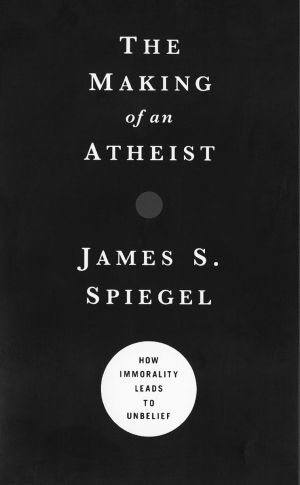
In this brief but insightful book, author James Spiegel cogently clarifies, especially for Christians, the real cogs that turn in the engines of atheists’ hearts, including the New Atheists. One key distinction of the New Atheists is that not only do they say that it is probable that there is no God, but that belief in God is wrong and should be proactively stamped out. Not only is Spiegel’s analysis backed up with history, Scripture, and logic, but his suggested mindsets and tactics for Christians to use in ministry among atheists are equally insightful and practical. This book has something for young and old, and would be a valuable addition to most any Christian’s library.
The entire book follows a progressive flow that compels the reader forward. Spiegel’s first two chapters point out obvious and fatal flaws with the atheistic worldview. In fact there are more, and more well-laid-out, arguments in just these forty large-font pages than there were in the entire book God and the New Atheism by John Haught, which was reviewed in the December 2008 issue of Journal of Creation.1
Succinctly refuting atheism
For example, Spiegel notes that the problem of evil, often considered the bedrock of atheism, “could never count as grounds for atheism” (p. 26). This objection is usually framed as a question like, “How could a theistic God allow evil, since by definition he doesn’t like it and is able to stop it?” Spiegel states that “one cannot—whether by appeals to evil or anything else—eliminate the need to explain the existence of the universe. Nor does the problem of evil eradicate the abundant physical and biological evidence for design” (p. 27). He admits that while it is challenging, the problem of evil really has nothing much to do with explaining how this world got here.
Not only this, but New Atheists like Richard Dawkins who have used the problem of evil to argue against God’s existence actually “have no grounds to call anything evil” (p. 27). The New Atheists are ‘positivists’, which means they believe that all real or true knowledge must come from a science experiment. Spiegel correctly points out that this faith claim is self-refuting, since, “the notion that all beliefs must be scientifically verifiable is, well, not scientifically verifiable” (p. 29).
Unfortunately, Spiegel admits that Christians ought to agree with atheist objections that past Christians are guilty of murder, abuse, oppression, slavery, torment, and torture, all motivated by the Bible. Most of the cases that New Atheists cite actually show that these evils were motivated not by Scripture, but by evil human intentions perhaps seeking justification from the Bible for their crimes. Thus, although we can agree with Spiegel that it is certainly our duty to admit faults, nevertheless the New Atheists’ spin on Christian history is grossly inaccurate, and thus not necessary to repent of. Further, atheists in the last century alone have murdered thousands [of times more] people as in the ‘religious’ wars and inquisitions of all previous centuries combined.
Clarifying a few arguments
It is also unfortunate that on page 45 Spiegel concedes to big bang cosmology as part of arguing for a first cause of the universe. If it began at one point in time (as he believes the big bang suggests), then it must have had a beginning. However, the big bang does not require a single beginning, but could be interpreted as the most recent fluctuation of an eternally oscillating universe.2 Thus, the big bang is a poor foundation for the cosmological argument for God.
Universal entropy is better suited for this argument. Since a measure of usable energy is lost every time energy or matter converts from one form to another, and since there remains plenty of usable energy, it must all have had a beginning. Though Christian apologists Geisler and Turek support the big bang, they explain this line of reasoning more fully.3
Also, on page 49 the author appears to concede Dawkins’ conception of organic evolution by natural selection. However, on the following page he refutes Darwinian evolution, recalling
“ … the lack of transitional forms in the geologic record, problems in accounting for the emergence of flight (in no less than four classes of organisms—insects, birds, reptiles, and mammals), and diverse instances of irreducible complexity in biological structures and functions” (p. 50).
Upon reflection, Spiegel’s apparent concession to Darwinian evolution on the prior page was only for argument’s sake. In context, he was showing that because Darwinian evolution as it is conceived can only operate on pre-existing life forms, and because there is no possible natural explanation for the first life, therefore all that is required to settle the question of God is examining the problem of the first life. In this way, arguments about evolution are often false cloaks behind which atheists have been hiding.
Spiegel dedicated his book to Christian philosopher Alvin Plantinga, and attempted to summarize the logic that Plantinga had rigorously defended elsewhere, showing that the naturalistic view leads to another self-defeating and therefore totally irrational perspective. In broad strokes, if all life formed by Darwinian selection whereby fitness is the sole determinant of that which persists, then even our cognitive faculties are the result of this process. If so, then “there is no necessary connection between the survival potential of a cognitive system and the truth of the beliefs it produces” (p. 58). Thus, in a naturalistic universe, there is no reason why belief in evolution ought to be true.

After refuting atheism in such plain language, the reader is left wondering, “If atheism is so incoherent, then why does anybody buy into it?” So this question is answered next.
How atheists are made: not by any scientific evidence
First, the link between right living and “cognitive function” (p. 52) is found in Ephesians 4:17–19, which the author exegeted. Verse 18 must be referring to people like atheists, “having their understanding darkened, being alienated from the life of God, because of the ignorance that is in them, because of the blindness of their heart.” According to Spiegel, “the root of the problem, apparently, is not a lack of intelligence but rather a hardness of heart that is itself caused by immoral behavior” (p. 52).
Matthew 15:19 states that immoral behavior proceeds from the heart. So there seems to be a progression whereby evil hearts give birth to evil thoughts which become evil deeds. Then, especially as immoral evils are perpetrated, evil hearts become hardened. This destructive process cripples intellect, or darkens understanding.
Spiegel outlines the slippery slope by which “sin corrupts cognition” (p. 54). First there is a moral slip-up, followed by withdrawal from Christians. Then there are doubts about the faith, with continued sin which ultimately leads to willful rejection of God. This useful insight is mirrored by Søren Kierkegaard’s quoted statement on page 57 that “people have hitherto been beating the air in their struggle against objections, because they have fought intellectually with doubt instead of fighting morally with rebellion.”
The sordid backgrounds of prominent atheists
Spiegel described features that the vast majority of atheists have had in common. First, they had either dead, absent, or abusive fathers. But he notes this is only a contributing cause. Atheists with such fathers include practically all the big names from our time and prior: Hume, Shopenhauer, Neitzsche, Russell, Sartre, Camus, Hobbes, Voltaire, Feuerbach, Butler, Freud, Wells, O’Hair, Daniel Dennett and Christopher Hitchens.
Atheists also indulged in immorality, and Spiegel referenced that this has been gruesomely described in Intellectuals by historian Paul Johnson. Rousseau sired and abandoned five illegitimate children; Karl Marx had an illegitimate and unacknowledged son; Leo Tolstoy was a seducer and adulterer; Hemingway was a womanizer; and Bertrand Russell was a serial adulterer. Johnson clearly demonstrated that modern era atheists “decided by their will to be immoral, not [by] their quest for truth” (pp. 73, 74).
Other examples of atheists’ personal miseries were provided in The Making of an Atheist, but even more could be added. For example, it has been revealed in recent biographies that “sexologist” Alfred Kinsey preferred working with prostitutes and homosexuals for sex experiments and surveys, and was himself a bisexual masochist who encouraged his graduate students to join in orgies.4
Thus, the will to live in sin has been the primary incentive behind the will to reject God. Spiegel quoted atheist Thomas Nagel as saying: “I want atheism to be true” (p. 85). Similarly, author Mortimer Adler initially rejected belief because it “would require a radical change in my way of life” (p. 85), although late in life he rejected unbelief and became a Christian. The problem of evil, and issues of science are largely smokescreens that mask atheist’s immorality and guilt.
Restoring light to darkened hearts
When atheism fully sets in, what results? “Spiritual deadness ensures that we can’t discover our spiritual deadness” (p. 90). Further, “it is difficult for theists to reason with atheists about worldview matters when such basic features of spiritual life are so denigrated. For this reason, we should not expect atheists to respond positively to rational arguments” (p. 101). But Spiegel balances this perspective with the admonition to always be ready to give a reason to everyone who asks.
Spiegel enjoins the reader to John Calvin’s comments supporting the idea that all people do retain some sense of God. Active rejection of God even belies some awareness of Him. Romans states that the wicked “suppress” God, and this action indicates that all have a ‘sensus divinitatus’.
In sum, poor fathering and poor moral choices instigate rejection of God. But the continued denial of God diminishes our sensus divinitatus, which inexorably leads to a breakdown of cognitive function. In this way, hearts are hardened.
So, what can Christians do if atheists are impeded from recognizing truth through arguments? The first key is virtuous living, which both stands out as a “powerful apologetic for unbelievers” and helps prevent believers from falling away (p. 117). “The more virtuously one lives, the more truth one is able to access, including truths about God and how to obey him” (p. 117).
Spiegel also notes with insight that to dwell on things that are excellent or praiseworthy, as Philippians 4:8 commands, leads to doing things like reflecting on the beauty of creation and therefore the Artist behind it. Avoid lewd entertainment. Intentionally read good books.
“We should take advantage of the privilege to thank and praise God. It satisfies emotionally and fertilizes faith” (p. 125). Atheists, unable to offer such thanks, become frustrated by the impulse to do so when they are inspired by majestic design in creation. Therefore live with understanding of their situation. “Be willing to be shortchanged, belittled, ridiculed, and scorned, and not return the same” (p. 128). This might influence a stubborn unbeliever, but it is living the right way, regardless.
References
- Thomas, B., The God of Evolution, Journal of Creation 22(3):35–37, 2008. Return to text.
- “The desire for a cyclic universe is still very much alive among non-Christian believers in the big bang.” Henry, J.F., Christian apologists should abandon the big bang, Journal of Creation 23(3):103–109, 2009. Return to text.
- Geisler, N. and Turek, F., I Don’t Have Enough Faith to Be an Atheist, Crossway, Wheaton, IL, pp. 76–78, 2004. Return to text.
- See Bergman, J., Kinsey, Darwin and the sexual revolution, Journal of Creation 20(3):111–117, 2006. Return to text.

Readers’ comments
Comments are automatically closed 14 days after publication.