

Journal of Creation 21(3):44–46, December 2007
Browse our latest digital issue Subscribe
Strong case, but flawed by compromise
A review of The Case for a Creator by Lee Strobel
Zondervan, Grand Rapids, MI, 2004
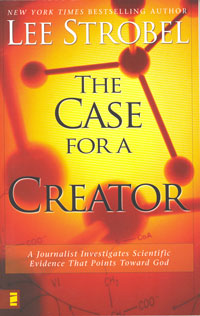
“You don’t need the Bible if you’ve got The Origin of the Species” (p 24). This is the challenge Lee Strobel brings in The Case for a Creator: does modern science support or refute the existence of an intelligent creator? Using his expertise as a journalist, he retraces his search for the truth about evolution and intelligent design, interviewing experts in areas including biochemistry, philosophy, astronomy and physics. The interviews build up a scientifically and philosophically convincing case for design rather than Darwinism.
Images of evolution
Strobel starts out by describing what he calls ‘images of evolution’ that were particularly persuasive to him and influenced him towards Darwinism. The four examples he gives are the Miller–Urey experiments purporting to prove that life evolved from non-living chemicals, Darwin’s tree of life, Haeckel’s embryo drawings, and the Archaeopteryx fossil ‘missing link’ between reptiles and birds. The problem with all of these evidences for evolution is that they break down under scrutiny.
The Miller–Urey experiment

The Miller–Urey experiment claimed to reproduce the atmosphere of the primordial earth and, using these conditions, create amino acids. The main problem with the experiment is that it used the wrong type of atmosphere, consisting of hydrogen, ammonia, methane and water vapour. Most evolutionary geochemists today believe that our earliest atmosphere probably consisted of carbon dioxide, nitrogen and water vapour, which gives much less favourable results. Even if the early atmosphere had been like the one in the Miller–Urey experiment, a few amino acids is far from a living cell; the amino acids would still need to be isolated from the surrounding material and assembled by chance and against the chemical barriers.1
Darwin’s tree of life
Darwin’s tree of life is a powerful image that sticks in the mind of every student from elementary school, with a one-celled ancestor as the ‘trunk’ of the tree, branching out into all the life forms that exist today. It is a good illustration of Darwin’s theory, but lacks even one undisputed missing link between different kinds of animals—the tree has no branches, trunk or root.
Haeckel’s embryo drawings
Haeckel’s embryo drawings, or similar sketches, are prominently featured in many biology textbooks. These drawings show alleged similarities between embryos as they develop; early in the sequence, the embryos of the different species look very similar, becoming more distinct as they progress in their development. These drawings are a fraud on several levels; he stacked the deck by choosing embryos of the species that would look most similar to each other, then made them look more similar than they really were. But, as Jonathan Wells explains to Strobel,
‘ … the most dramatic problem is that what Haeckel claimed as the early stage of development is nothing of the sort. It’s actually the midpoint of development … If you go back to the earlier stages, the embryos look far more different from each other. But he deliberately omits the earlier stages altogether’ (p. 49).2
Archaeopteryx
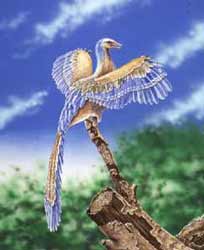
When Archaeopteryx was discovered, it was hailed as the missing link between birds and reptiles, but this claim fails on several levels. Archaeopteryx is not half-bird, half-reptile; it is a bird, with a bird’s feathers3 and structures that are very different from a reptiles’. There are no transitional structures; Archie had wings like modern birds, the unique avian lung system, a brain with large optic lobes, and semicircular canals in the ear that would have given it the good balance required for coordinating flight.4
Science: the only begetter of truth?
Harvard geneticist Richard Lewontin claimed that science is the ‘only begetter of truth’. It is ironic that this statement is self-refuting, because this statement cannot be tested scientifically, and as we gain knowledge through introspection and history that can’t be tested scientifically. Strobel explores the question of the proper boundaries of science and theology; can the two go together? Gould’s ‘non-overlapping magisteria’ claims that the Bible and science talk about two entirely different areas, making it impossible to have any connection between the two. However, the Bible makes claims that are scientifically testable, and the validity of its moral and spiritual message relies on its accuracy in all testable areas. Jesus’ statement, ‘If I told you earthly things and you do not believe, how will you believe if I tell you heavenly things?’ (John 3:12) shows the futility of trying to separate the Bible’s moral claims from its historical claims, including those that are scientifically testable.
The Darwinist has a problem when trying to invoke naturalistic causes for the origin of the universe; there is no nature to invoke before nature exists! Stephen Meyer explains, ‘You can invoke neither time nor space nor matter nor energy nor the laws of nature to explain the origin of the universe’ (p. 77). In other words, something outside of time and space and the laws of nature had to case all those things. Only theism provides an adequate answer for what caused the universe, although one does not need to believe that the God of the Bible is the Creator to use this argument.
Meyer also debunks the notion of the unbiased secular scientist:
‘Every scientist has a motive … but motives are irrelevant to assessing the validity of scientific theories … If every person in the Intelligent Design movement were a fundamentalist who attends Baptist Bible Church, it wouldn’t matter. Their arguments have to be weighed on their own merits’ (p. 85).
Otherwise, critics would be guilty of the genetic fallacy.5
Bad design?
Some Darwinists claim that evolution must be true on the basis of ‘bad design’ in certain structures. However, this argument is a theological argument, not scientific. People who claim that a structure is badly designed often fail to weigh the benefit of a structure to an organism versus the resources it uses. Most structures that evolutionists claim are ‘badly designed’ are adequate for the creature’s needs, and indeed the alleged ‘bad design’ turns out to be essential. A good example is the allegedly backwardly wired retina, an arrangement that turns out to be essential so that the light receptors can be regenerated and cooled .6 Furthermore, recent research shows that the eye even has a fibre-optic plate comprising the Müller cells that efficiently guides light through the nerve network.7
And in a case of true deficiency, it is easier for the creationist to explain how the Fall could corrupt an originally good structure than for an evolutionist to explain how that structure came to exist through mutation.
Cosmic design
Our universe is surprisingly suitable for life. This used to be taken for granted, but it has become clear relatively recently how remarkable the universe is. The fine-tuning of some of the constants is described as like throwing a dart from outer space towards the earth and hitting a precise atom.
So some opponents have used this as ‘evidence’ of multiple universes.8 However, these extra universes could not be observed, even in principle, so this is not science but special pleading. The multiverse theory is really the result of an a priori rejection of a designer, not science, and still fails to explain where they came from. If sceptics use Ockham’s Razor to reject a Designer, then a fortiori this should shave off these extra unobserved and unobservable universes and recognize that a Designer is actually a more parsimonious explanation.
Water
It used to be assumed that anywhere there is liquid water, life could flourish. Every time a new story comes out about a slight possibility of liquid water on a celestial body, it is inevitable that the possibility of life on that planet will be mentioned. However, the requirements for life on a planet are much more complicated than ‘just add water’, there are many criteria that must be met. Indeed, water is a huge obstacle for the origin of first life, because it tends to break down large molecules and inhibit their formation in the first place.9
Sun
For a planet to support life, it has to be in a certain place in the galaxy. It cannot be close to the centre because of the powerful black holes, and it also has to be away from the spiral arms which have many dangerous supernovas. The safest place is in between two of the spiral arms in the outer regions of the galaxy, but this region has less of the heavy elements needed to make a planet (but this presupposes an evolutionary origin of the planets which has major problems10 ). The sun is located in the exact best place in the galaxy for life. And it is in the unique co-rotation radius, where the star’s orbital speed matches that of the spiral arms, otherwise the sun would cross the arms too often and be exposed to supernova explosions.11,12
Earth’s position in the solar system is also ideal for life. If a planet is too close to the sun, all the water will evaporate; if it is too far, the water will freeze. There is a small area around a star where a planet’s orbit must be to have liquid water, this is the circumstellar habitable zone (CHZ). However, life can only occur in its inner edge; the outer parts of the CHZ require high levels of carbon dioxide in the atmosphere to trap the sun’s radiation and keep the water liquid, so there could not be enough oxygen in the air for animal life. A planet would also have to have a near-circular orbit; it would do no good for a planet to have liquid water for half the year and frozen oceans the other half.
It has long been assumed that our sun is an ordinary star; most high-school science classes learn how ordinary and run-of-the-mill our sun is. But the sun is far from ordinary—for one thing, it is in the top 10% of stars (by mass) in our neighbourhood; for another, it has many features that make it ideal for life on earth. It emits the right combination of red and blue light, ideal for photosynthesis.
Moon
The moon is an important feature: it is so massive relative to the earth (1/81) it stabilizes the tilt of earth’s axis, and generates tides that circulate ocean water and keep it fresh.13
Our moon can also cause total solar eclipses, which have greatly advanced astronomy. This can occur because of the fine match-up: the moon is both 1/400 the size of the sun, and 400 times closer, so they have the same angular size in the sky: 0.5’. Yet a blind spot of this book is that it fails to realize that this design makes sense only on a young earth view. Since the moon is receding, this matchup would not have worked for most of Earth history if it really were billions of years old.14
Earth
The earth itself has just the right mass. If it were less massive, it would not be able to hold an oxygen-rich atmosphere, but if it were too massive, gravity would pull mountains and continents down, and the whole world would be covered by the oceans.
There are also several negative feedback mechanisms that regulate surface temperature of Earth by reflecting light from the sun.
Beauty
There is also unnecessary beauty in physical laws, and their discoverability points to intelligent designer with a sense of aesthetics. This journal has also pointed to examples of beauty in the living world and the intricate mathematics behind it, as well as to the vacuity of ‘sexual selection’ explanations.15
The information problem
One of the most problematic areas of evolution is explaining how complex structures arose via random mutations. Especially difficult are irreducibly complex systems. Strobel defines irreducible complexity as a system that ‘has a number of different components that all work together to accomplish the task of the system, and if you were to remove one of the components, the system would no longer function’ (p. 197). There is no way to build up an irreducibly complex system part-by-part, because the absence of one of the vital parts does not result in a system that is simply less effective or efficient; the system does not work at all. Examples of irreducibly complex systems in nature include the bacterial flagellum and the blood clotting cascade.
Another problem evolutionists have is explaining how biological information in the form of DNA came to exist. Random chance could not create the complex code—it would be like throwing Scrabble letters at random to produce a work of literature. Self-ordering tendencies would create simple, repetitive sequences, while a code would require irregular sequences to convey information. Natural selection cannot be invoked either, for natural selection requires self-replicating entities to work; so it cannot be invoked to explain their origin. Leading 20th century evolutionist Theodosius Dobzhansky (1900–1975) said:
‘Natural selection is differential reproduction, organism perpetuation. In order to have natural selection, you have to have self-reproduction or self-replication and at least two distinct self-replicating units or entities. … I would like to plead with you, simply, please realize you cannot use the words “natural selection” loosely. Prebiological natural selection is a contradiction of terms’. [emphisis added].’16
Consciousness and the soul
Evolution has enough problems trying to figure out how life started at all, let alone a materialistic explanation of how consciousness came about. How could dead matter evolve consciousness? There is no inherent potential in matter to become conscious, and there is no real necessity for organisms to evolve consciousness. However, if materialism is correct, there can be no real consciousness, and no free will if we are governed simply by chemical processes in our brains.17
Conclusion
Strobel makes a good case for a designer, and much of the information in The Case for a Creator is useful to young-earth creationists. Strobel assumes the secular timescale of billions of years, and this is apparent especially in the astronomy chapter, though mentions of billions of years are scattered throughout the book. Some of his arguments rest on the assumption of the secular geological time scale, and it is asserted several times that the first life arose long after the beginning of the universe. This is a major flaw in his book, and makes it less useful than it could have been.
References
- See Bergman, J., Why the Miller-Urey research argues against abiogenesis, J. Creation 18(2):28–36, August 2002; <creation.com/urey>. Return to text.
- See also Grigg, R., Fraud rediscovered, Creation 20(2):49–51, 1998; <creation.com/fraud>. Return to text.
- See also Bergman, J., The evolution of feathers: a major problem for Darwinism, Journal of Creation 17(1):33–41, 2003. Return to text.
- Sarfati, J., Birds: fliers from the beginning, Creation 29(3):27, 2007. Return to text.
- See Sarfati, J., Loving God with all your mind: logic and creation, J. Creation 12(2):142–151, 1998; <creation.com/logic#genetic>. Return to text.
- Gurney, P.W.V., Is our ‘inverted’ retina really ‘bad design’? Journal of Creation 13(1):37–44, 1999; <creation.com/retina>. Return to text.
- Sarfati, J., Fibre optics in eye demolish atheistic ‘bad design’ argument, 3 August 2007, <creation.com/fiberoptic>; after Franze et al., Müller cells are living optical fibers in the vertebrate retina, PNAS USA 104(20):8287–8292, 15 May 2007 | 10.1073/pnas.0611180104, published online before print 7 May 2007; <www.pnas.org/cgi/content/abstract/0611180104v1>. Return to text.
- Tegmark, M., Parallel universes: Not just a staple of science fiction, other universes are a direct implication of cosmological observations, Scientific American 288:30–41, May 2003. Return to text.
- Sarfati, J., Origin of life: the polymerization problem, Journal of Creation 12(3):281–284, 1998; <creation.com/polymer>. Return to text.
- Sarfati, J., Earth is ‘too special’? Creation 28(3):42–44, 2006; <creation.com/earthspecial>. Return to text.
- Chown, M., What a star! New Scientist 162(2192):17, 1999. Return to text.
- Sarfati, J., The sun: our special star, Creation 22(1):27–31, 1999; <creation.com/sun>. Return to text.
- Pearce, F., Catching the tide, New Scientist 158(2139):38–41, 20 June 1998. Return to text.
- Faulkner, D.R., ‘The angular size of the moon and other planetary satellites: an argument for design’, CRSQ 35(1):23–26, June 1998. Return to text.
- After Burgess, S., The beauty of the peacock tail and the problems with the theory of sexual selection, Journal of Creation 15(2):94–102, 2001; <creation.com/peacock>. Return to text.
- Dobzhansky, T.G., Discussion of Synthesis of Nucleosides and Polynucleotides with Metaphoric Esters, by George Schramm, in Fox, S.W., ed., The Origins of Prebiological Systems and of Their Molecular Matrices, Proceedings of a Conference Conducted at Wakulla Springs, FL, pp. 309–310, 27–30 October 1963, Academic Press, NY, 1965. Return to text.
- See also Tate, D., Consciousness: a problem for naturalism: A review of The Truth About Human Origins (Chapters 5–8) by Brad Harrub and Bert Thompson, Journal of Creation 21(1):29–32, 2007. Return to text.


Readers’ comments
Comments are automatically closed 14 days after publication.