
Feedback archive → Feedback 2010
Ark ‘hominids’ and rib wrangles
Readers familiar with CMI’s articles concerning Adam’s rib will no doubt be intrigued by the second letter we’ve selected for publication this week. But first, commenting on our article about the claimed human ancestor Australopithecus sediba, South African correspondent Thys H. issued this challenge:
What a load of rubbish. It uses apparent scientific terms in a way which might impress the uninformed, but not the well-read adherents of evolution. I have seen articles that critisize [sic] Berger for not noticing strong homo-like traits in the Sediba-fossils.
Question: You admit that Australopiths are a species. It is not “human” but also not “ape”. Under what name was it taken up in Noah’s Ark according to your sources? Same applies to a great number of other hominid species.
CMI’s Dr Carl Wieland replies:
Dear Mr H.,
You ask:
Question: You admit that Australopiths are a species. It is not “human” but also not “ape”. Under what name was it taken up in Noah’s Ark according to your sources? Same applies to a great number of other hominid species.
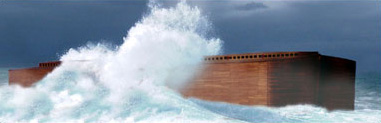
It’s not a question of ‘admitting’, as having them as a species hardly weakens the creationist case but rather the opposite. And of course, the Linnean classification system was not exactly in existence at the time of the Ark. The animals to accompany Noah on the Ark were two of each kind of land vertebrate. A biblical kind does not preclude variation, to the extent of speciation, within the genetic boundaries of that kind. This is not ‘evolution’ in the sense of a process driving molecules to man, as it all takes place within existing information parameters.
I would have thought that a careful reading of the article to which you are responding, including some of the linked references, would have made the answer very obvious. The evidence currently available, as we referenced from the respected evolutionary anatomist Oxnard, is consistent with the notion that all the australopithecines constitute a unique group of primates, that are not anatomically intermediate between humans and any of the extant ape groups. I would suggest that all the australopiths whose fossils we find today , including many that have been mislabelled ‘Homo habilis’, fall into this group, i.e. they are the descendants of two representatives of their kind on the Ark. The fossils in caves are clearly a post-Flood deposit.
It’s hard to know whether such fossil distinctions within Australopithecus as are found between afarensis and africanus, for instance, would translate into true species differences were they alive today. Even if there were say 4 separate species of australopiths post-Flood this does not preclude their descent from the one pair of their kind, in the same way as two representatives of the chimp kind likely speciated subsequently to give us Pan paniscus and Pan troglodytes (the pygmy chimp or bonobo, and the common chimp, respectively). It’s also unclear whether Ardipithecus deserves a separate genus name, and most likely was of the same created kind as all Australopithecus specimens.
Note that specimens labelled Homo erectus are almost certainly of post-Flood descendants of Adam, i.e. reflecting genetic variation within the human kind expressed in this instance in e.g. the robusticity of the skull features. Some that were in reality erectus, especially where particularly fragmentary evidence is involved, would have been wrongly classified as habilis (this problem with that taxon is not some creationist invention; see interview with evolutionist Dr Fred Spoor on the DVD The Image of God.) Of course, we would not see erectus as a separate species to sapiens in any meaningful biological sense, i.e. without denying the difference in e.g. robusticity, they would have been able to interbreed with each other. Even some evolutionary paleoanthropologists, such as Dr Milford Wolpoff, have similarly stated that it would make sense to classify Homo erectus as Homo sapiens.
So with humans on the ark, and the australopith kind (whatever it would have been called in Noah’s day) that covers, I believe, all the ‘hominid species’ to which your somewhat intemperate email refers.
Sincerely,
Carl W.
Wrangling over rib regeneration
Alessio B. (United Kingdom) submitted this question:
Hello,
@Bristol (the Science Museum in Bristol, [near] Wales) answered my question about using ribs for reconstruction of body parts after serious injuries. What they say doesn’t sound the same as what I read in Carl Wieland’s booklet about Adam’s rib. You can find the blog below and respond to them, if you like!
http://www.at-bristol.org.uk/646.html#jf4b2918ea
Thanks,
Alessio.
The gist of the portion of Dr Carl Wieland’s booklet Adam’s rib, creation and the human body relevant to the above enquiry can be seen in this short article: Regenerating ribs—Adam and that ‘missing’ rib. In Carl’s preliminary response to Alessio, he acknowledged that a more comprehensive answer would need more time:
Dear Alessio
This is Carl Wieland here. Thank you for your email. I note that they wrote on that site the following:
Do you know why to reconstruct bones after an accident they take some of your ribs?
And why they can go back there and keep taking more?Question via twitter from [email deleted]
Ribs can be used to replace things such as the mandible (jawbone).
Once a whole rib has been removed it will not regrow, if you remove one to three inches of rib it will regrow but will not be usable for bone reconstruction as it will be abnormally shaped.
You can use multiple ribs because there are 24 in total and you can lose portions of less than four without any functional loss.
Mark Yeatman BSc(Hons) MBBS MD FRCS(Eng) FRCs(C/Th)
Consultant Cardiothoracic Surgeon
University Hospitals Bristol NHS Foundation Trust
This is quite a surprise to me, because before going into print years ago, I checked my memory of what I was told with a plastic surgeon in Sydney, and he said it was correct.
I would imagine that a cardiothoracic surgeon should know what he is talking about, because they remove ribs, though I would not see them as authorities for what use plastic surgeons can put the bone to. Here then are the two things that puzzle me in his comments:
- that removing 1-3 inches is not usable for bone reconstruction as it will be ‘abnormally shaped’. It puzzles me, because I would have thought that a plastic surgeon can carve the bone removed to the shape they want, within limits. Where he says ‘such as the mandible’, it sounds as if his restrictions are because he is seeing it as ‘total replacement of one bone for another’. But in plastic surgery, sometimes one can use bone to ‘fill up’ defects in bone, and also in my case, rib bone was used to substitute for the missing nasal cartilage.
- A significant comment which I asked the plastic surgeon about (it was decades ago now) was whether the whole rib will regrow if removed with the periosteum intact. Maybe he took it as ‘a whole chunk of rib’ or whatever, but it appears that this surgeon is saying that 3 inches is the maximum for regrowth. My immediate thought is: I wonder if this web comment above includes the information about the periosteum. [This is the membrane that covers every bone, and in CW’s talks and writings, he points out that one needs to keep the periosteum intact in order for the rib to regrow—Ed.]
In any case, before [any thought of your] going back to these folk, I will check with a cardiothoracic surgeon friend of the ministry here in Australia, to seek clarification. If the answer is that even with the periosteum, only 3" will regenerate, then I will need to modify my comments in talks and in print (odd that no-one has picked it up for some 20 years), but it will make no difference to the statement that Adam’s rib would have regrown, because the Hebrew does not state that the whole rib was removed in any case. It says that God fashioned Eve from Adam’s ‘side’. The word carries connotations of curvature, and in addition, we are later told that she is called ‘flesh of my flesh, bone of my bone’, and the only bone in the side is the rib. So God would have taken flesh and bone from Adam’s side.
I’ll let you know of the outcome of my enquiries, which could take a few weeks.
Thanks for this once more.
Kind regards,
Dr Carl Wieland
Managing Director
Creation Ministries International Ltd (Australia)
creation.com
The cardiothoracic surgeon Carl consulted, Dr Andrew Hodge MB, BS (WA) and FRACS (Cardiothoracic), and Head of the Cardiothoracic Surgical Service at the Fremantle Hospital in Western Australia, has already been interviewed in Creation magazine. He replied to Dr Wieland as follows (italic emphases added):
Dear Carl
Speaking from my Cardiothoracic experience, the ONLY reason why a rib would grow back after excision is the presence of viable periosteum. Ribs are purposely resected subperiosteally [i.e. leaving behind the membrane covering every bone—Ed.]for two reasons. First, this is the most convenient surgical access to the chest cavity, and second so that they will grow back and provide local protection, and support for the muscles normally attached to them.
The end-product after healing can be weirdly shaped depending on the state of the injured periosteum and the inevitable distortion produced by the suturing. In theory the regenerated rib could be re-resected subperiosteally and I have had to do this on a number of occasions, but it is technically difficult, and re-entry to the chest is easier through the bed of another rib.
Correspondents should not forget that ribs have a designed purpose and are not structures that can be disposed of without consequences. The lower ribs in particular (those favoured for plastic reconstruction – easy access, few complications, carvability) have the functions of muscle attachments (diaphragm, abdominal and chest muscles), and physical protection of the soft internal organs (lungs, liver, kidneys, spleen). Hence it is desirable to resect subperiosteally in order to have some chance of these functions returning.
Protection of the underlying soft organs would not be seriously compromised unless 2 or 3 adjacent whole ribs were removed (e.g. including the 10th).
I have seen lung hernias occur through standard thoracotomy sites where the 6th or 7th rib and periosteum were removed and the sutures did not hold well enough for the thoracotomy to heal quickly, allowing the lung to push outwards between the adjacent ribs and under the skin. I have not seen this occur with subperiosteal rib resection, which is in any case less traumatic as well as allowing rib regeneration.
If bone required for reconstruction is separated from its periosteum and its blood supply, it provides only mechanical support while the soft tissues around it slowly dissolve it and the local forces remodel it to the functional shape required for its new position. It helps if the shape of the transplant approximates the shape of the desired end-product because the local forces have less to do – therefore ribs for jaws. This is why bone banks can be useful – the shape of the (dead) transplant can be very similar to the desired end-product.
Bone chips (from the patient’s iliac crest [outer part of the pelvic girdle—Ed.] or rib, or from the bank) can also be useful in filling bone defects, providing some local support and shape, and a local supply of calcium and bone proteins for reconstruction.
The issue of resection length is not relevant for ribs. If the whole periosteum is intact, the whole length will regrow. If not, then only that part which is intact will allow regrowth. It must be borne in mind that bone can form under different circumstances than under periosteum (eg myositis ossificans, the sesamoids in tendons, and in particular the bone that forms across a fracture or defect in a long bone).
Perhaps you should seek the opinion of an Orthopaedic Surgeon on this, but lengthening long bones (several centimetres) by deliberate osteotomy and distracting the ends by external fixateur allows for remodelling into a shape which is highly functional and almost original, and that occurs without the benefit of surrounding periosteum, at least initially. Live bone has the advantages of osteoclasts and osteoblasts which actively remodel according to the mechanical stresses of normal weight-bearing. [See Bridges and Bones, Girders and Groans—Ed.]
This is testimony to the design inherent in healthy repair of bones. It is one thing to accept after hundreds of thousands of [alleged evolutionary] years that a functional shape for bones is achieved—it is quite another to accept that in addition, they have the inbuilt ability to functionally repair themselves if subsequently damaged. Who would have thought it?
Kind Regards
Andrew
[In other words, Dr Hodge is saying that the science museum in Bristol is incorrect—the limiting factor is not the length of rib that needs to regrow, but the integrity of the periosteum (the “skin” or membrane around every bone, including the rib)—Ed.]


Readers’ comments
Comments are automatically closed 14 days after publication.