
Of barons, bones, birds and dinosaurs
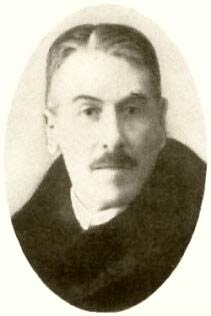
In 1895, Franz Nopcsa, a teenage baron from Transylvania, was shown some interesting fossil bones brought to his sister Ilona by peasants on one of their properties in Hatzeg. Soon after, he filled 19 wagons with fossils and took them to the University of Cluj, where he asked Professor Anton Koch for scientific references to enable the fossils to be identified. He was told there were no such references so he would have to write them himself. And write he did, publishing a first paper in 18971 and introducing to the world the first Transylvanian dinosaurs, including a first ornithopod species: Telmatosaurus transylvanicus (initially called by Nopcsa Limnosaurus transylvanicus). He then went to study at the University of Vienna and completed his doctoral thesis in 1903. A descendant of a baron known as Fatia Negra, who had attained legendary status as a Transylvanian version of Robin Hood, Franz Nopcsa had a tumultuous and troubled life. He became a member of the Royal Geological Society of London in 1912 and was a spy (for Austria-Hungary) during WWI. He even made a bid to become the king of Albania! Unable to cope with the massive sociological upheavals after the war, he shot himself (after sedating and shooting his long-time Albanian secretary and homosexual partner) in 1933.
Nopcsa’s fossil research methods and evolutionary views were way ahead of his times. Trying to explain the small average size of all Transylvanian dinosaurs, Nopcsa proposed that the area was an island in the Tethys Sea which allegedly covered a good part of Europe in the Maastrichtian (Late Cretaceous period, just before the famous extinction of the dinosaurs). Being isolated, the dinosaurs adapted their size to that of their island habitat (‘insular dwarfism’). One could imagine this as a sort of dinosaurian Galàpagos.
In 1978, much earlier (Early Cretaceous, according to the evolutionary timescale) dinosaur fossils were discovered about 150 km north.2 Although 10,000 bones have been excavated at the site, they allowed the putative identification of only six dinosaurian taxa, three pterosaur species and three bird species. Their habitat was described as an “archipelago of volcanic and coral islands”. The taphonomic investigation (a complex study of what may have happened from death to present times) has yielded little evidence for weathering but clear evidence for water transport (alignment of elongated elements). Predatory activity (evidenced via teeth marks) was also identified, yet the extreme rarity of carnivorous dinosaur types has puzzled researchers. Along with the small size of all the creatures in this fossil assemblage, it is considered further evidence for insularity.

In 2002 the fossil remains of a gigantic pterosaur were found in the Hatzeg area and promptly named Hatzegopteryx.3 Initially believed to be larger than the largest known pterosaur, Quetzalcoatlus northopi (with an estimated wingspan of maybe 11 meters), Hatzegopteryx was subsequently “demoted” to probably the same size as Quetzalcoatlus. This family of pterosaurs (Azhdarchidae) was most likely feeding on land where (at other locations) they have left many unmistakable footprints: four-toed hind legs and three-toed front legs (arms). It is therefore most intriguing that such large predators coexisted with an insular population of dwarfed dinosaurs. It appears the largest winged predators were feeding on some of the smallest dinosaurs.
Recent discoveries4 further complicate both the geological and evolutionary scenarios. In yet another area of Transylvania, about 65 km east of Hatzeg, in limestones ‘dated’ as Late Cretaceous, the largest known pterosaur was found,5 with an estimated wingspan of 13 meters. Based on other (marine) fossils, these limestones were assigned to the ‘Senonian’6 a term utilized in Europe for all sediments above the Turonian (Upper Cretaceous) and below the Danian (the first stage of the Tertiary) which in ‘absolute’ evolutionary age could be anything from 88.6 to 65 million years ago. As if finding pterosaurs in what were previously considered marine sediments was not enough of a puzzle for evolutionary scenarios, fossils of birds, including their nests and eggs, were also found at the very same location. The birds were enantiornithines, which except for toothed beaks and clawed wings, were similar to modern birds (Figure 1). The Transylvanian findings suggest they were nesting by rivers like ducks do. The discoverers make a rather colorful description of the birds’ last moments:4
“The frozen-in-time avian disaster scene suggests that the birds were enjoying a peaceful end to the nesting period, with some hatchlings and their parents already in the process of leaving, when everything suddenly changed.
“Because the fossil assemblage consists only of eggshell fragments, eggs and bird bones, it is most likely that the flooding was actually a quick ‘swamping’ or ‘drowning’ where the water from the river rose by, say, a foot or two
“ … it was not a massive tidal wave-style event, but most like a tidal bore-style flooding.
“The fossils show that some adults were swept up by the water and drowned. Baby bird bones suggest remaining chicks died too.
“The water sweeping across the colony picked up broken eggshell, any remaining eggs and birds, and carried them a few meters across to a shallow depression, perhaps present on the other side of the colony … ”
Now, if all these dinosaurs, pterosaurs and birds inhabited different islands, why they were all fossilized in rather similar conditions? Each time, some sort of flooding seems to have been involved, sometimes with violent transport of the bones. In addition, this Early Cretaceous site is inside a bauxite ore body which is interpreted as the result of intense tropical weathering, yet the dinosaur bones are not weathered at all, but clearly water transported!
Recent interpretations7 describe this Mesozoic Galàpagos as a stepping stone in the crossing of dinosaurs from Europe to Asiamerica and vice versa. There is another, simpler scenario which can explain all these unusual features very well. The alleged Tethys Sea was in fact one of the many arms of the global ocean rapidly invading the landmass as the Genesis Flood was unfolding. Dinosaurs, pterosaurs and birds were desperately trying to find sanctuary and some were caught on temporary islands. The flyers (pterosaurs and birds) could hop from island to island so some would end in areas which were not their normal habitat (like huge predatory pterosaurs amongst small dinosaurs). Some birds and probably some dinosaurs as well laid their eggs wherever they could, as modern birds would do when under intense stress. Other than the presence of eggs, no evidence for nesting was actually found. Modern nesting bird colonies are always littered with excrements which would have turned into detectable and quite visible mineral (mostly phosphates) deposits. If this area was indeed an archipelago for millions of years (as evolutionists claim) nesting places would have been rather scarce and lasting for very long time since they had to be located in areas inaccessible to land dinosaurs which would have considered bird eggs a delicacy. These Transylvanian fossil sites look much more as the “snapshot” of a geologic moment than an archive of a habitat lasting for millions of years.
References
- The Life and Legacy of the Dinosaur Baron, Scientific American, 28 September 2011; www.scientificamerican.com/article.cfm?id=dinobaron-the-life-and-legacy-franz-nopcsa Return to text.
- Benton, M.J., Cook, E., Grigorescu, D., Popa, E. and Tallódi, E., Dinosaurs and other tetrapods in an Early Cretaceous bauxite-filled fissure, northwestern Romania, Palaeogeography, Palaeoclimatology, Palaeoecology 130:275–292, 1997. Return to text.
- Buffetaut, E., Grigorescu, D. and Csiki, Z., A new giant pterosaur with a robust skull from the latest Cretaceous of Romania, Naturwissenschaften 89(4):180–184, 2002. Return to text.
- Viegas, J., Dino-era disaster: multiple drowned toothy birds, Discovery News, 3 November 2011; news.discovery.com/animals/drowned-dino-era-birds-111103.html?print=true. Return to text.
- New species of dinosaur and 68 million years nest discovered in Transylvania, Romanian Times, 31 October 2011; www.romaniantimes.at/news/Panorama/2011-10-31/17869/New_species_of_dinosaur_and_68_million_years_nest_discovered_in_Transylvania. Return to text.
- Mutihac, V., Ionesi, L., Geologia României, Editura Tehnică, Bucureşti, p.447, 1974. Return to text.
- Dyke, G., The Dinosaur Baron of Transylvania, Scientific American 305(4):81–83, October 2011. Return to text.


Readers’ comments
Comments are automatically closed 14 days after publication.