
Darwinism’s influence on modern racists and white supremacist groups: the case of David Duke
Racism is a major social problem in many nations today. A review of the writings of prominent modern racists, focusing on David Duke, finds that Darwinist ideas were critically important in developing and maintaining their racist ideas. David Duke, the most prominent racist in America today, heads the largest white supremacist organization in the world. His influence can be gauged by the fact that he was elected to serve in the congress of the state of Louisiana. His extensive writings about the central influence of Darwinist ideas on the development of his racist views are reviewed in this paper.
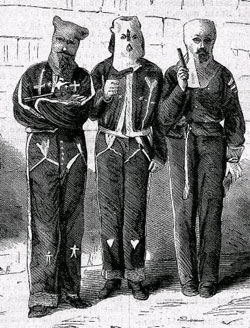
David Duke, a leader of several racist groups including the Ku Klux Klan and the American Nazi party, has ‘become a political rock star of sorts’—and one of the most well-known Americans of the past decade.1 Furthermore, Duke has worked with virtually every prominent American racist of the last 30 years.2,3 Duke’s popularity can be gauged by the fact that he received 680,000 votes in the 1991 Louisiana gubernatorial runoff, and was elected to serve in congress in the state of Louisiana.4
His religious background
Duke was reared a Methodist (his father was a Sunday school teacher), and later attended the Church of Christ.5 When race became an area of serious study for Duke, he no longer relied upon the Bible, but, instead, relied on science, specifically Darwinism. To learn ‘how racial differences originated’, he had to study evolutionary theory in detail.6 In his autobiography, Duke details his early religious upbringing, and why he rejected certain Christian teachings, specifically Genesis and creationism, and the ‘single origin of the races from Adam’ teaching.
Once he understood ‘the realities of racial difference’, he realized that ‘by learning about the evolutionary forces that created the different races, we can understand the character and conduct of the various races, our own included’.7 The conflicts Duke had with the church were not only with Darwinism, but also, especially, with the church’s opposition to racism. He bemoaned the fact that, when he graduated from college in the mid-1970s, an increasing number of churches were teaching that racism was a sin. By the 1980s, churches that were segregated only 20 years earlier, ‘even began to consecrate mixed marriages between Whites and Blacks’.8
Duke’s religious battle
Duke’s father, a geologist, tried to reconcile evolution with Christianity by concluding that evolution was the means God used to create life. This background set the groundwork for Duke’s later acceptance of Darwinism. As he read more and more on ‘the scientific issue of race’, he became torn between his religion and science.9 Duke was doing his research on Darwinism while he was attending a Church of Christ school in New Orleans. As a result of his study of evolution, Duke openly challenged his Sunday school teachers by discussing his evolving ideas about the origin of humans, and their implication for racism. When endeavouring to combine his Darwinist racist beliefs with Christianity, Duke used many of the same rationalizations used by theistic evolutionists to rationalize the plain statements of Genesis.
Duke eventually sided with Darwinism and rejected creationism. He concluded that with, ‘each passing day more evidence emerges of the dynamic, genetically-born, physical and physiological differences between the races’.10 So ended his ‘fleeting commitment’ to orthodox Christianity,11 even though he still peppers his writings with religious phrases, such as if ‘I can move our people one inch toward … God … my life will have been worthwhile’.12 His life tells a very different story. In short, after his acceptance of Darwinism, Duke unabashedly classified both the European and Asian races at a ‘higher level of human evolution than the African race’.13 He concluded that, ‘the evolution of man from his primitive to his modern state came from Nature’.14 Duke now firmly believes that ‘all life on Earth had evolved and is still undergoing change’.15
Especially important in Duke’s conversion to Darwinism was the ‘hard evidence of the great age of the Earth—such as the eras of geological time it took to raise Mount Everest from the bottom of the sea’.10 Long ages also figure prominently in Duke’s racist arguments. He concluded that the amount of time Darwinists believe that blacks and whites have been separated by evolution is more than enough time to produce what he views as the profound differences that exist in human races.16 He also relied on works such as Pendell, which reviewed the research on I.Q. and race, concluding that heredity plays ‘a leading role in intellectual ability’.17
Duke derisively called the ‘creationist belief that God instantaneously created mankind and all of Nature … egalitarianism’, and bemoaned the fact that egalitarianism became the ‘dogma of our times’. He was especially critical of creationism because creationists were egalitarians who teach ‘God made us all the same’.
Integral to Duke’s racism is the conclusion that genetics is central to determining a large variety of traits, including even sexual deviance, male/female differences, homosexuality and other traits. His conclusions in this area are similar to those of the early eugenic leaders who played an important role in American history at the turn of the last century, and also in Germany during Nazi rule. Duke discussed in some detail both positive and negative eugenics, implying support for both.
A concern repeatedly discussed by Duke is dysgenics—race degeneration that he concluded is caused by, among other factors, Caucasians interbreeding with ‘inferior’ races. Duke makes clear in his autobiography that his racism is clearly a result of his acceptance, not only of Darwinism, but also of the eugenics that logically results from Darwinism. Duke also repeats all of the arguments commonly published in the standard biological literature until the American civil rights movement—such as claiming that differences between the major races include not only skin color and hair texture, but also brain size, cranial structure, intelligence, musculature, hormonal levels, sexual behaviour, temperament, dentition, and even personality.18
Darwinists who influenced Duke
Duke admits that his interest in ‘the effects of evolution on races’ was originally stirred by professor Carleton Coon who, when Duke was doing his research, was the leading physical anthropologist and the president of American Association of Physical Anthropologists. Duke read all of Coon’s books he could find, including the Living Races of Man, Story of Man, Origin of the Races, and The Races of Europe. Coon published his many books with major publishers and, at the time of his death, was a research associate at the Peabody Museum of Harvard University. Zatarain claimed that it was Coon who ‘introduced Duke to the view that race was a key factor in the development of modern man’.19 Coon’s racists ideas were then mainline, and influenced hundreds of his students, who themselves became professors of anthropology at many of Americas leading universities. Duke was also heavily influenced by many other Darwinists, especially anthropology professor Earnest Hooton, also at Harvard. Although Duke relied upon many pre-1960 evolutionist writings in which racism was a dominant topic, he also quoted modern Darwinists. Duke’s belief that the major races have been in existence for tens of thousands of years meant there was ‘more than enough time for geography and climate to have created [by evolution] the profound differences that exist’ today between the races.20 The Darwinist conclusion that the Caucasian and Negroid groups have been divided for at least 110,000 years convinced Duke that significant differences existed between them.20 Duke determined from the speculations of modern Darwinists that Caucasian and Asians have been separated by only forty thousand years. For this reason, far fewer differences exist between them than between Negroids and Caucasians, who were separated long before this in the past. Duke repeatedly stressed that his conclusions on race were based on scientific research by leading modern scientists, and that this research forced him to reject the biblical creation account he was reared to believe.21
Professor Elmer Pendell’s influence
Another major influence on Duke was professor Elmer Pendell’s works, including Why Civilizations Self-Destruct and Sex versus Civilization.22,23 Both books concluded that more focus needs to be on the issue of human quality, as opposed to an almost exclusive focus on the concern of human quantity.24 Dr Pendell, also the editor/author of a major textbook,25 taught at Cornell, Penn State, and Baldwin-Wallace College. He holds degrees from Cornell and the University of Chicago. From Pendell, Duke obtained the idea that the less intelligent and less fit, as a whole, reproduce faster than the most intelligent and most fit.24 Pendell’s solution was to have the state regulate reproduction according to eugenic principles, which translates into sterilization of ‘inferior’ humans.26 Pendell reinforced Duke’s view that ‘cultural superiority is the product of biology’.27 Duke’s racist views even touched on the abortion issue:
‘Clearly, Duke’s belief that many humans were ‘scum’ and not worth nurturing was miles removed from the Christian underpinning of the right-to-life movement. But Duke’s belief in eugenics caused him to oppose abortion. He was prolife not because he believed in the sanctity of the human being, as do Evangelical Christians, but because he thought banning abortions would produce more white babies and fewer minority ones.’28
Pendell stressed that ‘the only source of brains is heredity’, and the key to evolution is ‘the elimination’ of the less fit.29 As a result, ‘as below average individuals were wiped out, the average moved up the scale … the weeding-out aspect of biological evolution has worked in the human species as well as in other species’ and ‘the culling of human flocks was basic to the development of mentality’.30 Pendell concluded that he was only ‘following through’ on Darwin.31
Race mixing
Race mixing is especially anathema to Duke, and is the reason why he is so concerned about segregation. Preserving the Caucasian genotype is critical, and interracial marriage, which can be prevented only by separating the races, is required to prevent degeneration of the human genome. Duke notes that interracial marriage is genocide, and is no less terrible than what the Germans attempted against Jews—and the ultimate result, he stresses, will be identical.32 Preserving the Caucasian race is but a precondition for continuing its evolution to a higher level.33
For all of these reasons, Duke is very concerned about blocking all egalitarian efforts, especially integration and the push for equal schooling for the races. He concludes that the great challenge is the ‘equality of the races’ question—and that in order to move up the evolutionary ladder, humans have to become smarter and healthier, and cross genetic thresholds that will some day make traveling to the Moon and other feats routine.33 Duke believes that Darwinism and racism are both clearly essential to the future of Western society and, thus, Duke is highly motivated to oppose all egalitarian efforts, and to support both segregation and the ‘advancement’ of Caucasians.
Duke stresses that many of the contrasting traits of Caucasians and Negroids is a result of evolution. For example, Duke noted that, when researching evolution, he compared the behaviour of Negroids and Caucasians. An example he gives is a fight between Muhammad Ali and Chuck Wepner (a Caucasian). He concluded that Ali had an ‘evolutionary advantage’ in the fight, adding that ‘I was probably the only one in the neighborhood who thought about the evolutionary racial differences between Ali and Wepner as the replay of the fight came on TV.’34
Those involved in racist movements are soon introduced to the idea that not only are Negroids inferior, but Jews are as well. Duke, likewise, encountered this issue and dealt with it by studying the ‘applications of evolutionary biology to the development of the Jewish people’.35 He concluded that Jews are inferior for many of the same reasons that Hitler did. This belief partly accounts for his active involvement in the American Nazi party.
Duke argues that:
‘Charles Darwin, in his study of the changing and evolving character of all life forms, demonstrated that principles of heredity combined with what he called, Natural Selection, had developed the exceptional abilities of mankind itself. His masterpiece, Origin of Species has a subtitle that expresses his whole idea in a nutshell; The Preservation of Favoured Races in the Struggle for Life.’36
Duke also noted that this concept dealt with natural selection not only at the individual level, but ‘even more importantly, on the selection process involving species and sub-species (races)’ as the subtitle of his ‘masterpiece’ demonstrates.37
H.G. Wells’ influence on Duke
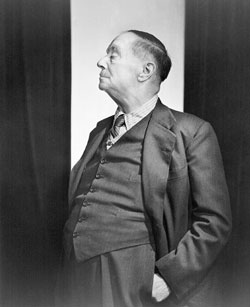
‘traits that originally led them to victory and dominance are lost as they gradually absorb the defeated population. Invariably the process begins again, and another people come on the scene and conquer, only to once more be absorbed by those they had vanquished … it became obvious to me that the race factor is present in the rise and fall of every civilization. In fact, in every fallen civilization there had been a racial change from the original founding population. The only real justification for the survival of a nation is a racial one—the survival of that specific population as a distinct genetic entity, as a source for the next generation.’40
Wells’ writing convinced Duke when he was still young that race was central to evolutionary advancement. From reading Wells’ and Pendell’s books, Duke came to conclude that his crusade against the black race is a matter of the very survival of America, a nation that he repeatedly states he loves.39 Although a disciple of Wells, Duke is actually working for much more moderate goals than his master. Wells had no qualms about admitting his solution to the world’s problems—a radical eugenics program that openly involved killing inferior beings. Wells’ attitude can best be summarized in his statement that, ‘there is only one sane and logical thing to be done with a really inferior race, and that is to exterminate it’.41
Duke was also influenced by Count Arthur DeGobineau’s Inequality of the Races—an old work that is still in print and used often by racists.42 Although DeGobineau wrote his infamous classic before Darwin published his Origin of Species, many of the ideas are the same. DeGobineau argues that civilization was ultimately the product of biology, specifically the racial characteristics of its founders. Civilization declined because of the inherent makeup of its founders changed, i.e. their racial quality declined because of ‘racial mixing’. Duke interpreted these concerns, especially those relating to the situation in America, as a result of Afro-Americans and Caucasians mixing.
Sociobiology, as advocated by Harvard’s Edward Wilson and other biologists, was also critically important in the evolutionizing of Duke’s thinking. Especially critical was ‘the landmark work of Wilson in his seminal Sociobiology; a Synthesis’. Duke read this work a few months after it came out and ‘found it magnificent’.43 Duke concluded that Wilson,
‘offered powerful evidence that behavior in the most elementary creatures such as ants … to the complexities of mankind itself, had a biological basis driven by the urge to preserve the genotype. Genetic kinship turned out to be a powerful factor in evolution and behavior. In such a context, group loyalty and altruism became understandable from the evolutionary perspective in that the individual may sacrifice his life and his individual reproduction to ensure the survival to those who are genetically similar to him.’43
Dawkins’ ‘selfish-gene’ idea, as shown in this statement by Duke, was also critically important.
Other evolutionists who influenced Duke
Of the many persons whom Duke lists that influenced his racist views, most were professional Darwinists, including Julian Huxley and George Bernard Shaw.36 He also studied the books of Henry Garrett, former chair of the psychology department at Columbia University and head of the American Psychological Association, and African Genesis by Robert Audry.44 Duke also relied on Sir Arthur Keith’s ‘dynamic’ book, A New Theory of Human Evolution,45 which stressed that not only individuals, but also groups (such as racial groups) are subjected to evolutionary pressures.
Duke even relied upon Frances Galton’s writings, the man who coined the term ‘eugenics’ and endeavoured to control human reproduction to improve ‘the inborn qualities of a race’.36 Duke notes that Darwin wrote to Galton, openly giving complete support to Galton’s eugenic views—and Duke concluded that relying on great men such as Darwin and Galton (as well as Harvard professors Wilson, Hooten, Coon and others, including ‘many of the leading lights of Western Civilization’) lent scientific support to his ideas, empowering him to carry on his campaign with confidence and vigour.36
Many biological works completed by well-known scientists whom Duke had read have been reprinted by various modern racist groups. One example is University of Texas at Austin professor Roger J. Williams’ book, Free and Unequal; the Biological Basis of Individual Liberty,46 originally published by the University of Texas Press and reprinted by Liberty Press, a racist organization. The book stresses that races, whether in mice, rats, horses, insects, or humans, all have developed by evolution—and that ‘if human beings failed to develop races they would constitute the only exception in the whole biological kingdom’.47
The books that Duke cited as being critical in the development of his ideas relied heavily upon Darwinism. For example, one of the most notorious racist books in the last century, Putnam’s Race and Reason: A Yankee View,48 published by the prestigious Public Affairs Press of Washington D.C., has a laudatory introduction by Ruggles Gates, Ph.D. and Henry Garrett, Ph.D., D.Sc., Robert Gayre, D.Sc. and Wesley C. George, Ph.D., all eminent Darwinists.
Duke’s influence on modern racism today
It would appear that Duke’s writings on race, which quote many prominent scientists (his autobiography alone lists 45 pages of references, mostly academic) would be very convincing to non-creationists who are conversant with evolutionary arguments. And, indeed, according to the Amazon.com reviews, they are very convincing to many people. Out of one hundred and thirty-eight reviews (the vast majority of books have far fewer reviews), the average customer review was exceptionally high (4.5 stars out of 5). Most reviewers gave Duke’s 1998 autobiography written to defend and justify his racist views five stars, and a handful gave it one star under such headings as ‘inaccurate and bigoted’ or ‘propaganda at its shiniest’. Several reviewers condemned Duke’s ‘science’, not realizing that many of his ideas were taken straight from the writings of highly respected scientists—although many, but not all, were pre-civil rights generation scientists.
Conclusion
It is clear from a review of the writings of the most prominent racists today that a major support for their beliefs is Darwinism. From this (i.e. Darwinism) Duke became convinced that the key to America’s salvation is racism, specifically against Afro-Americans and Jews. Armed with this ‘knowledge’, Duke was determined to aggressively carry his message of Darwinism and eugenics (and where it led him—namely, to racism) to the world. He concluded, ‘I truly believe that the future of this country, civilization, and planet is inseparably bound up with the destiny of our White race’.49
He has now dedicated his life to this goal, in spite of the fact that the racist Darwinian arguments Duke relies on have all been carefully refuted (and shown to be harmful) by both creationists and evolutionists.50
Acknowledgements
I wish to thank Bert Thompson for his comments on an earlier draft of this article.
Re-featured on homepage: 19 August 2009
References
- Zatarain, M., David Duke: Evolution of a Klansman, Pelican Publishing, Gretna, LA, p. 10, 1990. Return to text
- Bridges, T., The Rise of David Duke, University of Mississippi, Jackson, MS, pp. 41, 115, 1994. Return to text
- Rose, D.D. (Ed.), The Emergence of David Duke and the Politics of Race, University of North Carolina Press, Chapel Hill, NC, 1992. Return to text
- Bridges, ref. 2, p. 2 Return to text
- Duke, D., My Awakening: A Path to Racial Understanding, Free Speech Press, Covington, LA, p. 256, 1998. Return to text
- Duke, ref. 5, p. 89. Return to text
- Duke, ref. 5, p. 90. Return to text
- Duke, ref. 5, p. 257. Return to text
- Zatarain, ref. 1, p. 80. Return to text
- Duke, ref. 5, p. 103. Return to text
- Bridges, ref. 2, p. 7. Return to text
- Duke, ref. 5, p. 273. Return to text
- Duke, ref. 5, p. 103. Return to text
- Duke, ref. 5, p. 104. Return to text
- Duke, ref. 5, p. 101. Return to text
- Duke, ref. 5, pp. 90–91. Return to text
- Pendell, E., Population on the Loose, Wilfred Funk, New York, p. 188, 1951. Return to text
- Duke, ref. 5, p. 86. Return to text
- Zatarain, ref. 1, p. 79. Return to text
- Duke, ref. 5, p. 91. Return to text
- Maginnis, J., Cross to Bear, Darkhorse Press, Baton Rouge, LA, 1992. Return to text
- Pendell, E., Why Civilizations Self-Destruct, Howard Allen Enterprises, Cape Canaveral, FL, 1977. Return to text
- Pendell, E., Sex versus Civilization, Noontide Press, Los Angeles, CA, 1967. Return to text
- Duke, ref. 5, p. 109. Return to text
- Pendell, E. (Ed.), Society under Analysis, an Introduction to Sociology, Cattell, Lancaster, PA, 1942. Return to text
- Burch, G.I. and Pendell, E., Population Roads to Peace or War, Population Reference Bureau, Washington, D.C., 1945. Return to text
- Bridges, ref. 2, p. 123. Return to text
- Bridges, ref. 2, p. 125. Return to text
- Pendell, E., The Next Civilization, Royal Publishing Company, Dallas, TX, pp. 20, 23, 1960. Return to text
- Pendell, ref. 29, pp. 23, 28, 116–117. Return to text
- Pendell, ref. 29, p. 208. Return to text
- Duke, ref. 5, pp. 108–109. Return to text
- Duke, ref. 5, p. 110. Return to text
- Duke, ref. 5, p. 97. Return to text
- Duke, ref. 5, p. 450. Return to text
- Duke, ref. 5. p. 640. Return to text
- Duke, ref. 5, pp. 450–451. Return to text
- Wells, H.G., The Outline of History, Collier, New York, 1922. Return to text
- Duke, ref. 5, pp. 118–119 Return to text
- Duke, ref. 5, p. 118. Return to text
- Quoted in: Trombley, S., The Right to Reproduce: A History of Coercive Sterilization, Weidenfeld and Nicholson, London, p. 32, 1988. Return to text
- Duke, ref. 5, pp. 119–120. Return to text
- Duke, ref. 5, p. 451. Return to text
- Zatarain, ref. 1, pp. 79, 88. Return to text
- Keith, Sir A., A New Theory of Human Evolution, Philosophical Library, New York, 1949. Return to text
- Williams, R.J., Free & Unequal: The Biological Basis of Individual Liberty, Liberty Press, Indianapolis, IN, 1953. Return to text
- Williams, ref. 46, p. 210. Return to text
- Putnam, C., Race and Reason: A Yankee View, Public Affairs Press, Washington, D.C., 1961. Return to text
- Duke, ref. 5, p. 273. Return to text
- Bergman, J., Evolution and the origins of the biological race theory, Journal of Creation 7(2):155–168, 1993. Return to text
Readers’ comments
Comments are automatically closed 14 days after publication.