
Darwin’s finches
Evidence supporting rapid post-Flood adaptation

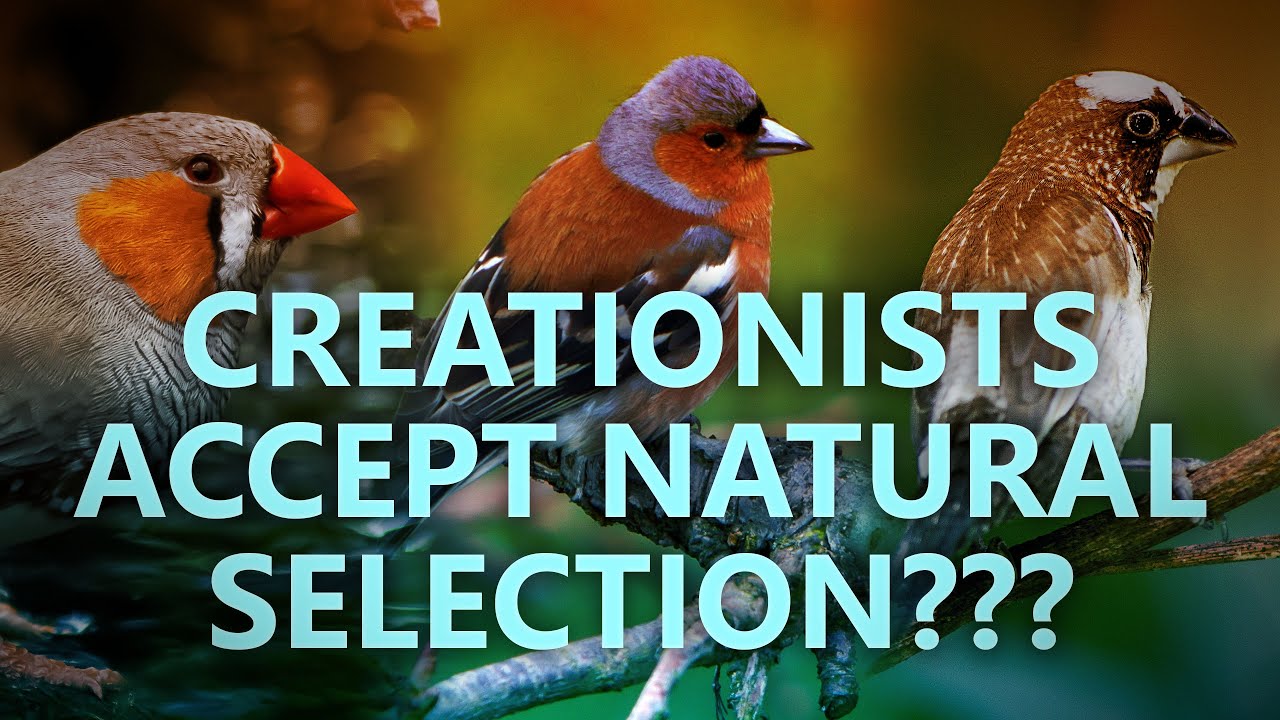
Thirteen species of finches live on the Galápagos, the famous island group visited by Charles Darwin in the 1830s. The finches have a variety of bill shapes and sizes, all suited to their varying diets and lifestyles. The explanation given by Darwin was that they are all the offspring of an original pair of finches, and that natural selection is responsible for the differences.
Surprisingly to some, this is the explanation now held by most modern creationists. It would not need to be an ‘evolutionary’ change at all, in the sense of giving any evidence for amoeba-to-man transformation. No new genetic information would have been introduced. If the parent population has sufficient created variability (genetic potential) to account for these varied features in its descendants, natural selection could take care of the resulting adaptation, as a simplistic example will show.
Say some finches ended up on islands in which there was a shortage of seeds, but many grubs were living under tree bark. In a population with much variation, some will have longer, some shorter, beaks than average. Those birds carrying more of the ‘long-beak’ information could survive on those grubs, and thus would be more likely to pass the information on to their descendants, while the others would die out. In this way, with selection acting on other characters as well, a ‘woodpecker finch’ could arise.
The same thing is seen in artificial selection, with all the various modern breeds of dogs being more specialized than the parent (mongrel) population, but carrying less information—and thus less potential for further selection (you can’t breed Great Danes from Chihuahuas). In all these sorts of changes, finches are still finches and dogs are dogs. The limits to change are set by the amount of information originally present from which to select.
Creationists have long proposed such ‘splitting under selection’ from the original kinds, explaining for example wolves, coyotes, dingoes and other wild dogs from one pair on the Ark. The question of time has, however, been seized upon by anti-creationists. They insist that it would take a much longer time than Scripture allows. Artificial selection is quick, they admit, but that is because breeders are deliberately acting on each generation. The usual ‘guesstimate’ of how long it took for Darwin’s finches to radiate from their parent population ranges from one million to five million years.
However, Princeton zoology professor Peter Grant recently released some results of an intensive 18-year study of all the Galápagos finches during which natural selection was observed in action.1 For example, during drought years, as finches depleted the supply of small seeds, selection favoured those with larger, deeper beaks capable of getting at the remaining large seeds and thus surviving, which shifted the population in that direction.
While that is not very surprising, nor profound, the speed at which these changes took places was most interesting. At that observed rate, Grant estimates, it would take only 1,200 years to transform the medium ground finch into the cactus finch, for example. To convert it into the more similar large ground finch would take only some 200 years.
Notice that (although the article fails to mention it) such speedy changes can have nothing to do with the production of any new genes by mutation, but are based upon the process described, that is, choosing from what is already there. It therefore fails to qualify as evidence for real, uphill (macro) evolution — though many starry-eyed students will doubtless be taught it as ‘evolution in action’.
Instead, it is real, observed evidence that such (downhill) adaptive formation of several species from the one created kind can easily take place in a few centuries. It doesn’t need millions of years. The argument is strengthened by the fact that, after the Flood, selection pressure would have been much more intense — with rapid migration into new, empty niches, residual catastrophism and changing climate as the Earth was settling down and drying out, and simultaneous adaptive radiation of differing food species.
Reference
- P.R. Grant, ‘Natural Selection and Darwin’s Finches’, Scientific American, 265(4):60–65, October 1991. Return to text.


Readers’ comments
Comments are automatically closed 14 days after publication.