

Focus: creation news and views
Dinos galore

Long-age paleontologists are dismissive of the biblical creationist view that the earth is only about 6,000 years old, and that most fossils were laid down in a global Flood about 4,500 years ago. That’s despite their encountering the strongest possible evidence (short of eyewitness testimony) for recent fossils/Flood in their daily work.

For example, Montana State University paleontologist Jack Horner has seen (and even smelled!) ‘fresh’ dinosaur bones, complete with red blood cells (see e.g. Creation 19(4):42–43, 1997 and 28(4):8–9, 2006, <creation.com/schweit>). He’s also observed first-hand dinosaur fossil ‘graveyards’ at various sites around the world that pose the question: how could these dinosaurs have been so preserved in such numbers buried under what is often described as ‘lake sediments’?

In fact, on a recent expedition to Mongolia’s Gobi Desert, Horner and his coworkers found 67 dinosaur skeletons in just one week! (The same area had yielded 30 skeletons last year.)
What possible scenario might explain, in what is now the Gobi Desert, how this many dinosaurs could suddenly die and be covered quickly with ‘lake sediments’? Sounds like it was a catastrophic watery event. And seeing as how similar fossil evidence is found right around the world, what more evidence of a catastrophic global Flood do you need?
Montana State University, www.montana.edu/cpa/news/nwview.php?article=4016, 20 September 2006.
Diamonds fast and flawless
The technology to produce man-made diamonds continues to improve. It is now possible for flawless single-crystal diamonds of more than 2 carats (the average engagement ring is less than a carat) to be churned out in a day. This shows you don’t need millions of years to get diamonds! (See also Creation 26(3):7, 2004.)
Apart from ramifications for the jewellery industry, researchers are hoping to further develop the technology so as to be able to cheaply mass-produce diamond semi-conductors. During the past year, they’ve been able to grow 10-carat single crystals with a colour and clarity surpassing that of mined diamonds.
Popular Science, www.popsci.com/popsci/whatsnew/301306492d68b010vgnvcm1000004eecbccdrcrd.html, 16 June 2006.
Kenyans protest evolution display
When Christians found out about an evolutionary display entitled ‘The Origins of Man’ being prepared by the National Museum of Kenya, they launched a campaign to have the display removed, or at least put in a less prominent location.
‘When museums put it out there that man evolved from apes, theologically they are affecting many people who are Christians, who believe God created us,’ said Bishop Boniface Adoyo, chairman of the Evangelical Alliance of Kenya. ‘It’s creating a big weapon against Christians that’s killing our faith … when children go to museums they’ll start believing we evolved from these apes.’
(For further commentary see creation.com/kenya.)
The Observer (UK), observer.guardian.co.uk/world/story/0,,1868904,00.html,
25 September 2006.
NewScientist 191(2569):10, 16 September 2006.
LEBENDIGE VORWELT Museum

Not an old cobweb
A piece of spider’s web, complete with a captured fly, has been found preserved in amber in Spain.
‘Dated’ at about 110 million years old, it’s been dubbed ‘the world’s oldest web’. But it’s certainly not ‘primitive’, as David Grimaldi of the American Museum of Natural History in New York makes clear. ‘It’s a geometrically complex web, certainly not a random assortment of strands like a cobweb,’ he said.
The actual evidence, as opposed to evolutionary storytelling, fits perfectly with the Genesis Creation account and a biblical time frame. Spiders have always been spiders, at least some with the built-in capability of producing geometrically complex webs from the beginning (about 6,000 years ago).
The amber fossil likely dates from the Flood, about 4,500 years ago (see Creation 25(2):53, 2003; creation.com/amber), which makes much more sense than the claimed 110 million years.
Science 312(5781):1761, 23 June 2006.
New Scientist 191(2558):22, 1 July 2006.
High-tech dino tails
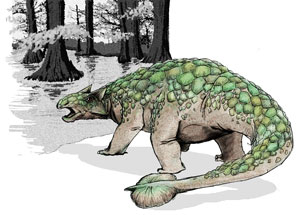
New research shows that the backs and tails of ankylosaurs were protected by strong, lightweight ‘armour’ so sophisticated that it’s been likened to the structure of a fibreglass surfboard or the Kevlar of bullet-proof vests.
Torsten Scheyer of the University of Bonn, Germany, found two complex arrangements within the ‘armour’. In the bone calcium of the plates, interwoven collagen fibres formed mats that crisscross from layer to layer. Within each mat, parallel fibres were angled perpendicular to fibres in the mats above and below.
‘The armour was thereby endowed with great strength in all directions,’ said Scheyer. He also pointed out that as the ankylosaur swung its tail in self-defense, the layering could absorb large amounts of stress.
All creatures reflect the ingenious hand of the Designer—the Creator God of the Bible. None fit the evolutionary notion of being ‘primitive’, leaving sceptics with ‘no excuse’ (Romans 1:20).
We have previously reported on the amazing armour design in living creatures that is inspiring human designers—e.g. the conch (Creation 27(3):19, 2005) and abalone (<creation.com/abalone>).
Live Science, www.livescience.com/animalworld/041117_dino_tech.html, 19 July 2006.
Just an ox

The kouprey—an ox with dramatic, curving horns—was discovered in Cambodia in 1937. It was recognized as a new species, and hailed as one of the 20th century’s most famous discoveries. The kouprey (which means ‘forest ox’ in the Khmer language) is now the national animal of Cambodia, and fears for its extinction saw it become an ‘icon’ of Southeast Asian conservation.
Now the authors of a genetic study published in the Journal of Zoology ‘present compelling genetic evidence that the kouprey may never have existed as a wild, natural species.’ They compared kouprey DNA with DNA from a Cambodian wild ox, the banteng. The results show the kouprey may have originated as a domestic hybrid, between banteng and zebu cattle, that later became wild.
‘The kouprey has acquired a rather romantic, exotic reputation,’ said Gary Galbreath, one of the study’s authors, of Northwestern University. ‘Some people would understandably be sad to see it dethroned as a species.’
This finding fits with the biblical creationist view that the various breeds of cattle around the world, including the American bison and the Tibetan yak, notwithstanding the different species names biologists assign to them, are all descendants of the same original created ‘kind’ (Genesis 1:24–25). DNA studies will reveal species belonging to other created kinds.
Northwestern University News and Information, www.northwestern.edu/newscenter/stories/2006/09/kouprey.html, 22 September 2006.
‘Chimney Rock’ eroding
Evolutionary notions that the earth has been shaped by slow-and-gradual processes over millions of years have conditioned the way people look at the world.
For example, many view familiar rock features as being stable and unchanging—even ‘permanent’ in the sense of human timeframes. So evidence to the contrary—e.g. the recent collapse of one of Australia’s ‘Twelve Apostles’ (Creation 28(1):33, 2005)—surprises many.
Nebraska’s Chimney Rock is a long-familiar ‘icon’ used to adorn decorative spoons, license plates, and now that State’s commemorative 25-cent coin. But to the surprise of many it’s eroding away. According to the Nebraska State Historical Society the Chimney Rock ‘spire’, currently about 36 metres (120 ft) high, has lost about nine metres (30 ft) in the past 150 years—more evidence that millions of years are not necessary.
PHYSORG.COM, www.physorg.com/news72360582.html, 18 September 2006.


Enceladus geysers
The Cassini space mission to Saturn continues to throw up surprises. That planet’s little moon Enceladus turns out to be ‘completely different than the cold, dead icy moon it should have been. Small as it is, it has an internal heat source and is geologically active.’
According to NASA, this explains the geysers on Enceladus, ‘spewing out’ water vapour and ice particles from its southern pole (top photo right)—enough water to maintain the moon’s atmosphere, feed Saturn’s vast E ring, and decompose into clouds of oxygen like the one Cassini had detected two years ago on its way to Saturn.
But how could tiny Enceladus still be so ‘geologically active’ after all the billions of years it’s presumed to have existed?
The biblical timeframe, with a universe only thousands of years old, makes much more sense.
Cassini–Huygens News Features, saturn.jpl.nasa.gov/news/features/feature20060629.cfm, 13 September 2006.
Cave painting surprise
Elaborate pre-Columbian cave paintings by the indigenous Alacaluf people have been found in Chile. More than 40 ‘stunning paintings’ in black and ochre were located in a cave in Madre de Dios island in Patagonia. The find has surprised anthropologists, as the Alacaluf were not previously known to have produced such art.
‘For years, people have insisted that this group did not engage in artistic expression, so now we are seeing that they were more advanced than had been believed,’ anthropologist Marcelo Aguilera said.
Such surprise is a consequence of an evolutionary mindset, in which ‘primitive’ man is thought to be ‘less evolved’ than ‘advanced’ humans. But from the Bible’s historical account, there’s nothing surprising about the Alacaluf find—man has always been intelligent and creative.
ABC News, www.abc.net.au/news/newsitems/200603/s1586770.htm, 9 March 2006.
Plans for Darwin’s 200th
As well as annual ‘Darwin Day’ commemorations scheduled for 2007 and 2008, planning for the 2009 ‘global celebration’ to mark the 200th anniversary of Darwin’s birth is well underway.
The number of events has increased substantially since Darwin Day was first commemorated a decade ago, with a host of regional atheist and humanist associations, along with Skeptics and ‘Freedom from Religion’ groups, hosting lectures and seminars to teach people more about evolution and Darwin.
Construction plans are also being drawn up for a replica of the H.M.S. Beagle, the ship that took Charles Darwin around the world between 1831 and 1836. ‘With all the Darwin 200 celebrations, there is not one big project to focus the attention on,’ said Peter McGrath, one of the leaders of the Beagle project. ‘I know the effect a square rigger has on young people—it’s a jaw-dropping sight.’
The hype surrounding ‘Darwin 200’, in addition to the evolutionary teaching bombarding us from all quarters, highlights the urgent need to arm people with the truth.
Darwin Day Celebration, www.darwinday.org, 18 September 2006.
BBC News, news.bbc.co.uk/2/hi/uk_news/wales/south_west/5190734.stm,
13 September 2006.
Hindu convert stays on as ‘Christian minister’
Many mainstream church leaders do not accept a straightforward reading of the Creation account in Genesis, leaving open the way for acceptance of Darwinian notions of evolution.
But according to evolution, man created ‘God’, rather than the other way around. Thus all religions are seen as equally ‘valid’ (and wrong). And now it is reported that a Reverend David Hart will apparently be allowed to continue to officiate as an Anglican minister despite his conversion to Hinduism. India’s national newspaper The Hindu pictured Mr Hart offering prayers to an idol of the four-armed elephant god Ganesh in front of his house.
‘I have neither explicitly nor implicitly renounced my Christian faith or priesthood,’ said Mr Hart. ‘My philosophical position is that all religions are cultural constructs.’
However, it’s reported that ‘not everyone in the Church of England is impressed’ by this, no doubt recognizing that Mr Hart’s views are contradicted by Scripture, e.g. John 14:6, Luke 11:23. But Reverend Hart is being logically consistent—as this magazine has indicated before, ‘god’ could be a three-horned cosmic cow (Creation 22(4):4, 2000) once you eliminate the Bible as absolute truth.
The Times Online, www.timesonline.co.uk/article/0,,2-2348095,00.html, 14 September 2006.


Mars too toxic
Dust storms on Mars appear to be creating a ‘toxic snow’ of bleach-like chemicals, making life impossible on that planet’s surface. Two NASA-sponsored studies have found that the often-seen ‘dust devils’ and planet-wide storms on Mars could generate a raft of corrosive chemicals, including hydrogen peroxide. Blanketing the Martian surface, these would render the soil sterile.
This new finding might explain the conflicting results when NASA’s Viking landers tested Martian soil for signs of life in the mid-1970s. One instrument found nothing, but another recorded that when nutrients were added to Martian dirt, the nutrients were broken down—an indication that microorganisms might be present. But now researchers say that the presence of hydrogen peroxide in the Martian soil ‘could have fooled the Viking instruments by producing reactions similar to that expected by microorganisms.’
For Christians, the accumulating evidence that life is absent elsewhere and that extra-terrestrial environments are uninhabitable ought to be no surprise. It was the Earth that the Creator formed to be inhabited (Isaiah 45:18) and it’s specifically because of what Adam did on Earth—not some sentient being elsewhere—that the entire heavens will be destroyed by fire (2 Peter 3:7–12). (See Gary Bates’ book Alien Intrusion: UFOs and the evolution connection.)
In stark contrast, it’s no wonder that researchers with an evolutionary mindset continue to eagerly probe for evidence of ET life, believing that if life evolved on Earth, why not elsewhere?
SPACE.COM, www.space.com/scienceastronomy/060731_mars_duststorms.html, 13 September 2006.
National Geographic News, news.national geographic.com/news/2006/08/060807-mars-snow.html,
13 September 2006.
‘Fragile comets’ origins mystery

We have many times reported (e.g. Creation 25(3):36–40, 2003; 26(2):9; 2004) that the rapid rate of visible decay of comets (‘dirty snowballs’ of ice and dust) every time they pass the sun speaks of a young (i.e. only thousands of years old) universe.
Avoiding that conclusion, cosmologists have suggested that comets originate from the ‘Oort cloud’ said to surround our solar system.
However, the ‘Oort cloud’ is completely hypothetical—it has never been observed. What’s more, given the relative fragility of comets, exactly how do evolutionary cosmologists propose that comets are formed?
This is precisely the problem that the ongoing breakup of Comet 73P/Schwassmann–Wachmann 3 has brought into sharp focus. This comet passes the sun every 5.4 years and its continuing fragmentation has captured the attention of many space-watchers. This year telescopes showed that over 30 of the biggest fragments had themselves each split into several dozen smaller chunks 20 to 30 metres across.
This prompted Casey Lisse of the Johns Hopkins Applied Physics Laboratory in Maryland, USA, to observe that the cores of comets ‘are as fragile as the meringue in lemon-meringue pie.’
Thus there remains a ‘great mystery’, according to Lisse. ‘How can a body as weak as meringue come together on a kilometre scale, then fall apart?’
Science News Online, www.sciencenews.org/articles/20060506/fob5.asp, 5 June 2006.
An ambitious project
An article in New Scientist entitled ‘Universe 2.0’ says that Nobuyuki Sakai and his colleagues at Japan’s Yamagata University ‘have discovered how to use a particle accelerator to create a whole new universe.’ So cosmologists around the world are considering how best to proceed with such a project.
But, you might ask, is such an ambitious undertaking really feasible?
‘The story really begins with the question of the origin of our own universe,’ says Eduardo Guendelman, a physicist at Israel’s Ben Gurion University. What he’s referring to is that with the growing acceptance of the big bang model of the origin of the universe came the understanding that if it happened once, it could happen again.
The question became, in the words of Andrei Linde, a cosmologist at Stanford University in California: ‘Could you concentrate enough energy to set off a mini big bang?’ According to Sakai’s group, it should be possible.
But there remain hurdles. As the New Scientist article points out, ‘It would be an extraordinary achievement, of course, but what happens then? It’s one thing to create a universe, but quite another to know where to keep it.’
Also, there’s the problem of raw materials—no-one’s ever found the type of particle (called a ‘monopole’) that the big bang theory claims our universe grew from. And then there’s the question of why go to all this effort, given that the laws of physics, as currently understood, prohibit even our visiting a newly created universe, let alone mining its resources.
Nevertheless, cosmologists remain excited by the idea. ‘Just imagine if it’s true and there’s even a small chance it really could work,’ says Linde. ‘In this perspective, each of us can become a god.’
Unfortunately for these would-be universe-builders, their grandiose plans are based on a false premise—the whole big bang idea is completely untenable. See Alex Williams’ and John Hartnett’s book, Dismantling the big bang .
NewScientist 191(2559):32–35, 8 July 2006.
They must be joking
Evolutionary biologists claim to have traced the origins of laughter to around four million years ago.
At that time, they say, pre-humans were slipping and stumbling in their first faltering attempts to walk on two legs. When the pre-humans saw a member of their group lose their footing they would laugh as a sign to each other that the slip-up wasn’t too serious.
According to Matthew Gervais and David Sloan Wilson, the authors of the study published in the Quarterly Review of Biology, language as a means of communication did not appear for another two millions years or so after the first laugh. They say that laughter functioned ‘as a medium for playful emotional contagion’, helping to bind group members together, especially important ‘during the fleeting periods of safety and satiation that characterized early bipedal life’.
What a story. The Bible says there is a time for laughter, but it certainly wasn’t millions of years ago. Given these evolutionists are apparently serious, it’s hard to know whether to laugh or cry (Ecclesiastes 3:4).
Of such godless schemes the Bible says: ‘The One enthroned in heaven laughs’ (Psalm 2:4, 37:13, 59:8).
The Times Online, www.timesonline.co.uk/article/0,,2087-21579461,00.html,
8 June 2006.
Quarterly Review of Biology 80(4):395–430, December
2005.
A quiet fan of the Designer’s

Examples abound of engineers having been inspired by design seen in God’s Creation. The quest to make portable computers even more compact has presented a number of design challenges, e.g. preventing the components from overheating in such a confined space.
In an interview with PC Authority magazine, Lenovo’s Arimasa Naitoh relates how, during the development of their Thinkpad computer, a young designer overcame the problem of excessive noise from the internal fan labouring to cool the graphics chip. Inspired by the near-silent flight of owls, he incorporated the owl-wing shape into each of the fan’s blades, greatly reducing the noise.
PC Authority, October 2006, p. 15.
Readers’ comments
Comments are automatically closed 14 days after publication.