

New design innovations from biomimetics
The exquisite designs of the organisms on Earth have served as inspiration to countless engineers and scientists. Important inventions, such as Velcro or the airplane, owe their inceptions to those who first observed these qualities in God’s handiwork and then sought to mimic these abilities. Although an ancient practice, biomimetics has grown in modern times as a form of reverse engineering.1 In practice, designs or processes in nature are studied for the purpose of finding practical applications and/or with the hope of designing artificial imitations. Recently the U.S. Department of Homeland Security (DHS) has funded biomimetic research that led to the development of an imaging device that can literally see through walls.
Lobster eye design
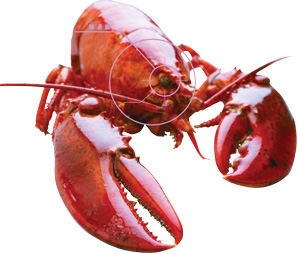
The unique design of the eye of the lobster is one such example that has been intensely studied to help understand how it allows some organisms to see in low light and murky waters. Rather than bending (refracting) the light to focus the image on the retina, several of the long-bodied decapod2 crustaceans (shrimps, prawns, crayfish and lobsters) possess reflecting compound eyes. Unlike the more common compound eyes of insects, which have hexagonal facets, the lobster eye design incorporates square facets that are arranged radially to form an optic array with a 180° field of view.3 The geometric assemblage of facets has all of the hallmarks of intelligent design and defies attempts to explain it through natural mechanisms.4

Science & Technology Directorate, Department of Homeland Security
Simply put, these facets are tiny square-shaped tubes with walls that act as mirrors to reflect the incoming light. The walls of each facet are perfectly aligned so that the reflected light is flawlessly focused toward the receptor layer so that they all merge at the same point (see diagram). The design creates an intensified, superpositioned image because the light from many facets combines to form a single image.5 As many as 3,000 reflective facets are found in some species such as the Norway lobster (Nephrops norvegicus), and increases in sensitivity up to 1,000-fold above that of the more common apposition type eye (where light remains within a single facet/ommatidium).6 Truly amazing!
Ears that hear and eyes that see—the Lord has made them both. (Proverbs 20:12)
Biomimetic applications
The decapod’s eye has the ability to intensify a low brightness image that is captured from a broad field of view using the technique of reflective superpositioning. Developing a system similar to that possessed by the lobster has intrigued engineers since the mechanism was first made known.
In a 2006 press release, UK researchers at the University of Leicester announced that they were developing an X-ray telescope that draws from the design features of the lobster eye. The “Lobster All-Sky X-ray Monitor”, which was originally proposed by Roger Angel of the University of Arizona in 1977, replicates the eye’s ability to focus images from all around without turning. Dr Nigel Bannister, University of Leicester, stated: “The great advantage of the Lobster design is an almost unlimited field of view”. The device may be used aboard the International Space Station or perhaps mounted on a free-flying satellite.7

More recently, the Physical Optics Corporation in Torrance, CA, operating under the U.S. Department of Homeland Security Science and Technology (S&T) Directorate has implemented the design of the lobster’s eye to create an imaging device. Known as LEXID (“lobster eye x-ray imaging device”), the new handheld imaging system can see through walls of various thicknesses and materials, and identify contents. The tremendous potential of the device has sparked interest from the U.S. Coast Guard, the U.S. Customs and Border Protection, and the Transportation Security Administration, which are organizations responsible for scrutinizing what is coming into the country.8
LEXID works by emitting low-level X-rays, which the lobster eye optics focuses into a collector. It then produces an interpretation of the returning X-rays on a small liquid crystal display, which is currently clear enough to reveal weapons or the presence of humans behind concrete walls. Although still in the developmental and testing phase, the prototype produced with just under one million dollars of Homeland Security money is expected to be ready for on-the-job DHS testing in the near future. In addition to DHS-intended applications, the inventors also envision a virtually unlimited number of alternative uses for the device, in fields ranging from construction to archaeology.9 Who would think that research revealing the incredible design of the lobster eye might someday safeguard nations or lead to other potential discoveries of historical significance?
Evolution or design?
The compound eye is one of the most complex and diverse organs. Crustaceans can be found with nine of the ten types of compound eyes, and four distinct types are present in the decapod subgroup. Apposition eyes (where each lens element contributes a unique part of each total image) are more common in crustaceans, but the reflecting superposition type discussed here is typical in the decapods (crayfish, lobsters, etc.).6
Evolutionists have attempted to construct phylogenies (evolutionary family trees) by comparing the types of compound eyes present in existing groups.10 They generally assume that the apposition eyes evolved first, since they are the most common type of compound eye. They are also present in larval stages of all decapods, and possessed by all ‘lower crustaceans’, such as the trilobite. The advanced reflecting superposition optics that inspired the LEXID are assumed to have developed by Darwinian processes in an ancient common ancestor of the decapods. However, no specific mechanisms for such a development have yet been put forth and experts admit that the overall structure of the eye would have to be radically transformed at once, or non-functioning intermediates would result.6
According to Edward Gaten, University of Leicester:
“The evolution of superposition eyes from the apposition eyes found in primitive crustaceans poses a particular problem. The apposition eye produces multiple inverted images whereas in the superposition eye a single erect image is present. To make this transition without going via non-functioning intermediates requires a continuing correction of the focusing properties of the dioptric apparatus so that light leaving the crystalline cone is either afocal or is focused onto the rhabdom layer.”6
Instead of recognizing the rather obvious implication, that a masterful intellect is responsible for the engineering wonders possessed by the organisms on Earth, the materialistic worldview causes many to naïvely accept that blind natural processes have given these amazing creatures the “appearance of having been designed for a purpose.”11 But the discipline of biomimetics speaks loudly against such materialistically derived fallacies. Engineers attempt to copy biological structures and processes because their designs are superior to those devised by the human mind. While LEXID and other devices based on the lobster eye are indeed ingenious technological innovations, they are but crude copies of the real thing.
Designs offer clear testimony of the existence and creativity of the One who created them, and the biological realm contains countless novelties that scientists struggle to comprehend, and in many cases they remain a mystery. Although we may never fully understand certain aspects of the creation, the qualities of the Creator are revealed through what is made, thereby leaving those who would deny His existence without any excuse (Romans 1:20).
Re-posted on homepage: 24 January 2018
References and notes
- What is biomimetics? How have designs in nature inspired human designers?; creation.com/biomimetics. Return to text.
- Decapods are a taxonomic Order (Decapoda) of 10-legged animals (deca = 10; poda = foot) in the Phylum Arthropoda, Subphylum Crustacea, Class Malacostraca. Return to text.
- Land, M., Eyes with mirror optics, Journal of Optics A: Pure and Applied Optics 2(6):R44–R50, 2000. Return to text.
- Sarfati, J., Lobster eyes brilliant geometric design, Creation 23(3):12–13, 2001; creation.com/lobster. Return to text.
- Land, M., Superposition images are formed by reflection in the eyes of some oceanic decapod Crustacea, Nature 263(5580):764–765, 1976. Return to text.
- Gaten, E., Optics and phylogeny: is there an insight? The evolution of superposition eyes in the Decapoda (Crustacea), Contributions to Zoology 67(4):223–235, 1998. Return to text.
- University of Leicester, Lobster telescope has an eye for X-rays, sciencedaily.com, 5 April 2006. Return to text.
- U.S. Department of Homeland Security, Eye of the Lobster, S&T Spotlight, 1(7), November 2007. Return to text.
- Hall, M., Lobster serves as model for new X-ray device, USA Today, 20 December 2007. Return to text.
- Bergman, J., Did eyes evolve by Darwinian mechanisms?, J. Creation 22(2):67–74, 2008; creation.com/eyes-evolve. Return to text.
- Dawkins, R., The Blind Watchmaker, W. W. Norton & Company Inc., New York, p. 1, 1996. Return to text.


Readers’ comments
Comments are automatically closed 14 days after publication.