
Feedback archive → Feedback 2010
The teeth of the patriarchs
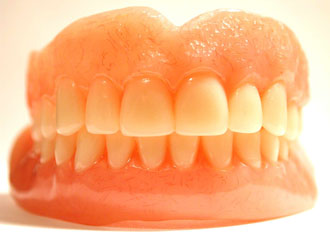
stockxchg
It’s very rare indeed that someone will write to CMI with an enquiry on the origins issue which has not yet been addressed in any of the thousands of articles we’ve published. USA correspondent Ann T. recently presented us with just such a question:
As a young earth creationist, I have wondered how the teeth of the long-lived patriarchs could have lasted and remained functional. I assume that there would not be any decay, but how could the enamel and dentin be replaced after so many years of wear?
CMI’s Dr Carl Wieland replies:
Dear Ann
You raise an interesting question, one I don’t think we’ve been asked before, and one that is worth exploring a little.
Before getting onto the main point, I would like to address your comment about “no decay”. Because the patriarchs lived after the Fall, they might well have had tooth decay—why not? But since that depends on things like diet and dental hygiene, and is not a straight line function of age (I’ve known youngsters with totally decayed teeth, and 90-year-olds with a near-perfect set of choppers), it’s not something we can easily take into consideration, as you suggest.
So the first thing I would say is, how do we know that they kept their teeth during those long lifespans? Quite simply, we don’t. However, even in low-tech cultures today, one sees that people who look after their teeth reasonably well keep them in fairly good condition for at least the majority of their life. So one would think it unusual if the design of the body as expressed in the preFlood world (see the article Living for 900 years) was suited for a lifespan of 600–900 years, but such that the folk concerned would only have teeth for the first 10% or so of their lifetimes. So that is a good motivation for this exploration—not that anything about the biblical account of preFlood longevity is under threat if we don’t come up with a good answer, but it would be of some interest to find out whether they could have kept their teeth for several hundred years. We can fairly assume, for simplicity, good dental hygiene and a good diet requiring a lot of chewing (as opposed to our modern diet), but not such a harsh existence that their food was mixed with significant dirt/sand, etc. which would greatly exacerbate wear. (This may have become the norm in the harsh post-Flood period, of course.)
As I understand it, secondary dentin can keep growing throughout life, so that would appear to be the answer for that. On the other hand, the cells that make enamel are believed to stop making it once the tooth is fully formed. The average rate of attrition (disappearance of thickness) of enamel today is about 8 thousandths of a millimetre per year. So given the known thickness of human enamel today (a maximum of about 2.5 mm, and it’s not even all the way around) that means in about 200–300 years at that rate, they would have exhausted their enamel thickness.
However, apparently it’s a misconception that enamel wear is mostly from chewing—in fact, during chewing, the tooth surfaces do not touch much. Being incredibly hard, straightout “wear” is less of a problem than cracking/microcracking, which is why its brittleness needs to be compensated for by the dentin acting as a cushion.
Wear of enamel today is mostly due to other factors than normal chewing; these include bruxism (the sort of tooth grinding when people are under stress), the bacteria that cause enamel decay, and acids in foodstuffs, the latter two obviously associated with diet. Even brushing itself, despite its benefits, can contribute to enamel wear. All the factors listed have links to our modern way of life, which may explain the existence of indigenous cultures with surprisingly good dental health in old age.
We assume, then, that the preFlood world had substantially less of those “lifestyle contributors” to enamel wear, the difference may well have been able to make the 2-3-fold difference in enamel attrition rate required to bring the range of “enamel lasting” up to the patriarchal lifespans.
Another thing possibly worth mentioning is that many of the fossils of extinct human types such as Neandertals (definite descendants of Adam) show what are known as taurodont molars. This stands for ‘bull-shaped’ teeth, and these teeth are larger, with larger than normal pulp cavities. Contrary to what one sometimes reads, they are not unique to fossil humans, but are a genetic variant found in a percentage of people today. (Sometimes, but not always, in association with genetic disorders. They appear to be a genetic variant that was more common in our ancestors.) It has long been believed that such teeth enabled the dentition to better withstand a more abrasive “caveman” diet. Why this should be is not clear, because the dentin and enamel are about the same thickness in taurodont teeth as their counterparts. But it has been speculated that the so-called tertiary form (“repair”) dentin is more readily produced in these teeth. This is manufactured in response to external factors such as tooth decay.
This is obviously a fairly complex subject, and as a non-dentist I am already way out of my depth, and invite participation from other readers. However, all this raises the possibility of whether the genetic loss factors (discussed in the Living for 900 years article) might also be linked to a loss (of frequency, at least) of the genes for taurodont teeth that might have been able to withstand the enamel-erosive forces for much longer. Perhaps research on today’s taurodonts might shed light on this, though I don’t think it’s at the top of the list for creationist research projects. [Author’s note inserted subsequent to the correspondence: a creationist orthodontist has just stated in an email1 that in his practice he sees a few children with “Neanderthal-like taurodont molars” and that these, interestingly, “have a history of longevity in their families”. So genetic traits towards living longer may indeed be associated with teeth that last longer.—CW.]
I know this has involved a lot of speculative elements, of necessity, but at least it has put it on the table. I think that even the glimmers of things discussed might already be such as to make the notion of healthy teeth at hundreds of years of age not nearly as farfetched as might have seemed at first glance.
Thanks once again for a very interesting question.
Kind regards,
Sincerely yours in Christ,
Carl W.
Managing Director
Creation Ministries International Ltd (Australia)
Reference
- Dr Jack Cuozzo, in personal correspondence to Dr Don Batten unrelated to this issue. Return to text.


Readers’ comments
Comments are automatically closed 14 days after publication.