

Something more or less?
The Isle of Man boasts two unusual animals: the Manx cat (pictured below left), which has something missing and the Manx Loughtan sheep (pictured below right), which has something extra.1
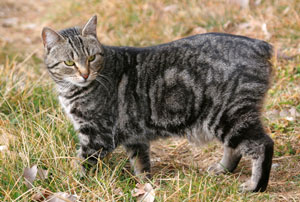
The Manx cat2 has almost no tail, although the amount of tail varies. Cat fanciers prize the tailless condition, which is due to a mutant gene. Like many other mutations, this one has a down side: ‘Manx syndrome’. The gene’s effect in shortening the spine, causing the taillessness, can go too far and cause severe spinal defects which kill affected kittens in their first few months of life. It can cause serious bladder and bowel dysfunction and extreme difficulty in walking. A less severe form results in very painful arthritis in the tail of the adult cat. To avoid this, most breeders have the tails of Manx kittens docked at 4–6 days of age. Breeders also deliberately use some tailed cats in breeding to try to reduce the prevalence of Manx syndrome.
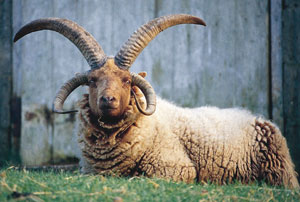
Manx Loughtan sheep3 can have one or two extra pairs of horns; two, four or six horns in total, but usually four. They have reddish-brown coloured wool and are similar to the black Hebridean Sheep breed, once established on the Hebridean Islands of Scotland, which can also have 2, 4 or 6 horns. Vikings possibly brought the Hebridean sheep to the British Isles. These sheep have naturally short tails and shed their wool in spring.
The genetic basis of the sheep’s extra horns is not known, but clearly the genes for making horns are present in all Loughtan sheep, but in some sheep the information is expressed two or three times instead of just once—like replicating a document on a photocopier. This is clearly a defect: the extra pairs of horns hardly help and can get in the way of feeding, or being able to see clearly, for example. The genetic system that normally specifies ‘express the horn information once’ has been corrupted so that now the information is expressed multiple times.
The natural changes in living things that we see everyday are like these examples: they do not involve the gain of new information. This gives no support to the dogma that ‘Nature’ created the genetic information for making horns on sheep or tails on cats—or changed microbes into mankind over eons of time.
References and notes
- Thanks to Ian Whiteway, Isle of Man, for drawing our attention to these animals. Return to Text.
- The Manx: cat breed FAQ. 23 September 2005. Return to Text.
- Hebridean sheep. 23 September 2005. Return to Text.
Readers’ comments
Comments are automatically closed 14 days after publication.