

The Fall: a ‘glorious necessity’?!
How Mormons muddle Genesis

‘Our view is that Adam made a good decision’, a Mormon replied when I asked him about Adam and Eve partaking of the fruit of the Tree of the Knowledge of Good and Evil (Genesis 3). He was only echoing a position consistently held by Mormon ‘prophets’ and ‘apostles’.
Mormon Apostle Dallin H. Oaks called the Fall a ‘glorious necessity’,1 and Elder Jess L. Christensen declared that ‘it would have been a terrific calamity if they had refrained from taking the fruit of the tree.’2
My Mormon friend also told me that he believed that Adolf Hitler would be saved along with Mother Teresa. While I need to clarify what he meant by ‘saved’ (see later), it is clear from this remark that points of agreement between Mormons and Christians are superficial when compared with differences. It is to be expected that a wrong interpretation of the events of Genesis (in this case, the Fall) will inevitably lead to a misunderstanding of the Gospel.
A proper understanding of salvation depends upon a correct understanding of where we came from, why we are here, and what is wrong with the world. When interacting with Mormons, Christians would do well to focus on the Fall, since it is foundational to the Gospel.
Falling forward?
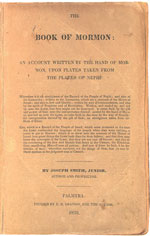
Mormons (officially ‘Church of Jesus Christ of Latter-Day Saints’) acknowledge that the Fall of Adam was a historical event, but they also say that the Fall ‘has a twofold direction—downward and yet forward.’3
The Bible is only one of four books that the Mormons get their doctrines from (called ‘standard works’): The Book of Mormon, the Bible, The Doctrine and Covenants, and The Pearl of Great Price.4
The Book of Mormon says:
‘And now, behold, if Adam had not transgressed, he would not have fallen, but he would have remained in the garden of Eden. And all things which were created must have remained in the same state in which they were created; and they must have remained forever, and had no end. And they would have had no children; wherefore they would have remained in a state of innocence, having no joy, for they knew no misery; doing no good, for they knew no sin’ (2 Nephi 2:22–23).
Mormons believe that Adam and Eve had ‘physical bodies not yet subject to death and not yet capable of procreation.’1 Mormon leaders have not clearly stated why a man and a woman living in a completed creation and free from the effects of physical and spiritual corruption were not able to procreate. Some Mormons have suggested that the Fall ‘brought about required changes in their bodies, including the circulation of blood and other modifications as well.’5
But this is contrary to the Bible’s teaching that God finished creating on the sixth day and that all He had made was ‘very good’ (Genesis 1:31). Surely functional reproductive systems were part of a completed creation, especially since God commanded Adam and Eve to increase in number (Genesis 1:28)?
It is even more difficult to understand how the introduction of sin and death into the world played a positive role in enabling them to have offspring. From a biblical perspective, complications in conception and birth defects are associated with the curse, but Mormons link the ability to reproduce with the introduction of death into the world.
So how do Mormons reconcile the fact that God gave a command to ‘be fruitful and multiply’ (Genesis 1:28) along with the contradictory command not to take fruit from the forbidden tree (the eating of which Mormons say enabled them to carry out the command to multiply)?

Mormons respond by saying that Adam’s disobedience was part of God’s program, so it was not really a sin. Adam was fulfilling the important role of introducing mortality into the world so that his offspring could embark upon the Mormon plan of salvation. Mormons say that Adam transgressed (violated a formal prohibition), but did not sin (do something inherently wrong)1 because he made the right decision in light of God’s plan of salvation.
Mormon leaders have also taught that God was merely making a statement of fact when He told them of the consequences of taking the fruit (i.e., they could take of all of the other trees without consequences, but they could not take of the forbidden tree without consequences).6 This comes from The Pearl of Great Price:
‘But of the tree of the knowledge of good and evil, thou shalt not eat of it, nevertheless, thou mayest choose for thyself, for it is given unto thee; but remember that I forbid it, for in the day thou eatest thereof thou shalt surely die’ (Moses 3:17).
Mormon scriptures portray God’s commands to Adam as ambiguous and contradictory.
By contrast, Genesis is logically consistent: God gives a clear prohibition regarding the Tree of the Knowledge of Good and Evil, and a warning of judgment that will inevitably follow disobedience (Genesis 2:16–17); Adam and Eve disobey God and hide from Him as a result of the shame; God indicts them for breaking His command (3:11), and judges them (3:14–19). The Bible is completely consistent. By contrast, the Mormon scriptures have them rejoicing at their disobedience:
‘And in that day Adam blessed God and was filled, and began to prophesy concerning all the families of the earth, saying: Blessed be the name of God, for because of my transgression my eyes are opened, and in this life I shall have joy, and again in the flesh I shall see God. And Eve, his wife, heard all these things and was glad saying: Were it not for our transgression we never should have had seed, and never should have known good and evil, and the joy of our redemption, and the eternal life which God giveth unto all the obedient’ (Moses 5:10–11).
The serpent’s promise
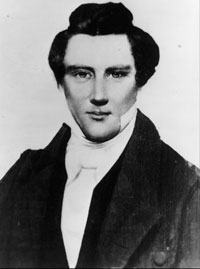
We can only understand this passage in the light of the Mormon concept of ‘salvation’. Mormon founder Joseph Smith Jr. (1805–1844) taught that before we were born on earth, all human beings lived in a pre-existent state as spirit children of God. We enter the physical world for a period of probation, which has the eventual goal of exaltation, meaning promotion to godhood. This ‘plan of salvation’ is also called the ‘law of eternal progression’: Mormons teach that God was once a man as we are, He is now an exalted man of flesh and bones, and we can become like him through our obedience to the Mormon Gospel.7
Eternal progression follows consistently from a glorification of the Fall of Adam. Smith’s exhortation that ‘you have got to learn how to be Gods’8 means that he believed the serpent’s lie that God can be disobeyed with impunity, and that, as a result of such disobedience, ‘Ye shall be as gods’ (Genesis 3:5).
So Mormonism is polytheistic at its core. Joseph Smith said, ‘I wish to declare I have always and in all congregations when I have preached on the subject of Deity, it has been the plurality of Gods.’9 Christians who regard Mormonism as simply another Christian denomination should take note of this foundational difference.
Sin and death
Mormons also ignore the clear biblical teaching that sin and death are inseparably linked, since death is the penalty for sin (Romans 5:12–21). The pervasive presence of death in the world testifies to the truth that the entire human race is under sin. Death reigns over all people as a judgment from God (Romans 5:16) because we all sinned in Adam (Romans 5:12). Mormons deny this.
Their Article of Faith No. 2 states, ‘We believe that men will be punished for their own sins, and not for Adam’s transgression.’10 But the Bible teaches that people inherit Adam’s fallen nature, and therefore they sin: ‘By one man’s disobedience, many were made sinners’ (Romans 5:19). Also, all have sinned individually (Romans 3:23).
While Mormons work to eradicate sinful behavior, they do not address the issue at its source—fallen human nature. By contrast, the central issue in Christianity is not individual sins, but the fallen nature that produces sins. The Bible teaches that the death brought in by Adam makes the new birth necessary (1 Cor. 15:20–23).
Since Mormonism teaches that Adam’s Fall was beneficial, it follows that their view of salvation differs from what the Bible teaches. Mormonism teaches that salvation is unconditional in one sense:
‘Through the Atonement, Jesus Christ redeems all people from the effects of the Fall’, and conditional in another: ‘Although we are redeemed unconditionally from the universal effects of the Fall, we are accountable for our own sins.’11
These seemingly contradictory statements are reconciled when we realize that in Mormonism, salvation in the unconditional sense simply means resurrection. Adam brought mortality into the world (necessary for us to participate in the ‘plan of salvation’), and Christ brings immortality so that all people will live in one of the three levels of heaven12 based on their performance on earth.
Mormonism says that all people enter the physical world via the mortality that Adam secured in the Fall, and all people exit via the immortality that Christ brought. What we do between these two essential events gives us an opportunity to obtain heaven’s highest level (exaltation to godhood) by our worthiness. The Bible declares that ‘by grace you have been saved, through faith … not by works (Ephesians 2:8–9), while The Book of Mormon affirms, ‘it is by grace that we are saved, after all we can do’ (2 Nephi 25:23, emphasis added).
In Mormonism, Christ’s atoning work ‘saves’ everyone, even apart from belief in Christ. This is why Hitler and Mother Teresa are both ‘saved’ (resurrected to live in one of the three levels of heaven). Mormons often quote 1 Corinthians 15:22 to justify this position: ‘for as in Adam all die, even so in Christ shall all be made alive.’
However, 1 Corinthians 15:22 limits those made alive to people who are in Christ, and the Bible teaches consistently that faith (trust) in Christ is required to benefit from any aspect of his atoning work (see John 3:36, for example).
Conclusion
Mormonism downplays Adam’s sin and the resulting judgment from God by teaching that the Fall made it possible for us to actually become ‘gods’. Mormons teach that people are justified by good works, contrary to what the Bible teaches.
Mormons fail to see in Adam and Eve’s attempts to cover their shame our own pitiful efforts to cover our sins and be justified by our works. So, they miss the beautiful picture of God’s provision for sin in the covering He provided them, the ‘Lamb of God who takes away the sin of the world’ (John 1:29).
References and notes
- Oaks, D.H., The great plan of happiness, Ensign, pp. 72–75, November 1993; also at <library.lds.org/nxt/gateway.dll/Magazines/Ensign/1993.htm/ensign november 1993.htm/the great plan of happiness.htm?fn= document-frameset.htm$f=templates$3.0>. Return to Text.
- Christensen, J.L., The choice that began mortality, Ensign, pp. 36–38, January 2002. Return to Text.
- The Church of Jesus Christ of Latter-Day Saints, True to the Faith, The Church of Jesus Christ of Latter-Day Saints, Utah, USA, p. 57, 2004. Return to Text.
- Ref. 3, 155–159. Return to Text.
- Nelson, R.M., The Atonement, The Church of Jesus Christ of Latter-Day Saints, 1996. Return to Text.
- Millet, Robert L., The Fall as taught in the Book of Mormon, The foundation for ancient research and Mormon studies, <www.lightplanet.com/mormons/basic/gospel/fall/millet_fall_bom.htm>, 1995. Return to Text.
- Mormon leaders have taught that we can be gods over our own worlds and procreate our own spirit children, just as the god of this world does. For an excellent compilation of these quotations, see Tanner, S., Mormons hope to become gods of their own worlds procreating endless numbers of children. Return to Text.
- King Follett Discourse, Journal of Discourses 6(1):1–11, found at <www.helpingmormons.org/follet.htm>. Return to Text.
- Joseph Smith’s Sermon on the Plurality of Gods. Contrary to this assertion, it can be demonstrated that Smith developed his polytheism over time. See White, J., The evolution of Mormon theology. Return to Text.
- From The Pearl of Great Price: Articles of Faith. Return to Text.
- Ref. 3, p. 18. Return to Text.
- Ref. 3, 92–94. Joseph Smith derived three levels of heaven (celestial, terrestrial, telestial) by combining 1 Corinthians 15:40–41 and 2 Corinthians 12:3, but in context, Paul is contrasting our present bodies with our future, resurrected bodies. The word ‘telestial’ does not appear in either text and was invented by Smith. Return to Text.
Readers’ comments
Comments are automatically closed 14 days after publication.