

‘Window plants’ let the light shine in
Desert plants have features useful for survival in the drying winds and fierce heat of such arid areas. For example, they have thick, succulent leaves that can retain and store water—rain doesn’t often fall in a desert!
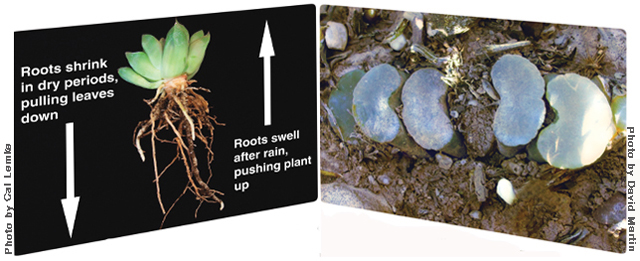
Some plants actually ‘hide’ underground, away from the desiccating winds and abrasive blowing sands, with only the tips of their leaves exposed.1 (See photo top right.) These leaf tips are equipped with translucent ‘windows’ which let the light in and down to the interior of the leaves, where the plant’s chloroplasts ‘catch’ the light and convert it to useful plant food (photosynthesis).2
Examples of plants which have ‘window leaves’ include various species from the genera Fenestraria, Haworthia (pictured here) and Ophthalmophyllum.
Furthermore, when rain eventually does come, some of these plants have roots that swell such that the leaves and growing part are pushed upwards, out of the underground darkness and into the light. (As soon as the moisture is gone, the roots dry out and shrink, so that most of the plant is pulled back beneath the surface of the sand.)
In the light of all this, there are several things we can note.
Firstly, there’s no excuse (Romans 1:20) for anyone thinking that organisms capable of capturing the sun’s energy in such a manner could have possibly come about by chance.3
Secondly, we can see parallels between window plants and the way we are called to live. Just as window plants let the light shine in, so should we.
Jesus, by whom and for whom we were made (Colossians 1:16), is the Light of the world (John 8:12). He stands at the door (cf. ‘window’), and when we open the door He will come in (Revelation 3:20)—it is good for our whole body (cf. leaf) to be full of light (Matthew 6:22). When we ask, He gives us living water (John 4:10). And having drunk, we will never thirst again (John 4:14), being called out of darkness (cf. underground) into His wonderful light (1 Peter 2:9).
References and notes
- BBC Science: Arid Eden, Programme 2: Sea of Sand—Sue Armstrong describes her visit to the Namib desert, bbc.co.uk, 20 February 2007. Return to text.
- Leaves—Plant Biology, biology-online.org, accessed February 2007. Return to text.
- Sarfati, J., Green power—God’s solar plants amaze chemists, J. Creation 19(1):14–15, 2005; creation.com/greenpower. Return to text.
Readers’ comments
Comments are automatically closed 14 days after publication.