

Can a cow become a hog?
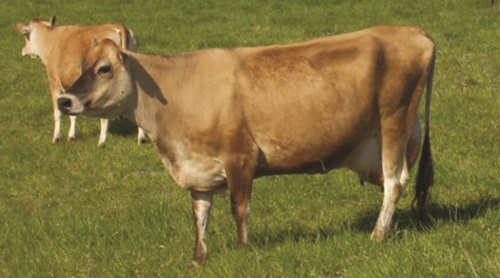
Wrap, rip; wrap, rip, wrap, rip; chew, chew, chew. After shifting a cow to a fresh paddock of green forage, I’m greeted with the pleasant sounds of wrapping and ripping the grass until she fills her mouth. She then raises her head and chews, chews, swallows, then goes back to wrapping and ripping. When her rumen is full, she’ll lie down, front end down first, followed by the tail end. Then, often with eyes half closed, she’ll contentedly ruminate what she has just taken in. Ahh, this is the natural eating style of the bovine kind.
While most momma cows in the world may still enjoy this lifestyle, many of their offspring do not. Instead, like most hogs in America, the calves, often as young as four months, are placed in a confined ‘feed lot’ and fed high starch diets for up to 10 months until they are ‘finished’ and ready for slaughter.
How can cattle survive on such radically different diets?
When seven of the (clean) cattle (bovine) kind stepped off the Ark about 4,500 years ago, they faced a more hostile environment than before. Our Creator God had packed an incredible amount of genetic diversity into each animal, knowing that at some point these animals would need the ability to adapt to the wide range of natural environments that would exist around the world. Also, God in his providence could have had in mind man selecting for traits which would increase the cow’s production of milk, cheese, butter, meat, other products, or even for strength to pull a plough.
God designed cattle to consume and process large quantities of forage efficiently. The unique design of their tongue, cheeks, teeth and digestive system show that grass and legumes (herbs) should be their primary, if not exclusive, diet.
What happens in the rumen and other parts of the digestive tract after the cow has ripped off several bites seems almost miraculous. Although we see the cow feeding itself, in fact it is feeding the billions of microbes in the four compartments of the cow’s ‘stomach’. Few other animals can turn sunshine, water, and grass into more useful products for man than the cow.
A cow grazes by using her long tongue to gently wrap around a wad of grass, pull it into her mouth, and then pinch it off between the lower incisors and dental pad. With this configuration, cattle cannot graze close to the ground, which, given the lifestyle of parasites, provides the cow with some protection against ingesting them. With no teeth on the top, only a dental pad, and a wide gap between the lower incisors and back grinding teeth (molars), she can chew a sizable amount of grass at one time. The rough-sided cheeks help hold the wad in the mouth. During this chewing process, cows produce 75-130 litres (20-35 US gallons) of saliva per day, which not only moistens the feed, but also contains alkali to keep the rumen at the proper neutral acidity (pH 6.5-7.2) for good microbial growth.1
After chewing, the cow swallows the wad of forage into the rumen—a most amazing vessel. It is the largest of the four compartments of the cow’s ‘stomach’ and is adaptable enough to digest nearly any type of food, though sudden dietary changes can result in poor health if not rapid death. The rumen is a huge fermentation vat with 25 to 50 billion bacteria and 200 to 500 thousand protozoa in every millilitre of rumen fluid. These microbes enable cows to digest plant fibre; something humans and hogs cannot do. This remarkable fermentation process has allowed producers to stuff not only grains, but everything from potato chips, dead animals, feathers, cupcakes, bubblegum (and wrappers) to chicken manure,2,3 into the rumen.4
The microbes also make vitamins such as B and C.1 If the forage is tough and needs more chewing,5 the cow regurgitates it from the reticulum, a second compartment of the digestive system. The microbes can only digest small pieces of food efficiently, so cattle re-chew their food several times. If cows stop chewing their cud, or ruminating, it indicates a digestive upset, that the rumen is not functioning properly.

While the cow is chewing her cud, she must belch (eructate), since the rumen microbes produce lots of carbon dioxide and methane. If the cow doesn’t burp, she develops ‘bloat’ and, if not treated quickly, will die. Feeding too much grain or certain legumes can cause bloat.
Amylolytic microorganisms (AM) ferment starch and cellulolytic microorganisms (CM) ferment cellulose contained in forages. Both organisms are already in the gut of the cow; one does not turn into the other when the diet of the cow is changed. Since the cow is a ruminant and thrives on forages, the CM ‘forage eaters’ will be the primary digesters. However, when the diet is switched to high starch grains (like in a feed yard), rumen pH is lowered. This environment favours the more aggressive AM ‘starch eaters’ and they will quickly multiply to process that type of feed. This shows the incredible adaptability of the rumen, but it comes at a cost. In the long term, the cow cannot remain healthy on the high starch diet since the CM ‘bugs’ necessary for healthy rumen function die off.5,6
This can result in a condition known as acidosis, which entails sudden death syndrome, polio, founder, rumenitis, liver abscesses, and malabsorption.7 What is done to keep them going? The veterinarian will often advise administering large infusions of sodium bicarbonate, formaldehyde and antibiotics directly into the rumen.7 However, these measures do not correct the underlying problem. Though the animal’s health may be permanently impaired, a ruminant can be put back on its proper natural diet by turning it ‘out to pasture’ or be fed a high forage diet for healing the effects of acidosis.
A third compartment is the omasum and little is known concerning its function, though it may absorb some volatile fatty acids. The fourth, the abomasum or ‘true stomach’ functions much like the human stomach from the standpoint of producing acid and enzymes to start protein digestion (the protein produced by the microbes). Another indication of acidosis is a displaced abomasum or ‘twisted stomach’, which can be repaired only with surgery.
Feeding grain to ruminants wasn’t common until after World War II. Since then it has been embraced, because of cheap cereal grains5 and the cow’s God-given adaptability in producing milk and meat. However, it is not without cost to man as well. The meat for human consumption from grain-fed animals is lower in nutritional quality than meat from grass-fed animals—for example, grass-fed beef has more heart and brain-friendly omega-3 fatty acids, but less overall fat and more vitamin E.8,9
Can a cow become a hog? Of course not: not physiologically, not physically and not genetically. However, due to the adaptability of the microbes in the cow’s digestion systems, we can force the cow to act like a hog, eating grains, but only for a limited time. The digestive system of the cow is designed to handle large amounts of forages. They do not do well on all-grain or high-fat diets. One article states, “cattle evolved digesting roughages that ferment slowly in the rumen” and that high grain diets disrupt the normal microbial environment which precipitates acidosis.10
Clearly the complex intricacies of the entire digestive system did not happen by chance. When even the secular scientist will state that the components work in a symbiotic manner, one wonders if they actually believe that all these necessary components ‘evolved’ simultaneously and by accident.
In Ps. 104:14, the psalmist says: “He causes the grass to grow for the cattle, and vegetation for the service of man, that he may bring forth food from the earth”. Cattle can thrive in their natural environment and will not normally need any supplements. However, because we live in a fallen world, sometimes they will need some help (for example, mineral supplementation or parasite control).
While God gave us dominion over the earth and the creatures (Gen. 1:28), we are also to be ‘good’ stewards and determine the most wise and careful use of the resources given to us (Matt. 25:14-30).
References and notes
- Hall, J.B., and Silver, S., Nutrition and feeding of the cow-calf herd: digestive system of the cow, Virginia Polytechnic Institute and State University, pubs.ext.vt.edu, Publication 400-010, 2001. Return to text.
- Haapapuro, E.R., et al., Review—Animal Waste Used as Livestock Feed: Dangers to Human Health, Physicians Committee for Responsible Medicine 26(5):599-602, 1997 | doi: 10.1006/pmed.1997.0220. Return to text.
- Daniel, J. and Olson, K.C., Feeding poultry litter to beef cattle, MU Guide G2077, MU Extension, University of Missouri-Columbia, 2005. Return to text.
- United States Food and Drug Administration banned some of these items: Expanded ‘mad cow’ safeguards announced to strengthen existing firewalls against BSE transmission, United States Department of Health & Human Services, News Release, 26 January 2004. Europe has implemented similar restrictions. Australia banned the feeding of all animal products to ruminants in the 1980s. Return to text.
- Diven, D., Low cost cow/calf production, The Bulletin-for Alumni of the School, Agri-Concepts, Inc., Arizona, USA, June 1997. Return to text.
- Williams, J. E., Ruminant Nutrition, Forages for grazing ruminants Lecture 6, University of Missouri, College of Agriculture, Food and Natural Resources, Division of Animal Sciences, asrc.agri.missouri.edu, accessed 1 August 2005. Return to text.
- Stock, R., and Britton, R., Acidosis, NebGuide, Institute of Agriculture and Natural Resources, University of Nebraska-Lincoln, 1992. Return to text.
- Poulson, C.S., et al., Conjugated linoleic acid content of beef from cattle fed diets containing high grain, CLA, or raised on forage, Livestock Production Science 91(1-2):117-128, 1 December 2004. Return to text.
- Getting Wild Nutrition from Modern Food, eatwild.com, accessed 2006. This references many scientific studies available to demonstrate the superior nutritional value of fully grass-finished meats, milk, and eggs. Return to text.
- What is Acidosis and How Do We Prevent It, extension.org, accessed March 2006. Return to text.


Readers’ comments
Comments are automatically closed 14 days after publication.