

Darwin’s mentors
How clergymen unwittingly helped pave the way for evolution

Two men who greatly influenced Charles Darwin during his lifetime were clergymen who were also scientists. This is despite the fact that both men were anti-evolutionists. These were his life-time friend, the Rev. John Henslow, Professor of Botany, and the Rev. Adam Sedgwick, Professor of Geology, both of Cambridge University.
John Stevens Henslow (1796–1861)
Henslow was an academic with many interests. After graduation in 1818, he took part in geological expeditions to the Isle of Wight with Adam Sedgwick, and to the Isle of Man. In 1822, he was appointed Professor of Mineralogy at Cambridge, from which position he resigned after being appointed Professor of Botany there in 1825. Along the way, he had been ordained an Anglican clergyman in 1824.
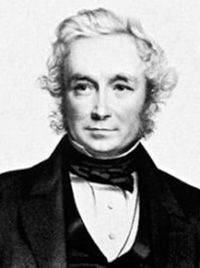
Founder of the Cambridge University Botanic Garden, Henslow had, in 1821, begun to gather a dried plant collection of the whole British flora.1 His aim was “to analyse the limits of variation within ‘created’ species”.2 He used the limits of variation to define species, in a practice he referred to as “collation”. In this he was conforming to the view that species do not evolve, but have the capacity to vary within limits.
In his autobiography, Darwin wrote that his friendship with Henslow influenced his whole career more than any other circumstance.3 This began in 1828, when Darwin was an undergraduate and attended one of Henslow’s receptions. Thereafter he took Henslow’s five-week botany course three times—in 1829, 1830, and 1831.
Henslow organized teaching walks around the Cambridge area to supplement these lectures. Darwin spent so much time on these that the other lecturers referred to him as “the man who walks with Henslow”.
In his autobiography, Darwin wrote of Henslow, “He was deeply religious, and so orthodox, that he told me one day, he should be grieved if a single word of the Thirty-nine Articles4 were altered.”5,6
Despite this, Henslow was “reconciled to a long, complex geological history which was not easy to equate with Genesis except in a general, figurative way.”7 And in his only publication, The Flood (1823), Henslow put forward “a hypothesis of a non-miraculous cause for the deluge … ”, postulating “a catastrophic strike by a comet”.7
In 1831, it was Henslow who recommended his recently graduated protégé, Charles Darwin, for the position of gentleman naturalist to accompany Captain Robert FitzRoy aboard HMS Beagle on the admiralty’s surveying expedition to South America. Just prior to this, Henslow had sent Darwin to gain field experience on a geological excursion to North Wales with Professor Adam Sedgwick.8
Adam Sedgwick (1785–1873)

Sedgwick was another academic who was ordained as an Anglican clergyman (1818) before being elected to the position of professor at Cambridge University, in his case in the Chair of Geology. While not an evangelical by today’s standards, and not a young-Earth creationist, he was no evolutionist either. “His geological position was catastrophist,9 and he believed in a succession of Divine creative acts throughout the long expanse of history.”10 Today he would be labelled a progressive creationist. Oddly he could not see the anomaly of believing in a short age for man and a long age for the rocks. Thus he wrote “the manifestations of God’s power on the earth have not been limited to the few thousand years of man’s existence. The Geologist … sees a long succession of monuments each of which may have required a thousand ages for its elaboration.”11
Although he was a long-age geologist, Sedgwick was totally opposed to all theories of biological evolution. When Robert Chalmers anonymously published his own theory of evolution, or transmutation, in 1844, in his Vestiges of the Natural History of Creation,12 Sedgwick denounced the work in a letter to Charles Lyell: “If the book be true, the labours of sober induction13 are in vain; religion is a lie; human law is a mass of folly, and a base injustice; morality is moonshine; our labours for the black people of Africa were works of madmen; and man and woman are only better beasts!”14
Sedgwick’s views of Darwin’s Origin
Sedgwick was equally caustic concerning Darwin’s Origin of Species in 1859. In a letter to Darwin he said:
“I have read your book with more pain than pleasure. Parts of it I admired greatly, parts I laughed at till my sides were almost sore; other parts I read with absolute sorrow; because I think them utterly false and grievously mischievous. You have deserted … the true method of induction … . There is a moral or metaphysical part of nature as well as a physical. A man who denies this is deep in the mire of folly.”15
And in his review published in The Spectator of 24 March 1860, Sedgwick wrote:
“I cannot conclude without expressing my detestation of the theory, because of its unflinching materialism;—because it has deserted the inductive track, the only track that leads to physical truth;—because it utterly repudiates final causes, and thereby indicates a demoralised understanding on the part of its advocates.
“Not that I believe that Darwin is an atheist; though I cannot but regard his materialism as atheistical. I think it untrue, because opposed to the obvious course of nature, and the very opposite of inductive truth. And I think it intensely mischievous.
“Each series of facts is laced together by a series of assumptions, and repetitions of the one false principle. You cannot make a good rope out of a string of air bubbles.”16
What made Darwin tick?

Thus we see that the two principal mentors in Darwin’s academic life, Henslow and Sedgwick, were not only Christians, but were both also vigorously and assertively opposed to any theory of biological evolution. Why then did Darwin abandon the role model of their teaching, and develop his own anti-God evolutionary philosophy?
The answer is simple. Despite the Christian testimony of Henslow and Sedgwick, and whatever conversations Darwin might have had with them concerning Christianity or the Bible, or for that matter their views on the fixity, or special creation, of species, one thing that he obviously did absorb (particularly from Sedgwick) was their belief in long geological ages. Thus, unwittingly, they destroyed the evidence of God’s supernatural acts as recorded in Genesis and gave Darwin the time frame he needed to make evolution ‘work’. Nothing else mattered!
Also, it was Henslow who recommended that Darwin take with him on the Beagle the first volume of Charles Lyell’s Principles of Geology (1830), albeit with the admonition “‘on no account’ to accept all its views”.17 This book advocated the doctrine of uniformitarianism, i.e. that the earth was shaped entirely by the steady accumulation of minute changes (present-day processes at present-day rates of intensity and magnitude) over enormously long spans of time. Despite the above “admonition”, it is hard to imagine a reason for Henslow’s recommending this book to Darwin, with its continuous thread of argument in favour of long ages, unless Henslow also substantially shared these views.
Interestingly, Lyell also vehemently rejected the concept of biological evolution. He was “ … appalled at the thought of a chimpanzee in the family, of an ape aspiring to ‘the attributes and dignity of man’.”18 Volume 2 of his Principles of Geology (1832) was “a book-long refutation” of Lamarck’s ideas on evolution—“ … piled with clever arguments against the idea that life had evolved and could be represented by a family tree”.18,19
Darwin received a copy of this second volume in the post at Montevideo (Uruguay), while still on the Beagle voyage. However, once again what Charles absorbed was enough to make evolution “work”, i.e. enormously long spans of time.
Conclusion
Today many churches and theological colleges have accepted the long ages and rejected the biblical record of God creating some 6,000 years ago. Some think that somehow this will make it easier for non-believers to become believers. But this is mistaken. As with Darwin, so also today, such contrary-to-the-Bible teaching does not incline men to faith in God, but undermines the credibility of God creating the world and makes the atheistic idea of evolution seem more plausible.
Re-posted on homepage: 25 July 2012
References and notes
- This was sufficiently detailed for Henslow to publish A Catalogue of British Plants in 1829. Return to text.
- Kohn, D. et al., What Henslow taught Darwin, Nature 436(7051):643–45, 2005. Return to text.
- The Autobiography of Charles Darwin, with original omissions restored. Edited with Appendix and Notes by his grand-daughter Nora Barlow, Collins, London, p. 64, 1958. Return to text.
- The historic statements of doctrine and summary of belief of the Anglican Church. Return to text.
- Ref. 3, pp. 64–65. Return to text.
- All ordinands for Anglican priesthood had to swear allegiance to the Thirty-nine Articles. Return to text.
- Walters, S. and Stow, E., Darwin’s Mentor: John Stevens Henslow, 1796–1861, Cambridge University Press, p. 162, 2001. Return to text.
- Henslow was also the chairman of the historic debate involving
Bishop Samuel Wilberforce and Thomas Huxley, held at Oxford on 30 June 1860.
See Grigg, R., Did Wilberforce say it? Creation 13(1):33, 1990.
See also Sarfati, J., Post-script: Wilberforce Jr. v Huxley debate, 20 February 2007. Return to text. - That is, that the earth’s history was marked by repeated catastrophes, such as floods, with Noah’s Flood being the last one. Return to text.
- Adam Sedgwick, Wikipedia, www.en.wikipedia.org/wiki/Adam_Sedgwick, accessed 3 May 2008. Return to text.
- Sedgwick, A., Discourse on the Studies of the University, Leicester University Press, p. 22, 1969 reprint from 1833 original. Return to text.
- The work suggested that everything in existence had developed from earlier forms: solar system, Earth, rocks, plants and corals, fish, land plants, reptiles and birds, mammals, and ultimately, man. Return to text.
- Induction is a form of reasoning that draws general conclusions from individual instances or evidence. Return to text.
- A. Sedgwick to C. Lyell, 9 April 1845 in Clark, J.W. and Hughes, T.M., The Life and Letters of the Reverend Adam Sedgwick, Cambridge University Press, Vol. 2, pp. 83–84, 1890. Return to text.
- A. Sedgwick to C. Darwin, 24 December 1859 in Darwin. F., The Life and Letters of Charles Darwin, D. Appleton & Co., New York, Vol. 2, pp. 43–44, 1911. Return to text.
- Quoted by Darwin in a letter to Charles Lyell, ref. 15, pp. 91–92. Return to text.
- Desmond, A. and Moore, J., Darwin, Penguin Books, London, p. 108, 1991. Return to text.
- Ref. 17, p. 131. Return to text.
- After Lyell had read Darwin’s Origin, he wrote
to Darwin on 3 October 1859 : “… when, as I fully expect, a new edition
is soon called for, you may here and there insert an actual case to relieve the
vast number of abstract propositions” (ref. 15, p. 2).
Lyell finally “published an infuriatingly tepid endorsement of evolution in his Antiquity of Man” (in 1863).
Source: Milner, R., Putting Darwin in his place, Scientific American 287(4):79–80, 2002. Return to text.

Readers’ comments
Comments are automatically closed 14 days after publication.