

Focus: news of interest about creation and evolution
Still fussing over feathers
Earlier we reported (22(4):6–7) that National Geographic had issued only a 10-line ‘correction’ of its November 1999 cover-story claims of a feathered dinosaur fossil, Archaeoraptor, which was a fake (a ‘composite’ of a dromaeosaur tail and the body of a bird.)
To give credit where due, NG has issued a five-page report on its own investigation into the fiasco in its October 2000 issue.
In one place it talks of ‘misguided secrecy and misplaced confidence, of rampant egos clashing, self-aggrandizement, wishful thinking, naïve assumptions, human error, stubbornness, manipulation, backbiting, lying, corruption …’.
Meanwhile, the evolutionists’ quest to find ‘dino-bird’ fossils continues—and just as unconvincingly.
A headline-grabbing claim revisiting the fossil of a tiny ‘feathered’ reptile, Longisquama, is doubted by many biologists, who say that the ‘feathers’ are in fact scales.
Others promote it as evidence against the dinosaur-to-bird theory. And more recent claims that a fossil named Protopteryx had ‘scale-like’ tail feathers have been questioned by others who say that the feathers resemble the tail feathers some birds display today when attracting a mate. Evolutionist bird expert Alan Feduccia summed up their confusion: ‘The true origin of birds is still up in the air.’ See also Did birds really evolve from dinosaurs?
National Geographic, October 2000, pp. 128–132.
Science, 23 June 2000, pp. 2202–2205.
Nature, 23 November 2000, p. 428.
New Scientist, 16 December 2000, p. 25.
More ‘living fossil’ coelacanths
The scientific world was stunned in 1938 when the coelacanth fish was discovered to be living in deep waters off Madagascar.
Previously known only from the fossil record, it was said to have become extinct 65 million years ago.Then in 1998 a marine biologist reported finding a fresh specimen in an Indonesian fish market.
Biologists had known nothing of this second population but local fishermen were quite familiar with it.Last October, recreational divers stumbled upon coelacanths off Sodwana, on South Africa’s north-east coast, 98 metres (320 feet) below the surface. It was the first time a diver outside a submersible craft had seen the species in its natural habitat.
A team later managed to film three coelacanths at a depth of 107 metres (350 feet), showing them ‘standing’ on their heads and feeding off the ledge of an underwater canyon.Following this latest discovery, marine biologists surmise that the coelacanth may be far more widespread than was thought.
ABC News, 4 December 2000.Sheep-goat hybrid
An unusual hybrid has been reported by veterinarians in Botswana—the offspring of a female goat and a male sheep.The animal shows many ‘hybrid’ features, with an outer coarse coat and inner woolly coat, and its tail hangs down.
It is very strong, apparently resistant to disease and grew faster than the kids and lambs born in the same month. This is an example of ‘hybrid vigour’. Its 57 chromosomes, intermediate between sheep (54) and goats (60), definitively prove the animal is a real hybrid.BBC News, 13 December 2000.
This fascinating account indicates that goats and sheep are descended from a single original ‘kind’. Other examples of interbreeding abound—such as false killer whale/dolphin and lion/tiger (Ligers and Wholphins: What next?, Creation22(3):28–33) indicating that the number of created kinds on the Ark was substantially fewer than the number of separate ‘species’ in the world today. (See also Speedy species surprise in this issue)
Dates damage Black Sea flood theory
The idea that the account of the worldwide Flood in the Bible is merely a distorted memory of localized flooding of the Black Sea has suffered a further setback. Robert Ballard, discoverer of the wreck of the Titanic, thought he had found relics of the Biblical Flood on the Black Sea floor, including carved wooden beams, stone tools and a collapsed structure ‘clearly built by humans’. But carbon dating of the wood gave ‘ages’ of only about 200 years.
MSNBC Science News, 6 November 2000.
It seems that either the Black Sea flood theory or the carbon dates (or both) are wrong. To link the flooding of the Black Sea with the Biblical Flood was totally unjustified speculation anyway. (See Pre-Flood relics on the bottom of the Black Sea?)
Another ‘living fossil’ tree
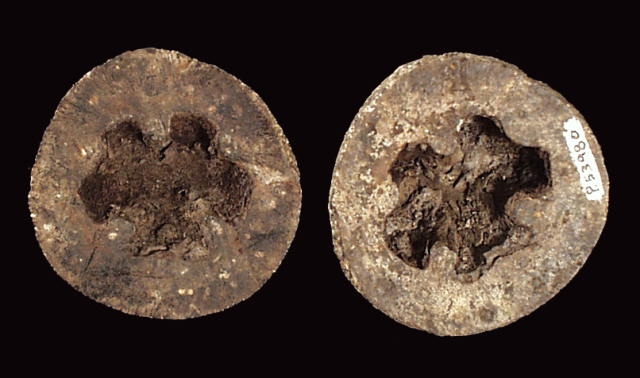
When the Wollemi Pine was discovered to be living in a remote canyon in Australia in 1994, it was nicknamed the ‘dinosaur tree’ as it had previously been known only from fossils ‘dated’ at around 150 million years old. (Sensational Australian tree … like 'finding a live dinosaur' Creation17(2):13; 19(3):7; 23(1):6.) Now another new species of Australian tree has been found further north—also previously unknown except for a fossilized nut found in 1875 and ‘dated’ at 15–20 million years old.
Not yet given a botanical name (though its finder has dubbed it the ‘Nightcap Oak’), the newly-discovered ‘living fossil’ is apparently confined to a single stand of 23 adult trees. As with the Wollemi Pine, the exact location of these ‘primitive’ trees is being kept a closely guarded secret. Meanwhile, authorities are endeavouring to multiply large numbers of these trees from cuttings.
The Sydney Morning Herald, 15 December 2000, p. 7.
As with all ‘living fossils’, the discovery of the Nightcap Oak defies evolutionists’ expectations—but is right in accord with the Biblical account.
Firstly, there has been no evolutionary change (ruling out any notion of ‘primitive’ vs ‘modern’).
Secondly, since the time of catastrophic fossilization (the Flood) was thousands of years ago, not millions, it is not surprising at all that some species previously thought to be extinct turn out to be still living. (The intervening layers of rock do not represent vast ages, but layers of sediment deposited rapidly during the Flood and its aftermath.)
See also Living fossils.
Preserved in salt
Researchers claim to have found the planet’s oldest living inhabitants—a new species of bacterium said to have been buried alive in salty water 250 million years ago.
The bacteria were preserved in crystals of salt, and were recently revived in a Pennsylvania laboratory.
Many in the scientific community dispute the claim, suspecting that the bacteria were not as old as the salt crystals.
However, the researchers refute this, saying the crystals were carefully inspected to make sure they had not been damaged since their formation (thus ruling out more recent entrance of bacteria) and all precautions were taken to prevent contamination in the laboratory.
Nature, 19 October 2000, pp. 844–845, 897–900.
Even in ideal, dehydrated conditions, it is unlikely that even DNA, let alone all the complex machinery of a living cell, could remain intact beyond about 10,000 years (Nature 365:700, 1993).
So if the bacteria really are as old as the salt crystals, the geological ‘millions of years’ for the salt crystals must be way out.
Island grey days
Imagine seeing only shades of grey. One in every 50,000 people worldwide suffers from achromatopsia, a total colour blindness.
But on the remote Pacific island of Pingelap, one in 20 has the disorder.
Affected islanders lack the sharp vision most people use to read (hampering their schoolwork), and their eyes are overwhelmed by sunlight—particularly severe on this tropical island. Treated as outcasts, staying indoors all day, some have managed to find work as night fishermen.
Most of the affected islanders can trace their ancestry back to one of the 20 survivors of a typhoon in 1775. That man probably carried a single copy of the flawed gene that has now become common in this isolated population.
Scientists have now identified the defective gene that causes achromatopsia, giving rise to hopes that ultimately a gene therapy treatment can be developed.
New Scientist, 1 July 2000, p. 12.
Color Blind Island, <abcnews.go.com/sections/science/DailyNews/colorblindness_gene000626.html>, 28 June 2000.
A striking and sad example of how debilitating mutations can become common in small isolated populations.
The theory of evolution says that species ‘advance’ in complexity through mutations, but the evidence—consistent with a creation which is in ‘bondage to decay’ (Romans 8:21)—indicates otherwise.
DNA decay drives cloning doubts
Advances in genetic technology have fuelled claims that man might soon be able to bring extinct species back to life, as long as preserved specimens containing original DNA can be found (e.g. woolly mammoths in ice).
But this is just wishful thinking, say many geneticists.
A cloning expert at London’s Natural History Museum, working on DNA extraction from lizard specimens, says that when an animal dies, its DNA starts breaking up immediately into smaller and smaller pieces—much of it is quickly destroyed, in fact.
‘To clone an animal you need its complete set of DNA intact and in a sensible form.’ Trying to clone from a century-old specimen would be like ‘taking a set of encyclopaedias and tearing up all the pages, then burning nine out of ten of them. At the end, all you’ve got is a handful of tiny strips of paper, and no idea of what was in the rest of the set of encyclopaedias.’
Australasian Science, September 1999, pp. 19–21.
Scientific American, November 2000, pp. 66–71.
The Australian Museum website, 15 December 2000.
This highlights the absurdity of claims of DNA-containing fossils being millions of years old. No fossil can be older than Creation, around 6,000–7,000 years ago.
Minuscule motors
Far tinier than any man-made motor is the ATPase enzyme, inside living cells, which produces ATP, the ‘energy currency’ of the body.
Spinning like a motor, it produces an immense torque (turning force) for its size, and keeps the cell supplied with usable energy.
Yet this machine is so tiny that 100,000 million million of these motors could fit into a pinhead. (See Design in living organisms (motors), Journal of Creation 12(1):3–5.)
By fitting a tiny metal propeller to the rotating central protein shaft of the ATPase enzyme, biological engineers have built a ‘bio-molecular engine’.
With the minute nickel blades rotating at up to eight rpm, some of the mini-motors spun continuously for 2½ hours.
Researchers hope to show the feasibility of harnessing the tiny engines for medical technology. However, they have conceded that they have a long way to go.
For one thing, of the 400 motors, which they constructed utilizing the ATPase enzyme, only five actually worked.
Beyond 2000, 30 November 2000.
The only way at present that man can produce an engine this tiny is to use a pre-made motor from the Master Technologist.
Rising mountains doomed dinosaurs?
A new theory has been put forward to explain the extinction of the dinosaurs (believed by evolutionists to have occurred 65 million years ago).
A university professor says the dinosaurs died out when India collided with the rest of Asia. He says that the collision rapidly pushed up a huge mountain range, affecting areas from Italy to New Caledonia, and triggering changes around the Earth, so that the ‘dinosaurs were doomed.’
While most geologists believe that mountain ranges form over long periods of time, this new theory says mountain-building sometimes happened quickly, triggering widespread volcanic eruptions and mass extinctions.
The Age (Melbourne), 3 November 2000.
It’s not surprising that at least one scientist would conclude from the geological evidence that rapid uplift of mountain ranges occurred in the past—the Bible speaks of such an event marking the end of the Flood: ‘The mountains rose up; the valleys sank down’ (Psalm 104:8, NASB).
Creationist geologists surmise that post-Flood volcanic activity was widespread (perhaps triggered by the mountain-building of Psalm 104), and continued for years—accounting for the many extinct volcanoes in the world today.
Land dinosaurs survived the Flood on the Ark, and, assuming they are extinct (see Mokele-mbembe: a living dinosaur? Creation21(4):24–25; A living dinosaur? 23(1):56), died out subsequently—just as species become extinct today.
Creating History
A leading Japanese archaeologist, whom colleagues had nicknamed ‘god’s hands’ for his uncanny ability to know just where to dig to find ancient relics, has publicly admitted to faking his most recent discoveries.
Shinichi Fujimura was renowed for discovering Japan’s ‘oldest’ sites of civilization, making front-page news each time he found ever-older artefacts.
But a Japanese newspaper had secretly photographed Fujimura sneaking onto the site in the early morning, digging holes and burying the stone implements a few days before he and colleagues unearthed them and proudly announced the ‘discovery’ to the media. After exposure, Fujimura apologized to the media, head bowed, saying, ‘I can’t imagine what made me do it.’
Although admitting to planting evidence at only two sites, Fujimura’s actions have raised doubts about his other finds, spaning 180 sites.
Meanwhile, a British museum has discovered that a prized dinosaur skeleton on display for 116 years is a fake—created from ‘a motley collection of bones, plaster and paint’.
Renaming the exhibit ‘iffyosaurus’, it will remain on display ‘as an example of Victorian fakery.’
ABC News, <abcnews.go.com/sections/world/DailyNews/Japan_archaeologist0001105.html>, 7 November 2000.
The Science Show—Radio National (Australia) broadcast, 9 December 2000.
The West Australian, 9 December 2000, p. 23.
The lesson is that extraordinary claims about the past should be treated with extraordinary scepticism.
Readers’ comments
Comments are automatically closed 14 days after publication.