
Feedback archive → Feedback 2009
Should atheists be free to teach what they believe?; and the “folding of solid rocks”
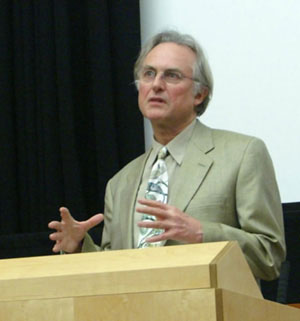
Our article Atheists to do religious education in schools prompted Rosalie D. (Australia) to write:
Hi, I am just wondering why it is a problem for atheists to teach what they believe, when you clearly want to be able to teach what you believe as Christians?
CMI’s Dr Don Batten responds:
Dear Rosalie,
Thanks for your comment.
As the article explains, atheism is already the de facto doctrine of secular (=godless) education, so atheism is already taught throughout the curriculum. Now atheists want to compete for the limited opportunities children have to hear something a bit different. That is hardly equitable.
Furthermore, educational authorities should have the welfare of children foremost in their policies. Should Satanists have access to children? Scientologists? As the article argues, atheism is not likely to help children lead fulfilled lives. See Suicidal atheist converts to Christ and our detailed article on atheism.
It is ironic that the freedom that atheists enjoy in western countries to practise their religion comes from the Christianity that many despise and want to destroy (there is no freedom to be an atheist in Islamic countries, for example, and the most atheistic countries were/are hell-on-earth to live in: Albania and North Korea, for example). If atheists succeed in destroying Christianity, they will also destroy their freedom. It won’t happen overnight, but it will happen (it is already happening with more and more government regulation of our lives).
Sincerely,
Don Batten
A New York Times article about creationists and the Grand Canyon “infuriated” USA correspondent Nicholas P., and he wrote to ask us for advice:

Hello CMI team.
Question here about rock / strata bending: This is (of course) a tremendously important piece of evidence for the youth of the geologic record and its quick, catastrophic laying. One of the best pictures I’ve seen of this is in The Creation Answers Book (a picture in Australia, which, incidentally, I tried one time to find a bigger picture of, but was unsuccessful).
Well, I was just looking for an old New York Times article that had quite infuriated me a few years back that covered the Grand Canyon and creationists touring there. The typical slandering, misrepresenting, and overall ridicule seeped through every line of this article, as we’ve come to expect of this “high class” publication. (The good news about this is, this treatment so infuriated me that it catapulted me into much more on-the-side creationist research, so their ridicule has born much fruit.) Well, as I re-read this article, the topic of rock / strata bending was briefly mentioned, to which the article threw out a quick (attempted) refutal:
“You see any cracks in that?” he asked. “Instead of bending like that, it should have cracked.” The material “had to be soft” to bend, Mr. Vail said, imagining its formation in the flood. When somebody suggested that pressure over time could create plasticity in the rocks, Mr. Vail said, “That’s just a theory.”
Besides the point that I don’t trust that those were Mr. Vail’s precise
words (if at all), or that that’s all he said, I haven’t heard what
the other side says in defense against this heavy evidence against uniformitarian,
long-age laying of strata: pressure “over time (?!)” and “plasticity
in the rocks”. Though this sounds ludicrous, certainly for major examples
of bending, and also so many other problems come up as well (and how, still, could
there not even be cracks?, and if the cracks could become fluid, then shouldn’t
the layers themselves have melded as well if not be lost altogether, etc etc), I
would like to find a fuller treatment covering evolutionists’ defense on this
question. Do any come to mind?
Thanks very much!
The article address is:
http://www.nytimes.com/2005/10/06/science/sciencespecial2/06canyon.html?fta=y&pagewanted=all
PS: if you check out this article (with accompanying video), how “funny” it is that they paint the scene as follows: the creationist group has three pastors with them; the evolutionary group has 11 PhDs. Hmmm, I know full well that the author has read Mr. Vail’s Grand Canyon book, which has many of our top Creation scientists in it. (NOT TO MENTION that Steve Austin must be one of the greatest geologist-authorities in the world on the Canyon.) Wilgoren and The New York Times must be afraid to mention our scientists publicly.
Dr Emil Silvestru, of CMI–Canada, responds:
Dear Nicholas
I am glad the mockery in the New York Times “catapulted you into much more on-the-side creationist research”. It seems this is becoming more and more of a backfiring effect with the NYT’s editorial politics …
In geology, the issue of folding of solid rocks is very similar to the issue of the origin of life in Darwinian evolution: a working hypothesis, not even a theory. Here are some points to ponder:
- The range of pressure and temperature (one cannot disconnect the two) needed to “plasticize” solid sedimentary rocks is well below that which diamonds need in order to form. Well, we do have the technology to reach such pressures and temperatures in order to create artificial diamonds, so why hasn’t anyone tried to replicate solid sedimentary rock bending (folding) then?
- If one reads what textbooks say about burial metamorphism—the process through which sedimentary rocks become metamorphic rocks because of increased pressure and temperature when sediments subside—a “conundrum” becomes evident: why is it that similar and even lower pressure and temperature conditions alleged for rock folding leave sedimentary rocks unchanged? They should become metamorphic at least in the apex area of folds (when you bend a metal plate, temperature increases in the apex of the fold), so that quartz sandstone should turn into a quartzite for example. Yet through the eight kilometres of its thickness, the Old Red Sandstone for example, while beautifully folded, always remains sandstone, it never becomes metamorphic rock even in the most intensely folded areas.
- At the Whaleback Anticline near Shamoking, Northumberland County in Pennsylvania, there is a fossilized tree on one of the flanks of the anticline. Geologist James Stuby points out: “Notice how the bedding dips at a steep angle, yet the shear stresses acting on the rock have conspired to keep the tree vertical.”1 Now isn’t that interesting and impossible? So the solid rock containing a fossil tree was bent and the tree somehow stayed vertical!!! Imagine you have a stack of cards and a toothpick inserted between them, parallel to the long side of the cards. You bend the stack to imitate an anticline and on one of the sloping sides the toothpick somehow remains vertical cutting through the cards! Here is a far more logical explanation: this was initially a pile of soft, unbound sediments in which a tree was buried, then the soft sediments were folded while the hard tree remained vertical (the best position to minimize damage during lateral compression). Subsequently solutions rich in minerals seeped through the sediments, replacing the wood (lignin) with mineral matter (fossilizing the tree) and also binding the grains in the soft sediments and thus turning them into hard rock (sand into sandstone, mud into mudstone, etc.)
I hope this helps. Please let us know if there is anything else you would like help with. Also, your healthy attitude when faced with ridicule from the enemy is a great example for others! Arguments from authority and use of ridicule are not at all scientific and almost always are an attempt to mask underlying angst and uncertainty. The more that creationists produce viable alternative explanations (rather than simply criticizing existing evolutionary ones) the greater the evolutionists’ angst.
Warmest regards
Emil Silvestru
Recommended Resources
References
- Stuby, J., Geology Photo Album 1998, http://www.stubotics.com/geoalbum/geoalbum1998.html, 2006; last accessed 1 October 2009. Return to text.
Readers’ comments
Comments are automatically closed 14 days after publication.