

Furry little humans?
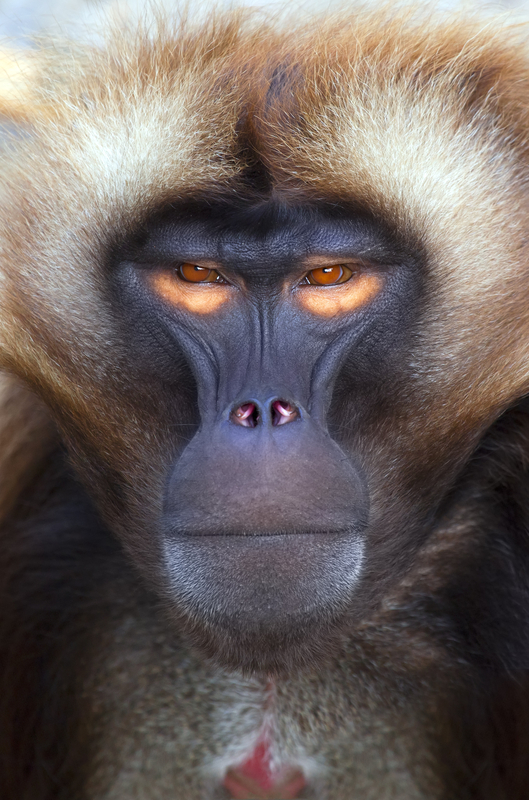
Over the past half-century or so, dozens of dedicated Darwinists have devoted decades of their lives to studying the behaviour of apes and monkeys. The public is regaled with stories about the likes of Jane Goodall and Dianne Fossey living with chimps and mountain gorillas, respectively. The social structures, behaviours, communication and so on of apes and monkeys are scrutinized for the slightest evidence that they have thoughts and minds not all that far from our own. We are regularly left to conclude that the differences between mankind and these alleged ‘close relatives’ of ours are really minor ones of degree, not kind.
Two developments in particular have comforted1 and reinforced the masses in such evolutionary notions.
One was the allegedly high percentage of genetic (DNA) similarity which such primates hold in common with humans. Chimp DNA was supposed to be anywhere from 96% to 98.7% identical to that of humans, depending on who is telling the story. [Author’s update November 2022: In the interim, the estimated difference has been downgraded to somewhere between 13 and 19%. But even at the mythical 1%, it still represented a difference of tens of millions of DNA ‘letters’, an unbridgeable gap for evolution in the alleged time available (c. 6 million years).]
Baboons are said to share 92% of their DNA with us. Granted a high degree of shared DNA, even if it were 90%, would that make them 90% human, as most interpret this? It is worth repeating what prominent evolutionist Steve Jones once reminded his audience of in the context of man/chimp DNA-sharing: “We also share about 50% of our DNA with bananas and that doesn’t make us half bananas, either from the waist up or the waist down.”2
The other development has to do with the issue of language. The chimpanzee Washoe and the bonobo Kanzi “have become famous for their ability to respond to human language in surprisingly complex ways”.3
It must be a great disappointment, then, for committed evolutionists to read of the latest work by two of the most dedicated primate behaviour researchers in the world.4 Robert Seyfarth and Dorothy Cheney are a husband-and-wife team who have performed many ingenious experiments with vervet monkeys and baboons, plumbing the depths of their social knowledge and mental processes.
Though they have occasionally revealed previously unknown ‘richness’ in a monkey’s social knowledge, overall their results have caused them to give a massive ‘thumbs down’ to the ‘monkeys are almost human’ view. They have gradually come to the conclusion (no surprise to Bible-believing Christians) that there are “severe limitations on intelligence and communication in monkeys”.5
For instance, baboons walking past a recently dismembered buffalo carcass do not ‘put two and two together’ to conclude that lions are in the vicinity. They only act alarmed once they spot the actual lions. Also, when they see an antelope carcass stuffed high up in a tree, they show no signs of concluding the obvious—that their mortal enemy, the leopard, is in the vicinity.
For another example: Baboons from a foraging troop which has spread out so that some are on either side of a forest are known to give barking calls. It has long been assumed that they were keeping ‘contact’, saying, in effect, ‘Hey, we’re over here, where are you?’ like humans would. But ingenious experiments have shown that the monkeys were only lamenting their own lostness.
Seyfarth and Cheney say that, unlike humans, “monkeys don’t actually recognize that other monkeys have minds”.6 Whatever thoughts and emotions they may have, they cannot project them outside of themselves, as humans do all the time. Thus, a chimp may grieve due to loss, but chimps do not seem to comfort others that are grieving.
This inability to put themselves in another monkey’s place was starkly demonstrated when a monkey named Sylvia made a deep water crossing with a baby clinging to her underside, causing it to drown. Since she could breathe, she could not relate to the fact that her baby could not.
So what does all this do to the ‘genetic similarity’ issue? The (definitely non-creationist) writer of the Smithsonian article which inspired this piece concedes that these results remind us that ‘just a few percentage points can translate into vast, unbridgeable gaps between species’.7 Of course, we have long been pointing out as above that a few percentage points means many millions of base pair differences—which are likely to be in much more crucial ‘controlling genes’.
We were created with more similarities to apes than to jellyfish. Since our bodily construction reflects our DNA ‘recipe’, it is perfectly logical and consistent that we would also be genetically more similar to apes than to jellyfish—or to bananas, for that matter.
And what about the much-vaunted ape language abilities? These researchers remind us that the circumstances were artificial. Seyfarth says, “You can teach a bear to ride a bicycle in the circus, but it doesn’t tell you much about what bears learn to do in the wild.”8 And furthermore, says the article’s author, “even in the laboratory, no animal has attained anything like true language”. Whereas humans “embody a theory of mind in wild excess”. We are aware that we, and our minds, exist and that others have thinking minds too. Humans, and humans alone, “know what we know, and we know that we know it. We possess the playful, curious, strange and sympathetic entity called human consciousness”.8
This is because, he should have added, we were made in the image of God. Made to think, reason, love and communicate with our Creator. Apes and monkeys, no matter how superficially similar, were not.
As Seyfarth concludes, “They’re not furry little humans. They’re just monkeys.”5
Is man an animal?
One increasingly hears phrases such as ‘humans and other animals’. This seems to be intended to attack the notion that people are special, being made in the image of God.
The answer to the question ‘is man an animal?’ is not, however, a simple one. In the technical biological sense, using the man-made classification criteria instituted by the creationist Linnaeus, the answer would seem to be ‘yes’. Man is obviously not a plant, or a bacterium. Creatures are grouped together using various criteria of similarity, which do not need to have any evolutionary overtones. We obviously have backbones, which would place us in the group known as vertebrates. We give birth to live young, suckle our offspring, and so on, which would place us with mammals, specifically the placental mammals. Furthermore, we have many features in common with the group known as primates.
But the problem is not so much with technical classification as with the ‘propagandistic’ effect that labelling people as ‘animals’ achieves. The real point that evolutionists try to make, and which should be resisted, is that man is ‘just one more animal’.
The potential for confusion is particularly strong because the word ‘animal’, in the layperson’s understanding, means something other than a human being. Thus, when people say, ‘animals are used to test cosmetics’, it is obvious that man is not included in this use of the term ‘animals’. (Equally, fish, insects and birds, though technically ‘animals’, are not usually talked about that way. E.g. ‘The fire injured many animals and birds’.)
People are definitely not ‘animals’ in any normal sense of that word, nor are they related to animals by common descent. They have been made in the very image of their Creator, and an awesome gulf separates them from even the most similar of any other living creatures (see main article).
The ultimate solution might be a separate kingdom in technical classification to adequately reflect that fact. However, this is unlikely to appear anytime soon in a world dominated by evolutionary thinking.
In the meantime, when asked whether man is ‘an animal’, the best way to avoid fostering evolutionary notions may be to:
- Carefully point out the different definitions of the term.
- Affirm that man is not an animal in any common usage of the term, nor in any evolutionary sense whatsoever.
Re-posted on homepage: 9 November 2022
References and notes
- Evolution often functions to anesthetize the conscience against the discomfort caused by the knowledge of sin/guilt. If Adam is your ancestor, God sets the rules; if ape, you do. Return to text
- Jones, S., interviewed at the Australian Museum on The Science Show, broadcast on ABC radio, 12 January 2002, abc.net.au. Return to text
- Conniff, R., Monkey wrench, Smithsonian pp. 102–104, 2001. Return to text
- Reported in ref. 4, pp. 97–104. Return to text
- Ref. 4, p. 97. Return to text
- Ref. 4, p. 102. Return to text
- Ref. 4, p. 98. Emphasis added. Return to text
- Ref. 4, p. 104. Return to text


Readers’ comments
Comments are automatically closed 14 days after publication.