
Mud experiments overturn long-held geological beliefs
A call for a radical reappraisal of all previous interpretations of mudstone deposits
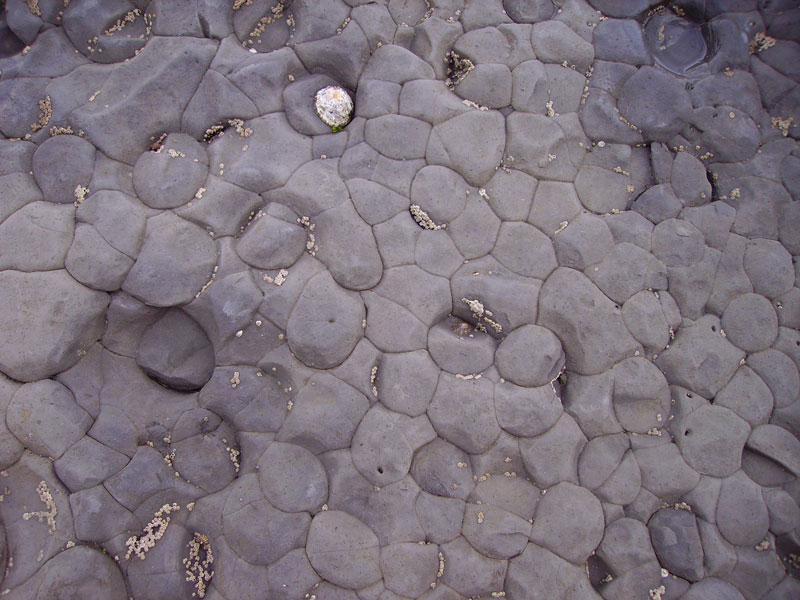
New research presented in Science magazine documents how, contrary to conventional wisdom, mud can deposit from rapidly flowing water.1 These findings cut across beliefs held by geologists for over a century and signal that ‘mudstone science is poised for a paradigm shift.’2
Using specially designed laboratory equipment, Juergen Schieber, John Southard and Kevin Thaisen have shown that mud-sized material will deposit under much higher current velocities than previously thought.
For more than a hundred years, geoscientists have assumed that long periods of quiet water conditions are required for the deposition of mud. Based on that belief, whenever geologists have encountered mud deposits in the sedimentary record they have interpreted them as forming in a tranquil deposition environment.
Long-age scientists have long attacked the idea that Noah’s Flood was a real, historical event, and disparaged the claim by young-earth creationists that the year-long Flood can account for most of the geological deposits exposed on the earth today. One of their major arguments concerns this widely held but erroneous belief.
For example, Alan Hayward uses the Haymond rock formation in the USA for this purpose, describing it as almost a mile (1.6 km) thick, extending over a large area, and containing more than 30,000 alternating layers of shale and sandstone.3
Hayward assumed the conventional geological beliefs about the deposition of mud as fact: ‘Shale is made of compacted clay. As most readers will have noticed, clay consists of exceedingly fine particles which take a long time to settle in water. Turbulence keeps them in suspension and consequently clay will only settle in calm water.’
He then uses these erroneous ideas to disparage the biblical account of the global Flood: ‘How did the Flood bring in a thin layer of sand and deposit it over a large area, then bring in a thin layer of clay and all this to settle quietly—all in a matter of minutes? And then repeat the whole performance fifteen thousand times?’
He then mocks the scientific standing of Flood geologists. ‘It seems rather obvious that there is only one way in which a series of events could possibly occur. God would have to direct and control the whole process miraculously to achieve this result.’

In other words, Flood geology is not real science because it needs to invoke supernatural intervention to explain an otherwise implausible (in his view) position.
However, the latest research report in Science turns Hayward’s argument on its head. The fact that muds deposit from flowing water means that the whole formation could be explained by catastrophic deposition, possibly within days or hours.
Daniel Wonderly is another who has used much ink and paper to mock young-earth creationist writings. He insinuates that young-earth creationists are uninformed, as reflected in the title of his book, ‘Neglect of Geologic Data: Sedimentary strata compared with young-earth creationist writings’.4
Surprisingly, his writings skeptical of Noah’s Flood are posted on the web site of the ASA, the American Scientific Affiliation, which describes itself as a fellowship of Christians in science who share a common fidelity to the Word of God and a commitment to integrity in the practice of science.
Wonderly follows a similar line to Hayward. In chapter 2 of his book he describes the immense thickness of sediments in the Appalachians, eastern USA, and argues that this amount of sediment could not possibly have been deposited in the year-long biblical Flood.5 It’s not that there is too much sediment but that the deposition rates were too slow.
His arguments hinge on his assumed deposition rates, which is why the latest experiments on mud deposition are so relevant. Wonderly says, ‘Most of the shale and mudstone strata were deposited in fairly deep waters in inland seas, and their rate of deposition was probably no more rapid than the slower rates we have cited for continental shelves.’
Interestingly, Wonderly here describes in detail events that occurred in the past but which have never been observed by any geologist. His whole argument is based on his beliefs. He goes on:
‘Even when a body of water is tranquil, at least many hours are required for the settling out of a single clay particle to become part of a shale or mudstone deposit. Even if the suspended clay particles have undergone flocculation (clumping), the water has to be essentially tranquil as the small clumps of flocculated clay are not nearly so dense as grains of sand.’6
Wonderly concludes, ‘One year just does not allow enough time for anything like the number of relatively quiet settling periods needed for the existing clay and mudstone layers.’ In other words, ‘Christian, you cannot accept the Bible as it reads.’

Again, the latest research documented in Science shows that these ideas are wrong.
Schieber, the lead researcher for the Science article, said it should have been obvious that mud can settle from flowing water. ‘All you have to do is look around. After the creek on our university’s campus floods, you can see ripples on the sidewalks once the waters have subsided. Closely examined, these ripples consist of mud. Sedimentary geologists have assumed up until now that only sand can form ripples and that mud particles are too small and settle too slowly to do the same thing.’7
With graduate student Kevin Thaisen, Schieber designed and built a ‘mud flume’ that looks a bit like an oval race track. They installed a motorized belt with paddles to keep the muddy water moving at a constant speed.
For mud they used extremely fine clays, calcium montmorillonite and kaolinite, as well as natural lake muds. According to conventional geological wisdom, talc-sized clay material would not settle from rapidly moving water. However, after only a short time the mud was moving along the bottom of the flume. According to Schieber, ‘They accumulated at flow velocities that are much higher than what anyone would have expected.’
Schieber suggests that one application of his research is by oil companies prospecting for oil and gas, because both organic matter and muds are sticky and are often found together. Along this line, his work could also be relevant to the way coal deposits form. Coal beds frequently alternate with shale and mudstone, so the traditional geological interpretation of coal forming in a swamp environment could be another cherished belief overturned by these findings.
Macquaker and Bohacs say of this research: ‘The results call for critical reappraisal of all mudstones previously interpreted as having been continuously deposited under still waters. Such rocks are widely used to infer past climates, ocean conditions and orbital variations.’8 What other sweeping global interpretations have been made from a faulty belief about the deposition of mudstone, a sedimentary rock comprising some two-thirds of the geological record?
Young-earth creationists have been challenging conventional interpretations of past geologic events for decades. The stranglehold of the uniformitarian paradigm, an anti-biblical belief system, has always choked a free and open discussion of alternative interpretations. Let’s hope these new experimental findings about mud and water will help to loosen that grip.
Re-featured on homepage: 5 August 2021
References
- Schieber, J., Southard, J. and Thaisen, K., Accretion of mudstone beds from migrating floccule ripples, Science 318(5857):1760–1763, 2007. Return to Text.
- Macquaker, J.H.S. and Bohacs, K.M., On the accumulation of mud, Science 318(5857):1734–1735, 2007. Return to Text.
- Hayward, A., Creation and Evolution: The Facts and Fallacies, Triangle, London, pp. 123–125, 1985. Return to Text.
- Wonderly, D.E., Neglect of Geologic Data: Sedimentary Strata Compared with Young-Earth Creationist Writings, Interdisciplinary Biblical Research Institute, Hatfield, PA, 1987. Return to Text.
- Wonderly, ref. 4, pp. 39–40. Return to Text.
- Wonderly, ref. 4, p. 41. Return to Text.
- As waters clear, scientists seek to end a muddy debate, Physorg.com, 13 December 2007. Return to Text.
- Macquaker and Bohacs, ref. 2. p. 1735. Return to Text.


Readers’ comments
Comments are automatically closed 14 days after publication.