

Naming the animals: all in a day’s work for Adam
Could Adam have named all the animals in one day?
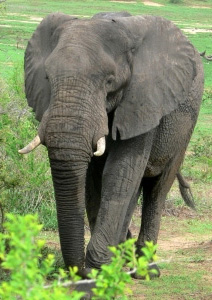
Genesis 1:24–27 states that God made the land animals, as well as the first man and woman, on Day Six of Creation Week. Genesis 2:18–23 tells us that Adam named the animals before Eve was created. So how could Adam have named all the animals in one day?
The time factor
Day Six of Creation Week began at evening (Genesis 1:31), and so consisted of about 12 hours of darkness followed by about 12 hours of daylight. There is no reason why God could not have made the land animals, and Adam too, during the darkness period of Day Six, so that at first light there they all were!
If, however, God used the daylight period, there is no reason to suppose that His creative acts in making the animals and Adam took any longer than the instant for Him to command these events to happen.1 So either way it need not have taken any time at all beyond first light on Day Six for all the land animals and Adam to have come into existence.
Adam therefore had most of the daylight hours of Day Six in which to complete his task. Note that this task did not include his searching out the animal, because Genesis 2:19 tells us that God ‘brought them unto Adam to see what he would call them’. Presumably this was in some sort of reasonably orderly procession.
Naming the animals
The following points need to be noted:
1. Genesis chapter 1 says that the animals were created according to their kinds, rather than according to their species—the phrase ‘after his/their kind’ occurs 10 times in this chapter (referring to both plants and animals). Exactly what the term ‘kind’ (Hebrew min) corresponds to in terms of the modern Linnaean classification system is not clear, but it appears that sometimes the min corresponds to today’s species, sometimes to the genus, and sometimes to the family. It indicates the limitations of variation. What is clear is that numerically there must have been fewer kinds in Adam’s day than the number of species we count today. [Ed. note: for more information, see Ligers and wholphins? What next?]
For example, it is more than likely that there would have been no domestic dogs, coyotes, and wolves as such, but rather one ancestral kind containing the genetic information for all of these to appear under natural selection pressures.

This is not evolution, because no new information is added. In the same way, the mongrel dog population of a few hundred years back was able to give rise (under human selection) to the various modern breeds of dog—because the information was already there in that population, much more than in today’s specialized, genetically depleted breeds. That’s why you can’t start with a chihuahua population, and expect that breeding/selection will eventually produce Great Danes.
2. Today we divide the animals into those we call tame (mostly herbivores), and those we call wild (both herbivores and carnivores), but this distinction did not apply before Adam sinned.
Genesis 1:30 says, ‘And to every beast … I have given every green herb for food’, and Genesis 1:31, ‘And God saw every thing that He had made, and, behold, it was very good.’ From these we conclude that animals did not kill each other for food pre-Fall, and they had no reason to fear man.
This means that we can regard them all as being tame at the time Adam named them. It also means that they would not have eaten each other, while taking part in any naming procession!
The animals which Adam named are specifically described in Genesis 2:20. They were the ‘cattle’, ‘the fowl of the air’ (birds), and ‘every beast of the field’. This classification has no correlation with today’s arbitrary system of man-made taxonomy (amphibians, reptiles, birds, mammals, insects), but is a more natural system based on the relation of the animals to man’s interests.
If we compare this naming list with the creation list in Genesis 1:20–25—birds and sea creatures (created on Day Five), beasts of the earth, cattle, creeping things—we see there are several very significant differences.2 Adam was not required to name any of the sea creatures, or any of the creeping things. And as the beasts of the field were not specifically mentioned in the creation list, we can regard them as being a subdivision of the beasts of the earth. That is, Adam was required to name only some of the total land animal population of his own day.
There is no suggestion that the naming was meant to be comprehensive. From this it follows that Adam’s task was not to provide a scientific taxonomy, but a set of general names of a selection of the animals, for the benefit of average human beings who would come after him.
So what animals were named?
1. The cattle (Hebrew: behemah)
The Hebrew term used here usually refers to animals which lend themselves to domestication—what we might call ‘domestic fauna’. Though no creatures were ‘wild’ in the modern sense, they would not all have been equally suitable for use by man.
It is interesting to note that most of the different breeds of what we call cattle today can be traced back to a single basic type, namely the aurochs, which itself is probably descended from the same created kind as the buffalo and bison group.3
Likewise, all the varieties of dog we have today have been bred from one basic dog/wolf type. Similar considerations may well apply to many other species of animals we use today, such as the horse.
All of this gives a total of a few dozen kinds at the most of behemah for Adam to name.
2. The fowl of the air
The Bible mentions some 50 different birds, whereas modern ornithologists divide the bird class into about 8,600 species. Of these, some 5,100 are in the order Passeriformes (perching birds), divided into suborders, families, and subfamilies; and there are about 3,500 species allotted to all other orders of birds in their families. Thus there are 285 species in the pigeon family, 127 species in the cuckoo family, 18 species in the penguin family, and so on.4 So how many birds did Adam have to name?
It is instructive to consider what Encyclopaedia Britannica says about parrots. ‘The avian order Psittaciformes [parrots, lories, cockatoos] contains more than 300 species of generally brightly colored, noisy, tropical birds, to which the general name parrot may be applied.’5
We do not know whether all such ‘parrots’ today are the descendants of one created kind, or whether the parrots of today descended from a handful of original kinds, which had (created) similarities to each other such that today we group them all under ‘parrot’.

If they were from one created kind, then instead of the 300 we have today, there would have been only one for Adam to name. Even if there were, say, three parrot kinds originally, it would have been fully legitimate (just as today) for these all to have been given the general term ‘parrot’. Therefore, only one representative from the three kinds would have been needed in the naming procession for the name ‘parrot’ (in whatever tongue Adam spoke) to have been given.
By the same reasoning, Adam probably named one ‘pigeon’, one ‘cuckoo’, one ‘penguin’, and so on.
Colliers Encyclopedia lists a total of 163 families of all living, fossil, and extinct birds.6 This means that if Adam named only one representing each such modern group, to which the same ‘general name’ could be applied, then there could have been fewer than a couple of hundred birds involved.
3. The beast(s) of the field
The Hebrew word sadeh, translated ‘field’ in several Bible versions, has the meaning of a flat open plain. The term ‘beast(s) of the field’ occurs several times in the Old Testament. These are all in a post-Fall situation, that is, after sin had entered the world.
They included animals that move in when humans move out (Exodus 23:29), ‘wild asses’ (Psalm 104:11), ‘dragons and owls’ (Isaiah 43:20),7 animals that prey on sheep (Ezekiel 34:8), and a range of carnivores (Ezekiel 39:17). As the condition of sin did not apply when Adam named the animals, the most we can take from these verses is an indication of the variety of animals involved.
It is better to think of sadeh (‘field’) as referring to the habitat, although not perhaps to the extent of asking ‘which field’? or ‘was the field the Garden of Eden?’
Taking all these factors into account, particularly the matter of habitat, the beasts of the field named were probably those animals which live today in open country and venture close to human habitation. Not named were probably those animals which live exclusively in forest, jungles, mountains, wetlands, deserts, etc.
On the basis of our earlier discussion concerning birds, it is clear that nowhere near the number of species extant today would have been involved. Adam presumably needed to name only one ‘snake’ (or at the most possible a few major anatomical differences, like ‘python’, ‘rattlesnake’, ‘cobra’). Likewise for many types of animals.
It is therefore completely inappropriate to talk of his having had to name the 6,000 species of reptiles or the 2,000 species of amphibians known today.8 Quite apart from the fact that many, if not most, of these have been excluded on the basis of habitat anyway. Thus, even allowing for extinct types, it would seem more than generous to allow for counting of a thousand ‘beasts of the field’—in reality, the figure may well have been in the low hundreds.
Was Adam equal to the task?
We learn language by association, but Adam, from the moment he was created, had language. Therefore he (and then Eve) must have already had built in ‘programs’ in their memory banks, so that when God said, ‘Don’t …’ (Genesis 2:17), they immediately knew exactly what this meant. It seems that they must also have known what it would mean to die, even though they had never seen anything dead.
It is therefore reasonable for us to conclude that, at the ‘naming parade’, Adam could speak a precise language, using one or two words in place of a long description, just as our one word ‘elephant’ refers to ‘a large, big-eared, trunk-nosed, tusked quadruped’.
It also means that he did not need to ponder each decision. His naming of each different kind of animal could therefore have been both quick and appropriate, and also without confusion, for he would have had the capacity to recall the names he already had allocated with a pre-Fall memory that was crystal clear and voluminous.9
So, even in the unlikely event that there were as many as a thousand animals paraded before Adam, how long would it have taken him to name them?
There are 3,600 seconds in an hour, so Adam could have completed his task in under an hour. If he did it in a more leisurely and contemplative fashion, it would have taken a few hours at the most (excluding time out for ‘coffee breaks’!). Surely a pleasant day’s work, leaving plenty of time for God to create Eve from Adam’s side that same afternoon.
Why?
Adam had been given dominion over the animals (Genesis 1:28), and God now provided him with the opportunity to exercise this responsibility in a way which established his authority and supremacy—in ancient times, it was an act of authority to impose names (cf. Daniel 1:7) and an act of submission to receive them.
This exercise also shows that Adam was not an ape-man, and indeed it was intended by God to show that he had no ape-like siblings among which to find fellowship or a mate (cf. Genesis 2:20b: ‘for Adam there was not found an help meet [i.e. helper suitable] for him’).
Contrary to the wishful thinking of evolutionists, the first man was not some stooped, dimwitted, grunting hominid, separated from his ape-like ancestors by a genetic mutation or two. The Bible portrays Adam as being essentially different from the animal world, because he had been created ‘in the image of God’ (Genesis 1:27).
This term refers primarily to man’s God-consciousness—his capacity for worshipping and loving God, his ability to understand and choose between right and wrong, and his capacity for holiness.10
A secondary meaning includes such things as man’s mental powers, reason, and capacity for articulate, grammatical, symbolic speech. In Adam, before sin, these capacities may have dwarfed anything we know today.
God in His omniscience would have foreknown the rise of humanistic naturalism in the twentieth century. This episode, way back in the Garden of Eden, highlights for those who have an eye to see it, the false and unbiblical nature of the evolutionary theory of human origins!
References and notes
- See Grigg, R., Creation—how did God do it? Creation 13(2):36–38, 1991. This shows that God’s creative ‘speaking’ in Genesis chapter 1 was equivalent to God’s ‘willing’ things to happen. Return to text.
- Some skeptics and liberals have put forward the mistaken criticism that the order in Gen 2:19–20 is chronological, i.e. that Adam was created before the animals, contrary to the order given in Genesis 1:21–26. However, Genesis 2 is not a second and different creation account. This is shown by the omission of any mention of the formation of the sun, moon, stars, or sea. Rather, chapter 2 gives more details about certain aspects of the creation which particularly concerned Adam. It would be both legitimate and in keeping with the sense of the Hebrew to translate Genesis 2:19 thus: ‘Now the Lord God had formed out of the ground all the beasts of the field and all the birds of the air …’. In fact, more than one modern translation of the Bible translates this verse in this way. There is no contradiction. (See Genesis contradictions? for more details.) Return to text.
- See Wieland, C., Re-creating the extinct aurochs, Creation 14(2):25–28, 1992; creation.com/aurochs. Return to text.
- ‘Birds’, Encyclopaedia Britannica 15:1–112, 1992. Return to text.
- Ibid., pp. 68–69. Return to text.
- Colliers Encyclopedia, p. 210, 1994. Return to text.
- Several modern translations of the Bible render ‘dragons’ (Hebrew tannin) as ‘jackals’. However, it is possible that ‘dragons’ (KJV) is a more correct term and refers, at least on occasion, to dinosaurs. If this is so, the number of dinosaurs named by Adam would have been limited, as with the other animals, to the comparative few whose habitat was flat open plains. Return to text.
- Especially so, when it is realized that many snakes are classified today according to the presence, absence, or location of various internal parts. Return to text.
- The human mind is capable of prodigious feats of memory, as for example chess players who can play several tens of games of chess ‘blindfolded’ (i.e. without sight of the board and communicating the moves by a recognised chess notation). Georges Koltanowski was a great expert, and also tackled 56 consecutive opponents blindfolded and won 50 games with 6 drawn, in 9.75 hours, on 13 December 1960 (Guinness Book of Records, p. 245, 1972); or Hiroyuki Goto, who recited pi to 42,195 places in Tokyo on 18 February 1995 (New Guinness Book of Records, p. 309, 1996). Adam’s mind at this stage was not affected by either genetic defects or sin. Return to text.
- The capacity for holiness, though flawed in the case of Adam and all of his descendants (us) because of sin, was perfectly shown in the life of the Lord Jesus Christ. Return to text.
(Also available in Romanian.)


Readers’ comments
Comments are automatically closed 14 days after publication.