
Journal of Creation 19(1):3, April 2005
Browse our latest digital issue Subscribe
No joy for junkies
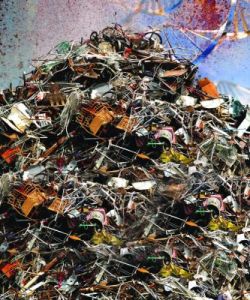
Before any sequencing of DNA had been done, evolutionists decided that fully 99% of the human DNA must be inert or ‘junk’. They came to this conclusion because, according to the calculations of population geneticists, if much more than 1% of the DNA sequence of creatures such as humans actually mattered, then ‘error catastrophe’ would have resulted, because natural selection could not have eliminated the large number of harmful mutations.1
When the DNA sequencing turned up ‘only’ about 25,000 protein-coding genes in humans, the evolutionists seemed vindicated, except that we already knew that DNA codes for more than just proteins. For example, the transfer-RNAs and ribosomal RNA are coded on the DNA. And various segments of DNA-coded RNA were being implicated as co-factors in various chemical reactions and in gene activation or suppression. But what else does all that DNA do?
Bit by bit, the idea of ‘junk’ DNA has been unravelling. There have been reviews and notes in Journal of Creation2–5 covering some of the exciting developments.
Recently, a large chunk of the remaining ‘junk’ has been implicated in the control of embryo development. Scientists at the Jackson Laboratory, Maine, USA, found that a type of transposable element (TE), a major class of supposed ‘junk’ or ‘parasitic’ DNA, activates during embryo development in mice.6 In a commentary on this work, Ricky James commented:
‘Therefore, more than one third of the mouse and human genomes, previously thought to be non-functional, may play some role in the regulation of gene expression.’7
Note that this ‘non-coding’ DNA only seems to function during egg and embryo development, so studying TEs in other cells would not reveal their function. This might explain why the functions of non-coding DNA have been so elusive.
These developments underline, once again, how evolutionary premises impede the progress of science. In the past, evolutionary notions led to over 100 human features being labeled ‘vestigial’, or leftovers of our supposed animal ancestry.8 This was based on the similarity of these features to ones found in animals, combined with the lack of knowledge about what the organs did. The lack of logic is astonishing: ‘since we don’t know what the organs do, they must be useless’. The same evolutionary ‘logic’ has been applied to the DNA: ‘we don’t know what most of it does, so it must do nothing’. So it is labelled ‘junk’, ‘pseudogenes’, ‘parasitic’, ‘retroviral inserts’, etc.
Thankfully, not everyone bought this idea. In the late 1980s, New Zealand–born Australian immunologist Malcolm Simons recognized patterns, or order, in the non-coding DNA that indicated to him that the code must have a function, but others ridiculed the idea.9 In the mid-1990s, he patented the non-coding DNA (95%) of all organisms on Earth. The company he founded, Genetic Technologies, now reaps licence fees from all technologies being developed to cure disease that involve the non-coding DNA. It’s quite controversial, of course, paying such licence fees. And since factors involved in all sorts of diseases, such as breast cancer, Crohn’s disease, Alzheimer’s, heart disease, ovarian and skin cancer, are being found in the ‘junk’, Genetic Technologies is doing quite well.10
There’s much gold to be mined from the junk, it would seem.
Leading geneticist Prof. John Mattick of the University of Queensland in Brisbane, Australia, has proposed that the non-coding DNA was part of a sophisticated ‘operating system’, with ample justification.11,12 Some critics rejected this on the grounds that such a system could not have evolved! Mattick recently said that ‘the failure to recognise the implications of the non-coding DNA will go down as the biggest mistake in the history of molecular biology’.9 This mistake can be attributed to an evolutionary approach to biology.
Creationists have long argued that ‘junk’ DNA is nothing of the sort. For example, Carl Wieland, Creation Ministries International (Australia), wrote, ‘Creationists have long suspected that this “junk DNA” will turn out to have a function.’13 Although there might be a small amount of non-functional DNA due to damaging mutations that have occurred since the Fall, it is inconceivable that God would create most of the human DNA as having no function.
References
- ReMine, W.J., The Biotic Message, Saint Paul Science, Saint Paul, MN, pp. 248–250. See also: Cost theory and the cost of substitution—a clarification, Journal of Creation 19(1):113–125, 2005. Return to text.
- Walkup, L.K., ‘Junk’ DNA: evolutionary discards or God’s tools? Journal of Creation 14(2):18–30, 2000. Return to text.
- Woodmorappe, J., Are pseudogenes ‘shared mistakes’ between primate genomes? Journal of Creation 14(3):55–71, 2000. Return to text.
- Jerlström, P., Pseudogenes: Are they non-functional? Journal of Creation 14(3):15, 2000. Return to text.
- Woodmorappe, J., Pseudogene function: more evidence, Journal of Creation 17(2):15–18, 2003. Return to text.
- Peaston, A.E., Evsikov, A.V. et al., Retrotransposons regulate host genes in mouse oocytes and preimplantation embryos, Developmental Cell 7(4):597–606, 2004. Return to text.
- James, R., Junk DNA guides embryo formation, www.Sciscoop.com/story/2004/10/13/33731/304. Return to text.
- Bergman, J., Do any vestigial organs exist in humans? Journal of Creation 14(2):95–98, 2000. Return to text.
- Genius of Junk (DNA), Catalyst, ABC TV, 10 July 2003; transcript: www.abc.net.au/catalyst/stories/s898887.htm. Return to text.
- Simons no longer owns shares in the company. See previous reference. Return to text.
- Dennis, C., The brave new world of RNA, Nature 418(6894):122–124, 2002. Return to text.
- Sarfati, J., DNA: Marvellous messages or mostly mess? Creation 25(2):26–31, 2003. Return to text.
- Wieland, C., Junk moves up in the world, Journal of Creation 8(2):125, 1994. Return to text.


Readers’ comments
Comments are automatically closed 14 days after publication.