

Radioisotope dating of rocks in the Grand Canyon
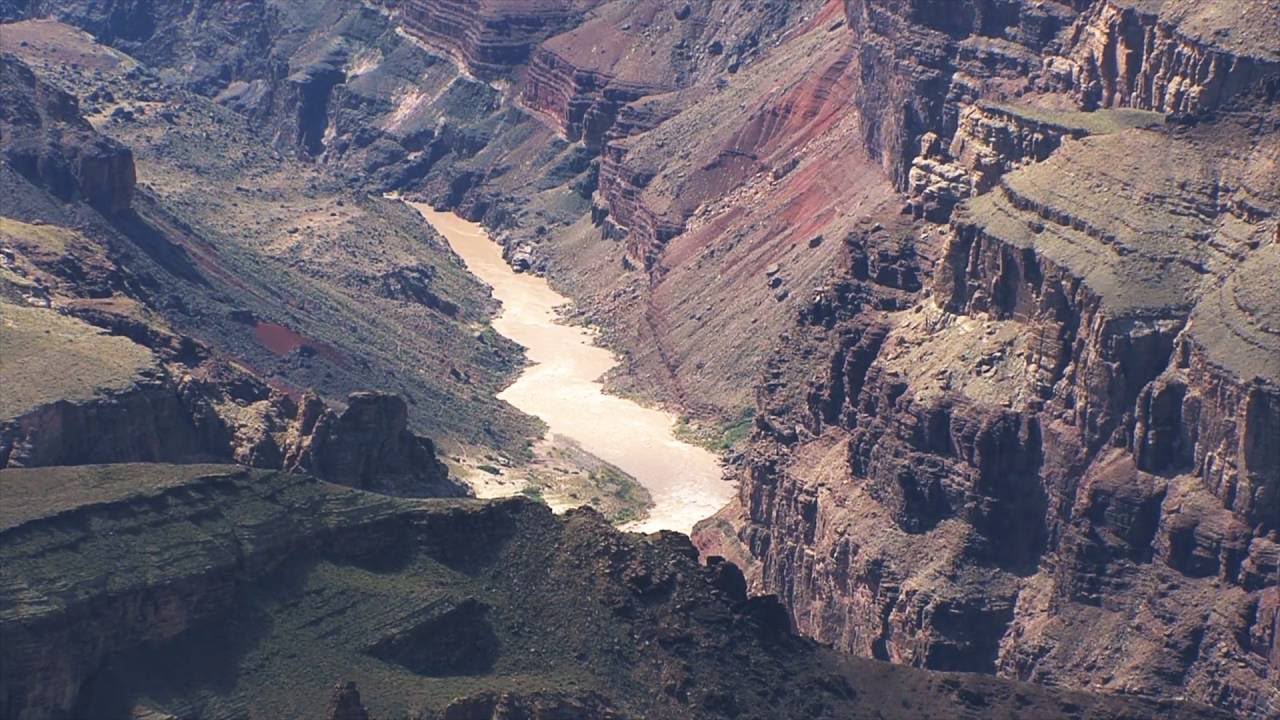
Rafting through Grand Canyon, northern Arizona, is a most exhilarating and enjoyable experience. Deep below the rim, the crystalline basement rocks tower above the turbulent Colorado River. Official publications say these rocks are more than a billion years old, but when the methods used to date them are carefully examined, a totally different story is discovered.
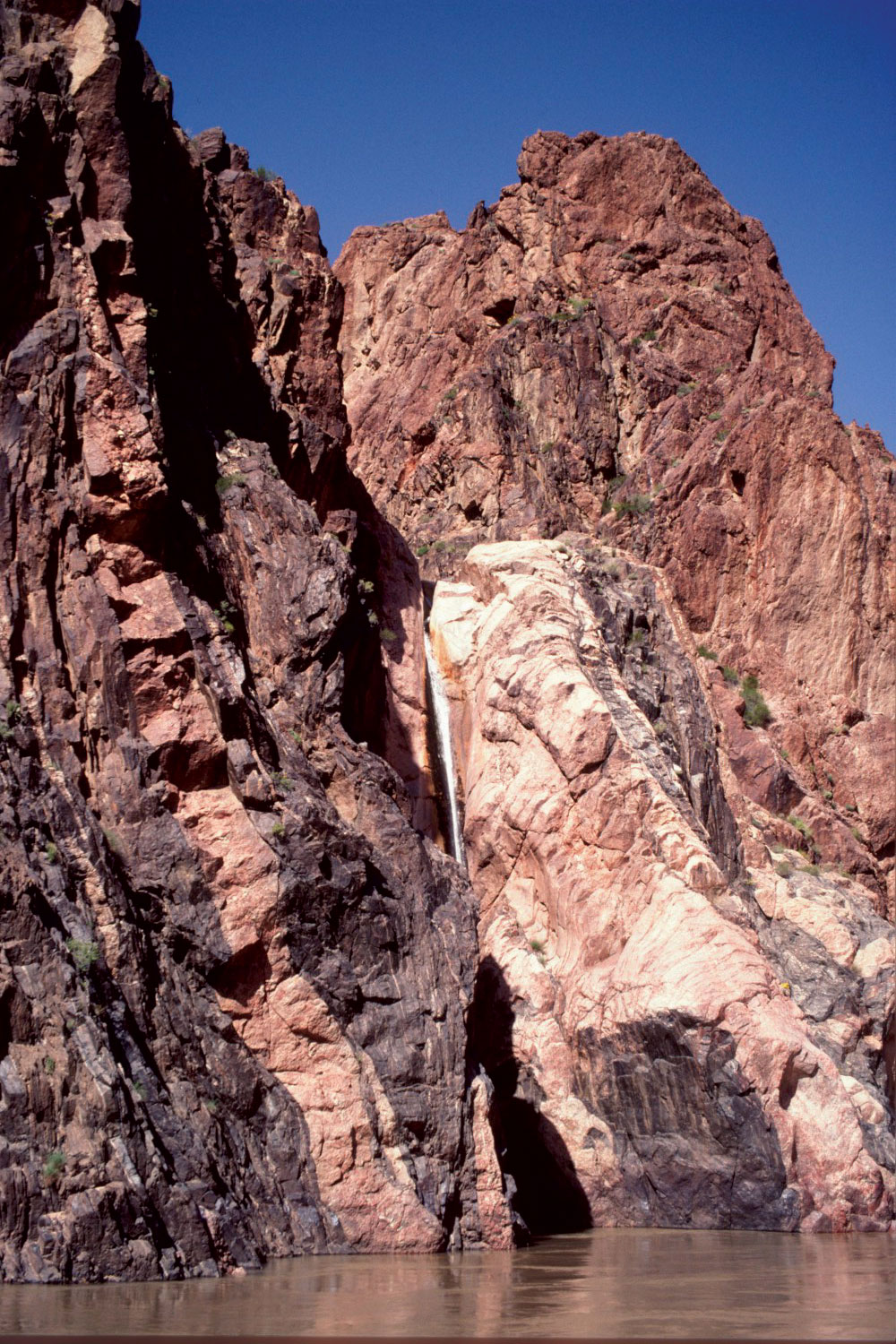
Clearly visible in the walls of the Inner Gorge are spectacular light-coloured rocks, such as the pink granites,1 which stand out starkly against the darker, metamorphic rocks2 (figures 1 and 2). The latter are former sedimentary and volcanic layers that have been transformed (metamorphosed) by heat and pressure during intense geologic upheavals in the past.
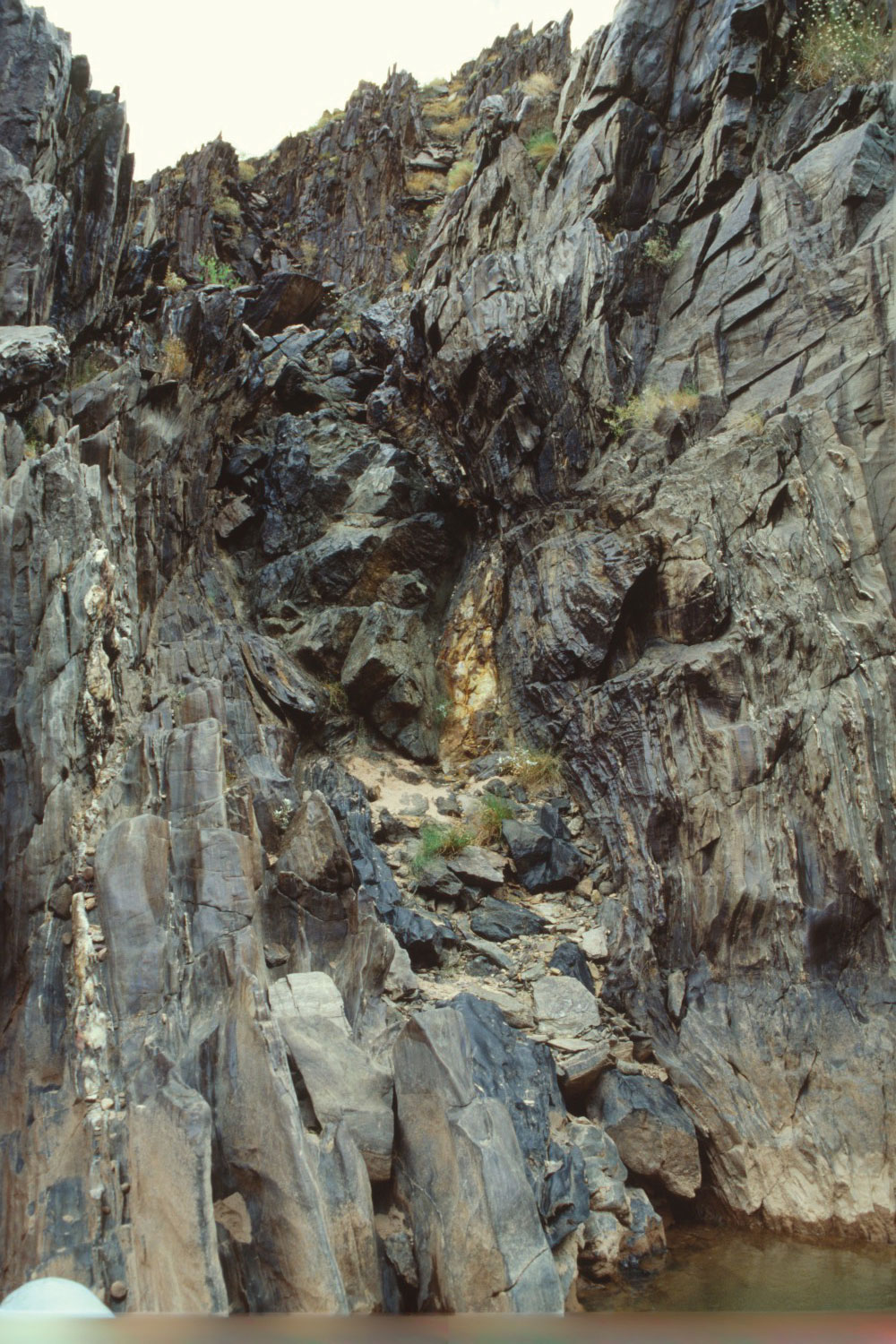
Among these volcanic layers are distinctive dark-coloured rocks called amphibolites3 (figure 3). These were once flows of basalt lava, up to tens of metres thick (figure 4). Some outcrops reveal round pillow structures, showing that the basalt lavas erupted under water.
How old are the rocks?
Based on radiometric dating, long-age geologists say that the basalt lavas erupted 1,745 million years ago4 and were metamorphosed some 1,700 million years ago.5 Many people, including many scientists, accept these dates as absolute truth. They believe that when different radio-dating methods are used on the same rocks, they will all yield the same age. But the quest to test this belief by sampling rocks from deep within Grand Canyon has found it is not true.
‘Dating’ amphibolite samples

During several raft trips through Grand Canyon, many samples of these ‘Brahma’ amphibolites were collected from various outcrops in the Inner Gorge.6 These included seven samples from a single amphibolite body (figure 5).7
All the samples were sent to two well-respected commercial laboratories for radioisotope testing.8 Both laboratories use standard, best-practice procedures on state-of-the-art equipment and routinely provide accurate and repeatable measurements of the required isotopes.
It is important to realize that the laboratories do not measure the ‘age’ of the rocks but the isotopes in them at the present time. Geologists calculate an ‘age’ using the measured amount of a ‘daughter’ isotope (e.g. argon) and its corresponding ‘parent’ isotope (e.g. potassium).
However, before this calculation can be made, it is necessary to assume how much of the ‘daughter’ and ‘parent’ were present when the rock formed. It is also necessary to assume that no isotopes were gained or lost over time and that the rate of radioactive decay has remained constant at the very slow rate measured today.
The problem is that we don’t know whether these assumptions are reasonable (because they are not provable), and it is especially awkward for metamorphic rocks. Geologists overcome this problem by ‘interpreting’ the result. For example, the calculated ‘age’ could be taken as the ‘date’ of metamorphism, or it could be the ‘age’ of the original volcanic (or sedimentary) rock, or something in between, or something else.
Different methods don’t agree


The calculated ages for all the individual samples from the same geologic formation using the same dating method turned out to be vastly different (see box, ‘Calculating the ages’, below), even for those closely spaced samples from the same outcrop of the same lava flow. The results are not even close to each other, although the samples should all have given the same age.
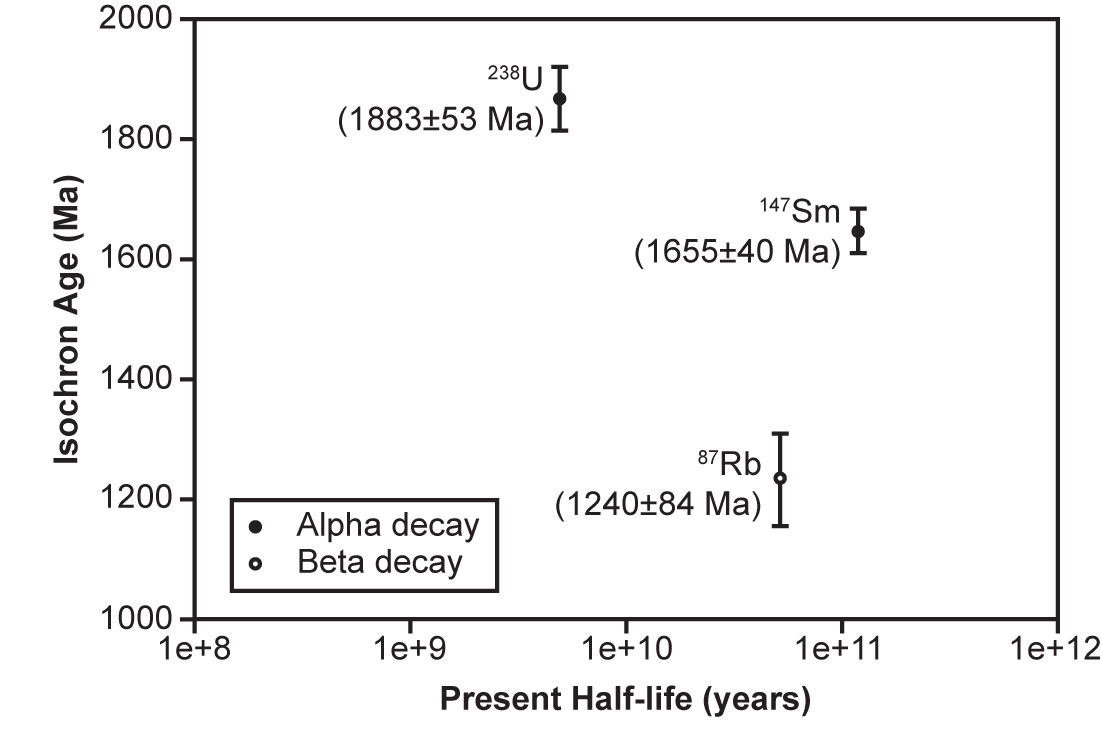
Furthermore, the ages calculated for these Grand Canyon rocks using three different ‘isochron’ methods also disagreed greatly with each other. Even when the error margins are taken into account, the three different dating methods give completely different ‘ages’ that cannot be explained away.
Indeed, none of the isochron ‘ages’ corresponds to the ‘date’ for any theorized geologic event—neither the original lava eruptions nor the subsequent metamorphism. Clearly, the calculated ages are useless for dating any event.
The rule, not the exception
Some might want to dismiss these conflicting ‘dating’ results as an isolated abnormality. They might claim that they are due to the uncertain effects of metamorphism and later alteration, especially erosion and weathering. But these are not isolated results. They are further confirmation of the repeated failure of all the radioisotope ‘dating’ methods to successfully date Grand Canyon rocks.9,10
It is not just creationists who are discovering these dating failures. Other geologists are also reporting that different methods on the same rock unit give conflicting radioisotope ‘dates’.11 But in their reports those geologists include tenuous ‘interpretations’ to try to explain away the abnormal amounts of daughter isotopes. It seems they are trying to avoid the inescapable conclusion that the radioisotope methods simply do not yield reliable ages.12
Calculating the ages
The so-called ‘model’1 potassium-argon (K-Ar) ‘ages’ calculated for each of the 27 amphibolite samples from Grand Canyon ranged from 405.1 ± 10 Ma (million years) to 2,574.2 ± 73 Ma. That is a six-fold difference, for samples that should be of similar age.
Note that the error estimates (the ± numbers) are small compared with the age. They are also small compared with the variation in ages between samples. This means that the laboratory testing was precise. However, as the results show, the error estimates say nothing about the accuracy of the ‘ages’ of the rock samples.
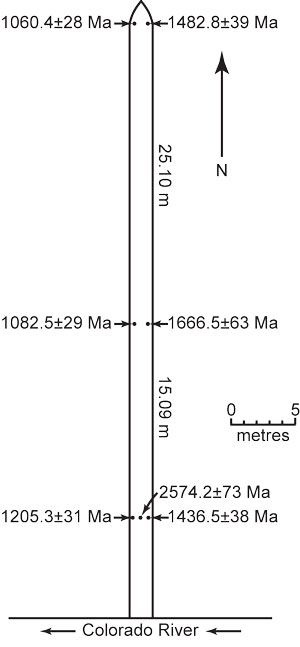
Furthermore, the seven samples from the small amphibolite unit near Clear Creek, which should be even closer in age because they belong to the same metamorphosed basalt lava flow, yielded K-Ar model ‘ages’ ranging from 1,060.4 ± 28 Ma to 2,574.2 ± 73 Ma (figure 6). This includes two samples only 0.84 m (2 ft 9 in) apart that yielded K-Ar model ‘ages’ of 1,205.3 ± 31 and 2,574.2 ± 73 Ma. Clearly, there is a problem with the assumptions on which the K-Ar ‘ages’ are calculated.
The isotopic results other than potassium-argon (K-Ar), namely rubidium-strontium (Rb-Sr), samarium-neodymium (Sm-Nd) and lead-lead (Pb-Pb), were used to calculate ages for the rock formation utilizing isochrons.2 Three ages altogether were obtained, one for each isotopic system.
The best isochron plots are where the straight line of best-fit falls within the analytical errors (the ± values) for each data point. Routinely, if the data set is large, a few outlying data points are ignored if they don’t plot on the line. Geologists justify this, saying that some geochemical alteration in the past disturbed the radioisotopes in those samples.
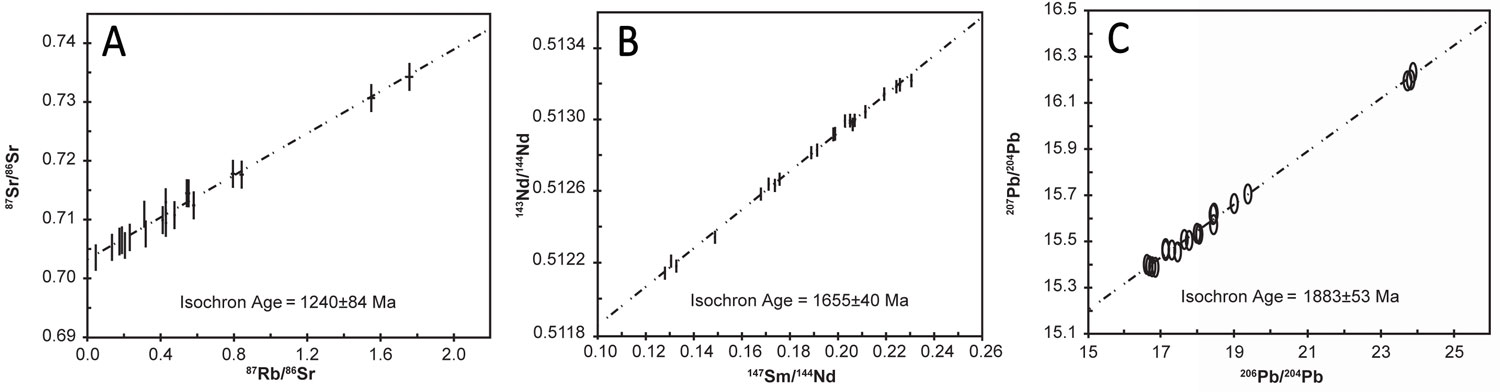
The best-fit isochron plots for these amphibolites yielded a Rb-Sr ‘age’ of 1240 ± 84 Ma from 19 of the 27 samples, a Sm-Nd ‘age’ of 1,655 ± 40 Ma from 21 samples, and a Pb-Pb ‘age’ of 1,883 ± 53 Ma from 20 samples (figure 7).3
Note that the quoted ‘age’ error margins (the ± values) are relatively small, due to the excellent statistical ‘fit’ of these isochrons to the data. In spite of this, the three different radioisotope methods give three very different ‘ages’—that is the ‘isochron discordance’ is pronounced. Figure 8 graphically illustrates how that, even when the calculated error margins are taken into account, the different radioisotope dating methods yield vastly different ‘ages’ that cannot be reconciled.
References
- A model age is calculated by assuming a value for the original isotopic composition of the molten liquid from which the rock solidified. In the case of K-Ar, it is assumed that when the rock formed, there was no Ar in it derived from radioactive decay of K.
- An isochron is a graphical plot of the isotopic compositions of the samples. It allows an isochron age to be calculated from a straight line plotted through the graph of the results. The Isoplot computer program, developed by Dr Ken Ludwig at the University of California Berkeley Geochronology Center, was used. See: Ludwig, K.R., Isoplot/Ex (Version 2.49): The Geochronological Toolkit for Excel, University of California Berkeley, Berkeley Geochronology Center, Special Publication No. 1a, 2001. The method effectively requires multiple assumptions, namely that the initial isotopic ratio of each sample was the same as the ratio of every other sample in the group.
- It is important to note that geologists routinely use only 6–10 samples for plotting isochrons and calculating isochron ages, so the isochrons obtained here from 19–21 samples are exceptional. Furthermore, all the results not included in the isochron ‘age’ calculations still plotted very close to the lines of best fit.
Accelerated radioactive decay in the past
Research by the RATE project1 has uncovered much evidence that radioisotope decay rates were accelerated in a global catastrophic event in the recent past.2 This evidence includes the patterns of discordances between ‘dates’ from the different radioisotope systems.3–6
For example, if accelerated radioisotope decay occurred, then alpha-decaying radioisotopes would yield older isochron ‘ages’ than beta-decaying radioisotopes. This is exactly the pattern in the Brahma amphibolites in Grand Canyon (figure 8).
Because the different radioisotope pairs are supposed to be dating the same geologic (rock formation) event, different ‘dates’ mean that the parent radioisotopes decayed at different rates over the same time period. In other words, the decay of the parent radioisotopes was accelerated by different amounts, the decay of those yielding older ‘ages’ (the alpha-decayers) having been accelerated more. This again matches theory.
Obviously, if radioisotope decay was accelerated, say during the Genesis Flood, then the radioisotope decay ‘clocks’ could never be relied upon when they ‘date’ rocks as millions and billions of years old. Indeed, there are several independent lines of irrefutable evidence7–9 which indicate that the rates of decay of these long-age radioisotopes were grossly accelerated during some event in the past, up to millions of times faster than their currently measured rates. Thus, it is entirely plausible that the rocks are only a few thousand years old.
References
- RATE is a cooperative research venture between leading creationist geologists and physicists of the Institute for Creation Research and the Creation Research Society of USA into Radioisotopes and the Age of The Earth.
- Vardiman, L., Snelling, A.A. and Chaffin, E.F. (Eds.), Radioisotopes and the Age of the Earth: Results of a Young-Earth Creationist Research Initiative, Institute for Creation Research, Santee, California, and the Creation Research Society, St Joseph, Missouri, in preparation, 2005.
- Austin, S.A. and Snelling, A.A., Discordant potassium-argon model and isochron ‘ages’ for Cardenas Basalt (Middle Proterozoic) and associated diabase of eastern Grand Canyon, Arizona; in: Walsh, R.E. (Ed.), Proceedings of the Fourth International Conference on Creationism, Creation Science Fellowship, Pittsburgh, Pennsylvania, pp. 35–51, 1998.
- Snelling, A.A., Austin, S.A. and Hoesch, W.A., Radioisotopes in the diabase sill (Upper Precambrian) at Bass Rapids, Grand Canyon, Arizona: An application and test of the isochron dating method; in: Ivey, R.L. Jr., (Ed.), Proceedings of the Fifth International Conference on Creationism, Creation Science Fellowship, Pittsburgh, Pennsylvania, pp. 269–284, 2003.
- Austin, S.A., Testing the assumptions of radioisotope dating, using whole-rock and mineral isochron methods by K-Ar, Rb-Sr, Sm-Nd, and Pb-Pb radioisotope pairs; in: Vardiman et al., ref 2.
- Snelling, A.A., Isochron discordance and the role of inheritance and mixing of radioisotopes in the mantle and crust; in: Vardiman et al., ref 2.
- Humphreys, D.R., Young helium diffusion age of zircons supports accelerated nuclear decay; in: Vardiman et al., ref. 2.
- Snelling, A.A., Radiohalos in granites: evidence for accelerated nuclear decay; in: Vardiman et al., ref. 2.
- Baumgardner, J.R., 14C evidence for a recent global Flood and a young earth: in; Vardiman et al., ref. 2.
Conclusion
The radioisotope methods, long touted as irrefutably dating the earth as countless millions of years old, have repeatedly failed to give reliable and meaningful absolute ages for Grand Canyon rocks. Irreconcilable disagreement within, and between, the methods is the norm, even at outcrop scale. In fact, when carefully examined, this radioisotopic evidence is consistent with the view that these rocks are young (see ‘Accelerated radioactive decay in the past’).
These results are a devastating ‘blow’ to the concept of long ages, foundational to uniformitarian geology and evolutionary biology. It is entirely feasible that the basalt lava flows, now deep in Grand Canyon, erupted onto the ocean floor during Creation Week and were metamorphosed in the upheaval that produced dry land on Day 3, just six thousand years ago.13
References
- E.g. the Zoroaster Granite. Geological formations have names for ease of identification. Return to text.
- The Vishnu Schist and other rocks of the Granite Gorge Metamorphic Suite. See Karlstrom, K.E., Ilg, B.R., Williams, M.L., Hawkins, D.P., Bowring, S.A. and Seaman, S.J., Paleoproterozoic rocks of the Granite Gorges; in: Beus, S.S. and Morales, M. (Eds.), Grand Canyon Geology, 2nd edition, Oxford University Press, New York, pp. 9–38, 2003. Return to text.
- Belonging to a rock unit called the Brahma Schist. Return to text.
- 1741–1750 million years (Ma) based on U-Pb (uranium-lead) ‘dating’ of ‘original’ zircon grains in metamorphosed felsic (granitic) volcanic rock layers within the Brahma and Rama Schists. See Ilg, B.R., Karlstrom, K.E., Hawkins, D.P. and Williams, M.L., Tectonic evolution of Paleoproterozoic rocks of Grand Canyon: Insights into middle-crustal processes, Geological Society of America Bulletin 108:1149–1166, 1996, and Hawkins, D.P., Bowring, S.A., Ilg, B.R., Karlstrom, K.E. and Williams, M.L., U-Pb geochronologic constraints on the Paleoproterozoic crustal evolution of the Upper Granite Gorge, Grand Canyon, Arizona, Geological Society of America Bulletin 108:1167–1181, 1996. Return to text.
- 1690–1710 Ma based on U-Pb ‘dating’ of minerals (monazite, xenotime and titanite) that formed in the overlying Vishnu Schist and underlying Rama Schist during the metamorphism. See Hawkins et al., ref. 4, and Hawkins, D.P. and Bowring, S.A., U-Pb monazite, xenotime, and titanite geochronological constraints on the prograde to post-peak metamorphic thermal history of Paleoproterozoic migmatites from Grand Canyon, Arizona, Contributions to Mineralogy and Petrology 134:150–169, 1999. Return to text.
- These samples were collected with a Scientific Research and Collecting Permit issued by the Grand Canyon National Park, as part of the RATE (Radioisotopes and the Age of The Earth) project. Return to text.
- 50 m (160 ft) long and 2 m (7 ft) wide, outcropping just upstream from the mouth of Clear Creek at river mile 84 (measured from Lees Ferry). Return to text.
- ‘Whole rock’ samples were analyzed in all cases—K-Ar at Activation Laboratories, Ancaster, Ontario, Canada; Rb-Sr, Sm-Nd and Pb-Pb at the PRISE Laboratory, Research School of Earth Sciences, Australian National University, Canberra, Australia. Return to text.
- Austin, S.A. and Snelling, A.A., Discordant potassium-argon model and isochron ‘ages’ for Cardenas Basalt (Middle Proterozoic) and associated diabase of eastern Grand Canyon, Arizona; in: Walsh, R.E. (Ed.), Proceedings of the Fourth International Conference on Creationism, Creation Science Fellowship, Pittsburgh, Pennsylvania, pp. 35–51, 1998. Return to text.
- Snelling, A.A., Austin, S.A. and Hoesch, W.A., Radioisotopes in the diabase sill (Upper Precambrian) at Bass Rapids, Grand Canyon, Arizona: An application and test of the isochron dating method; in: Ivey, R.L. Jr., (Ed.), Proceedings of the Fifth International Conference on Creationism, Creation Science Fellowship, Pittsburgh, Pennsylvania, pp. 269–284, 2003. Return to text.
- Musaka, S.B., Wilson, A.H. and Carlson, R.W., A multielement geochronologic study of the Great Dyke, Zimbabwe: Significance of the robust and reset ages, Earth and Planetary Science Letters 164:353–369, 1998. Return to text.
- Some might argue that these radio-dating methods still give ‘ages’ of many millions of years, as required by evolutionists. However, there is irrefutable evidence that the rates of radioactive decay of these ‘dating’ isotopes were grossly accelerated in the past, being up to millions of times faster than their currently measured rates (see box, ‘Accelerated radioactive decay in the past’, above). Return to text.
- Austin, S.A. (Ed.), Grand Canyon: Monument to Catastrophe, Institute for Creation Research, Santee, California, ch. 4, pp. 57–82, 1994. Return to text.


Readers’ comments
Comments are automatically closed 14 days after publication.