
Who gets the kidney—and lives?
Even a hoax can have valuable lessons.
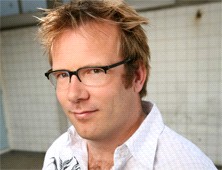
The host of the show
A storm of controversy surrounding a bizarre new ‘reality TV’ show by Dutch public broadcasting company BNN created worldwide attention—and was later revealed to be an elaborate hoax.
To get more people to consider donating their organs and tissues after dying, BNN decided to make a live TV show in which a terminally ill woman was going to grant one of her kidneys to one of three (preselected) contestants on the show. The public could vote by SMS to help her pick the one she feels should have her kidney.
In response, newspapers and internet forums were buzzing with comments and questions such as:
‘Is life ours to give?’
‘Does it mean that if she or the public doesn’t like the skin colour of one of the contestants, she would rather give it to one of the others?’
The issue raised questions in the Dutch parliament and even in the Counsel of the European Union.
Member of the Dutch parliament, Joop Atsma from the Christian Democratic Party, aggrieved by the news, said, ‘What next? Will we see people selling their organs, maybe for a charity?’1
Education, Culture and Science minister Mr. Plasterk, despite being a convinced evolutionist, said that such a show is ‘Absolutely inappropriate and unethical.’ He continued: ‘To have people with a life-threatening disease compete in a contest in which their life is at stake, is something I thought we had left behind since we stopped throwing Christians in front of lions.’2
The minister claimed that he was constitutionally barred from banning the show, and that the public broadcasters were responsible for their own programs. He said that while he could appreciate the effort made to bring the subject of organ donation to the attention of the public, he absolutely rejected the method BNN had chosen, as do all the Dutch organ transplant centres. The show was later shown to be a hoax—the ‘terminally ill’ woman was not dying at all. The purpose was apparently to draw attention to the lack of kidney transplant donors.
Reading all the news and forums, etc., it’s clear that the minister and most of my fellow Dutchmen3 are convinced that the sort of ‘playing God’ that the show was allegedly promoting is not appropriate. But when you think about it, isn’t that a little strange? A lot of those same people that had a problem with this don’t have a problem with abortion (allowed till up to 24 weeks gestation in the Netherlands) or euthanasia, in which Holland has long been a ‘leader’.

http://www.bnn.nl/page/donorshow
So on one hand they are saying we shouldn’t be allowed to play God by having the public and the woman in such a show choose the winner (a sentiment with which most Christians would surely agree). But on the other hand they think it is OK to kill a human being still in the mother’s womb.
Should we be surprised to see this type of confused thinking? Not really. In the Netherlands, once a great Christian nation,4 evolution is widely accepted. So, if we are the result of the process of evolution, the result of millions of years of death, disease and random chance, who is to decide what is right and wrong?
Did not also my thoughts and brain evolve, and aren’t right and wrong just one’s personal ideas about things? Why should the perception of one person be worse or better than that of another? And what is wrong with survival of the fittest? It’s been like that for millions of years, so why should we want to change that now?
Such reasoning might sound foolish, but it is perfectly rational if one follows the logic of evolution. In fact, similar reasoning has been used in the past, to convince oneself that one has not done any wrong. Think about the killing of the Jews in the Shoah (Holocaust)—see The Darwinian Roots of the Nazi Tree and The Holocaust and Evolution. Even many of the atrocities against aboriginals in Tasmania in the 19th century were based on pre-Darwinian notions of animal ancestry. See Culture Clash. Clearly these actions were based on evolutionary, naturalistic thinking and absolutely not on the history of life and the universe given in Genesis.
If we read the Bible we come to a different conclusion about the origin of life, and also about the moral issues. God has created us and He, the Creator of all, provided us with rules by which to live. A lot of people choose to live without God; they would rather decide for themselves how to live and what to do. Believing in evolution clearly supports that mindset. If we are just the result of evolution over billions of years, we do not have any responsibility to others and we can decide to live life just as we want to. A previous Dutch generation would have been appalled at not just ‘TV kidney lotteries’, but at the culture of death in abortion and euthanasia. This generation is shocked at the concepts in the show (a shock value that was in this case harnessed to promote a good cause), but accepts abortion and euthanasia. In the long run, as generations become more and more ‘evolutionized’, we can expect them to progressively become more and more hardened. We see this process in the once-Christian West, with things increasingly as they were in the time of Noah, when ‘ … GOD saw that the wickedness of man was great in the earth, and that every imagination of the thoughts of his heart was only evil continually’ Genesis 6:5.
References
-
http://www.telegraaf.nl/binnenland/64515991/Plasterk
_noemt_donorshow_onethisch.html?p=13,1. Return to Text. - http://www.nosheadlines.nl/forum.php/list_messages/6893. Return to Text.
- An internet poll of one of the large national papers concluded that more than 75% found it disgraceful. Return to Text.
- The laws on euthanasia and abortion have been the result of strongly secular government in the 80s and 90s. Return to Text.
Readers’ comments
Comments are automatically closed 14 days after publication.