
What did Wilberforce really say to ‘Darwin’s bulldog’?1
Huxley’s Debate with Wilberforce—Setting the record straight
Update, July 2022: Recent digitization of newspaper articles from 160+ years ago, 1 has given us new information, which puts a very different perspective on the debate. This information was unavailable when the late Prof. J.R. Lucas wrote his paper, which we originally endorsed. Hence the need for a new article now on our part.
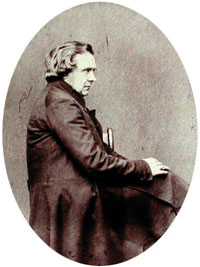

Huxley is probably best known today for his debate with the Anglican Bishop of Oxford, Samuel Wilberforce (son of the Christian anti-slavery politician, William Wilberforce), at the annual meeting of the British Association for the Advancement of Science. It was held in the Oxford University Museum library before an audience of over 700 on June 30, 1860, just seven months after the publication of Darwin’s Origin of Species. The chairman was Darwin’s mentor, Professor John Stevens Henslow.
Both Huxley and Wilberforce had written reviews of the Origin beforehand. Huxley had produced 5,000 words of adulation for The Times of December 26, 1859. Wilberforce, who was vice-president of the British Association, had a first-class degree in mathematics, and was an enthusiastic ornithologist, had written a carefully argued, scientific assessment of almost 19,000 words for The Quarterly Review of July 1860, pp. 225–264, in which he devoted six pages (pp. 239–245) to the absence in the geological record of any case of one species developing into another. When Darwin read Wilberforce’s Origin review, he said, “It is uncommonly clever; it picks out with skill all the most conjectural parts, and brings forward well all the difficulties.”2
At the meeting, Wilberforce spoke for about 30 minutes. His speech “rather than reflecting ignorance, prejudice and religious sentiment, [as commonly portrayed] in fact encapsulated many of the scientific objections people of his day had to Darwin’s book”.3 “As he saw it, and as most of his audience saw it, he was showing that it was, as a matter of scientific fact false, and only having established this did he go on to say in effect “and a good thing too.”4 Huxley then spoke and was followed by Robert FitzRoy (former captain of the Beagle), and Darwin’s friend, Joseph Hooker.
Most modern-day accounts of the debate include a story that Wilberforce supposedly asked Huxley whether he was related to an ape on his grandfather’s or his grandmother’s side. To which Huxley is alleged to have replied that he would prefer an ape for a grandfather to a man who employed his faculties and influence for the purpose of introducing ridicule into a grave scientific debate.
In fact, it is extremely unlikely that this alleged exchange occurred at the debate. Eminent philosopher (and traditional Anglican) Prof. J.R. Lucas (1929–2020), most famous for his defence of free will against determinism, sums up the evidence for and against this story in a long article in The Historical Journal5 summarized in Nature.6 He points out that the audience was larger than a full House of Commons, which means that, in the noisy and somewhat gladiatorial circumstances of the debate, not everyone would have heard everything that was said, or have correctly heard everything that was said. No verbatim account of the debate was kept.
Written accounts of the debate
Hooker did not mention it in his letter to Darwin, written two days later.7 Journalists’ reports in current periodicals did not mention it. Lucas writes, “[W]e have a journalist’s report … in three issues of The Athenaeum and a briefer one in Jackson’s Oxford Journal. These accounts give a different picture. Neither of the journalists present reported these tremendous words or noted their tremendous effect.8 Similarly “the Evening Star of the following day [1 July 1860] carried an account of the meeting, giving half of its space to the debate”, but made no mention of the alleged incident.9
The various versions in letters by Darwin’s supporters, published several decades after the event, vary considerably. “[I]t received little attention until the affair was reported in Darwin’s Life and Letters, compiled in 1887 by his son Francis.”10,11
According to Huxley himself, his own words were, “If then, said I the question is put to me would I rather have a miserable ape for a grandfather or a man highly endowed by nature and possessed of great means of influence & yet who employs these faculties & that influence for the mere purpose of introducing ridicule into a grave scientific discussion, I unhesitatingly affirm my preference for the ape.”12
Notice that Huxley was asking himself a hypothetical question. Had Wilberforce asked it, Huxley would surely have said, “The Bishop asked me … “ or, addressing Wilberforce, “You, Sir, asked me … “, but he didn’t say either of these things. Nor did he mention the word “grandmother”.
Adrian Desmond, Huxley’s biographer, writes: “Perceptions of the event differed so widely that talk of a ‘victor’ is ridiculous. Huxley believed himself ‘the most popular man in Oxford for full four & twenty hours afterwards’. … Hooker thought that … it was he (Hooker) who subsequently ‘smashed’ Wilberforce ‘amid rounds of applause’ And that it was he who was ‘congratulated & thanked by the blackest coats and whitest stocks in Oxford’ (the liberal clergy). In the chaos the punchdrunk combatants failed to see the jaunty Wilberforce leaving. He bore ‘no malice’, convinced that he had floored Huxley.”13
It is thus incorrect for the TV series Darwin’s Brave new World (Episode 3) to claim that the Darwinists “put down the oily bishop and made him look like a creep”. Nor is it correct that the alleged incident “immediately became a kind of media event as it would today”. Newspapers did not record it in “mythic terms”— in fact, they didn’t record it at all!
So what happened?
Putting all of the above together, we suggest that the following scenario best fits all the data.
- Wilberforce did not ask Huxley the ape question in his speech at the debate.
- Huxley, in his speech at the debate, asked himself the ape question in the first person. “If the question is put to me … [etc.].”
- Thirty-eight years later a Mrs Sidgwick (not Sedgwick) either mistakenly or maliciously put the words of the question into the mouth of Bishop Wilberforce in her article in Macmillan’s Magazine of 1898.
- Since then the story has generated a life of its own.
- Despite the biased and mutated accounts of this meeting, or perhaps because of them, history has come to regard this event as something of a turning point in the public acceptance of the theory of evolution.
Postscript
A modern protagonist is Prof. Janet Browne (see clip above), who includes her rendering of the Huxley–Wilberforce debate in her new book Charles Darwin.14
Hiram Caton15 in his review of this writes, “… [Browne’s] narrative incorporates Huxley’s tale as fact. Yet she knows that the celebrated triumph is imaginary. The solution? [She writes] ‘The gossip running through the crowd afterwards quickly crafted an epic narrative, a collective fiction with an inbuilt meaning much more tangible and important than reality.’ (pp. 124 f).”16
“Fiction declared to be more important than reality” would seem to be the best summary of a. the Wilberforce incident, b. the Darwin’s Brave New World TV series, and c. Darwin’s theory of evolution.
Re-featured on homepage: 27 June 2019
References
- See: Grigg, R., Darwin’s Bulldog—Thomas H. Huxley, Creation 31(3):39–41, June 2009. Return to text.
- C. Darwin to J.D. Hooker July 1860, Life and Letters of Charles Darwin, Edited by his son, Francis Darwin, 2:117–118, D. Appleton & Co., New York, 1911. Return to text.
- Gauld C., Update: The Huxley-Wilberforce Debate, [An analysis of 63 books on the subject.] Ships Resource Center, www1.umn.edu/ships/updates/wilbrfrz.htm . Return to text.
- Lucas, J.R.,Wilberforce and Huxley: a Legendary Encounter, The Historical Journal 22(2):319, 1979. Return to text.
- Ref. 4, pp. 313–330 Return to text.
- Lucas, J., Wilberforce no ape, Nature 287:480, 9 October 1980. Return to text.
- Bowlby, J., Charles Darwin: A New Life, W.W. Norton & Co., New York, pp. 354–55, 1990 Return to text.
- The Athenaeum, nos. 1705, 1706, 1707, 30 June, 7 July, 14 July 1860; Jackson’s Oxford Journal 7 July, 1860. Quoted in ref. 4, p. 315, n.10. Return to text.
- Ref. 7, pp. 358–59. Return to text.
- See Blackmore, V. and Page, A., Evolution the Great Debate, A Lion Book, Oxford, UK, p. 103, 1989. Return to text.
- One source is a Mrs Isabella Sidgwick [not to be confused with Sedgwick], writing as “Grandmother” in Macmillan’s Magazine 78(468):433–434, October 1898, i.e. 38 years later. Available in ref. 4, pp. 313–314. Return to text.
- T.H. Huxley to F. Dyster, 9 September 1860, quoted in ref. 13, p. 279. Return to text.
- Desmond, A., Huxley: From Devil’s Disciple to Evolution’s High Priest, Addison-Wesley, Massachusetts, USA, 1997, p. 280. Return to text.
- Browne, J., Charles Darwin (2 vols), Cape, London, 1995-2002. Return to text.
- Professor of politics and history at Griffith University, Brisbane, Australia, until his retirement, and a Fellow of the Australian Institute of Biology. Return to text.
- Hiram Caton’s review of Charles Darwin: A Biography Vol 2, The Power of Place by Prof. Janet Browne. http://www.amazon.com/review/R3K0FBRXC60KLF Return to text.


Readers’ comments
Comments are automatically closed 14 days after publication.