Few ideas have done more harm to the human race in the last 120 years than those of Sir Francis Galton. He founded the evolutionary pseudo-science of eugenics. Today, ethnic cleansing, the use of abortion to eliminate ‘defective’ unborn babies, infanticide, euthanasia, and the harvesting of unborn babies for research purposes all have a common foundation in the survival-of-the-fittest theory of eugenics. So who was Galton, what is eugenics, and how has it harmed humanity?
Francis Galton
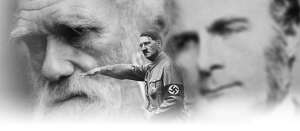
Photos Darwin by TFE Graphics, Hitler and Galton by Wikipedia.org
Francis Galton (featured on right in photo montage, right) was born into a Quaker family in Birmingham, England, in 1822. A grandson of Erasmus Darwin on his mother’s side and so a cousin of Charles Darwin (pictured above left), he shared the Darwinian agnosticism and antagonism to Christianity for most of his adult life.
As a child, he had learned the alphabet by 18 months, was reading by age 2½, memorizing poetry by five, and discussing the Iliad at six.1 In 1840, he began studies at Cambridge University in medicine and then in mathematics, but, due to a nervous breakdown, succeeded in gaining only a modest B.A. degree, in January 1844.2 When his father died that same year, he inherited such a fortune that he never again needed to work for a living.
This gave the wealthy young Galton free time not only for ‘amusement’, but also to dabble in a number of fields, including exploration of large areas of South West Africa, his reports of which gained him membership of the Royal Geographic Society in 1853, and three years later of the Royal Society. In that year, Galton married Louisa Butler, whose father had been Headmaster at Harrow School.
As an amateur scientist of boundless curiosity and energy, he went on to write some 14 books and over 200 papers.3 His inventions included the ‘silent’ dog whistle, a teletype printer; and various instruments and techniques for measuring human intelligence and body parts; and he invented the weather map and discovered the existence of anticyclones.
Interaction with Charles Darwin
The publication of Darwin’s Origin of Species in 1859 was undoubtedly a turning point in Galton’s life. In 1869 he wrote to Darwin, ‘[T]he appearance of your Origin of Species formed a real crisis in my life; your book drove away the constraint of my old superstition [i.e. religious arguments based on design] as if it had been a nightmare and was the first to give me freedom of thought.’4
From Nott, J.C. and Gliddon, G.R., Indigenous Races of the Earth, J.B. Libbincott, Philadelphia, USA, 1868.
Pseudoscientific illustration of alleged evolution of human ‘races’.
An allegedly ‘scientific’ illustration from 1868 showing that blacks were less evolved than whites by suggesting similarities with a chimpanzee.
Even the famous evolutionist Stephen Jay Gould commented that the chimpanzee skull is falsely enlarged and the ‘negro’ jaw falsely extended to suggest that ‘negros’ rank even lower than apes. This demonstration was not from racist or ‘fringe’ literature but from one of the leading scientific textbooks of its time. Today’s militant evolutionists like to conveniently evade the social implications of their ideas, but history demonstrates otherwise.
Galton ‘was among the first to recognize the implications for mankind of Darwin’s theory of evolution.’5 He believed that talent, character, intellect, etc. were all inherited from one’s ancestors, as was also any lack of these qualities. Thus the poor were not hapless victims of their circumstances, but were paupers because they were biologically inferior. This was contrary to the prevailing scientific view that all such qualities were due to environment, i.e. how and where a person was brought up.6 Galton believed that humans, like animals, could and should be selectively bred. In 1883, he coined the term ‘eugenics’ [Greek: εύ (eu) meaning ‘well’ and γένος (genos) meaning ‘kind’ or ‘offspring’] for the study of ways of improving the physical and mental characteristics of the human race.
Galton’s views left no room for the existence of a human soul, the grace of God in the human heart, human freedom to choose to be different, or even for the dignity of the individual. In his first published article on this subject, in 1865,7 ‘He denied … that man’s rational faculties are a gift to him from God; he denied that mankind has been cursed with sinfulness since the day of Adam and Eve’; and he viewed religious sentiments as ‘nothing more than evolutionary devices to insure the survival of the human species.’8
Concerning the sense of original sin, he wrote that ‘[this] would show, according to my theory, not that man was fallen from a high estate, but that he was rapidly rising from a low one … and that after myriads of years of barbarism, our race has but very recently grown to be civilized and religious.’9
In Hereditary Genius (1869), Galton enlarged on all these ideas and proposed that a system of arranged marriages between men of distinction and women of wealth would eventually produce a gifted race. When Charles Darwin read this book, he wrote to Galton, ‘You have made a convert of an opponent in one sense for I have always maintained that, excepting fools, men did not differ much in intellect, only in zeal and hard work … .’5 Galton’s ideas undoubtedly helped him extend his evolution theory to man. Darwin did not mention Galton in his Origin, but referred to him no less than 11 times in his Descent of Man (1871).
Three International Eugenics Congresses were held in 1912, 1921 and 1932, with eugenics activists attending from Britain, the USA, Germany, France, Australia, Canada, India, Japan, Mauritius, Kenya and South Africa. Notables who supported the ideas pre–World War II included Winston Churchill, economist John Maynard Keynes, science fiction writer H.G. Wells10 and US Presidents Theodore Roosevelt and Calvin Coolidge. Galton received the Huxley Medal from the Anthropological Institute in 1901, the Darwin Medal from the Royal Society in 1902, the Darwin–Wallace Medal from the Linnean Society in 1908, and honorary degrees from Cambridge and Oxford Universities; he was knighted in 1909. Despite these ‘honours’, in life Galton was not his own best advocate for his theories. He had many long-lasting bouts of illness, and notwithstanding his and his wife’s good intellectual pedigrees, they produced no children of their own to carry on his name and heritage. After his death in 1911, his will provided for the funding of a Chair of Eugenics and the Galton Eugenics Laboratory at the University of London.
Eugenics in action
The concept of improving the physical and mental characteristics of the human race may seem admirable at first glance. However, historically the method of achieving it has involved not just increasing the birthrate of the ‘fit’ by selected parenthood (‘positive eugenics’), but also reducing the birthrate of those people thought to impair such improvement, the ‘unfit’ (‘negative eugenics’).11
For example, by 1913, one-third (and from the 1920s on, more than half)12 of the US States had laws allowing for the compulsory sterilization of those held in custody who were deemed to be ‘unfit’. This resulted in the forced sterilization of some 70,000 victims, including criminals, the mentally retarded, drug addicts, paupers, the blind, the deaf, and people with epilepsy, TB or syphilis. Over 8,000 procedures were done at the one city of Lynchburg, Virginia,13 and isolated instances continued into the 1970s.14,15
About 60,000 Swedish citizens were similarly treated between 1935 and 1976, and there were similar practices in Norway and Canada.16
In Germany in 1933, Hitler’s government ordered the compulsory sterilization of all German citizens with ‘undesirable’ handicaps, not just those held in custody or in institutions. This was to prevent ‘contamination’ of Hitler’s ‘superior German race’ through intermarriage.
Image Wikipedia.org Eugenics congress logo. Click here for larger view
Then from 1938 to 1945, this surgical treatment of such ‘useless eaters’ was superseded by a more comprehensive solution—the eager genocide, by Hitler’s Nazis, of over 11 million people considered to be subhuman or unworthy of life, as is authenticated and documented by the Nuremberg Trials records. Those killed included Jews, evangelical Christians,17 blacks, gypsies, communists, homosexuals, amputees and mental patients.
This was nothing other than rampant Darwinism—the elimination of millions of human beings branded ‘unfit/inferior’ by, and for the benefit of, those who regarded themselves as being ‘fit/superior’.
The core idea of Darwinism is selection.18 The Nazis believed that they must direct the process of selection to advance the German race.19 Galton’s naïve vision of a ‘eugenics utopia’ had mutated into the Nazi nightmare of murderous ethnic cleansing.
Sadly, ideas of racial superiority and eugenics did not die with Hitler’s regime. David Duke, America’s infamous anti-black and anti-Jew racist, developed his views from reading the eugenicist writings of Galton, H.G. Wells, Sir Arthur Keith and others, as well as the early writings of modern sociobiologists such as Harvard’s E.O. Wilson.20
Eugenics in the 21st century.
Following World War II, eugenics became a ‘dirty word’. Eugenicists now called themselves ‘population scientists’, ‘human geneticists’, ‘family politicians’, etc. Journals were renamed. Annals of Eugenics became Annals of Human Genetics, and Eugenics Quarterly became the Journal of Social Biology.21 However today, some 60 years after the Holocaust, the murderous concept that Galton’s eugenics spawned is once again alive and flourishing, and wearing a lab-coat of medical respectability.
Doctors now routinely destroy humans, who were created in God’s image (Genesis 1:26), by abortion, infanticide and euthanasia, as well as in fetal/embryonic stem-cell research.
A. Abortion
According to the UK’s Daily Mail, ‘women are increasingly eliminating their unborn children because of non life-threatening deformities such as deformed feet or cleft lips and palates’, and ‘more Down’s Syndrome babies are now killed than are allowed to be born.’22 Dr Jacqueline Laing of London’s Metropolitan University commented, ‘These figures are symptomatic of a eugenic trend of the consumerist society hell-bent on obliterating deformity.’ ‘This is straightforward eugenics,’ said UK’s Life Trustee, Nuala Scarisbrick. ‘The message is being sent out to disabled people that they should not have been born. It is appalling and abhorrent.’22
Globally, there are an estimated 50 million abortions each year. That’s one abortion for every three live births, so any child in the womb, on average, worldwide, has a one in four chance of being deliberately killed.23
B. Infanticide
China is famous for its coercive one-child-per-family policy. In practice, most families want a boy, so if a girl is born, she can be at risk. Sometimes the same grisly principle is followed, but before birth. In India, it’s common to find out the sex of the baby, and a vast majority of abortions are of girl babies. It makes the feminist support of abortion distressingly ironic.
And disabled babies are at risk as well. ‘Ethicist’ Peter Singer has advocated legalization of infanticide to a certain age. He writes: ‘[K]illing a disabled infant is not morally equivalent to killing a person. Very often it is not wrong at all.’24
C. Euthanasia
In May 2001, Holland became the first country to legalize euthanasia, with the law coming into effect from January 2002. Euthanasia was tolerated in Belgium until May 2002, when it was legalized. It is tolerated in Switzerland, Norway and Columbia.23
Eugenics and the Scopes Monkey Trial1
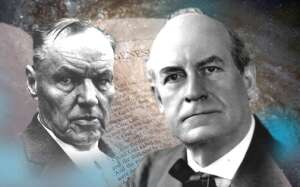
Photo Bryan College Clarence Darrow (left) and William Jennings Bryan
The textbook from which Scopes taught evolution, A Civic Biology by George Hunter,2 and its companion lab book3 were blatantly eugenic and offensively racist. Hunter divided humanity into five races and ranked them according to how high each had reached on the evolutionary scale, from ‘the Ethiopian or negro type’ to ‘the highest type of all, the Caucasians, represented by the civilized white inhabitants of Europe and America’.4A Civic Biology asserted that crime and immorality are inherited and run in families, and said that ‘these families have become parasitic on society. … If such people were lower animals, we would probably kill them off to prevent them from spreading. Humanity will not allow this, but we do have the remedy of separating the sexes in asylums or other places and in various ways preventing intermarriage and the possibilities of perpetuating such a low and degenerate race.’4
This is the book that Darwinists of the day insisted that Scopes had a right to teach!
All this is documented by Dr David Menton in the DVD Inherently Wind: a Hollywood History of the Scopes Trial (right).
References and notes
The 1925 trial in Dayton, Tennessee, USA, of high-school teacher John T. Scopes, charged with violating state law by teaching the theory of evolution.
Hunter, G., A Civic Biology Presented in Problems, American Book Co., New York, USA, pp. 195–196, 1914.
Hunter, G., Laboratory Problems in Civic Biology, American Book Co., New York, USA, 1916.
Ref. 2, pp. 261–265.
Judgment at Nuremberg
Perhaps the most frequently asked question concerning the eugenics-inspired genocide of the Holocaust is: ‘How could it have happened?’ In the 1961 MGM film Judgment at Nuremberg, about the trial of four Nazi war criminals, judges who had enforced Nazi decrees,1 one of the defendants (Judge Ernst Janning, played by Burt Lancaster) cries out to Chief Judge Dan Haywood (played by Spencer Tracy): ‘Those people—those millions of people—I never knew it would come to that. You must believe it!’ Haywood’s response was eloquent: ‘It came to that the first time you sentenced a man to death you knew to be innocent.’
Likewise today, eugenic killing of innocent preborn babies because they are thought to be less than perfect began the first time a doctor consented to kill a handicapped child in the womb. The rest is history.
Based on the third Nuremberg Trial (1947), also called the ‘Judges’ Trial’ because it tried Nazi judges and prosecutors for imposing the Nazi ‘racial purity’ programme through the eugenic and racial laws. There were a total of 13 Nuremberg Trials.
The photograph (above right) comes from the first Nuremberg Trial (1945–6), the most famous and significant of them because it tried the main German leaders. Front row (left-to-right): Hermann Göring, Rudolf Hess, Joachim von Ribbentrop, Wilhelm Keitel; Back row: Karl Dönitz, Erich Raeder, Baldur von Schirach, Fritz Sauckel. (Courtesy Wikipedia)
Conclusion
Not all evolutionists are murderers, of course, and Francis Galton may never have conceived that his theories would lead to the killing of so many millions of people, let alone the onslaught on defenceless unborn babies. However, such action is totally consistent with evolutionary teaching, namely the survival of the fittest by the elimination of the weakest. Deeds are the outcome of beliefs. As Jesus said: ‘A bad tree bears bad fruit’; it ‘cannot bear good fruit’ (Matthew 7:17–18).
Contrary to the deadly philosophy of eugenics, every human person has eternal value in God’s sight and has been created ‘in the image of God’ (Genesis 1:26–27). God also explicitly forbade murder (Exodus 20:13), or intentional killing of innocent humans. Indeed, God so loved humanity that He sent His Son, the Lord Jesus Christ, to die on the Cross to save us from sin (John 3:16–17), and to transform us into the image of His Son when we believe on Him (Romans 8:29; 2 Corinthians 3:18). In Jesus, the Second Person of the Trinity took on human nature (Hebrews 2:14), becoming the Last Adam (1 Corinthians 15:45), thus becoming the (kinsman-) Redeemer (Isaiah 59:20) of the race of the first man, Adam.
First posted on homepage: 28 August 2006 Re-posted on homepage: 25 February 2009
References and notes
Cowan, R., Sir Francis Galton and the study of heredity in the nineteenth century, Garland Publishing Inc., New York, USA, p. vi, 1985. Return to text.
Forrest, D.W., Francis Galton: The life and work of a Victorian genius, Paul Elek, London, UK, p. 25, 1974. Return to text.
Subjects included twins, blood transfusions, criminality, travel in undeveloped countries, meteorology, correlational calculus, anthropometry (measurement of the human body), and fingerprints as a means of identity—first used by Scotland Yard in 1901 and now throughout the world. Return to text.
Galton to Darwin, 24 December 1869, quoted from ref. 1, p. 74. Return to text.
Galton, Sir Francis, Encyclopædia Britannica5:97–98, 1992. Return to text.
These two views of heredity versus environment have also been labelled ‘nature versus nurture’. Return to text.
Galton, F., Hereditary talent and character, 2 parts, MacMillan’s magazine 12:157–166 and 318–327, June and August 1865 (Source: ref. 1, p. 1.). Return to text.
The last sentence of Galton’s autobiography reads: ‘Natural Selection rests upon excessive production and wholesale destruction; Eugenics on bringing no more individuals into the world than can be properly cared for, and those only of the best stock.’ (Ref. 9, p. 323.) Return to text.
In 1931, Vermont became the 31st US State to enact a sterilization law (not repealed until 1973). Source: Washington Post, 8 August 1999, p. A21. Return to text.
‘Eugenics’, Encyclopædia Britannica 4:593, 1992. Return to text.
Black, E., War against the weak: Eugenics and America’s campaign to create a master race, Four Walls Eight Windows, New York/London, 2003; see review by Sarfati, J., Creation27(2):49, 2005. Return to text.
Isherwood, J., Payout planned for victims of ‘barbaric’ sterilizations, Sydney Morning Herald, 27 August 1997, p. 10. Return to text.
Evolution describes the results of selection. See Stein, G.J., Biological Science and the Roots of Nazism, American Scientist76:50–58, January–Februay 1988. Return to text.
See Bergman, J., Darwinism and the Nazi race Holocaust, Journal of Creation13(2):101–111, 1999. This is thoroughly documented in Weikart, R., From Darwin to Hitler: Evolutionary Ethics, Eugenics, and Racism in Germany, Palgrave Macmillan, New York, USA, 2004; see review by Sarfati, J., Creation27(4):39, 2005. Return to text.
Singer, P., Taking life: humans, excerpted from Practical Ethics, 2nd ed., Cambridge, pp. 175–217, 1993. Singer is Ira. W. DeCamp Professor of Bioethics at the University Centre for Human Values, Princeton University. Return to text.
Comments are automatically closed 14 days after publication.
Feedback Guidelines
Be constructive & courteous. Don't attack individuals, denominations, or other organizations.
Stay on-topic. We're not here to debate matters like eschatology, baptism, or Bible translation.
Links to external sites and articles will be removed from your submission.
Privacy & Content Ownership
Comments become the property of Creation Ministries International upon submission and may be edited for brevity and clarity.
CMI may choose not to publish your comment depending on how well it fits the guidelines outlined above.
By submitting your comment you are agreeing to receive email updates from Creation Ministries International. You may unsubscribe at any time.
CMI records your real name, email address, and country as a sign of good faith. Privacy Policy
If your comment is published, your name will be displayed as ""
Cancel
Accept & Continue
Close
You are leaving CREATION.com
We have supplied this link to an article on an external website in good faith. But we cannot assume responsibility for, nor be taken as endorsing in any way, any other content or links on any such site. Even the article we are directing you to could, in principle, change without notice on sites we do not control.







Readers’ comments
Comments are automatically closed 14 days after publication.