

Focus: creation news and views
Not enough phosphorus
Out of big bang cosmology and evolution theory comes the idea that the Earth, dated at 4.5 billion years old, is the product of nuclear reactions in the stars billions of years earlier. So we too (and all other living things) are assumed to be the product of the stars.
But there’s a problem. While certain chemical elements in our bodies, such as oxygen, carbon, and nitrogen, are indeed also abundant elsewhere in the cosmos, phosphorus is not. Yet phosphorus is an essential component of DNA, RNA as well as many other important molecules of life.
This leaves evolutionists trying to explain how phosphorus could have become concentrated on Earth, ultimately becoming part of us. Enrique Maciá, writing in Chemical Society Reviews, says he and other researchers are so ‘motivated by this apparent paradox’ that they are scouring the cosmos using satellite and other technology in hopes of detecting the missing phosphorus. ‘We hope that such detections will shed light on phosphorus’s journey from the stars to Earth,’ he says.
Notice how this fervent and costly search for an evolutionary answer to the conundrum of the ‘missing’ phosphorus is based on the starting premise that life happened by chance. But there is no phosphorus ‘missing’—life didn’t happen by chance, it was intelligently designed. And the Designer has told us that Earth is not the product of the stars; rather He made the Earth before He made the stars (Genesis 1:1–16). And our ancestor, the first man Adam, was made from the dust of the Earth (Genesis 2:7), not stardust.
Nature, 9 February 2006, pp. 636–637.

Saturn’s rings ‘too clean’
Photographs from the Cassini spacecraft continue to reveal unexpected features about Saturn and its rings. New Scientist quipped that ‘Saturn’s rings just get weirder and weirder the closer we look’ and ‘it remains to be seen whether Cassini can solve the deepest mystery of the rings—their origin.’
Cassini has confirmed that Saturn’s rings are made of ice fragments ranging from a few centimetres up to tens of metres across. It had been thought that the rings were four billion years old—orbiting leftovers from the formation of the Saturn system. But the problem with that idea is that the rings’ material is clean and bright—99% pure ice.
As planetary scientists have realised, if the rings really had been gathering space dust for billions of years, their ice ought to be dark and grimy by now—but they’re too clean to be that old.
New Scientist, 14 January 2006, pp. 34–35.
Dawkins’ faith in Darwin
In response to the question ‘What do you believe is true even though you cannot prove it?’, renowned atheist Richard Dawkins said:
‘I believe that all life, all intelligence, all creativity and all “design” anywhere in the universe is the direct or indirect product of Darwinian natural selection. It follows that design comes late in the universe, after a period of Darwinian evolution. Design cannot precede evolution and therefore cannot underlie the universe.’
While many people (including Dawkins) believe evolution is a fact, his own response to this particular question makes it clear that ultimately his belief is something that can’t be proved, i.e. a starting assumption based on (blind) faith.
Edge, www.edge.org/what-do-you-believe-is-true-even-though-you-cannot-prove-it, 1 March 2005.
‘Simple’ organisms aren’t simple
According to evolutionary reasoning, ‘the more genetically complex an organism is, the loftier its place on the evolutionary tree.’ Or, put another way, ‘simpler animals ought to have correspondingly simpler genomes’.
So when researchers started identifying active genes in cnidarians, e.g. ‘the lowly sea anemone—one of the simplest animals on the planet’, they got a surprise. ‘We estimate they have somewhere between 20 and 25,000—the same ballpark humans are in,’ said one researcher.
This was not what evolutionists expected.
‘The genomic complexity of … cnidarians is much greater than expected,’ said John Finnerty, an evolutionary biologist at Boston University. ‘There is no simple relationship between the numbers of genes an animal possesses and its complexity at the morphological level.’
ScienceNOW Daily News, 9 March 2006.
New Scientist, 3 December 2005, p. 10.

Galactic line-up
The giant Andromeda galaxy is the nearest spiral galaxy to the Milky Way, and is surrounded by numerous dwarf galaxy satellites. Using the Hubble Space Telescope, astronomers have found that 80% of Andromeda’s satellite mass lines up on a single plane perpendicular to Andromeda’s own plane. Traditional theories of galaxy formation cannot account for this.
The findings left cosmologist Michael Turner, of the University of Chicago, intrigued. ‘It’s getting at this very simple question: how did our backyard get assembled?’
The ‘strange’ lining-up of Andromeda’s satellite galaxies is yet another indicator that ‘our backyard’ did not assemble itself (Genesis 1:14–19).
Space.com, space.com/scienceastronomy/060123_andromeda_plane.html, 3 February 2006.

Jurassic mammals
A hundred years of evolutionary teaching that only tiny, furtive shrew-like mammals lived with the dinosaurs has been overturned. A fossil of a beaver-like mammal unearthed in Inner Mongolia has been dated by evolutionists to 164 million years ago, around 100 million years before dinosaurs are said to have died out.
Of course, the evolutionists’ long-age view of rock layers and fossils as being a ‘record’ of evolutionary history is always going to be prone to revision. In contrast, armed with the biblical view of sedimentary rocks and fossils as being a legacy of the Flood and its aftermath, there’s no problem.
Science, 24 February 2006, pp. 1109–1110, 1123–1127.
‘One-way evolution’

Do evolutionists observe organisms gaining complex traits, in accordance with microbes-to-man evolution? Actually, no—but there’s abundant evidence of organisms losing traits (e.g. eyes, wings). And for years many have suspected the loss of complex traits is irreversible (an idea known as ‘Dollo’s Law’).
And now a study of variation in a gene found in many members of the plant family Solanaceae (e.g. tomato, tobacco plants) adds to the mounting evidence that complex characteristics are lost, not gained. In this case it was the ability to recognise and reject their own pollen, thereby avoiding self-fertilization and the harmful effects of inbreeding. In plants that have lost that ability (e.g. certain varieties of garden tomato), it has not been regained.
‘An intriguing aspect of this study is that the mechanism for ensuring cross-fertilization is very old, often lost, and never regained,’ said lead researcher Joshua Kohn, of the University of California, San Diego.
Indeed. Organisms originally were made ‘very good’, and in this ‘cursed’ world which is ‘in bondage to decay’ (Genesis 3:14-19, Romans 8:21), as mutations (copying mistakes in the genes) have accumulated, it’s been downhill ever since. As reports of this latest study put it, ‘evolution’ has been ‘unidirectional’ or ‘one-way’—the wrong way, so really devolution. Thus ‘evolution’ involves loss of traits, which is irreversible. So how did those traits evolve in the first place?
Physorg.com, www.physorg.com/news10022.html, 9 March 2006.
Proceedings of the National Academy of Sciences, 31 January 2006, pp. 1359–1363.
Avid about evolution

With a grant from the National Science Foundation, researchers at Michigan State University are developing a computer program ‘to bring students face to face with evolution.’ Dubbed ‘Avida’, the program shows digital ‘organisms’ called Avideans allegedly becoming more complex through replication, mutation and natural selection.
University staff praised Avida. A professor of philosophy said that ‘it lets students see that evolution works as advertised.’
Actually, it does nothing of the sort, for many reasons (see Information Theory Questions and Answers). Watching preconfigured images of ‘Avideans’ on a computer screen behaving according to instructions written by a programmer is in no way representative of the claims made of biological evolution. For one thing, the pretty screen ‘organisms’ don’t have to contend with the destructive effects of real-world chemistry. The strongly pro-evolution Scientific American, quoting the leading evolutionist John Maynard Smith, perhaps had the most astute criticism of this field:
‘Artificial life, a major subfield of complexity studies, is “fact-free science”, according to one critic. But it excels at generating computer graphics.’
And it begs the question: if there really is all the ‘evidence for evolution’ in the real world as evolutionists claim, why the need for digital simulation to teach students that evolution ‘works’? It speaks volumes that an Avida-proponent commented that the program is ‘your best counterattack to ID [Intelligent Design], which is not science.’
Yet watching Avideans is considered ‘science’?
Science, 10 February 2006, pp. 769–771.
Scientific American, June 1995, pp. 74–79.
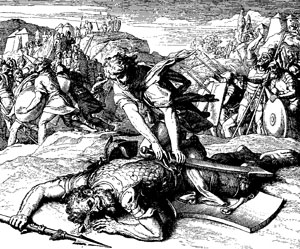
‘Goliath’ pottery shard
Archaeologists have unearthed a shard of pottery in southern Israel bearing an early Semitic-style inscription saying ‘Alwat’ and ‘Wlt’, likely Philistine renderings of the name Goliath.
Dated to around 900 bc, the shard was found about two metres underground at Tell-es-Shafi—the site of the biblical city of Gath (1 Samuel 17:4).
The Guardian, 14 November 2005, p. 18.
Titan’s non-fossil fuel
The Cassini-Huygens probe has found abundant methane on Saturn’s giant moon Titan—and it is not of biological origin, but geological.
This discovery is being hailed excitedly by the increasingly vocal group of scientists who for some years have argued that oil and natural gas deposits on Earth are forming currently from geological sources of methane (See Creation 27(3):9) rather than over millions of years from ‘the debris of dead dinosaurs and ancient forests.’
Thomas Gold (1920–2004), an astronomer at Cornell University, was probably the leading advocate of this theory. He had wryly noted that he was sure there had not been any ‘big stagnant swamps on Titan’ to produce the biological debris that science textbooks teach was required on Earth to produce oil and natural gas as a ‘fossil fuel’. See also Gushing oil surprise.
(N.B.: Coal is a fossil fuel, but the evolutionists’ millions-of-years ‘stagnant swamp’ theory doesn’t explain coal’s origin either. However, the global Flood event of Genesis 6–9 sure does. See creation.com/coal)
Nature, 8 December 2005, pp. 756–802.
WorldNetDaily, https://www.wnd.com/2005/12/33678/, 23 January 2006.
Thomas Gold, The Deep Hot Biosphere: The Myth of Fossil Fuels, 1998.
Other articles
Ancient dentistry
Perfect tiny holes in two human teeth dated at 8,000 to 9,000 years old, found in Pakistan by archeologists, suggest that ‘even prehistoric man had to fear the dentist’s drill’.

The teeth were still attached to their respective jaws, so were not used as part of a necklace. Investigation ruled out other possibilities such as dental decoration or tooth sharpening. The holes were too perfectly round to have been caused by bacteria and contained concentric grooves, which scientists think were caused by a drill with a tiny stone bit.
A spokesperson for the British Dental Association said the find was ‘surprising’. It ought be no surprise, however, to Bible-believing Christians. Man was originally created (just 6,000 years ago) with very high mental abilities by God—e.g. in only seven generations, people were experts in metallurgy (Genesis 4:22). Note that ‘prehistoric’ man has never existed because there were no people before written history. Note, too, that the evolutionists’ ‘8,000 to 9,000’ date is wrong—the teeth most probably date from after Babel, certainly no older than around 4,500 years ago.
BBC News, <news.bbc.co.uk/l/hi/health/1272010.stm>, 23 January 2006.
Signs of the times
It seems it’s not just belief in Jesus that’s declining in the UK, but also a basic knowledge of anything about Him. A British newspaper reported one of the symptoms:
‘A Christian charity is sending a film about the Christmas story to every primary school in Britain after hearing of a young boy who asked his teacher why Mary and Joseph had named their baby after a swear word.’
Such ignorance is understandable when parents and society neglect to pass on the knowledge of God to their offspring (the Israelites were warned against this—Deuteronomy 11:19, 31:11–13). Instead, their children are taught at school and by the media that everything made itself without God.
Nor should it be unexpected, given the decision four years ago to abolish the terms ‘BC’ and ‘AD’ in UK schools, replacing them with a politically correct system known as the ‘Common Era’. Both dating systems use the birth of Christ as their reference point, but the secular version refuses to acknowledge this. (’Common’ refers to the fact that the Christian calendar is the most widely used around the world.)
The Latin term Anno Domini—’in the year of our Lord’—becomes Common Era, or CE, while Before Christ becomes Before the Common Era, or BCE.
TheTimes (UK), https://web.archive.org/web/20051108023502/http://www.timesonline.co.uk/article/0,,13509-1811332,00.html, 5 October 2005.
This is London (from the Evening Standard), www.thisislondon.co.uk/news/articles/531644;, 21 September 2005.

Underwater hibernation
Some freshwater turtles are known to hibernate underwater, remaining submerged for months.
While researchers haven’t yet found evidence that other turtles (e.g. ocean-going turtles) have this ability, it gives us an insight into how turtles survived the Flood.
(Being aquatic creatures, turtles would not have been taken aboard Noah’s Ark as obligate passengers—Genesis 6–9.)
And it leaves us wondering just how evolutionists might explain how evolution taught the hibernating turtles to do their trick.
BBC Wildlife, June 2005, p. 19.
Biology Letters, 22 March 2005, pp. 82–86.

Alien ‘trees of life’
In anticipation that extra-terrestrial life forms will be discovered, Peter Ward of Washington University’s NASA Astrobiology Institute says that the current view of an evolutionary ‘tree of life’ needs to be expanded. He says that there’s no place in the current classification system to fit alien life forms, e.g. those based on a different chemistry to life on Earth.
So he proposes a classification to include different ‘trees of life’ called arborea.
‘Let’s face it, the universe is so huge there’s got to be so many different chemistries and for each one you need a whole new tree,’ Ward says. ‘I think there’s a forest out there.’
Such thinking presumes that evolution explains life on Earth, and if life evolved here, then it must have elsewhere, too. [See Gary Bates‘ book Alien Intrusion]
The Scientist, 21 November 2005, p. 12.
Out of Asia?
According to a study published in the Proceedings of the National Academy of Sciences, human ancestors originated in Asia, not Africa.
The claim, based on fossil teeth found in the Bugti Hills of central Pakistan, challenges the belief that apes evolved into humans in Africa. Lead author, Dr Laurent Marivaux, and his team named three new anthropoids, which were tiny and similar to today’s lemurs.
Marivaux said the Oligocene fossils of south Asia are almost totally undocumented paleontologically, and that it is not surprising that new discoveries ‘change or modify substantially our previous view’.
But which story are we to believe—Africa or Asia? Instead, let’s rely on the true record of human history in the Bible. We are not evolved from lemurs but are descended from Adam and Eve, created (around 6,000 years ago) by God in His image.
This makes much more sense than the wishful thinking of evolutionists, who go to great lengths in their attempts to connect humans and animals. (See e.g., Sarfati, J., Micro-primates … a transitional form or just heel-bone hype?)
Discovery News, www.abc.net.au/science/news/ancient/AncientRepublish_1381883.htm, 1 June 2005.
‘Rock concert’
The University of Wisconsin—Madison has held a rock concert (using rocks as percussion instruments and synthesiser recordings of rock strikes) to celebrate what secular geologists claim is the world’s oldest rock. The rock—a crystal of zircon found in Western Australia—is no larger than a grain of sand and has been ‘dated’ at 4.404 billion years.
The university’s website says the rock concert was staged to ‘explore the idea of Deep Time’, and to provide a ‘musical answer to the question, “what is 4.4 billion years?”‘
Sadly, despite such concerted efforts to proclaim the idea of ‘long ages’ at every opportunity, the radiometric dating techniques supposedly reflecting ‘deep time’ are actually deeply flawed. (See, e.g. Flaws in dating the earth as ancient)
There really is a ‘Rock of Ages’ (Isaiah 26:4, Psalm 62:7), but the rock concert glorified the wrong rock, wrong ages.
Herald Sun (Melbourne, Australia), 9 March 2005, p. 31.
The University of Wisconsin, www.geology.wisc.edu/~museum/symposium/home.html, 21 November 2005.
Warm oceans = more ice

Computer models simulating global warming suggest that warmer oceans could enhance the amount of Antarctic sea ice. This is because evaporation from warm oceans is much higher than that at cooler water temperatures. Higher evaporation rates lead to enhanced cloud formation with greater precipitation—including snowfall, which in higher altitudes and/or latitudes means greater buildup of ice sheets, glaciers, etc.
While the claimed evidence for global warming remains contentious (see creation.com/warming), the point that increasing temperatures result in greater snowfall certainly makes sense. Long-age geologists struggle to find a mechanism that would generate the warm sea temperatures needed for an Ice Age. But consider the biblical account of the ‘springs of the great deep’ (Genesis 7:11) breaking open, inundating the entire planet and drowning all people, air-breathing animals and birds except for those on the Ark, and the mystery fades. See The Answers Book, chapter 16: ‘What about the Ice Age?‘
NASA News Release, www.nasa.gov/vision/earth/environment/sea_ice.html, 13 September 2005.
What an idea!
The European Space Agency’s chief scientist, Dr Bernard Foing, has suggested that a Noah’s Ark—a DNA library of every plant and animal species—should be built on the moon just in case life on Earth is wiped out by nuclear holocaust or asteroid impact.
‘You could repopulate the Earth afterwards like a Noah’s Ark’, he said.
BBC News, http://news.bbc.co.uk/1/hi/sci/tech/3635972.stm, 8 September 2004.
Readers’ comments
Comments are automatically closed 14 days after publication.