
Journal of Creation 19(3):21–28, December 2005
Browse our latest digital issue Subscribe
Inheritance of biological information—part III: control of information transfer and change
When viewed in the light of Gitt’s multidimensional theory of information, Darwinian evolution falls apart. The structure of life, thought by Darwinians to be purposeless, is revealed to be awash with purpose. There is a surprising amount of experimental support for the idea that cells (as well as genes) control inheritance, and this contradicts neo-Darwinism because the extra-nuclear cell contents are passed on unchanged during reproduction. It also provides the foundation for a creationist theory of baramin stasis. The concept of baramin stasis does not exist in secular biology, so creationists need to develop it.

In Part I of this article, I outlined the poverty of the Shannon theory of information as used in biology by evolutionists, and illustrated the 5-dimensional Gitt theory of information in biological terms. In Part II, I used the Gitt theory to redefine the ‘information challenge’ (where does the information come from in ‘goo to you’ evolution?) in creationist terms, showing that there is a vast gap in our knowledge of information storage, use and transfer in biology. Here, in Part III, I review experimental evidence on control of information during inheritance, and endeavour to develop a new perspective within a biblical framework.
How does biological information change?
As Darwinists struggle to find answers to the ‘information challenge’ using only the one-dimensional statistical view of information, creationists now have a powerful 5-dimensional argument to bring to bear on the problem. Here are two examples.
Antibodies and new enzymes
The human immune system can conjure up new antibodies (which are protein complexes) to deal in a very specific way with just about any foreign organic material that enters the body.1 Moreover, microbes can produce new enzymes (by changing existing enzymes) to metabolize synthetic organic molecules that did not exist prior to their manufacture by humans.2 Evolutionists have used both these lines of evidence to answer the ‘information challenge’ and argue that new information can arise by random mutations in existing biochemical pathways.
But can new information really be produced by a random mutation? We can address this question using a comparison with human language.
Let’s imagine that Romeo sends Juliet an email every day saying ‘I love you.’ But suppose that one day a spontaneous error occurs in the system and the email reads ‘I love Lou.’ Juliet goes out and kills herself because she thinks that (a) Romeo no longer loves her, and (b) he now loves someone else called Lou. But has any new information arisen from the spontaneous error? No. Romeo still loves Juliet, not someone called Lou, and Lou does not even exist. All that the error has done is to degrade the integrity of the intended information.
In this scenario there is a change at the statistical level that appears to lead to a change at the semantic level—‘you’ and ‘Lou’ appear to refer to different people—but this is an illusion, because there is not a corresponding change at the apobetic level. That is, there was no change in the purpose of the message. Romeo’s intention in sending the email remained the same. For the new message to be true, Romeo’s intention would have had to change, but it did not, so the change to the message was an error, not a change in information content.
In contrast, something quite different can happen in cells. For example, one of the steps in the degradation of the pesticide pentachlorophenol in the bacterium Sphingomonas chlorophenolica involves a reductive dehalogenase enzyme that may have evolved by random mutation of a maleylacetoacetate isomerase that is normally involved in degradation of the amino acid tyrosine.3 Why the difference between biology and the English language? One reason for the difference is that in common usage the English language is not generally designed to produce useful information by the random shuffling of its components, whereas cells have a number of systems that are designed to produce useful outputs via the random shuffling of components. Does this constitute new information? No, it doesn’t, as an analysis of the higher levels of information content will reveal.
To do this, a more relevant example in English might be a soccer scoreboard. Let’s imagine that the scoreboard contains the information ‘Home Side 1, Visitors 0’. When the score changes to ‘Home Side 1, Visitors 1’ has the amount of information changed? No, it has not. The information content has changed, but no extra information has been added because the purpose of the information structure at the outset was to record varying score numbers. In a similar way, bacteria have informational structures in place to produce enzymes with the capability of changing their amino acid sequence. Some will be useless, some will be useful. Natural selection may ensure the survival of the useful ones, but a new, useful enzyme will not contain more information than the original system because the intention remains the same—to produce enzymes with variable amino acid sequences that may help in adapting to new food sources when there is stress due to an energy deficit.
So, the Darwinian arguments are without force, since it is clear that organisms are designed to vary. When they do vary, they produce nothing new (at the apobetic level), they merely illustrate that the variable design is being implemented, just as the Creator intended. Apobetics controls information change, not statistics.
The challenge for creationists, on the other hand, is to identify the two different kinds of informational structures that are present in living organisms. In the soccer scoreboard analogy, the ‘Home Side’ and the ‘Visitors’ structures remain conserved, while the score values can vary according to the progress of the game. What is it that maintains the integrity of the created kind, and what components lead to the different species within the created kind?
Structural information
According to Genesis 1, God created fully functioning adult organisms capable of reproduction. Thus, cells and their structural components were created de novo, and (we might reasonably infer) have been passed down more or less unchanged since then, maintaining the integrity of the created kinds. Organisms today therefore contain an enormous amount of non-coded (primordial created) information in these structural components, as compared with the coded information that we find on the DNA molecule and elsewhere.
How much non-coded information is contained in the structure of the cell? The algorithmic approach could be used here, and may be illustrated with a parallel question in human endeavour such as ‘How much information is contained in the Empire State building?’ Computer specialists could answer by calculating the length of the computer program that would be needed to specify the composition and manufacture of all the components, to direct all the building work, install all the services, establish and conduct all the businesses that use the building, and direct the finances and maintenance work that keeps the building running. In short, an architecturally complex entity (a cell is actually more like a city than a building, but even more complex still because it can reproduce itself) carries an enormous amount of structural information. We are still in the same boat as Chaitin (see Part I) when he said in 1974 that ‘the programs would be too long’.
So when we ask questions about biological information, it is naïve to simply look at the genetic component of information. Three billion base pairs of coded information in the human genome may well be miniscule compared with the enormous amount of non-coded structural information built in to the organism at creation.
Information transfer
We are now in a position to specify how information is transferred in a biblical model of biology. The chicken came before the egg. God created functional adult organisms in the beginning, so biology begins with an initial deposit of non-coded structural information in adult baramins. We could, in theory, quantify this information using an algorithmic approach, but for practical purposes it is enough to note that it is enormous and non-coded. Then there is created coded information in the chromosomes, with further smaller amounts in mitochondria and some other organelles. If we accept the Barbieri model (see Part II), then further codes also exist within the various memories that underlie development, but we should perhaps ignore them for the present, for we cannot deal with what we do not know.
If we now ask ‘How is information transferred?’ there must be two parts to the answer. Baramin-level information must be passed on unchanged, and species-level information must be subject to change. Since the purpose of coding is to provide a flexible information system capable of change, it seems fairly straightforward to propose that coded information in cells is the locus of species-level change. On the other hand, cell architecture is passed on unchanged and is thus the likely source of baramin stasis, although there also is much evidence that regions of DNA are highly conserved as well.
How can this information change? The coded information can change by mutation or by enzyme-mediated recombination. By mutation, in this context, I mean a random change caused by a copying error or by some physical damage to the DNA caused by radiation or chemical insult. By recombination I mean crossing-over, insertions, deletions, transpositions, jumping genes and any other enzyme mediated process. Since recombinations are enzyme-mediated, it reasonably implies that God created recombination to be the primary means of variation within baramins. Since mutations are arbitrary, and thus generally likely to be deleterious, it is reasonable to infer that God created the error correction systems to eliminate mutations.
Can structural information change? Even though the initial deposit of cell architecture comes in toto from the mother, its further growth (replication of organelles, extensions to microstructures, synthesis and destruction of metabolites) presumably involves DNA transcription and is thus subject to variation. As the peroxisome example quoted in Part I of this article showed, however, there do appear to be structural components in the cell that are not deleted when the complementary genes are deleted. This is perhaps an area for further research.
Error correction systems
The widespread existence of error correction systems in cells argues powerfully for stasis because things will remain the same if random change is averted. However, there is a functional rider to this claim. Error correction is also required to keep the cell functioning. As anyone knows who regularly works with machines (e.g. cars, computers) errors cause chaos, and in the cell’s case, death. How much of the error correction machinery is aimed at function and how much is aimed at maintaining integrity of the baramin? Or perhaps the two aims are in fact one—are baramins functional peaks in an otherwise ‘flatland’ of non-functionality?
Error correction and/or avoidance mechanisms operate at many levels, and their ubiquity and utility seems to contradict the neo-Darwinist claim that mutational errors are the driving force behind evolution and are thus central to the whole scheme of life. At the ground level, there is the redundancy in the three-base genetic codon arrangement that provides 64 codons to represent only 20 amino acids. This allows more than one codon to represent one amino acid, so any single mutation has a lesser chance of knocking out or changing an amino acid in the resulting protein. The mutation may simply change one codon to another which codes for the same amino acid.
Sexual reproduction is another level of defence against mutational change. Adult organisms that reproduce sexually have the ‘diploid’ chromosome condition. In humans, for example, we each have 46 chromosomes that consist of 23 pairs, one copy of 23 from each parent. If there are defects in the copy from one parent, then the uncorrupted copy from the other parent can override the defect to produce a normal child. This mechanism provides a challenge for neo-Darwinists, because without it, and given enough time, asexual organisms should go extinct via mutational overload (called Muller’s Ratchet). Yet there are many asexual organisms surviving today. But even if both copies are faulty, there appears to be a ‘revert to saved’ function in some cases that does not use DNA as a template.4 A leftover genetic imprint in the cell somewhere may provide the template, and if this is so, then it further supports the cellular control hypothesis.
The next level of protection comes in the form of error correction routines in the chromosome copying process. In humans, the system is so effective that only about one error slips through in around 40,000,000 nucleotide copies.5 Then we have DNA repair systems that check the integrity of DNA strands and repair any damage. Cells that have unrepaired DNA are prevented from undergoing cell division, so this is yet another level of protection again. And if the mutation is severe enough, the cell kills itself by apoptosis,6 thus providing yet another level of protection.Another level of protection comes with redundancy within the chromosomes themselves. Large stretches of the chromosomes consist of repeated segments so any mutations in these areas are likely to be insignificant because there still remain multiple copies of the original.
The cell also gives special attention to certain regions of chromosomes that are known to be highly conserved. In contrast, others regions of chromosomes seem to be mutational hotspots. That is, during cell division, mutations are much less likely to occur in the highly conserved regions and much more likely to occur in hotspots. The cell thus appears to be able to control the mutation pattern to some extent.
Insights from cloning experiments
Some interesting insights into control of information during inheritance have come to us in recent years through experiments in cloning and chimera production. A clone is produced when the nucleus (i.e. the genome only) of one individual is transferred to an ovum from another individual (from which the nucleus has been removed) to produce a genetically identical individual to the first one.7 A chimera is produced by inserting one or more whole cells (stem cells) of one organism into the early embryo of another organism to produce an adult that carries cells and tissues of both kinds.
Dolly the sheep was the first reproductively viable mammal to be cloned.8 Dolly’s biological mother was a Scottish blackface ewe. The nucleus was removed from one of her egg cells, then the nucleus from a body cell (i.e. not a gamete, but a differentiated adult cell, in this case from the udder) of a Finn Dorsett (white faced) ewe was inserted into the vacant egg cell, and implanted into the womb of a third blackface ewe. The embryo grew normally and white-faced Dolly was born. When she grew up, she was mated and produced lambs of her own showing she was reproductively normal (although she aged and died prematurely).
Inheritance at the subspecies level (blackface/whiteface) was thus determined by the nucleus. But because both parents came from the same species (sheep, Ovis aries) this does not tell us about how the integrity of the created kind is maintained.
Is it possible to produce cross-species clones? On 8 January 2001, a baby gaur bull (Bos gaurus) was born to a domestic cow (Bos taurus).9 The gaur is an endangered Asian ox and a skin cell nucleus was implanted into a cow egg cell to produce the baby bull. However, it is almost certain that the gaur is of the same created kind as domestic cattle, so while this is a cross-species clone it is not a cross-baramin clone.
Cross-baramin ‘clones’ of a ‘lesser’ kind have been widely produced in which only a gene or DNA fragment has been incorporated via recombinant technology. For example, a Canadian company has produced artificial spider silk in the milk of transgenic goats.10 In this case, the cell maintains the integrity of the baramin (the goats are normal goats and the milk is normal milk but with extra proteins in it), but of course the inserted genetic component is only a fragment and not a whole genome. The real test of inheritance requires a full-genome cross-baramin clone.
The closest report so far is a cross-genus experiment with common carp (Cyprinus carpio) and goldfish (Carassius auratus).11 The seven offspring (from 501 attempts) were virtually identical to the nuclear donor species (carp) in appearance and in most physical traits, but the number of vertebrae was in the range of the recipient species (goldfish). The authors speculated that a ‘segmentation clock’ early in embryonic development directs segmentation of the body and is controlled by the egg cytoplasm. This suggests that the ground plan for the body is controlled by the cell, and the details of the external morphology are controlled from the nucleus. This is consistent with the hypothesis that baramin integrity is maintained by the cell and species-level variation is produced in the nucleus.
Note on nuclear reprogramming
Cloning experiments illustrate the extraordinary ability of the nucleus to be ‘reprogrammed’ when transferred from an adult cell to an ovum. In normal development, a zygote divides into the billions of cells of an adult mouse (for example) and each of those cells differentiates and takes on very specific characteristics (e.g. eye, hair follicle, epidermis, etc). The repair mechanisms in each of these cells maintain this differentiated state for the lifetime of the body. That is, the repair and replacement processes always repair the skin cell as a skin cell, not as a toe bone or an inner ear cell. However, when the nucleus of any one of those differentiated cells is removed and inserted into a mouse egg cell from which the nucleus has previously been removed, the inserted nucleus gets ‘reprogrammed’ and the egg behaves as a fertilized zygote and goes on to differentiate (again) into a whole new mouse. What controls this reprogramming—the cell or the nucleus? It must be the cell, because it is only the cell (ovum in this case), and not the nucleus, that is in reproductive mode.In regard to chimeras, the basic principles are best illustrated with different strains of mice,12 because in chimeras of unrelated kinds some of the potential offspring combinations are non-viable. When an 8-cell embryo of strain A is combined with an 8-cell embryo of strain B (or just with cells from the embryo of strain B) and is implanted into a strain A mother, then a strain A offspring results, but having certain organs and tissues consisting wholly or partly of strain B cells. But by chemically tricking the strain A embryo into doubling its chromosome number (thus turning the normal diploid into a tetraploid) and then inserting strain B stem cells into it, an exclusively strain B offspring is produced. This happens because the strain A tetraploid cells are unable to develop normally and thus the strain B cells ‘take over the drivers seat’.
Chimera’s tell us at least two important things about inheritance. First, since pig/human and mouse/human chimeras have been produced, then it means that whole cells of one baramin are able to be ‘reprogrammed’ to function happily inside the body of a different baramin.13 Second, the cell in the ‘driver’s seat’ (the inner cell mass of the pre-implantation embryo) determines the baramin of the offspring. Either cell line can (theoretically, at least) take over the reins of development. The distinction between baramins is maintained in the body of the chimera, yet they can function harmoniously together.
Does this extraordinary discovery provide evidence of a Master Designer who can seamlessly interface different operating systems? The challenge is well illustrated by the history of personal computers. In the early days, there were many manufacturers in the marketplace, but none of the different machines could ‘talk’ to any other. Only two systems survived the competition (PCs and Macs) and they have gradually learned to ‘talk’ to one another. Producing a viable cell is one thing, but getting different kinds of cells to function together is a very much more advanced achievement.
Patterns in embryology
Embryogenesis provides us with incontrovertible evidence of maternal control over reproduction. In most animals (except mammals) everything that happens in the zygote up to the 128-cell stage (the blastula) is under the control of the maternal cell cytoplasm. No transcription of DNA from the zygote nucleus occurs until the mid-blastula transition (MBT) point. All the early cell divisions (called ‘cleavage’) occur within the existing mass of cytoplasm that was delivered with the maternal egg—no new cytoplasm is made. The only processes that occur are mitosis and DNA replication, and the resources needed for these come from RNA stored in the maternal cytoplasm. Indeed, the zygote nuclei can even be removed and the ovum will still produce a blastula.14 Only after the MBT does transcription from the zygote nucleus begin and the new organism begins to make its own RNA and remaining maternal RNA is broken down and removed.
In insects, where there is too much yolk to allow full cell division, ‘superficial cleavage’ occurs and only the nucleus divides. When about 5000 daughter nuclei are produced, they migrate to the perimeter of the yolk, encapsulate themselves in a membrane, and only then do the homeotic control genes become active and start coordinating the activity of other genes in embryo development.
This clearly shows that zygote DNA is only brought into operation after the cell has prepared the ground plan for it. This order of events seems to be confirmed by the carp-goldfish clone,9 where the early development (vertebra number) was determined by the cytoplasm and the later development (external morphology) was determined by the nucleus.
In mammals, transcription of zygote DNA begins after the first or second cleavage division in order to provide proteins required in the cleavage process. But whereas in other animals cleavage begins only a matter of minutes after fertilization, in mammals it does not begin until 12–24 hours afterwards. The cell is still in control in this period because it arranges the onset and early progress of cleavage, and it then co-opts the zygote DNA into providing construction materials for the continuing cleavage process. As in other animals, the real work of transcription—production of the genetically new offspring—does not begin until after the MBT. According to Gao et al.,
‘Early development in mammalian embryos is supported entirely by [egg cell cytoplasmic] factors before embryonic genome transcription commences, and genetic variation in [egg cell] composition can have profound effects on early development.’15
Thus, the groundwork of embryonic development is laid entirely by the mother cell, before it starts to implement the information contained in the nucleus of the zygote.
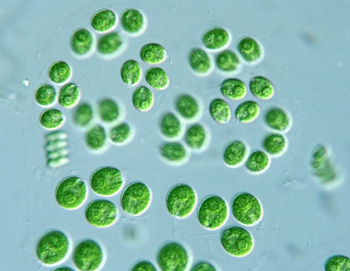
In the single-celled bi-flagellate alga Chlamydomonas, development is very brief—the zygote simply divides into four new vegetative individuals. But two of the most important post-fertilization processes are known to remain under cytoplasmic rather than nuclear control. First, two sets of DNA are carried in each gamete—the nuclear DNA and the chloroplast DNA. The nuclear DNA of both sexes (actually, strains called plus and minus) are amalgamated to produce the zygote nucleus, but only the plus chloroplast is transferred to the zygote—the minus chloroplast is digested and destroyed. The latter is accomplished by a nuclease enzyme present only in the plus gamete cytoplasm that is transferred to the zygote and then selectively imported into the minus chloroplast. Second, there are genes in the nuclear DNA that only become active when the zygote forms. This activation is accomplished by a homeodomain protein16 already present in the cytoplasm of the plus strain, which binds with an as yet unidentified protein delivered by the minus gamete. The new complex then activates transcription of the zygote-specific genes.17

In the flowering plant, Arabidopsis, ‘embryogenesis generates only a less complex core structure, the seedling, while virtually the entire adult plant morphology is generated by the activities of the apical meristems.’18 The apical meristem is a group of actively dividing cells in the growing tip, which only appears and begins to function once the seedling is in place. The seedling develops entirely under the control of maternal cell factors.
An inheritance model based on speciation data
The biblical history of biology is that God created a vast array of original kinds. Then extinction on a global scale occurred during the worldwide Flood of Noah, and the new world after the Flood was re-populated by a surviving subset of the original kinds. These surviving kinds proliferated in a glut of post-Flood speciation that resulted in the vast array of species that we see on Earth today.
If we ignore, for the moment, the very interesting question of how this might have happened and simply focus on the number of species that resulted from it, we can gain some insight into the nature of the information inheritance problem. For example, humans went through this catastrophic history just like every other created kind, yet there are very few named species of humans and they probably all belonged to just one biological species.19 In contrast, the majority of the flowering plants are generally thought to have speciated in the post-Flood period, and we see numbers amongst them in the order of 30,000 orchid species, 20,000 daisy species and 10,000 grass species. The beetles are the superstars of the animal kingdom, with over 350,000 named species coming from probably about 150 created kinds (taken as the number of families).
From an apobetic point of view, perhaps it was God’s purpose to create mankind to be like Himself and to retain that likeness consistently throughout human history. In contrast, it is clear that God’s purpose for vegetation (e.g. grass) was to cover the land, and for creeping things (e.g. beetles) to feed upon vegetation. Lots of grass and beetle species would thus be needed to fill the innumerable ecological niches that the Earth provided.
This model makes testable predictions. We would expect human inheritance to be dominated by structural and conservative components, and grass and beetle inheritance to have more emphasis on variable components. Perhaps the existence of more genes in the rice genome than in the human genome may fit this picture, although further research may show what we have discovered elsewhere, that the simple statistics are misleading. For example, since rice is an autotroph and has to manufacture and operate a photosynthesis system, extra genes would be required for this purpose. There may also be major differences in the levels of alternative splicing.
How did speciation occur?
Any theory of inheritance has to explain speciation, and the biblical worldview requires an enormous glut of speciation to have occurred in the immediate aftermath of the world-destroying Flood of Noah. How is this possible, given that modern species are fairly stable, and that stasis is the norm in the fossil record?20
Wild populations today may often be morphologically stable, but they can also be genetically quite diverse.21 A classic series of papers on the fruit fly Drosophila melanogaster shows that speciation can occur in just one generation from the wild.22 A culture of wild flies from an orchard was developed, and pupae from the culture were put into a habitat maze. Newly emerged flies had to negotiate the maze to find food. The flies faced three choices of which way to go through the maze, in the following order: light or dark, up or down, and scent of acetaldehyde or of ethanol. The flies were further characterized by the time of day when they emerged from the pupae. Two strains exhibiting opposite behaviors were chosen and allowed to breed together in the maze. One strain emerged early, flew upward and was attracted to dark and acetaldehyde. The other emerged late, flew downward and was attracted to light and ethanol. After 25 generations of continuing to live together, mating tests showed the two populations remained reproductively isolated and behaviorally distinct.
Two kinds of forces are at work here, the external environment (maze) and the internal metabolism (early/ late emergence) and behavior (preference combinations). Organisms that find a balance between these internal and external factors survive best. But very few characteristics of organisms are determined by single genes. One gene often influences several or many organ systems, and particular characteristics are often determined by multiple genes. Genetic engineers are therefore beginning to think in terms of gene ‘modules’ and a whole new field of ‘modular genomics’ is opening up to try to cope with this complexity.23 When a change in environment creates a selective pressure on a population, the genetic changes that result will sometimes be disruptive to some organisms but not, or less so, to others. Those that can balance the inner factors with the outer factors are the ones more likely to survive and reproduce.
Changes to the internal factors may also be accompanied by morphological changes (depending which ‘modules’ are involved) that would cause a taxonomist to call them a different species. We can view a species therefore as a population of interbreeding organisms that have reached an equilibrium between their environment and their internal constitution. Sometimes this equilibrium may be narrowly defined and the individuals will be all alike and easy to identify, and sometimes the equilibrium may range rather broadly and individuals will vary more from one another and be harder to identify.
After the Flood, as Woodmorappe has pointed out,24 there was a whole world of vacant ecological niches available, a rapidly changing climate (into and out of the ice age), and lots of opportunities amongst pioneering populations for founder effects, geographic isolation, and population bottlenecks that together would create a very rich landscape for rapid speciation. Perhaps the Creator had also provided a rich reserve of genetic modules to select from, and so no further explanation is needed.
Towards a biblical semantic model of inheritance
Let me now summarize. First, the naïve one-factor Mendelian model of inheritance (genes alone) is not consistent with the biblical view of biology—Genesis (and real, as opposed to Darwinian, biology) requires a two-factor model. At one level, organisms were designed to reproduce ‘after their kind’, but at a second level they were designed to diversify and adapt into a multitude of different ecological niches and changing environments. The most obvious experimental correlates with this two-level system are the cell and the chromosomes. Cells pass on their architecture and contents unchanged from mother to daughter, but chromosomes can vary from mother to daughter. Cells and their chromosomes do not act independently, however, and many areas on the chromosomes are highly conserved. The existence of multilevel error correction and error avoidance mechanisms also points to stasis in the chromosomes. Perhaps both cell and chromosomes together control stasis. Indeed, so much of the structure of life is devoted to information conservation that there is very little room left for random variation.
Baramin stasis is a concept alien to secular biology, so creationists need to develop a clear understanding of it. The evidence is there for those who want to see it. For example, Stephen Jay Gould said at the end of his distinguished career in paleontology,
‘ … the central fact of the fossil record [is] … geologically abrupt origin and subsequent stasis of most species. … the last remnants of a species usually look pretty much like the first representatives. … Paleontologists have always recognized the longterm stability of most species.’25
Likewise, the mechanism of inheritance was acknowledged to be fundamentally unexplainable in Darwinian terms when Richard Dawkins wrote,
‘The theory of the blind watchmaker is extremely powerful given that we are allowed to assume replication and hence cumulative selection’26 [my emphasis].
Dawkins’ theory did not even begin to operate until all the complex machinery of reproduction and inheritance was already in place. Thus the great champions of evolution are telling us virtually all we need to know to formulate the biblical model of baramin stasis!
Second, information is a 5-dimensional nominal entity that cannot be explained in terms of matter, energy or the forces that influence them. The ‘information challenge’ is thus a challenge for creationists as well as evolutionists. But since information comes from information and ultimately from an intelligent source, and an intelligent Creator can account for its dimensions of semantics, syntax, pragmatics and apobetics, then creationists are in a leading position to make progress in this field.
Third, the Barbieri semantic model (see Part II) appears to provide a means of progressing towards an implementation of Gitt’s 5-dimensional theory of information. This model identifies cells as primarily epigenetic rather than genetic systems—that is, stable inheritance is not primarily controlled by genes but by the cellular and chromosomal systems that control genes. Moreover, it predicts the existence of several other cellular memories apart from genes, each with its own code system apart from the genetic code. These have yet to be discovered experimentally, but they should provide a strong test of the validity of the model. Some could, for example, reside within the 97% of the human genome that does not code for proteins.
Fourth, since organisms are designed to change at the species level, Darwinist attempts to support their theory with statistical arguments are irrelevant. When organism lineages change through their built-in mechanisms of variation (together with natural selection) no increase in apobetic information content occurs. The organisms are simply doing what they were designed to do—survive in the face of a changing environment. Apobetics, not statistics, controls information change.
Conclusion
The concept of baramin stasis does not exist in secular biology, so creationists need to develop an answer to the question of what maintains baramin integrity and what allows for variation. There is a surprising amount of experimental support for the idea that cells, not just genes, control inheritance. This provides an obvious foundation for stasis because extranuclear cell structure and content is passed on unchanged from mother to daughter cell. Furthermore, the high levels of information conservation in chromosomes also suggests further mechanisms of baramin stasis. Baramin stasis fits well within the Gitt theory of information, and together they provide a powerful refutation of Darwinism and a resounding affirmation of biblical creation.
Acknowledgments
The editor and several anonymous referees have contributed substantially to the content and structure of this article (in all three parts), for which I am very grateful.
References
- Truman, R., The unsuitability of B-cell maturation as an analogy for neo-Darwinian theory, 2002; <www.trueorigin.org/b_cell_maturation.asp>, 7 October 2004. Return to text.
- Batten, D., The adaptation of bacteria to feeding on nylon waste, Journal of Creation (formerly TJ) 17(3):3–5, 2003. Return to text.
- Copley, S.D., Evolution of a metabolic pathway for degradation of a toxic xenobiotic: the patchwork approach, Trends in Biochemical Sciences 25(6):261–265, 2000. Return to text.
- DeWitt, D.A., Startling plant discovery presents problems for evolution, <www.answersingenesis.org/docs2005/0406mutation_fixing.asp>, 3 June 2005. Return to text.
- Nachman, M.W. and Crowell, S.L., Estimate of the mutation rate per nucleotide in humans, Genetics 156:297–304, 2000, <www.genetics.org/cgi/content/full/156/1/297>, 3 June 2005. Return to text.
- Bell, P., Apoptosis: cell ‘death’ reveals creation, Journal of Creation(formerly TJ) 16(1):90–102, 2002; Bell, P., The non-evolution of apoptosis, Journal of Creation (formerly TJ) 18(1):86–96, 2004. Return to text.
- The word ‘clone’ is also used of an organism that carries an exact copy of a gene or DNA fragment that was artificially transferred to it from another organism. Return to text.
- A simple description of the process is on-line at: <science.howstuffworks.com/cloning3.htm>, 3 June 2005. Return to text.
- <news.bbc.co.uk/1/hi/sci/tech/1113719.stm>, 3 June 2005. Return to text.
- <news.bbc.co.uk/1/hi/sci/tech/1760059.stm>, 3 June 2005. Return to text.
- Yong-Hua Sun, et al., Cytoplasmic impact on cross-genus cloned fish derived from transgenic common carp (Cyprinus carpio) nuclei and goldfish (Carassius auratus) enucleated eggs, Biology of Reproduction 72:510–515, 2005. Published online 6 October 2004. Return to text.
- Tam, P.P.L. and Rossant, J., Mouse embryonic chimeras: tools for studying mammalian development, Development 130:6155–6163, 2003. Return to text.
- The mixing of the cells in the embryo occurs before the immune system develops, that is why the alien baramin cells are not rejected by the immune system. Return to text.
- Rancourt, D., Maternal Control of Early Development, Dynamic Development, University of Calgary, <www.ucalgary.ca/UofC/eduweb/virtualembryo/maternal_control.html>, 3 June 2005. Return to text.
- Shaorong Gao et al., Recapitulation of the ovum mutant (Om) phenotype and loss of Om locus polarity in cloned mouse embryos, Biology of Reproduction 72:487–491, 2005. Return to text.
- A protein produced by a homeobox gene that regulates development of the body plan. Return to text.
- Pan, J., Misamore, M.J., Wang, Q. and Snell, W.J., Protein transport and signal transduction during fertilization in Chlamydomonas, Traffic (The International Journal of Intracellular Transport) 4(7):452–459, 2003; <www.blackwellpublishing.com/abstract.asp?aid=3&iid=7&ref=1398-9219&vid=4>, 3 June 2005. Return to text.
- Berleth, T. and Chatfield, S., Embryogenesis: pattern formation from a single cell; in: The Arabidopsis Book, American Society of Plant Biologists, Rockville, MD, 2002. <www.botany.utoronto.ca/ResearchLabs/BerlethLab/publications/berleth&Chatfield.02.pdf>, 3 June 2005. Return to text.
- All living humans belong to one species, Homo sapiens. Other fossil ‘species’ within the genus Homo have been named but there is no hard evidence to dispute the biblical view that they were all descendants of Adam and Eve. See <www.answersingenesis.org/creation/v17/i4/bones.asp>, 3 June 2005. Return to text.
- Gould, S.J., The Structure of Evolutionary Theory, Belknap Press, Harvard University, MA, pp. 874–875, 2002. Gould asserts ‘stasis [is] a property actively maintained by species’ (emphasis in original). Return to text.
- An extreme case is found in Australian rock wallabies: Jerlström, P., Jumping wallaby genes and post-flood speciation, Journal of Creation (formerly TJ) 14(1):9–10, 2000. Return to text.
- Rice, W. R., Disruptive selection on habitat preference and the evolution of reproductive isolation: an exploratory experiment, Evolution 39:645–646, 1985; Rice, W.R. and Salt, G.W., Speciation via disruptive selection on habitat preference: experimental evidence, The American Naturalist 131:911–917, 1988; Rice, W.R. and Salt, G.W., The evolution of reproductive isolation as a correlated character under sympatric conditions: experimental evidence, Evolution 44:1140–1152, 1990. Return to text.
- Segal, E. and Kim, S.K., The modular era of functional genomics, Genome Biology 4:317, 2003, <genomebiology.com/2003/4/5/317>, 6 June 2005. Return to text.
- Woodmorappe, J., Noah’s Ark: A Feasibility Study, Institute for Creation Research, Santee, CA, Part IV, 1996. Return to text.
- Gould, ref. 20, p. 749, 2002. Return to text.
- Dawkins, R., The Blind Watchmaker, Penguin Books, London, p. 140, 1986. Return to text.

Readers’ comments
Comments are automatically closed 14 days after publication.