

Life on Mars?
Separating fact from fiction
Update, 14 Jan 2022: Life on Mars claim retracted.
We are reposting this article on the front page because of this belated retraction after a quarter century. It was a hot topic just as I was moving from Wellington, New Zealand to work for CMI-Au in Brisbane. So my very first articles for CMI were on the claims of life from Mars: newsletter, this one for Creation magazine, and a perspective for the Journal of Creation.
Various anti-creationists were trumpeting this, and this was before we had our website to answer them easily, so we were stuck with paper responses. On one case, a vociferous anticreationist professor predicted that creationist would have merely religious answers, without science. I submitted a response summarizing similar arguments to this article, but the editors censored out all the scientific arguments, to make it look like the anti-creationist was right.
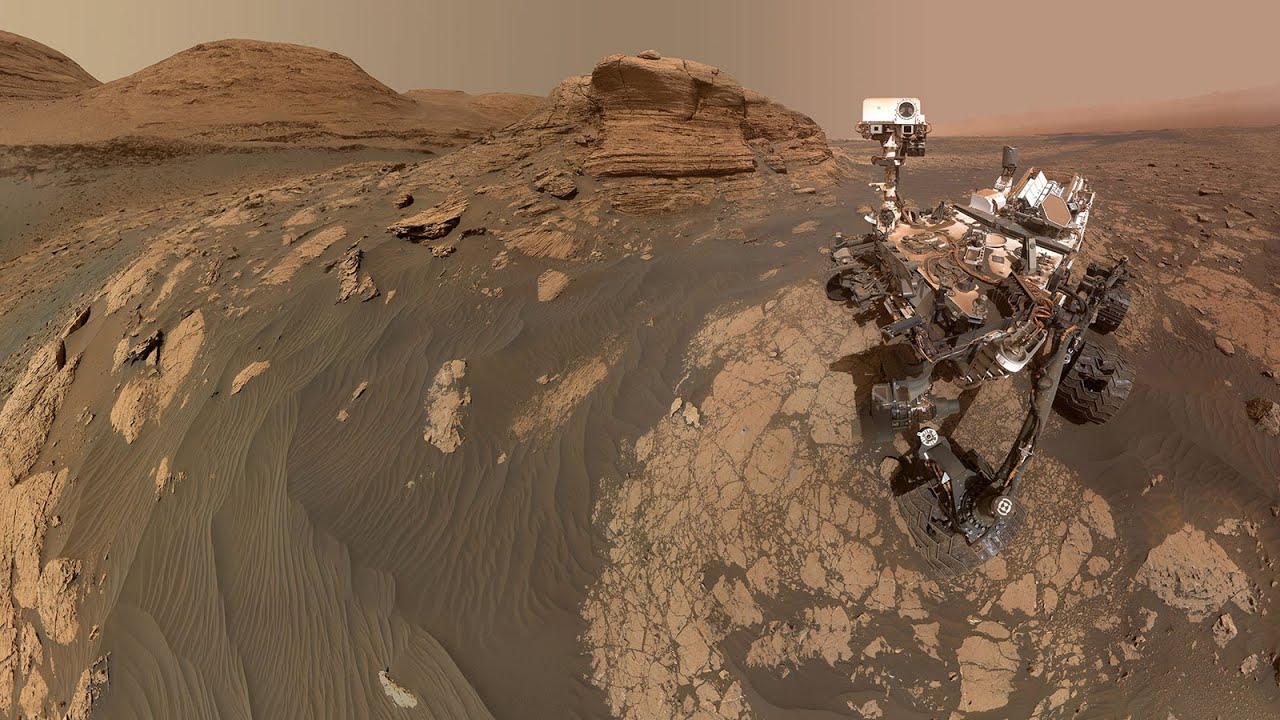
But now the Mars rovers have confirmed just what we said 25 years ago. The organic molecules that people were excited about clearly had an abiotic (non-life) origin. A summary of the research in the prestigious journal Science.
Abiotic formation of organic molecules
Mars rovers have found complex organic molecules in the ancient rocks exposed on the planet’s surface and methane in the modern atmosphere. It is unclear what processes produced these organics, with proposals including both biotic and abiotic sources. Steele et al. analyzed the nanoscale mineralogy of the Mars meteorite ALH 84001 and found evidence of organic synthesis driven by serpentinization and carbonation reactions that occurred during the aqueous alteration of basalt rock by hydrothermal fluids. The results demonstrate that abiotic production of organic molecules operated on Mars 4 billion years ago.a
We obviously don’t agree with the claimed age, but it shows that the chemicals are not evidence for life on Mars. But of course this didn’t stop the evolutionary spin from the lead researcher Andrew Steele, of the Carnegie Institution for Science:
These kinds of non-biological, geological reactions are responsible for a pool of organic carbon compounds from which life could have evolved and represent a background signal that must be taken into consideration when searching for evidence of past life on Mars. Furthermore, if these reactions happened on ancient Mars, they must have happened on ancient Earth, and could possibly explain the results from Saturn’s moon Enceladus as well. All that is required for this type of organic synthesis is for a brine that contains dissolved carbon dioxide to percolate through igneous rocks. The search for life on Mars is not just an attempt to answer the question “are we alone?” It also relates to early Earth environments and addresses the question of “where did we come from?”b
More likely, it shows the limit of the type of organic molecules abiotic processes can produce. Such materials are chemical ‘dead ends’, and never did progressed further towards life—and never could, for chemical reasons (see Origin of Life Questions and Answers).
Notes
- Steele, A. and 15 others, Organic synthesis associated with serpentinization and carbonation on early Mars, Science 375(6577):172–177, 13 Jan 2022. Return to text.
- Carnegie Institution for Science, Martian meteorite’s organic materials origin not biological, formed by geochemical interactions between water and rock, phys.org, 13 Jan 2022. Return to text.
If asked ‘What was the hot media topic of 1996?’, many would reply, ‘The sensational claim that scientists have discovered life from Mars.’ It certainly dominated the newspapers and television channels for some time. The news has been great publicity for NASA, just when the US Congress was discussing funding cuts.

The timing of the announcement was brilliant, coinciding with the release of the blockbuster movie Independence Day, about an extraterrestrial invasion of Earth.
The possibility of life on Mars has fascinated many, including the wealthy American astronomer Percival Lowell, who erroneously thought he had discovered hundreds of canals by 1908. But when the Viking spacecraft visited Mars in 1976, no trace of life was found, despite sophisticated detection techniques.
Many articles have proclaimed that this latest ‘discovery’ would, if confirmed, disprove traditional Christianity. They argued that life on Mars would show that matter has an inbuilt tendency to form life. Thus, a Creator is unnecessary, and the Earth and humanity are nothing special. However, the professing evangelical President of the USA, Bill Clinton, was very enthusiastic, saying, ‘If this discovery is confirmed, it would surely be one of the most stunning insights into our universe that science has discovered.’1
What was actually found?
No-one has found life on Mars; the announcement concerns a potato-sized rock on Earth (from Antarctica). This rock, thought to be a meteorite, contains tiny globules which superficially resemble bacteria in shape, and certain chemicals which supposedly came from once-living organisms. Note that the most which is being claimed is evidence for fossil microbial life, not ‘little green men’.
Did the rock really come from Mars?
We do not know for sure, although about the only thing most researchers agree upon is that it did. The gases trapped inside the rock’s tiny pores reportedly match today’s atmosphere on Mars (argon and carbon dioxide). However, its mineral composition differs from that of the 11 other meteorites believed to be martian, and it is reportedly (according to evolutionary dating methods) several billion years older than these other 11. But it does have the same distinctive oxygen isotope ratio, which has supposedly remained unchanged for ‘billions of years’. This is evidence that they all may have come from the same parent body, but is not conclusive. For a rock to escape Mars’ gravity, its speed would need to be over five times greater than that of a rifle bullet.2 Some scientists believe an impact from a large enough object could cause this.
Was any life actually found?
One of Australia’s most ardent atheistic sceptics proclaimed ‘Mars life’ as a fact, and, without the caution one would expect from a scientist, used it as an excuse to launch another tirade against scientists who believe the universe and life were created. But the facts do not justify his dogmatic claims.
Some of the structures in the rock are unusual, and are shaped a bit like some bacteria. But you cannot judge most things by their outward appearance. The chief researcher for one team examining it admitted that such shapes could represent dried-up mud.
A huge problem with the alleged fossil bacteria is their tiny size — many times smaller than all known free-living bacteria.3 The Martian objects simply do not have enough room to pack in all the information needed for a self-reproducing cell.4 This is why William Schopf of the University of California, LA, a leading expert on microfossils, said: ‘I think it is very unlikely they have remnants of biological activity.’
Most people don’t know that another team which analysed the same rock found that it lacked a key sign of biological activity. The leader, Jim Papike, director of the Institute of Meteoritics at the University of New Mexico, said: ‘When we looked at the ratio [of two types of sulphur], there was no evidence that it was in a ratio for life forms.’ In fact, he said that the ratio pointed in the opposite direction.5
So why did people think life was found?
Tiny globules of minerals called carbonates, with even tinier oval and tube-shaped objects on the surface. Limestone and marble, for example, consist mainly of carbonate minerals. However, the key paper6 concedes that ‘The origin of these globules is controversial’, and that they could have formed by processes unconnected with life. In particular, there is some evidence that they were formed at a temperature far too hot for life.
Molecules called PAHs (Polycyclic Aromatic Hydrocarbons, many of which are strong cancer-causing agents). However, these molecules are not always produced by living things. They are commonly found in soot and diesel exhaust. Also, ‘PAHs are very widespread compounds in asteroids and not diagnostic of life’ according to Robert Clayton, a geochemist at the University of Chicago. He also pointed out that PAHs in fossils have about a thousand times the variety of those in this rock.7
Another possibility is that these chemicals are from Earth and contaminated the meteorite once it was here. Richard Zare, who headed the chemistry team, tried to rule out this explanation because there are more PAHs deep inside the rock than on the surface, whereas contaminants would tend to affect the surface more than the inside. But Robert Gregory, a geologist at Southern Methodist University points out that water could seep into the many fissures in the rock and concentrate PAHs on the inside, while those on the surface would be destroyed by UV light.8
Certain iron compounds. The rock contains a mineral called magnetite, also called lodestone (which was used in the first compasses), as well as another mineral similar to ‘fool’s gold’.

These minerals can be formed by living organisms or by processes having nothing to do with life. It is the occurrence of these minerals together which suggests (to some) that they were formed by living cells. But the researchers haven’t ruled out all possible non-living processes.
Would life on Mars prove particles-to-people evolution?
Many sceptics have committed a logical error, because even if life were actually found on Mars, it would not prove that it had evolved there.
First, it could not rule out an Earth origin for that life. After all, if rocks can be blasted from Mars to Earth, it should be possible to blast them the other way.9 A less dramatic possibility, which scientists have considered for years, is that spores from Earth were pushed out of the upper atmosphere into space by light pressure, especially during a solar flare. Therefore, the alleged Martian life could originally have been seeded by Earth life.
Second, evolutionists have not succeeded in showing how non-living matter can jump the many hurdles required to form living cells.10
What does Scripture say?
The Bible does not explicitly say that no life was created outside the Earth. Some Christians of yesteryear, e.g. the British scholar Richard Bentley, even theorised that God’s omnipotence and glory might be expressed by many planets with life.11
However, it must be noted that most supporters of ET life have a strong evolutionary bias, as pointed out at the beginning of this article. Both Carl Sagan and H.G. Wells wrote books supporting evolution and opposing Christianity. It is tragic that millions of dollars are wasted on seeking complex signals from space which would prove an alien intelligence, but such people refuse to consider that the complex signals of our DNA and protein point to an Intelligence which made us. It is also sad to see President Clinton virtually pledging billions of dollars to help the space program because he thinks some shapes and chemicals in a rock show that life was on Mars. Yet in the USA, millions of dollars are spent, with his approval, killing unborn human babies with heartbeats and brainwaves, because he presumably maintains that they are not alive!
Scripture strongly implies that no intelligent life exists elsewhere, and the millions of taxpayers’ dollars spent on SETI projects have failed to refute this. The Earth was created purposely to be home for humans. It was on Earth that humans rebelled against their Creator and brought the cosmos under the curse of death and decay (Romans 8:22). It was also the place where the Creator took on the nature of one of His creatures, died for their sins, and rose from the dead. It would therefore seem hard to reconcile intelligent life on other worlds with the Fall and the Incarnation. It would also seem odd for God to create microscopic life on other planets, but we should not be dogmatic on this.
Summary
The media speculations about ‘life on Mars’ were premature, to say the least. Some researchers in the field believe the evidence is actually against any life. Some have suggested that the claim is a publicity stunt by NASA to gain more Government funding. At most, the evidence is only vaguely suggestive of microbial life. If so, there is still no reason that this could not have had an earth origin.
These dubious claims about ‘life’ in a rock are a smoke-screen, hiding the fact that true life is only found in the Rock (Isaiah 44:8), and that the only way to eternal life is through the chief Cornerstone, Jesus Christ (Ephesians 2:20, cf. John 14:6, Acts 4:12).
References and notes
- Time, August 19, 1996, p. 83. Such a pro-evolutionary stance is not surprising; Clinton’s disregard for the absolutes of Scripture in regard to abortion and homosexual activity is well-known. Return to text.
- McGraw-Hill Encyclopedia of Science and Technology 1971, Vol.5, p. 74 states that the escape velocity at Mars’ surface is 5.1 km/s. Return to text.
- The martian objects measure between 20–100 nm (1 nm = 10–9 m), while free-living bacteria measure between 500–20,000 nm, New Scientist, 17 August 1996, p. 5. The smallest bacteria, called Mycoplasma, range between 100–250 nm in diameter, but can only survive as parasites of more advanced organisms (article ‘Bacteria’, Encyclopædia Britannica, 15th edition, 1992, Vol.14, p. 571). Return to text.
- The American biochemist Harold Morowitz calculated that the smallest hypothetical minimal cell we can envisage is about 100 nm across. This would contain three ribosomes, a full complement of enzymes, a DNA molecule 100,000 bases long, and a cell wall. He points out that this ‘is almost certainly a lower limit, since we have allowed no control functions, no vitamin metabolism and extremely limited intermediary metabolism.’ Principles of Biomolecular Organisation, eds. G.E.W. Wostenholme and M. O’Connor, London: J.A. Churchill, 1966 p. 456. Cited in Michael Denton: Evolution: A Theory in Crisis, Bethesda, MD: Adler & Adler, 1986, pp. 263–264. Return to text.
- Cincinnati Enquirer, August 8, 1996, p. 15. His scientific paper is C. K. Shearer, G. D. Layne, J. J. Papike and M. N. Spilde, ‘Sulfur isotopic systematics in alteration assemblages in martian meteorite Allan Hills 84001’, Geochimica et Cosmochimica Acta 60(15):2921–2928, 1996. Return to text.
- David S. McKay et al., ‘Search for Past Life on Mars: Possible Relic Biogenic Activity in Martian Meteorite ALH84001’, Science 273:924–930, 16 August 1996. Return to text.
- New Scientist, August 17, 1996 pp. 4–5. Return to text.
- Ibid. p. 5. Return to text.
- This would be more difficult, because Earth’s escape velocity (11.2 km/s) is over twice that of Mars. Also, rocks from Mars would be attracted by the Sun’s gravity, so would be more likely to intersect Earth’s orbit. On the other hand, the Sun would tend to attract Earth rocks away from Mars’ orbit. But the possibility still exists, discussed in this magazine well before the Mars announcement (18(3):7). The mechanism outlined in the text, of spores transported by the solar wind, would favour Earth to Mars transfer over the reverse. Return to text.
- Let us assume that Mycoplasma is the simplest self-reproducing organism (although as indicated above, truly free-living organisms are even more complicated). It has 482 genes coding for enzymes about 400 amino acids long on average, Science 270:445–6, 20 October 1995. Each enzyme must have a precise sequence to function properly. There are 20 different types of amino acid that occur in enzymes. Even if only 10 units had to be exactly right in each enzyme, the chance of getting the full set by ordinary random chemical combinations is one in 106271 (one followed by 6271 zeroes). This is effectively nil when one realises that the number of atoms in the universe is only about 1080 (one followed by 80 zeroes). Some evolutionists try to explain away these odds by invoking natural selection, but this requires self-reproducing entities to start with, so cannot explain their origin. Return to text.
- Lance Morrow, ‘Viewpoint: Life as Divine Cartoon’, Time, August 19, 1996, p. 83. Return to text.




Readers’ comments
Comments are automatically closed 14 days after publication.