
Feedback archive → Feedback 2011
Copycat copout: Jesus was not made up from pagan myths
Linda E. writes concerning an agnostic friend who wrote in support of the copycat thesis: the idea that the gospels copied its stories about Jesus from pagan myths. CMI’s New Testament specialist Lita Sanders demonstrates how the copycat thesis is utter nonsense. Her comments are interspersed.
Dear Linda,
Please see my comments interspersed.
I’ve been e-mailing the agnostic son of my pastor. I’ve sent him the list of 15 questions for evolutionists, but, as he is not much of a science person, he responded with questions about the Epic of Gilgamesh and the flood (which I could answer—in fact, I sent him an article from your site) …
I presume you mean Noah’s Flood and the Gilgamesh Epic.
… as well as a site that claims that Jesus is simply a re-hashing of ancient mythological gods. I plan to continue the science issue with him as well, and I know how to do that. I don’t know enough about these myths to be able to give him a satisfactory answer. The site he sent is [Weblink removed as per feedback rules—Ed.]. I’ve copied the article in question below for your convenience. Can you help me answer this?
Jesus’ Story Is An Obvious Rehashing Of Numerous Previous Characters
Perhaps even more compelling is the story of Christ himself. As it turns out it’s not even remotely original. It is instead nothing more than a collection of bits and pieces from dozens of other stories that came long before.
The article claims that the Bible is not original, but the thing that’s not even remotely original is the article itself. There’s not anything that hasn’t been refuted many times over, and much of this information is available freely on the Internet for anyone who cares to do the research. We have a few articles on our site, for example, Was Christianity plagiarized from pagan myths? For much of this, I’m going to be referring you to resources on the Tekton Apologetics Ministry page, as there’s much more information on pagan parallels there. Some general background is available at: Was the story of Jesus stolen from pagan savior figures? More specific information on several of the alleged pre-Christs is available at Were Bible stories and characters stolen from pagan myths? For general information about the figures, I went to Wikipedia (not a site I generally recommend, but okay for really general information like this) and a few other sites that a Google search can easily bring up.
Here are some examples.
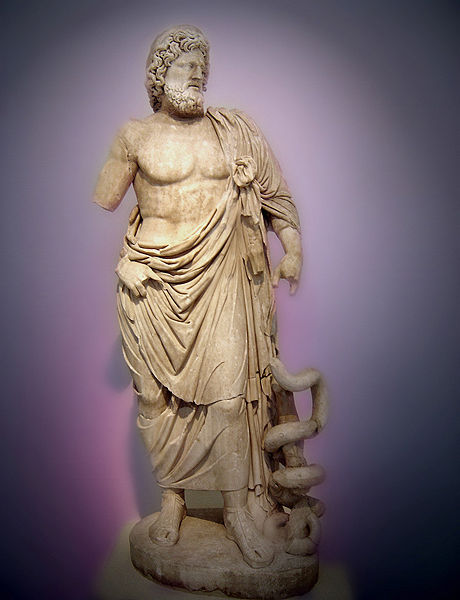
Asklepios healed the sick, raised the dead, and was known as the savior and redeemer.
The term Soter was applied to Asklepios, an appellation that Christians argue only applies to Jesus. But ‘savior’ can mean many different things, and there is no indication that Asklepios was known as a savior in the same sense that Jesus is. Since he’s a god of medicine, and maybe a deification of an actual person who was a physician, we shouldn’t be surprised that he’s credited with healing people, and he is credited with raising Hippolytus from the dead, though he was killed for doing it and accepting gold for it.
In short, yes, there are some superficial similarities, but nothing substantial or unexpected, and certainly nothing that one could argue that Christians took from Asklepios-worship. Also, ancient mythology was rich and varied. It might be argued that they anticipated most possible situations. So a cut and paste job on ancient beliefs could have been applied to the life of Jesus no matter what actually happened. But superficial parallels aside, the claims of Christianity are unique.
Hercules was born of a divine father and mortal mother …
A god having sexual relations with a human woman is not a parallel for virgin birth, by definition. See also The Virginal Conception of Christ: Alleged pagan derivation.
… and was known as the savior of the world.
Like many Greek heroes and demigods, Hercules fought lots of battles, killed lots of bad guys, etc. He was credited with making the world safe for mankind because he killed many monsters. In exactly what sense do they mean he was the ‘savior of the world’? And I couldn’t find any record of the actual phrase “savior of the world” being used of him.
Prophets foretold his birth and claimed he would be a king, which started a search by a leader who wanted to kill him.
I couldn’t find any accounts of prophets foretelling Hercules’s birth, or that he would be a king. The closest I could find relates to Heracles (not the same person as Heracles is the Greek hero from whom the Roman Hercules is derived). According to the Greek legend, Heracles’ mother Alcmene was simultaneously pregnant with Heracles by Zeus and his half brother Iphicles by her husband. Knowing that Heracles would be a descendant of Perseus, Hera tricked Zeus into vowing that the next-born descendant of Perseus would be High King. Zeus did so thinking that Heracles would be born next, but Hera made the goddess of childbirth delay Heracles’ birth while causing another descendant of Perseus to be born prematurely.
The ‘leader who wanted to kill him’ is Hera, Zeus’s jealous wife. Hardly counts as a parallel with Jesus.
He walked on water and told his mother, “Don’t cry, I’m going to heaven.” when he died. As he passed he said, “It is finished.”
I was unable to find any reference to Heracles or Hercules walking on water, or anything that could reasonably be interpreted as close to walking on water. His mother isn’t even present at the version of his death I was able to find, and I wasn’t able to find anything approximating ‘it is finished’ in the death story, either.
Dionysus was literally the “Son of God”, …
So was every member of the pantheon and all the demigods who resulted from Zeus’s numerous trysts. Hardly a comparison with Jesus.
… was born of a virgin mother, …
Nope, a result of divine fornication, as with Zeus’s other kids.
… and was commonly depicted riding a donkey.
So because other figures ride donkeys, Jesus can’t? That’s a trivial comparison. And the symbolism of the donkey is hardly the same.
He healed the sick and turned water to wine.
I was unable to find any healing attributed to Dionysus, and he was the god of the vine, but I couldn’t find any accounts of him turning water into wine.
He was killed but was resurrected and became immortal.
Depending on which myth is under consideration, he either was reincarnated or didn’t die—in the most common version, his mother is killed, leaving the fetal Dionysus behind. Zeus sews the fetus into his thigh and carries him until he is ready to be born. And a lot of the demigods eventually became immortal, but the idea of true bodily resurrection was repugnant to Greeks, which is why Paul had to straighten out the Corinthian Church regarding the resurrection (see 1 Corinthians 15 and The Resurrection and Genesis).
His greatest accomplishment was his own death, which delivers humanity itself.
I can find no connection between his death and delivering humanity. He was known as a bringer of peace, but this had more to do with him bringing wine and festivals with him.
Osiris did the same things. He was born of a virgin, …
He was the son of Geb and Nut. Again, not a virgin birth.
… was considered the first true king of the people, …
Osiris was known as the ‘king of the living’ sometimes, but that’s hardly surprising, and hardly a parallel for the Messianic role that Jesus claimed.
… and when he died he rose from the grave and went to heaven.
There are two events in Osiris’ life which could be said to be resuscitations of sorts. First, after Osiris was killed, his wife Isis used a spell to temporarily bring him back from the dead long enough to become pregnant by him (and so we get Horus, who I’ll address below). She hid his body, but when his brother (who murdered him) found the body, he tore it into 14 pieces, 13 of which Isis gathered together and bandaged for a proper burial. The other gods were impressed by her devotion and brought him back to life and made him the god of the underworld.
As with most of these ‘parallels’, simply telling the stories that are the alleged parallels is enough to refute the idea that the story of Jesus is based on them in any sense.
Osiris’s son, Horus, was known as the “light of the world”, “The good shepherd”, and “the lamb”. He was also referred to as, “The way, the truth, and the life.” His symbol was a cross.
There’s absolutely no evidence for any of this in any reputable source. The burden of proof is therefore on those that make these claims to document them.
Mithra’s birthday was celebrated on the 25th of December, his birth was witnessed by local shepherds who brought him gifts, had 12 disciples, and when he was done on earth he had a final meal before going up to heaven. On judgment day he’ll return to pass judgment on the living and the dead. The good will go to heaven, and the evil will die in a giant fire. His holiday is on Sunday (he’s the Sun God). His followers called themselves “brothers”, and their leaders “fathers”. They had baptism and a meal ritual where symbolic flesh and blood were eaten. Heaven was in the sky, and hell was below with demons and sinners.
A lot of Mithraism post-dates Christianity, and there is legitimate cross-pollination, but it’s Mithraism borrowing from Christianity, not the other way around. The only way that Christianity borrowed from Mithraism was in art. Third and fourth century Christians took the Mithraic images of Mithra slaying the bull and shooting arrows at a rock to get water out of it, and made lookalikes of Samson killing the lion and Moses getting water from the rock at Horeb. See the Tekton article: Was the story of Jesus stolen from that of the Persian deity Mithra?
Krishna had a miraculous conception that wise men were able to come to because they were guided by a star. After he was born an area ruler tried to have him found and killed. His parents were warned by a divine messenger, however, and they escaped and was met by shepherds. The boy grew up to be the mediator between God and man.
Who actually thinks people in Palestine had significant contact with Hinduism, much less that they’d model their Savior on very foreign pagan deities? Krishna’s ‘miraculous conception’ is his mom being impregnated by ‘mental transmission’ from his completely human father. No wise men or stars that I was able to find. Rulers trying to kill babies that might grow up to threaten them is a common theme. No shepherds that I can find, and the function of mediator is also one that I couldn’t find explicitly brought out. Although both ‘mediator’ and ‘god’ take on very different meanings when one realizes that we’re dealing with a polytheistic religion.
Buddha’s mother was told by an angel that she’d give birth to a holy child destined to be a savior.
I found no indication of this. Maya dreamed that a white elephant with six tusks entered her side, and ten months later gave birth. In any case, Buddhism doesn’t have a ‘savior’; Buddha is supposed to have shown the way to ‘Nirvana’, freedom from the endless reincarnational cycles of death and rebirth into a suffering world.
As a child he teaches the priests in his temple about religion while his parents look for him.
As a child, he was shielded from religion because he was destined to be a great prince, but the Brahmins prophesied that he would choose a religious life over political office.
He starts his religious career at roughly 30 years of age …
29 to be exact.
… and is said to have spoken to 12 disciples on his deathbed.
He had 2 chief disciples, eleven great disciples, and ten lay disciples. Which 12? I couldn’t find any reference to twelve disciples. His last words that I can find were instructing his attendant to convince Cunda that his death had nothing to do with the meal he offered to him.
One of the disciples is his favorite, and another is a traitor.
Pretty much everyone will have a favourite out of a group of people, and disciples betraying their masters is also a common theme.
He and his disciples abstain from wealth and travel around speaking in parables and metaphors.
Asceticism and this form of teaching were quite common. But are there any substantial similarities in the particulars of any of that teaching?
He called himself “the son of man” and was referred to as, “prophet”, “master”, and “Lord”.
No evidence of the first one that I could find, and the last three are so vague as to be useless in ascertaining any connection between the two.
He healed the sick, cured the blind and deaf, and he walked on water. One of his disciples tried to walk on water as well but sunk because his faith wasn’t strong enough.
General miracle working is vague and practically ubiquitous in all religious traditions. The story about the disciple walking on water has minimal similarity with the story of Peter.
The legend follows:
SOUTH of Savatthi is a great river, on the banks of which lay a hamlet of five hundred houses. Thinking of the salvation of the people, the World-honored One resolved to go to the village and preach the doctrine. Having come to the riverside he sat down beneath a tree, and the villagers seeing the glory of his appearance approached him with reverence; but when he began to preach, they believed him not.
When the world-honored Buddha had left Savatthi Sariputta felt a desire to see the Lord and to hear him preach. Coming to the river where the water was deep and the current strong, he said to himself: “This stream shall not prevent me. I shall go and see the Blessed One, and he stepped upon the water which was as firm under his feet as a slab of granite. When he arrived at a place in the middle of the stream where the waves were high, Sariputta’s heart gave way, and he began to sink. But rousing his faith and renewing his mental effort, he proceeded as before and reached the other bank.
The people of the village were astonished to see Sariputta, and they asked how he could cross the stream where there was neither a bridge nor a ferry. Sariputta replied: “I lived in ignorance until I heard the voice of the Buddha. As I was anxious to hear the doctrine of salvation, I crossed the river and I walked over its troubled waters because I had faith. Faith. nothing else, enabled me to do so, and now I am here in the bliss of the Master’s presence.”
The World-honored One added: “Sariputta, thou hast spoken well. Faith like thine alone can save the world from the yawning gulf of migration and enable men to walk dryshod to the other shore.” And the Blessed One urged to the villagers the necessity of ever advancing in the conquest of sorrow and of casting off all shackles so as to cross the river of worldliness and attain deliverance from death. Hearing the words of the Tathagata, the villagers were filled with joy and believing in the doctrines of the Blessed One embraced the five rules and took refuge in his name.
But the earliest account of Buddha’s life was written in the second century AD, far too late for Christianity to be copied from it. Indeed, by that time this legend might be copied from Christianity.
Apollonius of Tyana (a contemporary of Jesus) performed countless miracles (healing sick and crippled, restored sight, casted out demons, etc.) His birth was of a virgin, foretold by an angel. He knew scripture really well as a child. He was crucified, rose from the dead and appeared to his disciples to prove his power before going to heaven to sit at the right hand of the father. He was known as, “The Son of God”.
The problem, of course, is that these previous narratives existed hundreds to thousands of years before Jesus did.
The only valid point of comparison between Apollonius and Jesus is that they both performed miracles. And the stories of Apollonius were written no earlier than 217 AD. See more in this Tekton article.
Logic Sets In
Many are familiar with Occam’s Razor, which states that, all things being equal, one should not seek complex explanations when more simple ones are available.
The gross inaccuracies contained in the above show that all things aren’t equal. And this source hasn’t even considered the social and religious dynamics which would preclude a Jewish sect from adapting pagan religious stories to their new first-century AD religion. For example, there are at least 17 factors that meant Christianity could not have succeeded in the ancient world, unless it were backed up with irrefutable proof of the Resurrection, as shown in The Impossible Faith.
No one disputes that these other stories predate the Judeo-Christian Bible, …
Really? The Mithra stories that most closely parallel Jesus are after Him. Apollonius’ biography wasn’t written until the third century, and Buddha’s was in the second century (six centuries after the events it reports).
… so we really only have two options:
The religious explanation is that while the other stories were very much the same as those in the Bible, they are all false.
No, our explanation is that those myths aren’t even very similar to the Gospels. And the places there are superficial similarities are exactly where we would expect to find them, but in the particulars, Christianity is unique (the only one with a genuinely virgin birth, genuine resurrection, some unique miracles).
And even if the stories did predate Jesus, this would not necessarily mean that the Jesus narratives were false (this would commit the genetic fallacy). Yet when we carefully analyze these particular claims, we see that there is little to no documented evidence that Christianity borrowed heavily from pagan religions. Thus, the pendulum swings strongly in the opposite direction from where the article writer wants it.
But when they occur in the Bible (despite it being much the same content), this time the stories are true.
I don’t say that a story is true just because it appears in the Bible (there are some stories, parables, which are in the Bible but aren’t historical; the Bible never presents them as such), and I don’t reject something just because it doesn’t appear in the Bible (some of the extra-biblical myths may have their source in a distorted history). But unlike the myths, we have solid evidence that the Bible presents a trustworthy historical account. For instance, the Gospels present four different accounts that corroborate each other (and contrary to many assertions, the Gospels can be harmonized). Acts corroborates parts of Paul’s letters. And in the Old Testament, we’ve found evidence of many people groups, places, and events that were only previously known from Scripture, and hence many had doubted the Bible’s accuracy. See for example articles like A former chief magistrate examines the witnesses to the resurrection and Easter’s earliest creed.
One explanation of the resemblances to the earlier myths is that Satan created them to lead people astray from the true Messiah that would come much later. So essentially, an ultra-powerful and evil being (Created by God) influenced humanity to create deceptive stories—thousands of years before the real version—so that people wouldn’t believe the real thing when they saw it.
Some of them may be directly satanic, some may be distorted ancestor worship, some may be the product of visions/hallucinations. I don’t really care that much about where they came from. What does it matter? These skeptics need to deal with the Gospel’s truth claims, not resort to history-free diversions.
The alternative explanation is that the nature of storytelling during the period was such that central themes propagated through time. This combined with the natural tendency to have certain repeating elements in human stories, and the fact that the Bible stories came after the other ones, explains the similarities to previous myths.
There are central themes, and these are precisely the ones we find echoed in all the stories (attempted murder of the infant prince by jealous adversary, miracle-working teacher, tragic death, living on in some sense). But again, in the particulars, Christianity is unique. There is no comparison to Christianity.
This is probably also a good place to bring out another thing that makes Christianity unique. People said that Heracles, Dionysus, etc., did all these things, but no one claimed to be eyewitnesses of these things. A common feature of all these alleged pagan derivations is the huge time gap of many centuries between the person and the legends. Conversely, the Gospels were written by people who knew Jesus personally, or by those who knew such people personally (see Gospel Dates and Reliability). The first people to spread the Gospel said, in essence, “Jesus did miracles, taught, was crucified and raised from the dead, and we saw it!” This is the crucial difference. Christianity started at a time when if it weren’t true, the Jewish authorities should have been able to drag the corpse from the tomb, if there still was a corpse (and they would have had no qualms about doing so).
And since the stories of worldwide floods, virgin births, and people rising from the dead that the Bible is based on were false to begin with (which everyone agrees on)—they are also false in the Bible.
The worldwide flood stories (where did we go from ‘Christ copycats’ to flood stories?) are all based on the same historical event, which the Bible records accurately. And that is particularly appalling logic. So if A, B, and C lie about having done a certain thing, D can’t be telling the truth? Does the existence of counterfeit money disprove real money?
In short, the Bible is simply another iteration of the same themes that came long before it.
Which of these two explanations makes more sense to you?
The first is a strawman and the second literally makes no sense. I prefer our explanation to either of them.
Republished on Freethoughtpedia.com with permission by Daniel Meissler[1].
Hopefully that’s a pseudonym, because he should be ashamed of such nonsense; and the Freethought people were too sloppy even to get his name right.
It’s only rank ignorance, both of the social world of early Christianity, and of the particulars of those other religions, that allows things like this to survive. It’s hard to decide whether to counter these with serious arguments like the above, or with hysterical laughter. They want us to question our faith, and this is the best they have to offer?
In short, only someone who hasn’t done his homework would ever reject Christianity on the basis of pagan parallels. Christianity has been shown to be historically reliable, and to reflect events that actually happened. Even the Jewish opponents of Jesus had to explain away the empty tomb somehow. The pastor’s son, being an agnostic, questions Christianity. That’s okay; our faith will withstand scrutiny if he’s open to answers. But he should equally question this swill he’s swallowing, because if he questions his sources at the most basic level as I’ve done here, they won’t withstand the examination.
Sincerely,
Lita Sanders

Readers’ comments
Comments are automatically closed 14 days after publication.