

Radiometric dating breakthroughs
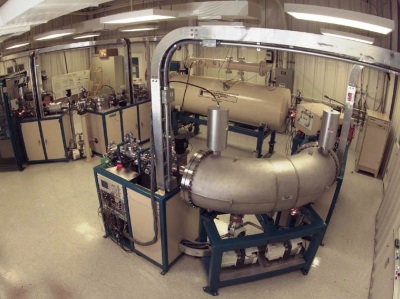
A few years ago, some leading creationist geologists and physicists began a detailed research project into Radioactivity and the Age of The Earth (RATE). This RATE project began as a cooperative venture between the Institute for Creation Research (ICR), the Creation Research Society of USA (CRS) and Creation Ministries International (CMI).1
With the release of key peer-reviewed papers at the 2003 ICC (International Conference on Creationism), it is clear that RATE has made some fantastic progress, with real breakthroughs in this area.
A young age for ‘ancient’ granites
When physicist Dr Russell Humphreys was still at Sandia National Laboratories (he now works full-time for ICR), he and Dr John Baumgardner (still with Los Alamos National Laboratory) were both convinced that they knew the direction in which to look for a definitive answer to the puzzle of why radiometric dating consistently gives ages of millions and billions of years.
Others had tried to find an answer in geological processes—e.g. the pattern was caused by the way the magma was emplaced or how it crystallized. This is indeed the answer in some cases.2,3 But Drs Humphreys and Baumgardner realized that in other cases there were many independent lines of evidence that suggested that huge amounts of radioactive decay had indeed taken place. (These include the variety of elements used in ‘standard’ radioisotope dating, mature uranium radiohalos and fission track dating.) It would be hard to imagine that geologic processes alone could explain all these. Rather, there was likely to be an answer that concerned the nuclear decay processes themselves.
From the eyewitness testimony of God’s Word, the billions of years that such vast amounts of radioactive processes would normally suggest had not taken place. So it was clear that the assumption of a constant, slow decay process was wrong. There must have been speeded-up decay, perhaps in a huge burst associated with Creation Week and/or a separate burst at the time of the Flood.
There is now powerful confirmatory evidence that at least one episode of drastically accelerated decay has indeed been the case, building on the work of Dr Robert Gentry on helium retention in zircons. The landmark RATE paper,4 though technical, can be summarized as follows:
- When uranium decays to lead, a by-product of this process is the formation of helium, a very light, inert gas, which readily escapes from rock.
- Certain crystals called zircons, obtained from drilling into very deep granites, contain uranium which has partly decayed into lead.
- By measuring the amount of uranium and ‘radiogenic lead’ in these crystals, one can calculate that, if the decay rate has been constant, about 1.5 billion years must have passed. (This is consistent with the geologic ‘age’ assigned to the granites in which these zircons are found.)
- However, there is a significant proportion of helium from that ‘1.5 billion years of decay’ still inside the zircons. This is, at first glance, surprising for long-agers, because of the ease with which one would expect helium (with its tiny, light, unreactive atoms) to escape from the spaces within the crystal structure. There should surely be hardly any left, because with such a slow buildup, it should be seeping out continually and not accumulating.
- Drawing any conclusions from the above depends, of course, on actually measuring the rate at which helium leaks out of zircons. This is what one of the RATE papers reports on. The samples were sent (without any hint that it was a creationist project) to a world-class expert on helium diffusion from minerals to measure these rates. The consistent answer: the helium does indeed seep out quickly over a wide range of temperatures. In fact, the results show that because of all the helium still in the zircons, these crystals (and since this is Precambrian basement granite, by implication the whole earth) could not be older than 14,000 years. In other words, in only a few thousand years, 1.5 billion years’ worth (at today’s rates) of radioactive decay has taken place. Interestingly, the data have since been refined and updated to give a date of 5,680 (± 2,000) years.
The paper looks at the various avenues a long-ager might take by which to wriggle out of these powerful implications, but there seems to be little hope for them unless they can show that the techniques used to obtain the results were seriously flawed.
More surprises on radiocarbon
Another dramatic breakthrough concerns radiocarbon. It’s long been known that radiocarbon (i.e. carbon-14, or 14C) keeps popping up reliably in samples (of coal, oil, gas, etc.) which are supposed to be ‘millions of years’ old. However, with the short half-life of 14C it should decay to zero in only some tens of thousands of years at the most.5 For instance, CMI has, over the years, commissioned and funded the radiocarbon testing of a number of wood samples from ‘old’ sites (e.g. samples with Jurassic fossils, samples inside Triassic sandstone, and samples burnt by Tertiary basalt) and these were published (by then staff geologist Dr Andrew Snelling) in Creation magazine and Journal of Creation. In each case, with contamination eliminated, the result has been in the thousands of years, i.e. 14C was present when it ‘shouldn’t have been’. These results encouraged the rest of the RATE team to investigate 14C further, building on the literature reviews of creationist physician Dr Paul Giem.
In another very important paper, scientists from the RATE group summarized the pertinent facts and presented further experimental data.6 The bottom line is that virtually all biological specimens, no matter how ‘old’ they are supposed to be, show measurable 14C levels. This effectively limits the age of all buried biota to less than (at most) 250,000 years. (When one takes into account the probability that before the Flood the ratio of radioactive to ‘normal’ carbon was much lower,7 the calculated age comes right down into the biblical ‘ballpark’.)
Interestingly, specimens which appear to definitely be pre-Flood seem to have 14C present, too, and importantly, these cluster around a lower relative amount of 14C. This suggests that some 14C was primordial (existing from the very beginning), and not produced by cosmic rays—thus limiting the age of the entire earth to only a few thousand years.
This appears to have been somewhat spectacularly supported when Dr Baumgardner sent five diamonds to be analyzed for 14C. It was the first time this had been attempted, and the answer came back positive—14C was present. The diamonds, formed deep inside the earth, are assumed by evolutionists to be over a billion years old. Nevertheless they contained radioactive carbon, even though, if the billion-year age were correct, they ‘shouldn’t have’.
This is exceptionally striking evidence, because a diamond has remarkably strong lattice bonds (that’s why it’s the hardest substance known), so subsequent atmospheric or biological contamination should not find its way into the interior.
The diamonds’ carbon-dated ‘age’ of about 58,000 years is thus an upper limit for the age of the whole earth. Again, this is entirely consistent with helium diffusion results reported above, which indicate the upper limit is in fact substantially less.8,9
14C workers have no real answer to this problem, namely that all the ‘vast-age’ specimens they measure still have 14C. Labelling this detectable 14C with such words as ‘contamination’ and ‘background’ is completely unhelpful in explaining its source, as the RATE group’s careful analyses and discussions have shown. But it is no problem or mystery at all if the uniformitarian/long-age assumptions are laid to one side and the real history of the world, given in Scripture, is taken seriously. The 14C is there, quite simply, because it hasn’t had time to decay yet. The world just isn’t that old!
The 14C results are an independent but powerful confirmation of the stunning helium-diffusion results. It looks like 2003 was a bad year for megachronophiles (lovers of long ages), but a good year for lovers of the Word of God.
Re-posted on homepage: 26 October 2022
References and notes
- The Australian ministry’s contribution was mostly providing the expertise of geologist Dr Andrew Snelling; however, when he commenced work with ICR, the project rightly reverted to a joint project of ICR/CRS. Return to text.
- Snelling, A.A., The failure of U-Th-Pb ‘dating’ at Koongarra, Australia, J. Creation 9(1):71–92, 1995. Return to text.
- Walker, T., The Somerset Dam igneous complex, south-east Queensland, Honours thesis [1st class Honours or Summa cum laude awarded], Department of Earth Sciences, University of Queensland, 1998. Return to text.
- Humphreys, D. et al., Helium diffusion rates support accelerated nuclear decay, icr.org, 16 October 2003. Return to text.
- Even with the most sensitive AMS techniques used today, nary an atom of 14C should be present after 250,000 years. Return to text.
- Baumgardner, J. et al., Measurable 14C in fossilized organic materials: confirming the young earth creation-flood model, icr.org, 16 October 2003. See also: Baumgardner, J., Humphreys, D., Snelling, A. and Austin, S., The Enigma of the Ubiquity of 14C in Organic Samples Older Than 100 ka, Eos Transactions of the American Geophysical Union 84(46), Fall Meeting Suppl., Abstract V32C-1045, 2003. And also: Lowe, D., Problems associated with the use of coal as a source of 14C free background material, Radiocarbon 31:117–120, 1989. Return to text.
- Factors which would lower the ratio: (1) more 12C in the biosphere due to the much greater amount of plant and animal life on the planet, (2) possibly less 14C production due to stronger magnetic field deflecting cosmic rays better, (3) 14C formed by cosmic rays started building up at creation, and in only 1,600 years before the Flood would not have reached equilibrium. Return to text.
- Chaffin, E., Accelerated decay: Theoretical models, icr.org, in: Ivey, R.L., Jr., Ed., Fifth International Conference on Creationism, Creation Science Fellowship, Pittsburgh, Pennsylvania, pp. 3–15, August 2003. Return to text.
- This burst of accelerated decay would be expected to have a greater effect, proportionately, the longer the half-life. Compared to the effect on a uranium isotope with a half-life of billions of years, the effect of speeded-up decay on 14C, with its half-life of the order of 5,000 years, would be much less, which would explain why there is still some of this primordial 14C left. Other papers by RATE scientists at the 2003 ICC dealt with theoretical grounds for accelerated decay and also gave further supportive evidence from isochron dates for this varying effect. I.e. ‘good’ isochrons obtained for different decay chains within the same rock sample, which should have all registered the same ‘date’, varied from one another indicating a greater effect on longer half-life isotopes. See Snelling, A.A. et al., Radioisotopes in the diabase sill (Upper Precambrian) at Bass Rapids, Grand Canyon, Arizona: An application and test of the isochron dating method, icr.org, in: Ivey, R.L., Jr., Ed., Fifth International Conference on Creationism, Creation Science Fellowship, Pittsburgh, Pennsylvania, pp. 269–284, August 2003. Return to text.

Readers’ comments
Comments are automatically closed 14 days after publication.