
Experiments that actually don’t prove evolution
A review of Darwin’s Brave New World, Episode Two1

Episode Two of the TV series Darwin’s Brave New World, shown on ABC1 in Australia in November 2009, is titled “Evolutions”. It has a couple of segments dealing with Darwin’s daughter’s illness, so we will combine them to begin with.
Darwin’s daughter, Annie
We see Darwin’s 10-year-old daughter, Annie, “fighting for her life against a mysterious illness”. Her mother, Emma, says, “We trust in the name of the Lord, our God”, albeit without the film showing anyone praying for Annie’s healing. Presumably the point is to show that “trust in God” is a waste of time.
The Announcer declares, “Darwin sees Annie’s death as a tragic reminder of natural selection. Only the strong survive, and nature, not God, decides her fate like that of any other animal.” Prof. Richard Dawkins chips in with, “The whole of nature, when you look at it not only is cruel, but has to be cruel as a part of natural selection.”
Darwin tried every natural remedy he could think of to save his daughter. including the water cure and various medicines. All to no avail. In fact, it is God, not nature, who determines who survives.2 And as to cruelty in nature, the world today is not as God created it, namely very good, but we are living in a cursed world—cursed because of mankind’s sin (Genesis chapter 3).3
Darwin’s barnacles
In 1844, the publication of a rival book about evolution called Vestiges of the Natural History of Creation by an anonymous author (later known to be Scottish journalist Robert Chambers) temporarily sets Darwin back, until his friend, Joseph Hooker, gets him going again by advising him to specialize. Darwin chooses to study barnacles for the next eight years.
We are told that no one has studied barnacles before. Nevertheless it was believed that all barnacles were hermaphrodite, i.e. having both female and male sexual organs. Darwin then sees one barnacle under his microscope that is male only. The Announcer reworks this as, “He sees some barnacles that can change into a single sex. Like the finches from the Galápagos islands: more evidence that species can change dramatically, the process of natural selection.” Prof. Iain McCalman says, “The process of producing offspring in itself produces inherent and inevitable varieties. He discovers that variations occur inevitably and perpetually in nature.”
But Darwin discovered no such thing. All that he discovered was one barnacle that is male. The rest is spin, i.e. that because there are two varieties, one of them must have changed into the other. This is not a “crucial insight”, but a fundamental non sequitur. This is similar to the argument put forward by evolutionists that germs evolve into antibiotic-resistant types. The better explanation is often that the antibiotic-resistant type has existed all along and flourishes when the non-resistant type is eliminated. And even where a new type arises by mutation, it is always a downhill change.4 Darwin’s male-only barnacle obviously had less genetic information than the hermaphrodite ones (or possibly the instructions for making the female parts had been switched off).
The real meaning of “natural selection”
Darwin continues to wonder just how one species might change into another. And regarding Darwin’s belief that, in the competition to thrive in a new environment, species eventually modify to form new species, we are given some words of wisdom by Dr David Suzuki. “When you begin to think that the environmental conditions in some way impinged on our hereditary material and favoured one set of genes over another, then it begins to make sense; that’s how they began to diverge, that’s why they’re different—because of the environmental conditions that act to basically filter out or winnow out those combinations of genes that were less fit.”
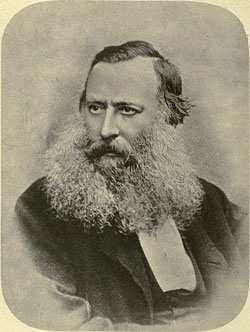
Note Dr Suzuki’s last 10 words: “winnow out those combinations of genes that are less fit”. This is indeed all that natural selection does. Depite all the huffing and puffing in this film, natural selection does not create the more fit. Rather, it is a winnowing agent that gets rid of the less fit and so maintains the status quo. Furthermore, natural selection was not “discovered” by Charles Darwin; if anything it was “discovered” by the creationist chemist/zoologist Edward Blyth (1810–1873), who wrote about it in 1835–37,5 as elimination of the less fit in order to preserve the status quo (the fitness) of the group.6,7
Darwin’s experiments: what they do and don’t prove
The film now seems to suggest that if Darwin can discover by experiment how species migrate, he will have proved that they have ipso facto evolved. We are told, “He thinks laterally to show exactly how animals and plants could migrate around the world and then evolve into new species.” But the fact that something migrates anywhere is no proof whatever that it then evolves. People who migrate to Australia may become Australians, but they don’t start to turn into kangaroos.
Nevertheless we are shown some experiments.
- Darwin immerses some seeds in salty water to see how long they can survive. It is long enough for them to drift across an ocean. Great, but all this proves is that these seeds can survive long enough to drift across an ocean, not that they then evolve into anything else once they get somewhere else! In fact, these experiments have given great ammunition to creationists to answer those who claim that floating seeds could not have helped substantially re-vegetate a post-Flood Earth.
- He tests whether snails could hitch a ride on ducks’ feet by seeing how many snails fall off some appendages while he shakes them. He shakes them for 10 seconds—12 fall off and four stay put. It’s difficult to see how that proves much at all!
- In his garden he shows that some insects go only to some flowers.
- He was shown an orchid from Madagascar that had a very long neck, over a foot long. Naturalists in Europe were only familiar with moths that had a very short proboscis. Darwin predicted that a moth would be found with a proboscis a foot long. It was found 100 years later. However, this does not prove evolution; at most it demonstrates natural selection—not the same thing.8
Prof. Janet Browne tells us that while Darwin continues his experiments “he meticulously gathers evidence [note the word!] by a relentless writing campaign to hundreds of naturalists around the world. He requests animal and plant specimens, along with detailed notes on their habits and histories. … He put everything he had into making that theory work, into finding evidence [that word again] to support it, into discussing it, or at least the facts that it was based on, with colleagues from all over the world. So his entire life was given to that theory.”
Well, hooray for Darwin! But Prof. Browne did not give us even one piece of the alleged “evidence” that Darwin deduced from the specimens, such as the skeletons from India and the beans from Norway, etc., that were sent to him by his many colleagues around the world. The fact that he put so much effort into his search doesn’t prove that his theory was true; if anything, it could show how elusive any evidence for it was!
We are now introduced to Alfred Russel Wallace,9 about whom we are told (inter alia) that he grew up without any scientific background, that he makes a living collecting animal specimens in the Malay archipeligo for resale around the world, and that he believes orangutans are related to man. Prof. McCalman puts into Wallace’s mouth that “evolution is an indisputable fact”. However, the only actual Wallace quote given, from a paper he wrote in 1855 exploring the concept of evolution and formation of new species, doesn’t quite say this: “Every species has come into existence coincident with both time and space with a pre-existing closely allied species.”
Pigeons: what do they prove, if anything?
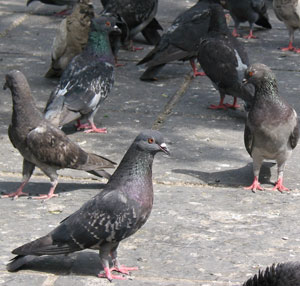
Back to Darwin, who is now considering pigeons. The narrator tells us, “Darwin argues that man has changed them enormously by selective breeding. He calls this ‘artificial selection’ and maintains it mirrors what nature does in the wild with natural selection, his key to evolution.” Then Dr Suzuki says, “Natural selection is just a marvellous extention of what Darwin knew—that human intervention by artificial selection could lead to enormous changes. But if the same process occurred in nature, then environmental conditions could act in the same general way as humans deliberately selecting for certain traits.”
Quite so, but no matter how much they have been bred, no pigeon has ever changed into a non-pigeon. Pigeon experiments are therefore a strong demonstration that variation has limits, whereas evolution from molecules to man requires that it does not.
Thomas Huxley
Earlier we have been introduced to Thomas Huxley as an incredibly angry young man who loathes Christian naturalist Richard Owen, the head of Britain’s scientific establishment. Huxley, Hooker and Darwin become friends. However, Huxley does not agree with Darwin’s theory of natural selection and with good reason.
Prof. Iain McCalman says, “Huxley is interested in the anatomy, the structure, of species. He saw no such law of development at all.” And Huxley says to Darwin, “Intermediate forms are missing … even ancient fossil animals have living relatives that have undergone little or no change. Fossil history does not mirror an individual embryonic growth.”
Well said, Huxley! Nevertheless, Huxley needed a cause as much as Darwin needed a champion, and soon Huxley would be known as Darwin’s bulldog.10
Summary
Vigorous activity in doing experiments, dedication, even ingenuity, are all commendable, but they should not be confused with results, or “proof” of evolution. Evolutionists and creationists have the same information—fossils, armadillos, barnacles, seeds that can survive in salt water, pigeons, orangutans, whatever. However, just what this information is evidence for depends on how we interpret it. But which interpretation is most consistent? All the real scientific results reported in this program fit better into a biblical creationist worldview than the naturalistic worldview (materialism / atheism), which the program assumes.
Re-featured on homepage: 10 November 2010
References.
- See also: A Review of Darwin’s Brave New World, Episode 1 Return to text.
- See Grigg, R., Darwin’s arguments against God. Return to text.
- See Sarfati. J., Why is there Death & Suffering? booklet: Raises questions but provides framework for answers Return to text.
- See Wieland, C., Superbugs not super after all, Creation 20(1):10–13, 1997. Return to text.
- Blyth, E., The Magazine of Natural History Volumes 8, 9 and 10, 1835–1837. Return to text.
- See Darwin’s illegitimate brainchild: If you thought Darwin’s Origin was original, think again! Creation 26(2):39–41, 2004. Return to text.
- See Wieland, C., Muddy Waters: Clarifying the confusion about natural selection … Return to text.
- See Grigg, R., The Love Trap, Creation 24(3):26–27, 2002 and Natural selection Q and A. Return to text.
- See Grigg, R., Alfred Russel Wallace: ‘Co-inventor’ of Darwinism, Creation 27(4):33–35, 2005. Return to text.
- Grigg, R., Darwin’s bulldog—Thomas H. Huxley, Creation 31(3):39–41, June 2009. Return to text.


Readers’ comments
Comments are automatically closed 14 days after publication.