
Now a Creationist

CMI Ph.D. scientist and author explains to an outside website what turned him to biblical creation
(First published on Boundless.org, 23 January 2009)
How does someone with an essentially secular upbringing and secular education become a staunch supporter of biblical creation? (See also previous Boundless article A Theory of Creation). There was no single reason, but many pieces of evidence that accumulated into an overwhelming case.
Missing links
One of the first holes I found in the evolutionary story was in my introductory geology class. The Geology professor,1 a paleontologist, said explicitly, ‘The fossil record does not support Darwinian evolution! Rather, it seems to support a series of divine creations.’ He went on to assure the large class in the lecture theatre, ‘I am not a divine creationist’, then explained away the problem, or it certainly seemed at the time to be special pleading. Later studies have confirmed that the links are still missing, just as Darwin realized in his day.2
Real chemistry vs chemical evolution
In my organic chemistry classes, the real chemistry learned there seemed to pose enormous problems for theories of the origin of life from non-living chemicals (chemical evolution or abiogenesis). And if evolution couldn’t start in the first place, then it couldn’t have got going. It would be like a race with all runners dead on the starting blocks.
For example, we studied a type of reaction vital for life and chemical industry called condensation polymerization. This is where lots of small molecules (monomers) are combined to form big molecules (polymers), releasing water molecules at every step. Such reactions can go the other way, a process called hydrolysis: water plus polymer produces monomers. A basic chemical law tells us that water is the last place we would want to try condensation reactions; rather, it would help break up big molecules. Yet the text books told us that life began in a primordial soup, which contains rather a lot of water!3

Also, theory—as well as plenty of practice in chemistry labs—taught us that reactions won’t always go the way you want—chemicals want to react in other ways as well. For example, although life needs both sugars and amino acids, unless they are kept apart (e.g. by the cell’s architecture), they will react and destroy each other. This in fact happens during bruising of fruit and cooking. Also, real chemists recognize the danger, and attach ‘protecting groups’ to stop certain reactions, then remove them. The alleged primordial soup didn’t have any chemists around!
Another interesting fact we learned was that many chemicals of life came in two ‘mirror image’ forms, rather like your left and right hand (hence the term ‘chirality’ from the Greek word for ‘hand’, cheir ?e??). Yet life contained only one of them. A single impurity could destroy the DNA double helix or protein activity. But when we made such chemicals, they always arose in a 50/50 mix. We managed to separate them using one-handed forms obtained from living things, which helped to crystallize one of the forms we were after. This was quite involved. But once we had the needed one-handed form, it was very easy to revert it to the 50/50 mixture, e.g. just adding charcoal. So there was a huge problem with the primordial soup idea: it would produce the 50/50 mixture, not the pure one-handed forms needed for life.4
Information: a key to understanding creation v evolution
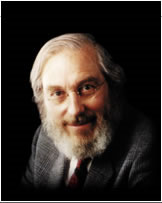
A major influence in my early postgraduate days was the visit to my country by a mild-mannered English professor, Arthur Wilder-Smith (1915–1995). He was very highly qualified, with three earned doctorates in science, and he introduced the idea of information, since taken up by the Intelligent Design movement. And this was devastating against evolution.
All the design in living things is encoded in a sort of recipe book with lots of information. Information describes the complexity of a sequence—it does not depend on the matter of the sequence. It could be a sequence of ink molecules on paper (book)—however the information is not contained in the molecules of ink but in the patterns. Information can also be stored as sound wave patterns (e.g. speech), but again the information is not the sound waves themselves; nor electrical impulses (telephone) or magnetic patterns (computer hard drive).
The famous physicist Paul Davies, certainly no Christian or creationist, explained much the same thing:
‘We now know that the secret of life lies not with the chemical ingredients as such, but with the logical structure and organisational arrangement of the molecules. … Like a supercomputer, life is an information processing system. … It is the software of the living cell that is the real mystery, not the hardware.’But where did it come from? Davies framed the question this way:
‘How did stupid atoms spontaneously write their own software? … Nobody knows … ’. 5
Dr Wilder-Smith argued that this information in living organisms required a source beyond ordinary physics and chemistry. And while Paul Davies didn’t want to come to that conclusion, he admitted, ‘There is no law of physics able to create information from nothing.’
Avoiding the bait-and-switch
Dr Wilder-Smith also cut through much evolutionary bluff. That is, for evolution to work, much new information is required. Yet the changes usually touted by evolutionary propagandists involve sorting out information that was already in existence, removing information by natural selection, or corrupting information by a genetic ‘typo’ or mutation.6 Evolutionists typically equivocate or play bait-and-switch, i.e. invoking examples of mere change, which no creationists deny, and use this as proof of evolution from goo to you via the zoo, which requires information-increasing change. Note also that Darwin wasn’t the inventor of natural selection—creationists such as Edward Blyth discussed it before Darwin, but properly recognized it as a culling not a creative force.7
Rock layers
The idea of millions of years was seriously undermined in my postgraduate years when some conservative Roman Catholic pro-life friends invited me to a screening of the then new Evolution: Fact or Belief, made by European Catholic creationists. This included the work by French sedimentologist Guy Berthault. His experiments, sometimes working with non-creationists, have shown that fine layers do not need to be formed one at a time, over many years. Rather, many layers can form all at once by a self-sorting mechanism during the settling of differently sized particles, as long as there is horizontal flow.8 In one of Berthault’s experiments, finely layered sandstone and diatomite rocks were broken into their constituent particles, and allowed to settle under running water at various speeds. It was found that the same layer thicknesses were reproduced, regardless of flow rate. This suggests that the original rock was produced by a similar self-sorting mechanism, followed by cementing of the particles together—not over millions of years.9 The prestigious journal Nature reported similar experiments by evolutionists a decade after Berthault’s first experiments.10
Also, recent catastrophes show that violent events like the Flood described in Genesis could form many rock layers very quickly. The Mt St Helens eruption in Washington State produced 7.6 metres (25 feet) of finely layered sediment in a single afternoon!11 And a rapidly pumped sand slurry was observed to deposit about a metre (3–4 feet) of fine layers on a beach over an area the size of a football field.12
Another problem for the millions of years scenario was ‘flat gaps’ or ‘paraconformities’. To explain, think of the jagged surface of most landscapes, due to erosion. Streams and rivers keep cutting deeper gullies, canyons, and valleys. But often the layers below them are completely smooth. Yet they are often claimed to have been deposited millions of years apart. But if the top of each layer had been exposed for millions of years, it should be as jagged as the surface.13
A more obvious problem was the fossils. We simply don’t see fish fossilizing at the bottom of rivers and oceans. Nor are sheep and cattle farms filled with fossils. Why not? Because most dead animals are scavenged and disintegrate quickly. So the fact that we have fossils at all shows that they must have been buried rapidly. This includes jellyfish—yet Darwin’s slow-and-gradual dogma led him to claim that no soft-bodied organism could be fossilized.14
The above three factors made Noah’s Flood a compelling idea, and if this is accepted, there is no need for millions of years.
The Bible vs evolution
I became a Christian in my early years at university. As in most countries, there was not very much teaching in the church on apologetics (defending the faith), but there were highly motivated individuals. Fortunately they and I managed to find each other, and one result was the formation of the Wellington Christian Apologetics Society.
As above, there were huge scientific holes in evolutionary theory. At the same time, it became clear that the Bible can’t be married with evolution either.
Some taught that biblical history began at Abraham. But Gen. 1–11 segues seamlessly into Gen. 12–50, and is the same type of literature, written as historical narrative. Later, this became clearer, since Hebrew historical narrative history is dominated by particular verb forms known as preterites (or waw consecutives). A statistical analysis by Hebrew scholar Steven Boyd showed that perfect and imperfect verbs are dominant in undoubted poetic passages, while preterites dominate in undoubted historical narrative.15 And his analysis showed, ‘the probability that Genesis 1:1–2:3 (X1 = 0.655) is a narrative is 0.999972604’.16
Also, the rest of the Bible treats Genesis as history, and sees no difference between 1–11 and 12–50. For example, Jesus spoke of Abel as the first martyr (Matthew 23:35). Luke’s genealogy (Luke 3) went past Abraham through Noah and Adam, without the slightest hint that the ancestors before Abraham were any less historical. And Adam is called ‘the son of God’, not the son of an ape-like ancestor who descended from pond scum. The ‘heroes of the faith’ list in Hebrews 11 included pre-Abrahamic characters Abel, Enoch and Noah, with no hint that they were any less real.
Indeed, ‘Scripture cannot be broken’ (John 10:35) and the repeated, ‘It is written … ’ show that for Jesus, what Scripture said is what God said.17 Indeed, He defended many of the doctrines that sceptics love to scoff at (including Noah’s Flood and Ark—Luke 17:26, 27).18
Sin and Death
The clincher for a thoroughly biblical creation belief was resolving how there could be a loving God with all the pain, suffering and death. The answer is that God didn’t create the world this way; rather He created it very good (Genesis 1:31). Death and suffering are intruders, not the way God originally created. Death is called the last enemy (1 Corinthians 15:26), and the ‘wages of sin’ (Romans 6:23), and creation is now groaning in pain (Romans 8:22). The Bible tells us that all this came about because of the disobedience of the first man, Adam, and this affected not only humans19 but the whole creation.20 But trying to add millions of years to the Bible means death came before Adam’s sin, which rips apart the vital biblical connection between death and sin.21
In particular, this connection is integral to the Gospel message itself. Paul’s great chapter on the Resurrection (1 Corinthians 15) explicitly connects the death brought by Adam’s sin to the Resurrection brought by the Last Adam. If the first Adam were allegorical, then what happens to the last Adam? And because Jesus conquered physical death, it follows that the death sentence God passed on Adam must also include physical death. Thus all fossil humans and other creatures must have come after this.
This alone is the death knell for attempts to marry the Bible with evolution or millions of years.
In light of all this, how could I now not be a creationist?! I am commanded to love the Lord with all my mind (Mark 12:30), and now that I can see that His testimony is indeed trustworthy (Psalm 19:7), it’s really quite easy.
References
- NB: in British Commonwealth countries, ‘professor’ is given only to the highest rank of lecturers. Return to text.
- See my book Refuting Evolution (1999, 2008), ch. 3, The links are missing, creation.com/refuting. Return to text.
- Sarfati, J., Origin of life: the polymerization problem, J. Creation 12(3):281–284, 1998; creation.com/polymer. Return to text.
- Sarfati, J., Origin of Life: The chirality problem, J. Creation 12(3):263–266, 1998; creation.com/chirality. Return to text.
- Davies, P., Life force, New Scientist 163(2204):27–30, 18 September 1999. Return to text.
- See also Weston, P., and Wieland, C., How information is lost when creatures adapt to their environment, Creation 20(4):28–31, 1998; creation.com/adapt. Return to text.
- Grigg, R., Darwin’s illegitimate brainchild: If you thought Darwin’s Origin was original, think again! Creation 26(2):39–41, 2004; creation.com/brainchild. Return to text.
- Julien, P., Lan, Y., and Berthault, G., Experiments on stratification of heterogeneous sand mixtures, J. Creation 8(1):37–50, 1994. Return to text.
- Berthault, G., Experiments on lamination of sediments, J. Creation 3:25–29, 1988; creation.com/sedexp. Return to text.
- Makse, H.A. et al., Spontaneous stratification in granular mixtures, Nature 386(6623):379–382, 27 March 1997. See also Snelling, A. Nature finally catches up, J. Creation 11(2):125-6, 1997. Return to text.
- Austin, S., Mount St Helens and catastrophism, Proc. First International conference on Creationism, 1:3–9, ed. R.E. Walsh, R.S. Crowell, Creation Science Fellowship, Pittsburgh, PA, USA, 1986. Return to text.
- Batten, D., Sandy stripes: Do many layers mean many years? Creation 19(1):39–40, 1996; creation.com/sandy. Return to text.
- For further discussion see: Roth, Ariel, Those gaps in the sedimentary layers, Origins (GRI) 15:75–92, 1988. Return to text.
- Catchpoole, D., Hundreds of jellyfish fossils! Creation 25(4):32–33, 2003; creation.com/jellyfossils. Return to text.
- Boyd, S.W., ‘A Proper Reading of Genesis 1:1–2:3; in DeYoung, D., (editor), Thousands … Not Billions, pp. 157–170, Master Books, Green Forest, Arkansas, 2005. This sampled 47 narrative and 49 poetic passages as well as Genesis 1:1–2:3. Return to text.
- Boyd, S.W., The Biblical Hebrew Creation Account: New Numbers Tell The Story, Institute for Creation Research, www.icr.org/article/24, November 2004. Return to text.
- Sarfati, J., The Authority of Scripture, Apologia 3(2):12-16, 1994; creation.com/authority. Return to text.
- Livingston, D., Jesus Christ on the infallibility of Scripture, from ‘A Critique of Dewey Beegle’s book titled: Inspiration of Scripture’, MA Thesis, 2003; creation.com/jesus_bible. Return to text.
- Cosner, L., Romans 5:12–21: Paul’s view of a literal Adam, J. Creation 22(2):105–107, 2008. Return to text.
- Smith, H.B. Jr., Cosmic and universal death from Adam s Fall: an exegesis of Romans 8:19 23a, J. Creation 21(1):75–85, 2007; creation.com/romans8. Return to text.
- See Sarfati, J., The Fall: a cosmic catastrophe, J. Creation 19(3):60–64, 2005; creation.com/plant_death. Return to text.


Readers’ comments
Comments are automatically closed 14 days after publication.