

Comets—portents of doom or indicators of youth?
Comets have long fascinated (and often horrified) mankind. They seem to come from nowhere, and disappear just as suddenly. Their tails seem to dwarf other heavenly bodies.

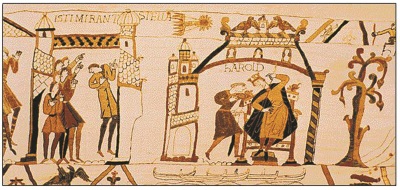
People viewed them as portents of disaster, and indeed a comet appeared about the time of the futile Jewish revolt against the Romans in AD 66, which ended in the destruction of Jerusalem in AD 70; and before the Battle of Hastings in 1066.
Triumph of Biblical worldview over astrological superstition
However, instead of trying to tell fortunes from the heavenly bodies (astrology), we should gain information from their Creator, in His written Word, the Bible. It was the Biblical worldview which led to the science that explained comets. The Bible teaches that the universe was made by a God of order (1 Corinthians 14:33), who gave mankind dominion over creation (Genesis 1:26-28). Historians of science, regardless of their own religious faith, from Christians to atheists, acknowledge the vital importance of the Christian worldview in the rise of modern experimental science.
For instance, Johannes Kepler (1571–1630) formulated the laws of planetary motion. Kepler calculated a creation date of 3992 BC (even younger than the famous date of 4004 BC calculated by his contemporary, Archbishop James Ussher (1581–1656)). Then Isaac Newton (1643–1727), widely regarded as the greatest scientist of all time, developed the laws of motion, gravity and calculus. But he wrote more on Biblical history, and vigorously defended Ussher’s chronology.1
Newton’s friend Edmond Halley (1656–1742) applied these laws to about 25 observed comets and showed that they followed predictable paths. In particular, he noticed that a comet he observed in 1682 followed an orbit very much like that of similar comets seen in 1531 and 1607. So he realized that it was really the same comet reappearing at intervals averaging 76 years. This was also the comet that appeared in 1066, AD 66, and also 12 BC, a few years before Christ was born.2 When he successfully predicted that the comet would appear in a particular year (after his death), this was seen as a great triumph for Newton’s theories, and the comet was deservedly named after Halley.

Origin of comets
The Word of the Creator of the comets, which inspired the development of the science that demystified them, also tells us when He made them. In Genesis 1:14-19, He told us that He made the sun, moon and stars on Day 4 of Creation Week, which was about 4000 BC, as Kepler and Newton realized. Since the Hebrew word for star, כוכב (kokab) refers to any bright heavenly object, it presumably includes comets as well.
The features of comets make perfect sense in a Biblical timescale, but are a huge problem for evolution/billions of years. Because all age indicators work on assumptions, the argument here is not claimed as ‘proof’ of a ‘young’ solar system. Because of the reliable eye-witness account of the Creator in the Bible, the young age is accepted. And this article, among many others,3 shows that even under the evolutionists’ own assumptions, there are huge problems for their timescale.
What are comets?
Comets are ‘dirty snowballs’ (or ‘dirty icebergs’4,5 that revolve around the sun in highly elliptical orbits They are usually a few km across, but Halley’s is about 10 km (6 miles). Hale-Bopp, seen in 1997, at about 40 km (25 miles) is one of the largest comets known. They contain dust and ‘ice’, which is not just frozen water but also frozen ammonia, methane and carbon dioxide.
How comets shine—problem for long-agers
When comets pass close to the sun, some of the ice evaporates, and forms a coma typically 10,000–100,000 km (rarely up to one million km) wide. Also, the solar wind (charged particles radiating from the sun) pushes a tail of ions (electrically charged atoms) directly away from the sun. Solar radiation pushes away dust particles to generate a second tail that curves gently away from the sun and backwards.
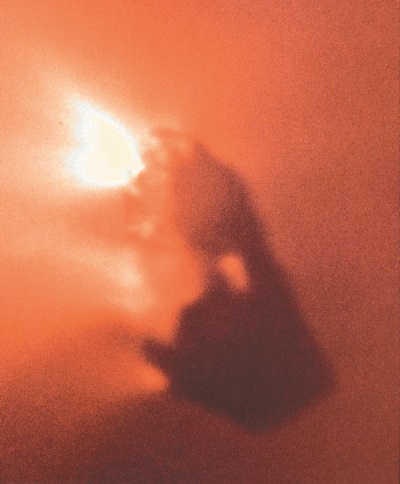
The coma and tails have a very low density—even the best vacuums produced in laboratories are denser. The Earth passed through a tail of Halley’s comet in 1910, and it was hardly noticeable. But comets reflect the sun’s light very strongly, which can make them very spectacular when they are close to both the sun and Earth. The appearance like a hairy star is responsible for the term ‘comet’, from the Greek word κομητης comētēs (long-haired) from κομα (coma) = hair.
This means that the comet is slowly being destroyed every time it comes close to the sun. In fact, many comets have been observed to become much dimmer in later passes. Even Halley’s comet was brighter in the past.6 Also, comets are in danger of being captured by planets, like Comet Shoemaker–Levy crashing into Jupiter in 1994, or else being ejected from the solar system. A direct hit on Earth is unlikely, but could be disastrous because of the comet’s huge kinetic (motion) energy. The problem for evolutionists is that given the observed rate of loss and maximum periods, comets could not have been orbiting the sun for the alleged billions of years.7,8
Comet impact
Some evolutionists believe comets have caused mass extinctions. The mysterious aerial explosion in Tunguska, Siberia, in 1908, which flattened over 2,100 km2 (800 sq. miles) of forest, has been attributed to a comet, but no people were killed because the area was unpopulated. However, more recently, some geologists proposed that it was caused by a large amount of underground gas being released into the air and exploding.1
Two groups of comets
Comets are divided into two groups: short-period (<200 years) comets, such as Halley’s (76 years); and long-period (>200 years) comets. But the comets from the two groups seem essentially the same in size and composition. Short-period ones normally orbit in the same direction as the planets (prograde) and in almost the same plane (ecliptic); long-period comets can orbit in almost any plane and in either direction. One exception is Halley’s, which has retrograde motion and a highly inclined orbit. Some astronomers suggest that it was once a long-period, and strong gravity from a planet dramatically shrunk its orbit, and thus the period. So long-period and Halley-type comets are grouped together and called ‘nearly isotropic comets’ (NICs).
The highest period of a stable orbit would be about four million years if the maximum possible aphelion (furthest distance of an orbiting satellite from the sun) were 50,000 AU.9 This is 20% of the distance to the nearest star, so there’s a fair chance other stars could release the comet from the sun’s grip.10
However, even with this long orbit, such a comet would still have made 1,200 trips around the sun if the solar system were 4.6 billion years old. However, it would have been extinguished long before. The problem is even worse with short-period comets.
Empty evolutionist explanations
The only solution for evolutionists is hypothetical sources to replenish the supply of comets:
Oort cloud
The best-known hypothetical source is the Oort cloud, after the Dutch astronomer Jan Hendrik Oort (1900–1992) who proposed it in 1950. This is allegedly a spherical cloud of comets extending as far as three lightyears from the sun. It is proposed as a source of long-period comets. Passing stars, gas clouds and galactic tides are supposed to be able to knock comets from the Oort cloud into orbits entering the inner solar system. But there are several problems:
- No observational support.11 Therefore it’s doubtful that the Oort Cloud should be considered a scientific theory. It is really an ad hoc device to explain away the existence of long-period comets, given the dogma of billions of years.
- Collisions would have destroyed most comets: The classical Oort cloud is supposed to comprise comet nuclei left over from the evolutionary (nebular hypothesis) origin of the solar system, with a total mass of about 40 Earths. But a newer study showed that collisions would have destroyed most of these, leaving a combined mass of comets equivalent to only about one Earth, or at most 3.5 Earths with some doubtful assumptions.12,13
- The ‘fading problem’: The models predict about 100 times more NICs than are actually observed. So evolutionary astronomers postulate an ‘arbitrary fading function’.14 A recent proposal is that the comets must disrupt before we get a chance to see them.15 It seems desperate to propose an unobserved source to keep comets supplied for the alleged billions of years, then make excuses for why this hypothetical source doesn’t feed in comets nearly as fast as it should.
Kuiper Belt
The Kuiper Belt is supposed to be a doughnut-shaped reservoir of comets at about 30–50 AU (beyond Neptune’s orbit), postulated as a source of short-period comets. It is named after Dutch astronomer Gerald Kuiper (1905–1973), sometimes considered the father of modern planetary science, who proposed it in 1951.
To remove the evolutionary dilemma, there must be billions of comet nuclei in the Kuiper Belt. But nowhere near this many have been found—only 651 as at January 2003.16 Furthermore, the Kuiper Belt Objects discovered so far are much larger than comets. While the diameter of the nucleus of a typical comet is around 10 km, the recently discovered KBOs are estimated to have diameters above 100 km. The largest so far discovered is ‘Quaoar’ (2002 LM60), with a diameter of 1,300 km (800 miles), which orbits the sun in an almost circular orbit17 [Ed. note: <http://www.gps.caltech.edu/~mbrown/sedna/> Sedna, discovered on 14 November 2003 and reported on 15 March 2004, after this article was written, is probably larger]. Note that a KBO with a diameter only 10 times that of a comet has about 1,000 times the mass. So in fact there has been no discovery of comets per se in the region of the hypothetical Kuiper Belt, so it so far is a non-answer.18 Therefore many astronomers refer to the bodies as Trans-Neptunian Objects, which objectively describes their position beyond Neptune without any assumptions that they are related to a comet source as Kuiper wanted.
Interstellar origin of comets
The idea that comets come from outside the solar system has been almost universally abandoned (see box).
Summary
Comets are not portents of doom, but are objects God created on Day 4. The successful prediction of comet appearances was an early triumph for modern science, inspired by a Biblical worldview. Comets lose so much mass every time they shine that they could not be billions of years old. Evolutionists propose various sources to replenish the comet supply, but there is no real observational evidence, and numerous unsolved theoretical difficulties. Therefore comets make much more sense under a Biblical timescale.
Hugh Ross vs comet facts

The Canadian-born astronomer Hugh Ross is the leading proponent of the view that the days of Genesis 1 were billions of years long. He has influenced many leading evangelicals, and is president of the ostensibly Christian apologetics ministry, Reasons to Believe, in California. As his testimony makes clear, his compromise in Genesis is due to his faith in the ‘big bang’. This leads him into all sorts of unorthodox views, such as millions of years of death and suffering before Adam; plants feeling pain; a local flood; manlike creatures that created art, superglue, and made ocean voyages but didn’t have souls, etc.
Ross tries to solve the decaying comets problem (for old-Earthers) by claiming that comets have an interstellar origin.1 But this was amazingly outdated, even at the time he wrote. This is especially remarkable for someone with his qualifications in astronomy, who urges Christians to accept the consensus view of astronomers, and let it over-ride the grammatical-historical interpretation of Scripture. While this answer was proposed in the past, virtually no astronomer accepts this view today, because the comets would have hyperbolic orbits and speeds exceeding the solar escape velocity. And this is not observed, despite Ross’s claim to the contrary.1 Otherwise, why would there be any need for the Oort Cloud or Kuiper Belt hypotheses, which Ross failed to mention at all in his book?1 Creationist astronomer Dr Danny Faulkner rightly regarded this as one of a number of Ross’s mistakes that greatly call into question his statements on these matters.2
Ross, H., Creation and Time, Navpress, Colorado Springs, pp. 116–117, 1994.
His words were ‘blunders that call into question his competence’. Faulkner, D., The dubious apologetics of Hugh Ross, J. Creation 13(2):52–60, 1999. A few years after Dr Faulkner wrote, Ross interviewed him on his radio show, and the notes cite some papers on the Oort Cloud and Kuiper Belt.
References and notes
- Newton, I., The Chronology of Ancient Kingdoms Amended, published posthumously 1728, cited in Renfrew, C., Before Civilization, Penguin Books, England, pp. 22–23, 1973. Return to text.
- Some have thought that this was the ‘Star of Bethlehem’, but it doesn’t fit the details given in the Gospel according to Matthew. Rather, this Star is better explained as an appearance of God’s Shechina Glory—see bibleanswersministry.org, How Did the Wise Men Know? or Is Astrology Valid? Return to text.
- See ‘Young’ age of the Earth & Universe Q&A, creation.com. Return to text.
- Frank Whipple’s model, e.g., Whipple, F.L., Background of modern comet theory, Nature 263:15, 2 September 1976. He expressed it more formally as ‘dirty ice comet nucleus’. Return to text.
- Whipple, F.L., Present status of the icy conglomerate model; in: Ices in the Solar System, Klinger J., Benest, D., Dollfus, A. and Smoluchowski, R. (Eds.), D. Reidel Publishing, Dordrecht, Holland, pp. 343–366, 1984. Return to text.
- However, the pathetic appearance in its last visit in 1986 was more due to the highly unfortunate conditions. I.e. when it was at its brightest, at perihelion (closest approach to the sun), the Earth was on the other side of the sun, which therefore blocked it. And even when it emerged from behind the sun, it was far from Earth. Return to text.
- Wieland, C., Halley’s Comet: beacon of creation, Creation 8(2):6–10, 1986. Return to text.
- The most thorough article is Faulkner, D., Comets and the Age of the Solar System, J. Creation 11(3):264–273, 1997. Return to text.
- AU = astronomical unit, the mean distance from the Earth to the Sun, 150 million km (93 million miles). Return to text.
- This comes from Kepler’s 3rd Law of Planetary motion, a3 = p2, where a is the semi-major axis in AU, and p is the period in years. Return to text.
- Sagan, C. and Druyan, A., Comet, Michael Joseph, London, p. 175, 1985. Return to text.
- Stern, S.A. and Weissman, P.R., Rapid collisional evolution of comets during the formation of the Oort cloud, Nature 409(6820):589–591, 2001. Return to text.
- Faulkner, D., More problems for the ‘Oort comet cloud’ J. Creation 15(2):11, 2001. Return to text.
- Bailey, M.E., Where have all the comets gone? Science 296(5576):2151–2153, 21 June 2002 (perspective on Levison, ref. 15). Return to text.
- Levison, H.F. et al., The mass disruption of Oort Cloud comets, Science 296(5576):2212–2215, 21 June 2002. Return to text.
- Parker, J.M., Ed., Distant EKOs: The Kuiper Belt Electronic Newsletter 27, boulder.swri.edu, January 2003. Return to text.
- The name ‘Quaoar’ (pronounced kwah-o-wahr) comes from the creation mythology of the Tongva people (the San Gabrielino Native Americans). It was discovered by Chad Trujillo and Mike Brown of Caltech in Pasadena in June 2002. Return to text.
- Newton, R., The short-period comets ‘problem’ (for evolutionists): Have recent ‘Kuiper Belt’ discoveries solved the evolutionary/long-age dilemma? J. Creation 16(2)15–17, 2002. Return to text.


Readers’ comments
Comments are automatically closed 14 days after publication.