
Feedback archive → Feedback 2008
Church of England apologises to Darwin
Anglican Church’s neo-Chamberlainite appeasement of secularism
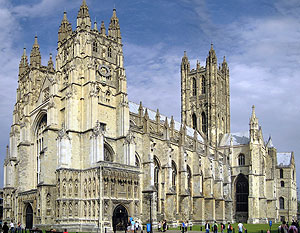
In 2008, the year before Darwin’s bicentennial, the Church of England (Anglicans) officially celebrated it by apologizing to Darwin. However, they don’t speak for all attenders of this church, since many of them are still faithful to Scripture and are appalled by their ‘leaders’. There are numerous mistakes in the article by the official CoE representative, a Rev. Dr Malcolm Brown, on the official CoE website, and Jonathan Sarfati replies point-by-point. The CoE apology was appropriately also around the 70th anniversary of the disastrous Allied appeasement of Hitler at Munich in 1938, and was just as futile
Good religion needs good science
by Rev Dr Malcolm Brown, Director of Mission and Public Affairs Church of England
The trouble with Homo sapiens is that we’re only human. People, and institutions, make mistakes and Christian people and churches are no exception.
Indeed, as the CoE has officially shown with this craven apology—as if apologies for the past are meaningful, given that both Darwin and those who allegedly wronged him are long dead. But ‘false apology syndrome’ is a fashionable way to virtue-signal without cost. And who does he really speak for? Certainly not the large numbers of Anglicans who still believe the Bible.
When a big new idea emerges which changes the way people look at the world, it’s easy to feel that every old idea, every certainty, is under attack and then to do battle against the new insights.
Such superficial psychologization may be touching, but in reality, philosopher Daniel Dennett calls Darwinism a universal acid that ‘eats through virtually every traditional concept’—mankind’s most cherished beliefs about God, value, meaning, purpose, culture, morality—everything.
The church made that mistake with Galileo’s astronomy, and has since realised its error.
It can get tedious to see compromising churchians trot out the Galileo affair as an excuse for their compromise. The church indeed made a mistake with Galileo, but the opposite of what Brown thinks. The Catholic Church had the science of its day on its side. Galileo at the time could not prove that the earth moved (given the knowledge and instrumentation available in about 1630, no one could!). His strongest ‘evidence’ was the tides, this was a fallacious argument. The church’s trouble was interpreting certain biblical passages as supporting the prevailing science of the day. When Galileo challenged the prevailing scientific framework, his scientific enemies persuaded the Church that he was attacking the Bible, which he was not. See the articles in Galileo, Geocentrism, and Flat Earth Questions and Answers.
Some church people did it again in the 1860s with Charles Darwin’s theory of natural selection.
Some did, i.e. refused to make the same mistake as the Church in Galileo’s day, of marrying their theology to the current scientific fad, which merely results in widowhood in the next generation. But far too many appeased Darwin, with the same disastrous effects as Chamberlain’s appeasement of Hitler 70 years previously.
Note that natural selection is not Darwin’s theory. Natural selection is real, and was discussed by the creationist, Edward Blyth, and today is an important part of the creation model. Natural selection has nothing to do with turning moths into motorists or bacteria into biologists, because the changes are in the wrong direction, i.e. removing information instead of adding it as goo-to-you evolution requires.
So it is important to think again about Darwin’s impact on religious thinking, then and now—and the bicentenary of Darwin’s birth in 1809 is a good time to do so.
We quite agree—hence our international ‘Challenging Darwin in 2009’ documentary film project.
Theories raised moral questions
But if Darwin’s ideas once needed rescuing from religious defensiveness, they may also now need rescuing from some of the enthusiasts for his ideas. A scientist has a duty to the truth: he or she is called to be fearless in discovering the way the world works.
Indeed. But so often, Darwinians accept materialism as a dogma (like Richard Lewontin) or as ‘rules of the game’, so reject a design explanation a priori even if all the evidence supports it (as Scott Todd pointed out).
But how a scientific theory is used, and the ways in which ideas can be deployed politically or ideologically, are the responsibility of a less easily defined constituency. ‘Darwinism’ has become something bigger than Darwin’s own theories, and raises many moral questions. This doesn’t make the church of the 1860s right to have attacked Darwin, but it does suggest that the question is deeper than deciding whose side you would have been on in that historic debate between Samuel Wilberforce, Bishop of Oxford, and Darwin’s supporter, Thomas Huxley.
It would help to separate the facts from the myth about this as well.
Nothing in scientific method contradicts Christian teaching
We agree. Indeed, the founders of modern science were creationists, while science doesn’t need goo-to-you evolution.
Darwin was, in many ways, a model of good scientific method. He observed the world around him, developed a theory which sought to explain what he saw, and then set about a long and painstaking process of gathering evidence that would either bear out, contradict, or modify his theory.
This is simplistic—see also Darwin and the search for an evolutionary mechanism, which shows the historical and philosophical influences on Darwin’s ostensibly scientific theory. However, Darwin did largely follow some erroneous methods of Francis Bacon, an errant creationist.
As a result, our understanding of the world is expanded,
Certainly, Darwin’s research on the role of earthworms in soil was a great contribution, as were his meticulous studies on carnivorous plants and barnacles, and could truly have said to expanded our understanding. But when it came to evolution, even many evolutionists admit that his book went way beyond the evidence. For example, one of his highly qualified contemporaries, Professor Johann H. Blasius, director of the Duke’s Natural History Museum of Braunschweig (Brunswick), Germany, was highly critical:
‘I have also seldom read a scientific book which makes such wide-ranging conclusions with so few facts supporting them. … Darwin wants to show that Arten [types, kinds, species] come from other Arten. I regard this as somewhat of a highhanded hypothesis, because he argues using unproven possibilities, without even naming a single example of the origin of a particular species.’
but the scientific process continues. In science, hypotheses are meant to be constantly tested. Subsequent generations have built on Darwin’s work but have not significantly undermined his fundamental theory of natural selection.
Why would we want to undermine natural selection? We would merely want to undermine the additional claim that it is a creative force rather than a culling force.
There is nothing here that contradicts Christian teaching.
Unless Christian teaching is divorced from Christ’s! He clearly taught that ‘Scripture cannot be broken’, and said, ‘it is written’ to settle an argument—for Jesus, Scripture said = God said . He affirmed the special creation of man and woman ‘from the beginning of creation’ (not billions of years later, from pond scum via the animal kingdom), and the global Flood, as well as other Scriptures that skeptics love to mock.
Jesus himself invited people to observe the world around them and to reason from what they saw to an understanding of the nature of God (Matthew 6:25–33).
So our Rev. Dr decides that he does believe some of the Scriptures—a cafeteria Christian who decides which parts of the biblical ‘menu’ he likes. But Jesus never told people to reason in a way that contradicted ‘it is written … ’.
Christian theologians throughout the centuries have sought knowledge of the world and knowledge of God.
Indeed, but their priorities are different from the Rev. Dr Brown’s. Because of Adam’s sin, the creation is cursed (Genesis 3:17–19, Romans 8:20–22), man’s heart is deceitful (Jeremiah 17:9) and the thinking of a godless man is ‘futile’ (Romans 1:21). But although Scripture was penned by fallen humans, these humans were moved by the Holy Spirit (2 Peter 1:20–21:), so Scripture itself is ‘God-breathed’ (2 Timothy 3:15–17). Therefore, Scripture is the only source of revelation not tainted by the Fall.
So a biblical Christian should not reinterpret the perfect, unfallen Word of God according to fallible theories of sinful humans about a world we know to be cursed. As the systematic theologian Louis Berkhof approvingly explained about the views of some leading Reformed theologians:
‘… Since the entrance of sin into the world, man can gather true knowledge about God from His general revelation only if he studies it in the light of Scripture, in which the elements of God’s original self-revelation, which were obscured and perverted by the blight of sin, are republished, corrected, and interpreted.’1
Berkhof’s own view was:
‘Some are inclined to speak of God’s general revelation as a second source; but this is hardly correct in view of the fact that nature can come into consideration here only as interpreted in the light of Scripture.’2
For Thomas Aquinas there was no such thing as science versus religion; both existed in the same sphere and to the same end, the glory of God.
Note that Thomas (c. 1225–1274) agreed with six-day creation! And Thomas is hardly an isolated example. Most biblical scholars before the rise of long-age geology accepted Genesis as written, including Josephus and later Jewish scholars, most church fathers including Basil the Great, and all the Reformers including Luther and Calvin. See The History of Interpretation of Genesis 1–11 for much more documentation.
Whilst Christians believe that the Bible contains all that we need to know to be saved from our sins, they do not claim that it is a compendium of all knowledge.
This is so. Francis Schaeffer pointed out that the Bible is ‘true truth’ but not exhaustive truth. But our Rev. Dr disbelieves the former.
Jesus himself warned his disciples that there was more that he could say to them and that the Spirit of truth would lead them into truth (John 16:12–13).
Yes, but the Spirit of Truth would not contradict what He had already revealed in Scripture; evolution most certainly does, as shown in the articles under Why is evolution so dangerous for Christians to believe?
There is no reason to doubt that Christ still draws people towards truth through the work of scientists as well as others, and many scientists are motivated in their work by a perception of the deep beauty of the created world.
Indeed, there are many highly qualified scientists who believe the Bible as written, such as Dr Raymond Damadian (1936–2022), one of the leading pioneers of MRI. Every issue of Creation magazine features one (and of course is edited by a number of such scientists).
Nevertheless, it is worth remembering that scientific theories can be overtaken in their turn even as old ideas prove to have an enduring quality. Most of us get by with some version of Newtonian physics and understand little of Quantum Theory. Newtonian ideas suffice for most of our everyday needs—but we now know that we can’t push them too far as there is plenty that they do not adequately explain.
This is true. Similarly, Newtonian physics was replaced by Einsteinian relativity for very high speeds, and this in turn seems likely to be replaced by Carmelian relativity.
But all these examples concern operational or observational science, while Darwinian evolution concerns origins/historical/inferential science (see Naturalism, Origins and Operational Science).
Reaction now seems misguided
Darwin’s meticulous application of the principles of evidence-based research was not the problem.
Yet as shown above, he went way beyond the evidence.
His theory caused offence because it challenged the view that God had created human beings as an entirely different kind of creation to the rest of the animal world.
It contradicted the clear biblical teaching that God did make man as a separate creation, to have dominion. Denying this has led to absurd elevations of animals as deserving of ‘human’ rights—see Going ape about human rights: Are monkeys people, too? And many of the loudest supporters of such ideas, such as the antitheistic evolutionist Peter Singer, downgrade humans, to promote bestiality, infanticide and euthanasia—see Blurring the line between abortion and infanticide?.
But whilst it is not difficult to see why evolutionary thinking was offensive at the time, on reflection it is not such an earth-shattering idea.
And even at the time, the church had already appeased secularism when it came to geological history. That is, they had abandoned Scripture on the history of the earth in favour of the uniformitarian dogma of Hutton and Lyell, ignoring the scientific problems and spiritual warnings of the Scriptural Geologists.
This appeasement enabled Darwin to link slow and gradual geological processes with slow and gradual biological processes. Worse, the long ages implied that the fossil record showed creatures suffering and dying for millions of years of death and suffering, rather than as a result of the Fall. So Darwin rejected the inconsistency of this notion of God using millions of years of death and suffering to bring about a ‘very good’ creation (Genesis 1:31), especially as death is called ‘the wages of sin’ (Romans 6:23) and ‘the last enemy’ (1 Corinthians 15:26).
This rejection was poignant when Darwin lost his daughter Annie to a disease, because the prevailing appeasement doctrine implied that such disease-causing features were ‘very good’. The problem of harmful creatures has bothered later apostates like Charles Templeton.
This is a blind spot among both theistic evolutionists and long-age creationists—who believe basically the same as those appeasers in Darwin’s day who were so ineffective. And our Rev. Dr really is clueless about this key objection to marrying Darwinism with Christianity—the biblical teaching that death came through sin.
The proper answer is that the fossils were largely caused by the Flood, while harmful features and behaviours are the result of the Fall, as explained in How did bad things come about? from the Creation Answers Book.
Yes, Christians believe that God became incarnate as a human being in the person of Jesus and thereby demonstrated God’s especial love for humanity. But how can that special relationship be undermined just because we develop a different understanding of the processes by which humanity came to be?
That’s not hard to answer. Luke tells us that Jesus was a descendant of a real historical first man, Adam (Luke 3:23–38)—so the Apostle Paul calls Him ‘the Last Adam’ (1 Corinthians 15:45). This is vital, because Isaiah spoke of this coming Messiah as literally the ‘Kinsman-Redeemer’, i.e. one who is related by blood to those he redeems (Isa. 59:20, which uses the same Hebrew word גואל (gôēl) as is used to describe Boaz in relation to Naomi in Ruth 2:20, 3:1–4:17). The Book of Hebrews also explains how Jesus took upon Himself the nature of a man to save mankind, but not angels (Heb. 2:11–18). But without the common descent of all mankind from Adam, this vital kinsman-redeemer concept collapses.
Thus Darwinism and millions of years have baneful implications for the Australian Aborigines: if they have been here for 40,000 years, they can’t have come from Adam, which means they can’t be saved by the Kinsman-Redeemer, the Last Adam. See also an article about another apology, discussing the problems with such evolutionary teachings. And the Rev. Dr Brown had a Darwin-admiring predecessor in the CoE, clergyman Charles Kingsley, who wrote:
‘The Black People of Australia, exactly the same race as the African Negro, cannot take in the Gospel … All attempts to bring them to a knowledge of the true God have as yet failed utterly … Poor brutes in human shape … they must perish off the face of the earth like brute beasts.’
Secular Darwinists were even worse, snatching Aboriginal people as specimens of ‘missing links’ for museum displays (see Darwin’s bodysnatchers: new horrors)
It is hard to avoid the thought that the reaction against Darwin was largely based on what we would now call the ‘yuk factor’ (an emotional not an intellectual response) when he proposed a lineage from apes to humans.
Does it matter what our Rev. Dr thinks is the reason? I have provided the scriptural reasons. Elsewhere I have counselled against emotional appeals to ‘yuk factor’ arguments.
But for all that the reaction now seems misjudged, it may just be that Wilberforce and others glimpsed a murky image of how Darwin’s theories might be misappropriated and the harm they could do (see the section Darwin and the Church).
Which section is grossly misleading about Darwin’s views about Christianity—see Darwin’s arguments against God: How Darwin rejected the doctrines of Christianity.
Even if they were blind to the future, it remains that the legacy of Darwin (rather than Darwin’s own achievements) has had a shadow side.
Social misapplication of Darwin
Who says it’s a misapplication?
If evolution is continuing, and humanity as we know it is not the final summation of the process, it is not difficult to slip into a rather naïve optimism which sees the human race becoming better and better all the time. Despite our vastly expanding technical knowledge, even a fairly cursory review of human history undermines any idea of constant moral progress.
Of course. And the decline in following absolute moral law is hardly surprising when scientistic elites and their churchian allies undermine belief in an absolute moral Lawgiver who has revealed His law in the Bible. One excellent treatment of the way morals have declined because of a faulty worldview is contained in the book The Vision of the Anointed by Dr Thomas Sowell. This does not come from a Christian perspective, but he points out the fallacy of assuming the perfectibility of humans through human effort, and ignoring the inherent imperfection of mankind, which Christians would attribute to the Fall, a teaching undermined by Darwin.
Humanity’s advance in terms of technical prowess and achievements has not, to most people’s eyes, fully liberated us from our burdens. Christians believe that all of us are constrained by sin and that only through the death and resurrection of Jesus can we move beyond what constrains us, to a fuller and more human way of living.
Indeed, although one must wonder what he means by these things; liberals are fond of double-speak to hide what they really believe.
But Christians are not the only ones who are sceptical of the idea that evolution means moral progress.
Mainly because the failures of Darwin-based Nazism and Communism showed how disastrous it was to try to create a paradise on Earth by sacrificing humans in the way.
Natural selection, as a way of understanding physical evolutionary processes over thousands of years, makes sense. Translate that into a half-understood notion of ‘the survival of the fittest’ and imagine the processes working on a day-to-day basis, and evolution gets mixed up with a social theory in which the weak perish—the very opposite of the Christian vision in the Magnificat (Luke 1:46–55).
Yet this Rev. Dr says that God created in a diametrically opposed way to that revealed in this self-same Christian vision. The atheist Jacques Monod was not impressed:
‘The more cruel because it is a process of elimination, of destruction. The struggle for life and elimination of the weakest is a horrible process, against which our whole modern ethics revolts. An ideal society is a non-selective society, is one where the weak is protected; which is exactly the reverse of the so-called natural law. I am surprised that a Christian would defend the idea that this is the process which God more or less set up in order to have evolution (emphasis added).’
This ‘Social Darwinism’, in which the strong flourish and losers go to the wall is, moreover, the complete converse of what Darwin himself believed about human relationships.
Has this Rev. Dr even read Darwin? As we show in Darwin was indeed a Social Darwinist , anti-creationist Peter Quinn pointed out:
‘Sounding more like Colonel Blimp than Lieutenant Columbo, Darwin envisions a far grimmer future for races or sub-species less fit than the Anglo-Saxon. “At some future period, not very distant as measured by centuries, the civilized races of man will almost certainly exterminate, and replace, the savage races throughout the world,” he predicts. “At the same time the anthropological apes … will no doubt be exterminated. The break between man and his nearest allies will then be wider, for it will intervene between man in a more civilized state … even than the Caucasian, and some ape as low as a baboon, instead of now between the Negro or Australian and the gorilla.”’
From this social misapplication of Darwin’s theories has sprung insidious forms of racism and other forms of discrimination which are more horribly potent for having the appearance of scientific “truth” behind them.
It is hardly an accident that such widely dispersed cultures as Germany and America could come up with similar applications of Darwinism: America’s racist eugenics program, and the Nazi undermining of sanctity of human life, eugenics and the Holocaust. Note that eugenics was invented by Darwin’s first cousin, Francis Galton, who justified it by Darwin’s evolutionism. And in 1912, Darwin’s son Leonard gave the presidential address at the First International Congress of Eugenics, a landmark gathering in London of racial biologists from Germany, the United States.
Darwin’s immense achievement was to develop a big theory which went a long way to explaining aspects of the world around us. But to treat it as an all-embracing theory of everything is to travesty Darwin’s work. The difficulty is that his theory of natural selection has been so effective within the scientific community, and so easily understood in outline by everybody, that it has been inflated into a general theory of everything—which is not only erroneous but dangerous.
The real travesty is the willingness of so many churchians to embrace Darwin’s hypothesis, ignoring the clear evidence of design and Darwinism’s inability to explain the encyclopedic quantities of information in all living creatures, and abandon Scripture.
Capacity to love consistent with Darwin
Christians will want to stress, instead, the human capacity for love, for altruism, and for self-sacrifice. There is nothing here which, in principle, contradicts Darwin’s theory.
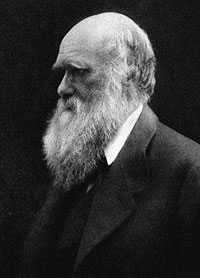
No, but Darwinian theory would explain this as the result of selfishness, either among creatures or genes—see Altruism and kin selection .
Humanity has acquired the capacity to reflect, to imagine, and to reason from what is known to what is not yet known. Some animals may have these features in a very rudimentary form, but the human capacity is so much greater as to be effectively unique. It is our capacity to imagine other people as more than bodies, but as persons, which marks us out. It is that, above all, which has enabled the human mind and will to achieve so much. And if this capacity—which we can characterise as the capacity for love—is consistent with Darwin’s ideas of natural selection, it suggests that our capacity as a species to act in ways which appear to be against our personal interests has, paradoxically, enabled us to survive as “fitted” to our context and environment.
But then there is no objective reason for unselfishness, given that it can be only an illusion that really fosters an underlying selfishness.
So the pseudo-Darwinian reductionism, which elevates selfishness into a virtue and celebrates power and dominance, is not only a misunderstanding of Darwin but may even contribute to human decline by eroding those aspects of being human which have given us such a natural advantage.
Hardly a ‘misunderstanding’: selfishness is at the root of Darwinism; treating altruism as a means to an end does nothing to soften it.
Even the more sophisticated versions of ‘Social Darwinism’, which interpret all human behaviour in terms of the struggle for dominance and the maximisation of genetic advantage through the generations, risk presenting us with an image of being human which makes us slaves to some kind of evolutionary imperative, as if we are programmed in ways we cannot over-rule. But the point of natural selection is that it is precisely by being most fully human that we demonstrate our fitness. And being fully human means refusing to abdicate our ability to act selflessly or lovingly and to challenge thin concepts of rationality which equate “being rational” to material self interest.
But Darwinism can select only for survival value, not for altruism per se. It also can’t provide any basis for calling unselfishness objectively good and selfishness objectively wrong; all it can do is assess their selective advantages.
It is vital that Darwin’s theories are rescued from political and ideological agendas that are more about controlling human imagination and unpredictability than about good science.
Translation: Darwinism should be sugar-coated to hide its real evils from unsuspecting churchgoers and parents.
Discerning where culture threatens Christianity
All that I have said so far will remain contentious in some circles. Some Christian movements still make opposition to evolutionary theories a litmus test of faithfulness and—the other side of the coin—many believe Darwin’s theories to have fatally undermined religious belief and therefore reject any accommodation of one by the other. Why should this be?
Because they really are incompatible, despite the political waffling by compromisers. Note that we don’t claim that one can’t be a Christian and a biblical errantist (or evolutionist or long-ager). Many people are saved despite ‘blessed inconsistency’—there is no hint in the Bible that the ability to hold mutually contrary thoughts in the same skull is an unforgivable sin. People are saved by grace through faith, not by works (Eph. 2:8–9), and the content of this saving faith is that Jesus Christ, the God-man, died for our sins, was buried and rose again (1 Corinthians 15:1–4). See also:
- Is it possible to be a Christian and an evolutionist? A leading creationist answers an often-asked question
- The big picture: Being wrong about the six days of creation does not automatically mean someone is not a Christian. But if you think that makes it unimportant, stand back and look at the big picture.
- Do I have to believe in a literal creation to be a Christian?
- Can Christians believe evolution?
The Church of England in 1860 was already facing challenges to its former pre-eminence. Freethinking and non-conformist Christianity were confronting the power of the established church—and then came Darwin. These were nervous times for Anglicans, and when worldly power is thought of as God-given, threats to power are perceived as attacks on God. What was true for Anglicans in 1860 is largely true for all kinds of Christians today, although (depending where you are in the world) the threat may be perceived to come from radical Islam, secularism, consumerism or atheism.

This doesn’t apply to those churches not connected with the State. But it’s notable that many evolutionized clergy not only have appeased secularism but also appeased radical Islam: the leading cleric in the CoE, the Archbishop of Canterbury, Rowan Williams, stated earlier this year that adoption of sharia law in the UK seems unavoidable . Then in the manner of liberals everywhere, he claimed that he had been misunderstood.
The cultures within which Christians try to be faithful are widely seen to be hostile, at least in some respects, and discipleship means, at some level, standing against some social trends. The problem for all Christians is discerning where the surrounding culture is really a threat and where it is compatible with our understanding of God.
This much is true: but the means for discernment should be comparison with God’s written Word, the Bible. What does the Rev. Dr offer but the shifting sands of episcopal opinion?
Because “science” has been widely regarded as offering a total theory of everything; because some scientists have encouraged this claim; perhaps because we all know how reliant we are on scientific ideas which we barely understand and which make us nervous of our ignorance; and perhaps because the churches have not been good at equipping people to see God at work in the contemporary world—
How about, the appeasement of much of the church to secularism and failure to equip their flock with reasons for their faith (1 Peter 3:15) and ways to demolish opposing arguments (2 Corinthians 1-:4–5).
for all these reasons and others, a parody of science has become a focus for certain forms of social unease. In so far as the practice of science has its hubristic side, there is a case for science to answer.
But why should they? The church has already appeased secularists about world history, so why shouldn’t they wait for further appeasement? For example, secularists claim that dead men don’t rise and virgins don’t conceive, and that miracles are impossible, so should we appease them by denying the bodily Resurrection, Virginal Conception, and miracles of Christ? And in the areas of morality, some evolutionists claim that homosexual behaviour and adultery are in the genes, so should we throw out biblical morality as well? Actually, a number of ministers in the CoE (and certain other denominations) have ‘reasoned’ precisely this way, such as the former American Episcopalian bishop John Shelby Spong.
In so far as ‘Social Darwinism’ has diminished our sense of being human and being in relationships, there are real problems to address. But first it is important to recognise that the anti-evolutionary fervour in some corners of the churches may be a kind of proxy issue for other discontents; and, perhaps most of all, an indictment of the churches’ failure to tell their own story—Jesus’s story
But in the Rev. Dr’s case, ignoring the parts that contradict his seeming idol of Darwinism. But Jesus told Nicodemus (John 3:12): ‘I have spoken to you of earthly things and you do not believe; how then will you believe if I speak of heavenly things?’ If Jesus was wrong about earthly things (like a recent creation and a global flood, as above), was He also wrong about a heavenly thing like John 3:16, only four verses later? If not, why not?
—with conviction in a way which works with the grain of the world as God has revealed it to be, both through the Bible and in the work of scientists of Darwin’s calibre.
God doesn’t contradict Himself, so real science will back up the Bible.
Rapproachment [sic] between Darwin and Christian faith
At a university in Kansas, I asked a biology professor how he coped with teaching Darwin’s theories to students whose churches insisted that evolution was heresy and whose schools taught creationism. “No problem,” he replied, “the kids know that if they want a good job they need a degree, and if they want a degree they have to work with evolution theory.
Yet some have whinged that the movie Expelled was lying about the overt discrimination practiced against creationists. Indeed, even evolutionists who even so much as suggest that creation should be discussed in school science classes have lost their jobs, such as the Royal Society’s director of education, Rev. Professor Michael Reiss a few days ago (see Reiss resigns as Royal Society stifles debate on evolution).
The leading misotheist Richard Dawkins has no time for those who try to marry evolution with Christianity, saying:
‘Oh but of course the story of Adam and Eve was only ever symbolic, wasn’t it? Symbolic?! Jesus had himself tortured and executed for a symbolic sin by a non-existent individual. Nobody not brought up in the faith could reach any verdict other than barking mad!’
I.e. he has as much contempt for churchian appeasers of evolution as Hitler had for Chamberlain.
Creationism is for church, as far as they’re concerned. Here, they’re Darwinists.” Perhaps he was over-cynical.
Or deceitful, like evolutionary educrat Bora Zivkovic, who bragged about misleading students about this ‘non-overlapping magisteria’ (NOMA, a claim that science and religion have nothing to say about each other):
Yes, NOMA is wrong, but is a good first tool for gaining trust. You have to bring them over to your side, gain their trust, and then hold their hands and help them step by step. … Better NOMA-believers than Creationists, don’t you think?—
But he was also pointing to young lives which could not be lived with integrity—the very opposite of how Christians are called to live. There is no integrity to be found either in rejecting Darwin’s ideas wholesale or in elevating them into the kind of grand theory which reduces humanity to the sum of our evolutionary urges. For the sake of human integrity—and thus for the sake of good Christian living—some rapprochement between Darwin and Christian faith is essential.
Rather, real integrity comes from accepting the Bible as true—including the history that underpins faith and morality. The real double-mindedness comes from trying to hold mutually contradictory ideas in the same skull, as one of CMI’s Ph.D. biologists, Dr Don Batten explains.
And now comes the pathetic apology:
Charles Darwin: 200 years from your birth, the Church of England owes you an apology for misunderstanding you and, by getting our first reaction wrong, encouraging others to misunderstand you still. We try to practice the old virtues of ‘faith seeking understanding’ and hope that makes some amends. But the struggle for your reputation is not over yet, and the problem is not just your religious opponents but those who falsely claim you in support of their own interests. Good religion needs to work constructively with good science—and I dare to suggest that the opposite may be true as well.
On a lighter note, but very relevant to this sad situation, we believe that most visitors to this page, including our many C of E/Anglican friends and supporters, will appreciate the satire of the Church of England’s accommodation of liberalism in the episode ‘The Bishop’s Gambit’ (1986) from the classic British comedy series Yes, Prime Minister (view here). No, we are not thereby endorsing everything in that clip, or series, or any other secular item we might refer to, but it is interesting to note that the ‘world’ can sometimes see things more clearly than we think.
Re-featured on homepage: 23 November 2023
References
- Berkhof, L., Introductory volume to Systematic Theology, p. 60. Return to text.
- Berkhof, Ref. , p. 96. Return to text.


Readers’ comments
Comments are automatically closed 14 days after publication.