
Feedback archive → Feedback 2008
Was Dawkins stumped?
Frog to a Prince critics refuted again
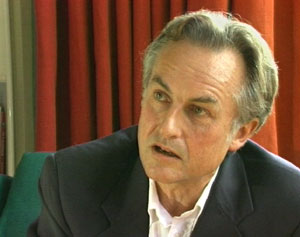
This week we feature a critical feedback from JW, whose complaint relates to CMI’s videoclip of Richard Dawkins being stumped by a question about genetic information, which features on our DVD From a Frog to a Prince (see raw footage with subtitles, right).
We like to publish critical feedbacks regularly, and our policy is to choose the best-articulated and most well-reasoned critical feedback available. But regrettably, few of the multitudinous critical emails we receive are cogent and logical, with most tending toward the ‘mangled diatribe’ end of the literary spectrum. JW’s email below is mildly representative in this regard. Although JW’s contribution breaks our feedback rules against unsubstantiated allegations, etc., her comments give us the opportunity to confront the prolific accusations made against us in relation to our Richard Dawkins interview, and also to address some common misthinking regarding religion. We have answered previous critics in Skeptics choke on Frog: Was Dawkins caught on the hop? But we still receive a lot of abuse and slander in relation to our Dawkins interview, much of it revolving around incorrect accounts of the sequence of events that occurred during the interview. For a precise analysis and timeline of exactly what took place, see our Dawkins Interview Timeline (below).
J.W. writes:

I’ve seen the raw footage of the so called “stumping Richard Hawkins” [sic] fiasco. You are liars! You didn’t “stump” him. He gave a brilliant and true answer!!! Must you really lie to try to satisfy your followers??? All the worlds religions have been created by people trying to explain a world around them they can’t understand. Think about it, can ALL the religions be right? Which one, out of the hundreds that have existed, is the one true religion? If you are reading this and thinking “MINE! MINE! MY BELIEFS ARE REAL!!” I say, prove it…rationally. And no, saying “you’ll find out when you die” is not a rational answer. It is something you’d say to a child to scare them. It is what every religion uses to scare their “flocks”, to keep the simple minded people in line. Religion is what it is, a crutch for the weak minded.
Andrew Lamb responds:
I’ve seen the raw footage of the so called “stumping Richard Hawkins” fiasco.
An excerpt of CMI’s raw footage of our Richard Dawkins interview was posted online in April 2007 on a secular website. The excerpt is that in which Richard Dawkins responds to the question, ‘Can you give an example of a genetic mutation or an evolutionary process which can be seen to increase the information in the genome?’, a question that he was asked on two separate occasions on the day.
Encouragingly, in the year that has passed since then there have been almost half a million viewings of this video, by people from around the world. That’s several hundred thousand people who have witnessed for themselves the utter inability of evolution’s leading apologist to account for genetic information.
A shortened version of this appears in our popular Frog to a Prince DVD, which incidentally now has subtitles in ten languages.
You are liars! You didn’t “stump” him. He gave a brilliant and true answer!!!
We did not lie. The ‘Richard Dawkins Stumped…’ title given to our raw footage clip on that secular website is accurate. Dawkins was stumped, as shown by the fact that he tried to think of an answer, but eventually responded with comments that did not address the question.
A few of the things Dawkins said were true, e.g. ‘fish are modern animals’. But even then, they don’t qualify as true answers since they had nothing to do with the question asked.
Also, much of what he said was not true, e.g. his comment that ‘They [fish] are descended from ancestors which we’re descended from’. From the true eye-witness account of history given in the Bible we know that humans have always been humans, and did not descend from some other kind of creature, and there are no facts of science to demonstrate that they have, only the fanciful story-telling of evolution theorists.
Must you really lie to try to satisfy your followers???
Your comment here implies that you think there is something wrong with lying. But if evolution were true, it would not be possible to show logically that lying is ‘bad’. Rather ‘good’ and ‘bad’ would just be matters of opinion, not matters of objective reality. Evolutionary beliefs provide no objective basis to justify traits like honesty. In contrast, to lie would be acting inconsistently with the teachings of the Bible, which says to speak the truth (Ephesians 4:25 and many other verses). When Christians act with selfless compassion and altruism, they are likewise acting consistently with their beliefs. Not so the evolutionist—see An atypical atheist.
All the worlds religions have been created by people trying to explain a world around them they can’t understand.
Incorrect. Some of the world’s religions are revealed religions, not invented religions. Judaism and Christianity are based largely on revelation from God—see Q&A:Bible. And there are also some religions that allege revelation, but whose claimed revelation is dubious, unless one were to include the possibility of revelation from fallen angels, i.e. demonic revelation, as falling under this heading. E.g. Mormonism (involving alleged revelation from an angel called Moroni—see How Mormons muddle Genesis) and Islam.
However, yes, most religions are human inventions. For a good resource on this point, I recommend the book What About The Other Religions? by Dr Werner Gitt.
Think about it, can ALL the religions be right?
Good point. No, they cannot. If the religion of evolution is true, then religious ideas that conflict with evolution, e.g. that creatures were created and reproduce ‘after their kind’, must be false, as is plain to Joe Public, but denied, sadly, by some liberal theologians.
Which one, out of the hundreds that have existed, is the one true religion?
Very good question. I suggest four criteria for narrowing down the field of hundreds.
One, a candidate true religion should not be incompatible with any observable or reliably attested fact. Biblical (young-earth creationist) Christianity passes this test with flying colours, whilst evolution fails miserably, being irreconcilable with many facts of science, such as the well-established laws of chemistry, information, probability, and thermodynamics. See Holy Books: which one are you going to trust?
Two, it should involve signs (e.g. genuine miracles). The best attested is the Resurrection of Christ. The article The Impossible Faith: Or, How Not to Start an Ancient Religion points out at least 17 factors that meant Christianity could not have succeeded in the ancient world, unless it was backed up with irrefutable proof of the Resurrection.
Three, it should involve fulfilled prophecy. The Bible stands supremely alone in this regard—see page 13 of The Creation Answers Book. For more on fulfilled Bible prophecy, see Ha-Mashiach.
Four, it should produce good fruit. Christianity has had a profound civilizing influence on the world (again, see CAB page 13).

If you are reading this and thinking “MINE! MINE! MY BELIEFS ARE REAL!!”
Actually, reading your comments triggers quite different thoughts in me . . .
I say, prove it…rationally.
Rationally? As with your comment above re lying, you are depending on explicitly creationist axioms to argue against creation! Let me explain. If the Bible is true, and there is a benevolent, omniscient Creator God, and we are created in His image, then it follows that our thoughts are meaningful and rational. But if evolution is true, and we are just an accumulation of millions of genetic mistakes, then our thoughts are just purposeless movements of chemicals and electrons in the brain, and there is no reason to presume that they are meaningful and rational. Conclusions about religion or any other subject would be worthless, because there is no reason why undirected mutations and chance bio-electrical brain signals should produce coherent meaningful thoughts.
Similarly, when assuming that lying is bad, you are adopting an explicitly biblical Christian premise. There are religions in which lying is regarded as a virtue, and others which say that there is no such thing as truth. In expecting that others will share your attitude about lying you are implicitly relying on the (dwindling) shared Christian moral heritage of the West.
And no, saying “you’ll find out when you die” is not a rational answer. It is something you’d say to a child to scare them.
But what if you are wrong, and there truly is eternal conscious suffering of the unsaved, as taught by Jesus (Matthew 18:8; 25:41; 25:46; Mark 3:29; 9:43–48—see also Revelation 14:11; Jude 1:7; 1:13; 2 Thessalonians 1:9; 2 Peter 2:17)? This is one of the reasons why Christians are willingly prepared to suffer so much to reach others with the Gospel of Jesus Christ, because they know the terrible fate that awaits those who reject Jesus’ atoning sacrifice for our sins.
Perhaps deep down you fear that you are wrong and that God will hold you accountable? After all, research has shown that even young children from non-Christian cultures instinctively know that there is a Creator God—see Children believe in God.
It is what every religion uses to scare their “flocks”, to keep the simple minded people in line.
Religions that lack hell for heretics in the afterlife tend to make hell for heretics in this life—see The blood-stained century of evolution and Expelled: New movie exposes persecution of anti-Darwinists.
Religion is what it is, a crutch for the weak minded.
Weak minded? Like the great scientists Newton, Kepler, Maxwell, Damadian; or slavery abolitionist Wilberforce, or Corrie Ten Boom who hid Dutch Jews from the Nazis? But under the evolutionary faith system, how can one even talk about minds, weak or otherwise? Both would be mere epiphenomena of motions of atoms in the brain obeying the fixed laws of chemistry.
However, in one respect you are right. Compared to mankind’s original sinless state, we are weak, and greatly in need of divine support. I’m eternally grateful to Jesus for the efficacious crutch He provided, because we are broken by sin. Of course atheists have their crutches too—consider Richard Dawkins’ comment that ‘Darwin made it possible to be an intellectually fulfilled atheist.’ This demonstrates that microbes-to-man evolution is a vital crutch for the faith of atheism.
Andrew Lamb
Dawkins Interview Timeline

The above timeline is of the Richard Dawkins interview that formed the basis of CMI’s video From a Frog to a Prince (click on it to see high-resolution version).
From a Frog to a Prince recording timeline resolves questions
This timeline, based on the main camera sound track of the interview, reconciles the three accounts of the interview, i.e. the published accounts of Richard Dawkins and Gillian Brown, and the unpublished account of Philip Hohnen, given in personal correspondence with CMI during 2001–2003. There seemed to be discrepancies between the three accounts, but our timeline is consistent with all three accounts and with the audio tape. The key to resolving the apparent inconsistencies is the realization that:
Dawkins was questioned about information twice, first by Hohnen (A on timeline), after which the interview was interrupted, with Dawkins upset, and later by Brown (K), from behind the camera, when Dawkins had no ready answer.
Dawkins’ anger erupted at the first occasion, when he suspected he might be speaking to creationists. This is what Dawkins recalled and gave as an excuse for his silence following the question on the video, which was asked some time later when Dawkins was already aware that he was speaking with creationists. In his recollection, Professor Dawkins conflated these two events.
After Philip Hohnen had been on a tour of the house with Mrs Dawkins (Lalla Ward) (section D on timeline), and then negotiated with Richard Dawkins (E), the latter agreed to make a statement for recording. In his statement (G, J) Dawkins candidly admitted that evolution had to explain the information in living things and he claimed that mutations, aided by natural selection, created all the information. These very pro-evolution statements are on the video, just as Dawkins had wanted. After these confident assertions, Gillian Brown, from her position behind the camera, slipped in the question asking for an actual example of an evolutionary process that can be observed to increase the information in the genome (K). It would have been churlish of Dawkins not to try to answer this, in the light of the confident spiel he had just given. His look (on the video) of puzzlement, even consternation, had nothing to do with discovering the nature of the interview (this discovery happened much earlier). The fact that he failed to answer the question, even given time to think, should have been sufficient for any fair-minded observer to see that the silence (L) following the asking of the question revealed a lack of an answer, not a rising tide of anger, etc., as claimed by Dawkins.
There was a period (D–E on the timeline) which was perceived differently by the three participants, in part because they were actually doing different things at the time (e.g. Philip Hohnen was being given a guided tour of the house by Mrs Dawkins). When Hohnen returned from the tour, he did not see any evidence of a rapprochement between Dawkins and Brown. Hohnen then negotiated with Dawkins for a continuation of the videoing, with Dawkins agreeing to give a statement.
This timeline harmonizes the recollections of all three persons and shows that the video producer did not manufacture Dawkins’ silence and nor was Dawkins’ silence due to a rising tide of anger over discovering that he was being interviewed by creationists (this had happened earlier). Hohnen recalls that they parted in good humour. The segment where Dawkins fails to answer the information question is fair (in fact the period of silent puzzlement was considerably shortened on the Frog to a Prince video).
It may be argued that Brown pushed the boundaries by asking the question at all when she had agreed for Dawkins to make a statement. However, it was a question begging to be asked after Dawkins’ confident speech about the adequacies of natural processes in creating new information.
Philip Hohnen has checked the timeline, and vouches for its accuracy.
Explanatory notes to timeline
- Creation Ministries International have an audio tape (we may also have the actual video recording, but it is not currently locatable) of the latter part of the interview, starting from the point at which Dawkins expressed his suspicions (B). This audio tape comprises the sound track from the main video camera. (Another video camera was also running during much of the interview.) A copy of this same audio tape was sent to the anticreationist Glenn Morton, who had previously been sceptical of our account. After seeing this copy, Morton declared ‘I will state categorically that the audio tape of the interview 100% supports Gillian Brown’s contention that Dawkins couldn’t answer the question.’
- The green (lightly shaded) segments of the timeline above represent periods covered on the audio tape. The red (darkly shaded) segments represent periods not covered on the audio tape.
- The two occurrences of double slashes // in the timeline’s text boxes represent breaks in recording.
- Dawkins’ oft-discussed ‘11-second pause’ is represented in this timeline by segments L and M, and is referred to on this chart by the term ‘silence’, rather than the usual term ‘pause’ in order to differentiate between this and the recording pauses. It is 11 seconds from the end of GB’s question until RD’s audible intake of breath, and 19 seconds in total from the end of GB’s question until the pause in recording (O). That is, L, M and N together comprise 19 seconds. There is approximately seven seconds of silence between RD’s audible intake of breath and his request to stop.
- In period O on this chart, i.e. after GB asked the info question and RD requested a stop, there was no speaking by anybody until GB said ‘Now recording’ and RD began speaking again with ‘Ok. There’s a popular misunderstanding …’.


Readers’ comments
Comments are automatically closed 14 days after publication.